Imaginary dialogue between Ralph Abernathy and Martin Luther King
by Charactorium · Martin Luther King (1929 — 1968) · Politics · 5 min read
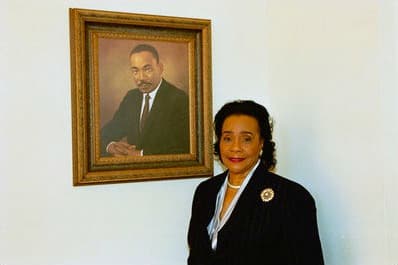
It is in the dimness of a room at the Lorraine Motel, in Atlanta and then on the road through the South, that Ralph Abernathy finds his old friend in this winter of 1968, shortly after the launch of the Poor People's Campaign. Fatigue marks Martin's face, but the coffee still steams between them, and the telephone — always that telephone — lies silent on the nightstand. They have known each other since the strategy nights in Montgomery, when they would remake the world until dawn. Tonight, Ralph comes not as a lieutenant of the SCLC, but as a brother who wants to hear the man behind the preacher.
—Martin, I was behind you at the Lincoln Memorial on August 28, 1963. You had your written text. Why did you suddenly put your papers down?
You remember the roar of that crowd, Ralph — two hundred and fifty thousand souls, and that terrible silence before I spoke. I had prepared something reasonable, measured. And then I heard Mahalia behind me urging me toward the dream. So I let go of my notes. What I said next, I had not written; it rose from the churches where we prayed together, from the children of my home. I saw my four little ones, I saw this country judging a man by his soul and not his skin. I believe that at that moment I was no longer speaking: something greater was speaking through me. You were there, you felt it too.
I let go of my notes; at that moment I was no longer speaking, something greater was speaking through me.
—When we started in Montgomery, many wanted to meet violence with violence. Where did your stubbornness for nonviolence come from?
From two books that never leave me, you know that: my Bible and the writings of Gandhi. The Sermon on the Mount gave me the spirit, Gandhi gave me the method. At first, in Montgomery, I kept a gun in my house, I never hid that from you. And then I understood that you cannot drive out darkness with darkness. Nonviolence is not the passivity of the coward: it is an active, demanding resistance that accepts to receive the blow in order to unmask the injustice of the one who strikes. The soul of this method, brother, is love — not a tender sentiment, but a tenacious will for redemption for the oppressor as well as the oppressed.
You cannot drive out darkness with darkness; the soul of nonviolence is love.
—In Birmingham, in April 1963, they threw us in jail. You were writing in the margins of newspapers. To whom were you responding?
To men of the church, Ralph. White moderate clergymen who begged me to wait, to let time do its work. But I have learned through pain that freedom is never voluntarily given by the oppressor; it must be demanded by the oppressed. The word 'wait' has almost always meant 'never' when spoken by our brothers. How can you tell a child why he cannot enter an amusement park because he is black, and ask him to be patient? I wrote on whatever came to hand — newspaper margins, scraps of paper passed to me. The cell was narrow, but my conscience could no longer be silent.
The word 'wait' has almost always meant 'never' when spoken by our brothers.
—That telephone there, beside you — we both know it is not alone in listening. How does one live being hunted day and night?
You learn to speak as if the whole world is listening, because it is. Mr. Hoover and his bureau follow us into every city, every room, every call. At first, it kept me from sleeping. Then I made a kind of bitter peace with it: if they are listening, let them hear a man who says in private nothing other than what he proclaims in public. I have no two faces, Ralph, you know that well. That does not make it any less heavy. When I enter one of these motel rooms, alone, far from Coretta and the children, I feel the weight of all those eyes. But a watched man who has nothing to hide remains a free man.
If they are listening, let them hear a man who says in private nothing other than what he proclaims in public.
—Before Oslo, in 1964, you received that vile anonymous letter. And the Nobel prize money, you did not keep a dollar. Why?
That letter was meant to break me, to push me into shame until I disappeared of my own accord. I read it, and I let it be what it was: the fear of my adversaries, not my judgment. I could not let it command my life. As for the fifty-four thousand dollars, brother, how could I have kept it? That money was not mine. The prize did not honor a man; it honored a people on the march — you, the children beaten on the bridges, the elderly women who walked for a year rather than ride a humiliating bus. I gave it all back to the movement. A preacher who grows rich on the suffering of his own has nothing left to preach.
The prize did not honor a man; it honored a people on the march.
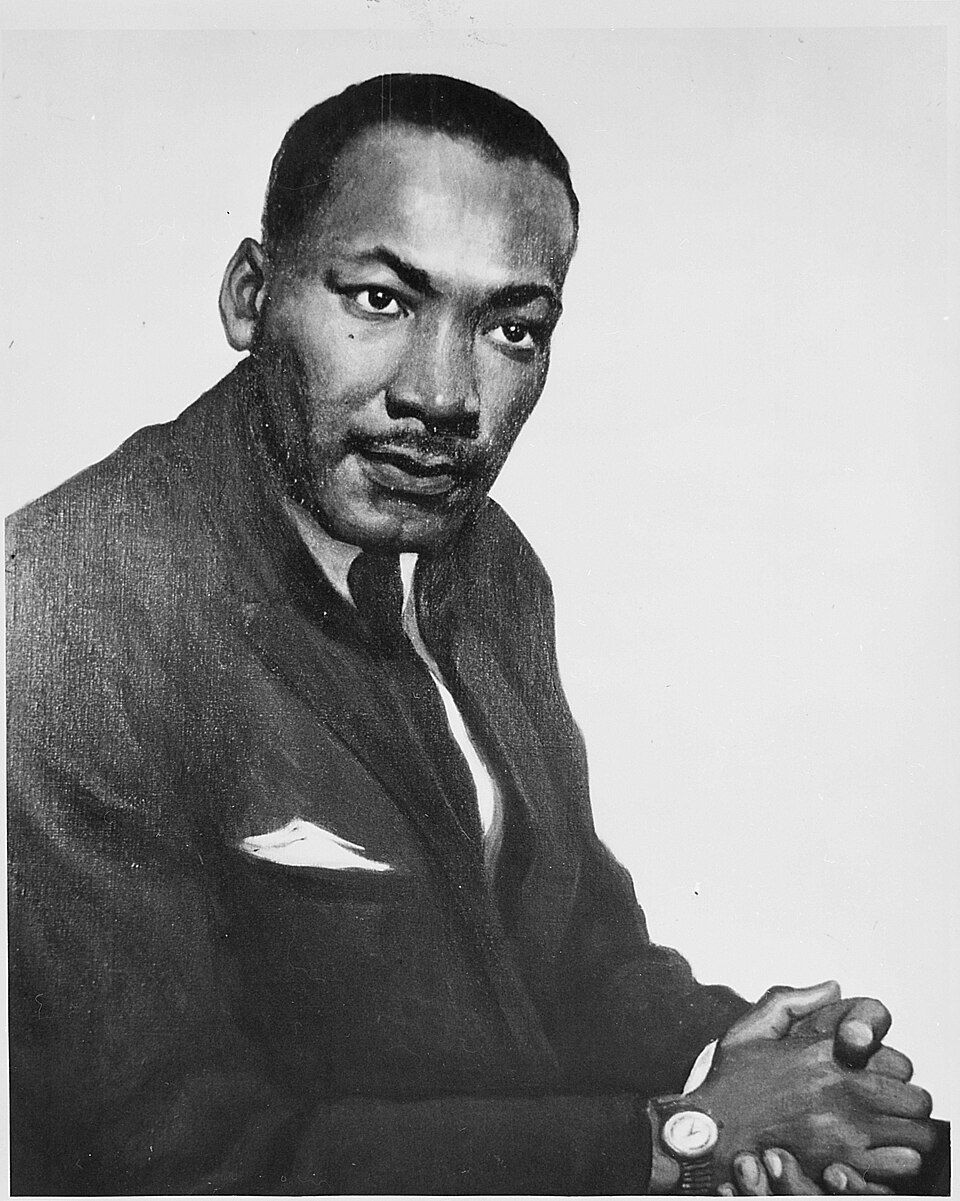
—You led us to Chicago, into the ghettos of the North. Many did not understand this shift. Why leave the South we knew?
Because we had won the right to sit at the counter, but not the right to pay for the meal. The Civil Rights Act, the Voting Rights Act — these are immense victories, and we won them together. But what good is it to enter a restaurant if you cannot afford to order? In Chicago, I saw families crammed into slums, children gnawed by rats, and no written segregation laws — only organized poverty. Northern racism does not carry a sign; it hides in rents and wages. I understood that our struggle could not stop at skin color: it had to tackle the economic injustice that chains the poor of all races.
What good is it to enter a restaurant if you cannot afford to order?
—By taking a stand against the Vietnam War, you lost powerful friends, all the way to the White House. Did you measure what it would cost?
I measured it, yes, and it tore me apart. President Johnson had signed our laws; owing him so much and then defying him was heartbreaking. But I could not raise my voice against violence in the streets of our cities and stay silent before the violence my country was pouring onto a distant people. What right would I have to ask our angry young men to put down their fists, if I let my nation burn villages far away? I was told to stay in the civil rights field, not to mix the struggles. But injustice, Ralph, is indivisible. I would rather lose allies than lose my soul.
Injustice is indivisible; I would rather lose allies than lose my soul.
—And now this Poor People's Campaign we are launching together. You want to bring together Whites, Blacks, Indians. Is it not too much, after so many years?
It may be the greatest gamble of our lives, brother, and I will not hide from you that I am tired. But we have no choice. As long as the wealth of this country coexists with the misery of its children, we have only repainted the façade. I want to bring the poor from everywhere to Washington, to camp under the windows of power until they can no longer look away. A hungry white man from Appalachia and a hungry black man from Mississippi are brothers in the same need. If we can make them see that, then the fear that sets them against each other will crumble. That is now the promised land toward which I walk.
As long as the wealth of this country coexists with the misery of its children, we have only repainted the façade.
—You were stabbed in New York as early as 1958, beaten, imprisoned so many times. How do you keep turning the other cheek after all that?
That day in Harlem, the blade lodged so close to my heart that the doctors told me a simple sneeze would have killed me. I had time to reflect, on that hospital bed, on what hatred was worth. And I understood that if I had answered violence with violence, I would have been dead inside long before the knife. Turning the other cheek is not submitting, Ralph — it is refusing to become what you fight. Each blow received without returning it is a mirror held up to the oppressor, so that he may finally see the ugliness of his act. It takes more courage than striking back. But it is the only force that transforms the enemy instead of simply defeating him.
Turning the other cheek is not submitting: it is refusing to become what you fight.
—After all these trials, Martin, the dream you spoke of in Washington — do you still believe in it, tonight, in this tired room?
I believe in it even more fiercely, precisely because it has cost blood. The dream was never a sweet reverie, brother; it was already, that day, an act of defiance. I refuse to accept that humanity is forever bound to the starless night of racism and war. I have seen too much goodness in ordinary people — those who marched, fasted, prayed alongside us — to believe that hatred will have the last word. It may be that I will not see the morning I announce. But our people will reach that promised land. And you, my old companion, you will be there to see it. Hold on with me until then.
The dream was never a sweet reverie; it was already an act of defiance.
This imaginary interview was generated by artificial intelligence from sources documented in Martin Luther King's profile. It dramatises what the figure might have said based on what we know about them, but does not constitute attested historical testimony. For primary sources and factual documentation, refer to the full profile.