Kids interview Martin Luther King
by Charactorium · Martin Luther King (1929 — 1968) · Politics · 5 min read
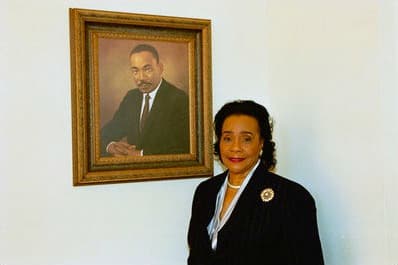
Two 12-year-old students visit an exhibition on civil rights. In front of an old photo of a man at a microphone, they stop. And suddenly, as if in a dream, Martin Luther King is there, sitting on a chair, ready to answer all their questions.
—What was your idea for changing things without fighting?
You know, my child, many wanted me to fight back. I said no. I had read the writings of a man named Gandhi, and my Bible never left me. Those two books fit together in my hands. They taught me nonviolence: you refuse to strike, even when you are struck. Imagine you receive a slap and you answer with a calm smile. It is very hard, believe me. But that smile shows everyone who the real villain is. Nonviolence is not for those who are afraid. It is for the brave who love, even their enemies.
You refuse to strike, even when you are struck.
—And the bus boycott, how did it work? Who did it hurt?
In Montgomery, in 1955, Black people had to give up their seats to whites on buses. A woman, Rosa Parks, said no one evening. So we invented a weapon without violence: the boycott. That means we all refuse, together, to take the buses. Imagine an entire city where people walk miles every morning, in the rain, rather than get on. The buses ran empty. And the money stopped coming in. We had thrown no stones. We had just walked, for over a year. And we won.
We had thrown no stones. We had just walked.
—Is it true you wrote a letter in prison? What did you write on?
Yes, my child. In 1963, in Birmingham, I was put in a cell. White clergymen told me: 'Wait, be patient, this is not the right time.' That hurt me. So I answered. But I had no paper! I wrote in the margins of newspapers they passed me, then on scraps a friend smuggled out. A letter cut into pieces. I said a simple thing: freedom is never willingly given by the oppressor. You must demand it. You cannot ask someone to wait another hundred years to be treated as a man.
Freedom is never willingly given by the oppressor.
—Why didn't you want to wait? Isn't waiting wiser?
That's a good question. They always told me 'later.' But imagine you wait, and your father waited, and your grandfather too. All that time, children could not enter some schools, nor drink from some fountains. In Birmingham, I saw police set dogs on peaceful protesters. How do you tell a wounded child: 'patience'? Civil disobedience means quietly disobeying an unjust law, to show it is wrong. Waiting, sometimes, is not wisdom. It is just accepting injustice longer.
Waiting, sometimes, is just accepting injustice longer.
—Was your great speech, 'I Have a Dream,' planned that way?
No, and that is the most beautiful part! On August 28, 1963, before the Lincoln Memorial, there were 250,000 people. I had prepared a different, more serious text. I was reading my notes. And behind me, a singer, Mahalia Jackson, shouted: 'Tell them about the dream, Martin!' So I put down my papers. And I spoke from the heart. I said my dream: that my four children would one day live in a country where they would be judged not by the color of their skin, but by the content of their character. Sometimes, the most beautiful things are not written in advance.
Sometimes, the most beautiful things are not written in advance.
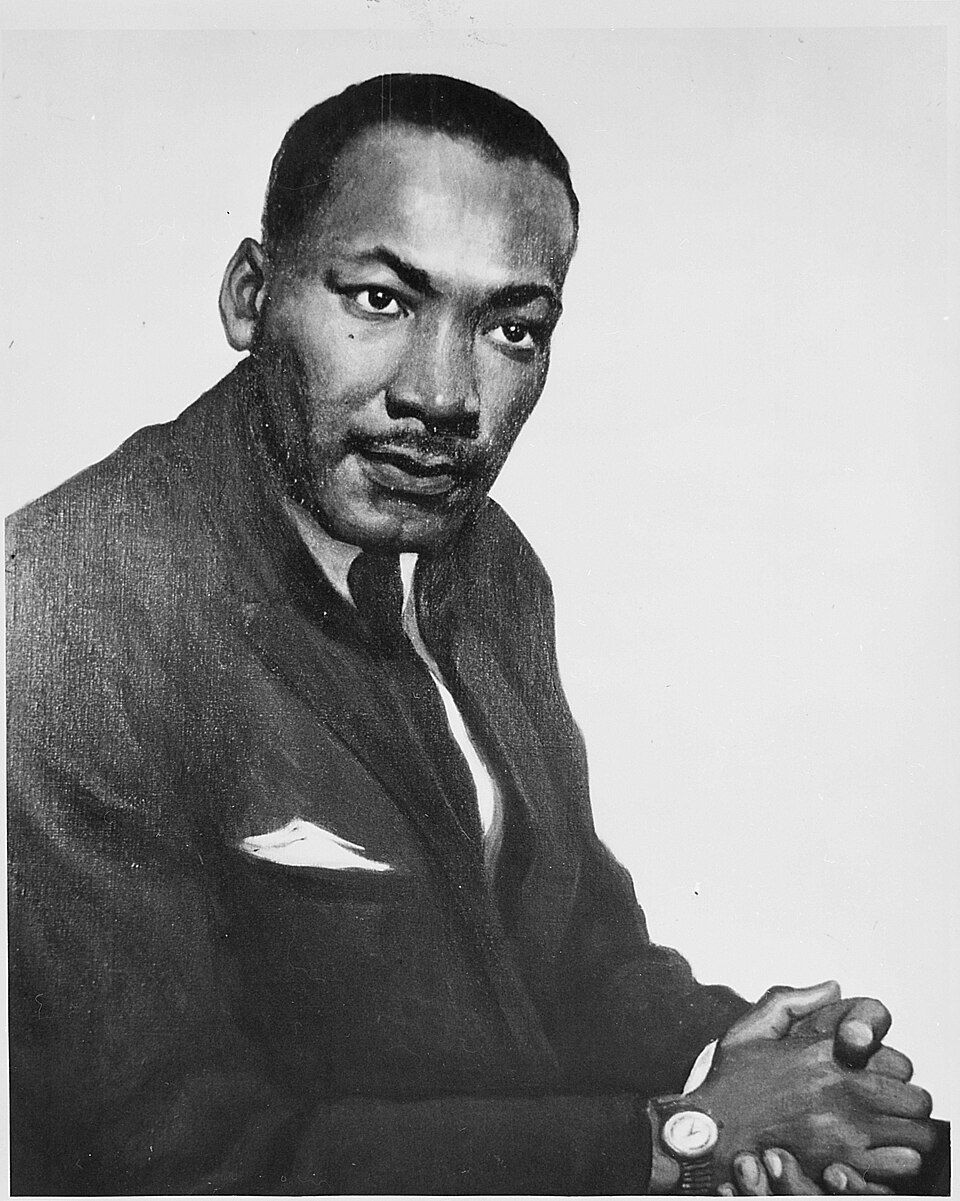
—How did it feel to speak before so many people?
You know, my heart was beating fast. Imagine a crowd so large you cannot see where it ends, everywhere faces, hats, signs raised to the sky. I was a pastor, so I was used to full churches. But this was a whole people. The microphone was my only tool, my weapon. Not a gun: a voice. When I heard the crowd respond, vibrate at every sentence, I felt we were one great body. I was afraid and happy at the same time. It is strange, those two together.
Not a gun: a voice.
—Were you afraid at night? Were you really threatened?
Yes, my child. I will not lie to you. In 1956, a bomb was placed at my home in Atlanta, while my wife and baby were inside. My phone was tapped by men who watched me day and night. Once, I even received a horrible anonymous letter that wanted me to disappear. Fear knocked at my door almost every evening. But I had learned one thing: if you wait until you are no longer afraid to act, you will never act. Courage is not the absence of fear. It is moving forward anyway.
Courage is not the absence of fear. It is moving forward anyway.
—I heard someone stabbed you one day. Is that true?
It is true, and it was long before Memphis. In 1958, in New York, I was signing my first book. A woman, very sick in her mind, approached and plunged a knife into my chest. The blade stopped very close to my heart. The doctors told me: if you had only sneezed, you would have died. Imagine, my child: sneeze, and die. I lived ten more years after that. Ten years to walk, speak, hope. Each day of life had become a gift. That is why I never wanted to waste a single one.
If I had only sneezed, I would have died.
—After all that, you won, right? Why keep going?
We had won great laws, it is true. But I traveled to the North, to Chicago, in 1966. And there I saw something else: whole families crowded in poor neighborhoods, without work, without money. The law said 'equal,' but misery did not disappear. So my struggle grew. In my last book, Where Do We Go from Here, I asked: where are we going, chaos or community? Sitting at the same counter is good. But if you don't have a penny to pay for your meal, what's the use?
The law said 'equal,' but misery did not disappear.
—And the Vietnam War, why did you talk about it? It wasn't your subject.
Many criticized me for that, you know. In 1967, I said out loud that the Vietnam War was a mistake. Political friends got angry, even the president. They told me: 'Stick to Black rights, not the war.' But for me, it was linked. How could I preach nonviolence at home and accept violence over there? We were sending poor young people to die far away, instead of building schools here. My duty was not to please. My duty was to speak the truth, even when it cost me friends.
My duty was not to please, but to speak the truth.
—The night before you died, did you know it was going to happen?
It is troubling, my child. The night before, April 3, 1968, in Memphis, I spoke one last time. I said I had been to the mountaintop, and I had seen the Promised Land. I added that I might not get there with them. As if I felt it. But I was not afraid. Because I knew one thing: our people will reach that land of freedom, even if I stop along the way. A dream does not die with the one who carried it. It continues to walk in the hearts of those who hear it. Perhaps in yours.
A dream does not die with the one who carried it.

This imaginary interview was generated by artificial intelligence from sources documented in Martin Luther King's profile. It dramatises what the figure might have said based on what we know about them, but does not constitute attested historical testimony. For primary sources and factual documentation, refer to the full profile.