Imaginary interview with Martin Luther King
by Charactorium · Martin Luther King (1929 — 1968) · Politics · 6 min read
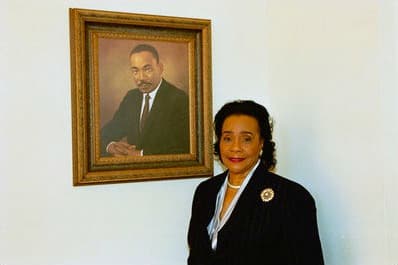
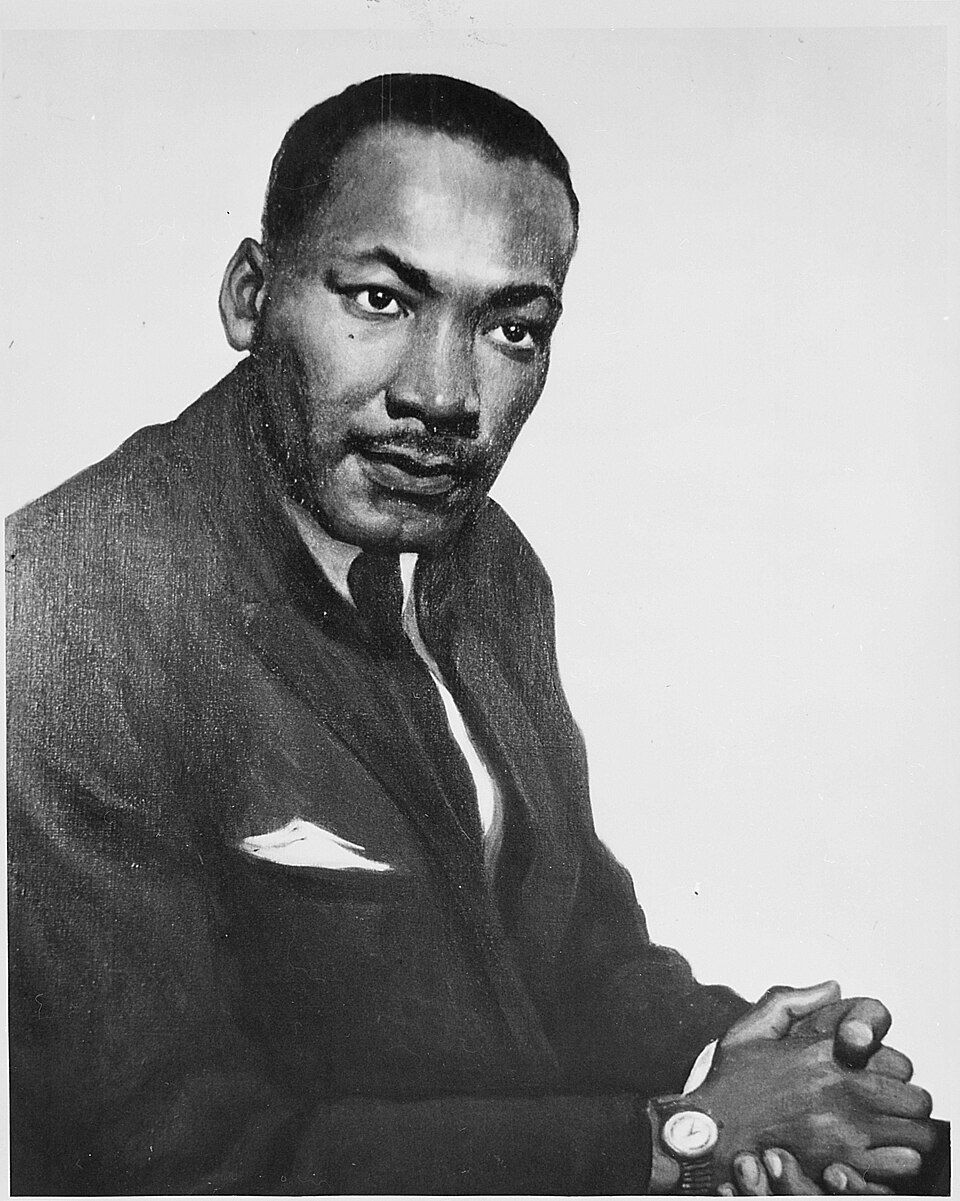
Memphis, April 3, 1968. A room at the Lorraine Motel, suitcases barely unpacked, thunder rumbling over the Mississippi. The man who welcomes us is thirty-nine years old, his voice still warm from the speech he just gave at Mason Temple; he sits down, loosens his dark tie, and agrees to look back on fourteen years of walking.
—Do you remember the exact moment when you set down your notes, in front of the Lincoln Memorial?
August 28, 1963. Before me were two hundred and fifty thousand faces and a text written the night before, wise, measured, in which I spoke of bad checks and the nation's promises. I was reading. And then I heard Mahalia Jackson, behind me, call out: "Tell them about the dream, Martin!" It was a Baptist church voice, a voice that had carried me a hundred times during the Montgomery bus boycott. I felt the paper become useless under my fingers. So I set it aside. What came out, I had preached elsewhere, in half-empty halls in the South, but that day, before Lincoln's marble, it became something else—a prayer spoken aloud for my own children.
I felt the paper become useless under my fingers. So I set it aside.
—Why did you choose your children to embody that dream, rather than a political argument?
Because a law can be debated, but a child's face cannot be debated. I have my four little ones in Atlanta, in the Auburn Avenue neighborhood where I was born, and every morning I ask myself what America they will grow up in. That day I said: "I have a dream that my four little children will one day live in a nation where they will not be judged by the color of their skin but by the content of their character." You cannot hate a man who speaks to you of his children. Racial segregation is justified by abstractions, statistics, fear; I wanted to oppose it with something tender and irrefutable. A father who dreams is more dangerous to injustice than an orator who accuses.
—In April 1963, you were asked to wait, to be patient. What did you answer from your Birmingham cell?
I answered on the only paper I had: the margins of a newspaper, the edges of pages, scraps scribbled on that a lawyer smuggled out of prison piece by piece. White clergymen, men of good will, wrote to me that my campaign was coming 'too soon.' But I learned one thing in the struggle: "We know through painful experience that freedom is never voluntarily given by the oppressor; it must be demanded by the oppressed." Waiting, for a people under Jim Crow laws, is never neutral—it is consenting to one more day of humiliation. Civil disobedience is not disorder; it is the disciplined refusal to obey a law that degrades the human soul. That letter from Birmingham, I did not write it against my enemies, but to awaken my friends.
Waiting, for a people under Jim Crow laws, is never neutral.
—How do you distinguish a just law from a law one has a duty to break?
A just law uplifts the one who obeys it; an unjust law degrades and debases him. When a man voluntarily accepts prison to awaken the conscience of his community, he actually expresses the greatest respect for law—not contempt. In Birmingham, in 1963, our peaceful demonstrators faced fire hoses and police dogs, and the whole world saw those images. That is the pedagogy of nonviolence: it forces hidden brutality to show itself in broad daylight. I long meditated on Thoreau before entering my cell, and his pages confirmed that one has no moral obligation to obey legalized injustice. But—and this is essential—the one who breaks the law must do so openly, with love, and accept the price. Otherwise it is no longer civil disobedience, but anarchy.
—Nonviolence is sometimes reduced to weakness. What do you say to those who see it as resignation?
I answer them what I wrote as early as 1958, in Stride Toward Freedom: "Nonviolence is not a method for cowards. It resists. The soul of nonviolence is love." It takes more courage to receive a blow without returning it than to return it. My Bible and the writings of Gandhi never leave me; the Mahatma showed me that one can be a militant and unarmed at the same time, firm in demand and gentle in means. Nonviolence does not seek to humiliate the adversary, but to win his friendship and understanding. You do not fight hate with greater hate—you only add night to the night. To resist without destroying: that is the most demanding discipline I know.
You do not fight hate with greater hate—you only add night to the night.
—In Oslo, receiving the Nobel, what did you want to say to the world beyond America?
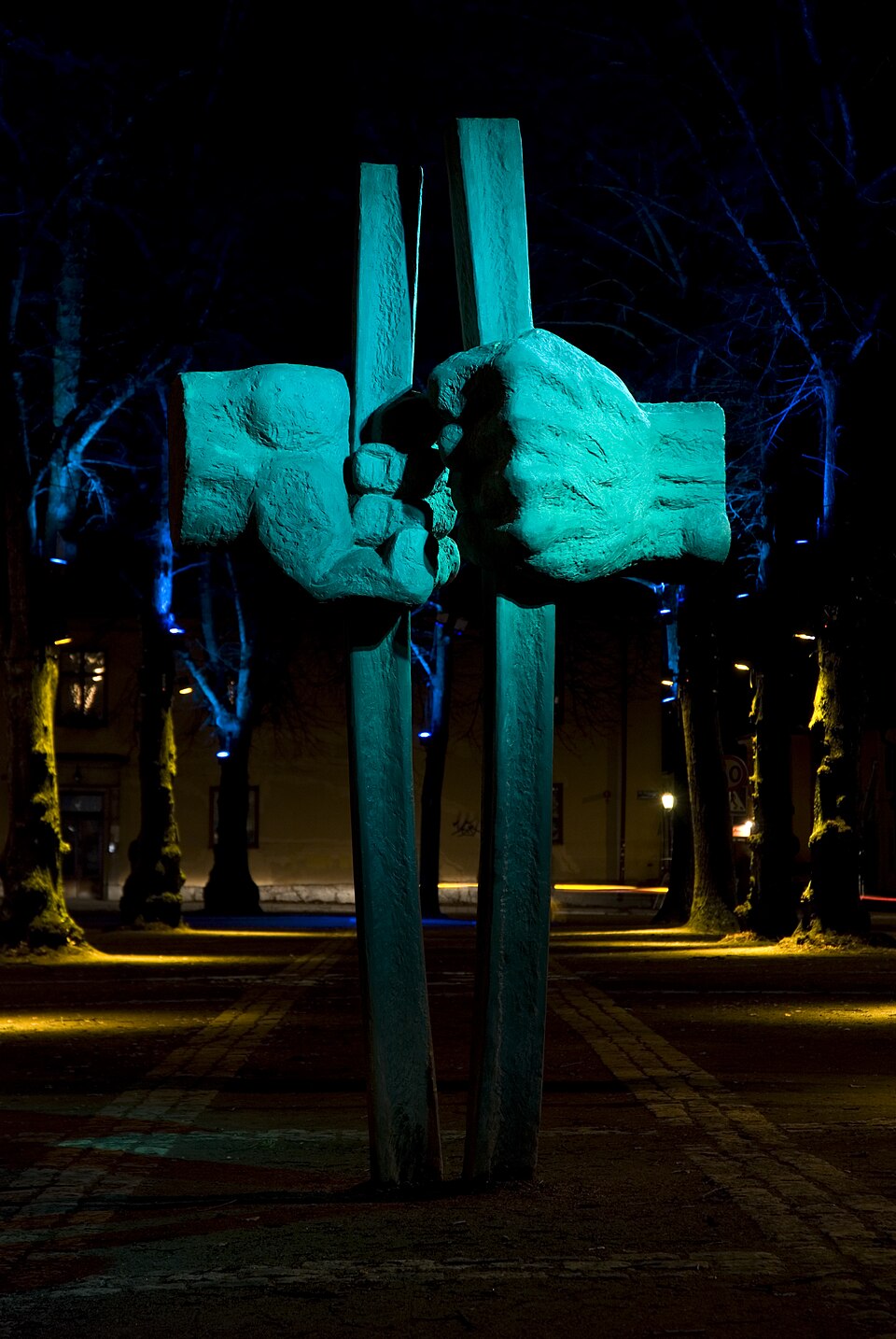
That this prize was not mine. In Oslo, on December 10, 1964, I received this medal at thirty-five, and I gave every dollar—fifty-four thousand—back to the movement, because you do not accept a reward for an unfinished struggle. Before that assembly, in the midst of the Cold War, I said that "I refuse to accept the idea that humanity is so tragically bound to the starless midnight of racism and war that the bright daybreak of peace and brotherhood can never become a reality." The peoples then freeing themselves from colonial rule were watching America; I wanted them to know that nonviolence was not a peculiarity of the South, but a universal grammar of dignity. Racism and war are the two faces of the same fear of the other.
—You long knew the FBI was watching you. How do you live knowing your phone is tapped?
You learn to speak as if every word were heard—because it is. The telephone is my main work tool: I coordinate the SCLC from one motel room to another, and J. Edgar Hoover listens on the same line, year after year. One day, an anonymous letter was sent to me, along with recordings, which essentially suggested that I end my life before receiving the Nobel. I read it, I understood where it came from, and I continued. What can you do with such baseness except refuse to stoop to it? If they think I am dangerous to the nation, it is because they confuse the nation with the injustice it harbors. I have never conspired in the shadows; my whole struggle takes place in broad daylight, microphone in hand, before crowds.
You learn to speak as if every word were heard—because it is.
—Death brushed you long before Memphis. How does constant danger change the way you keep going?
In 1958, during a book signing in Harlem, a deranged woman plunged a letter opener into my chest. The blade lodged so close to my aorta that the surgeons told me a simple sneeze would have killed me. Two years earlier, in 1956, a bomb was placed on the porch of my Atlanta home, where my wife and daughter were sleeping. When you have lived through that, you stop bargaining with fear. I do not believe a man can be truly free until he has found something for which he would be willing to die. That does not make me reckless—I am afraid like everyone else, at night, in these segregated hotel rooms where I stay. But fear does not govern my steps. It walks beside me, that is all.
You stop bargaining with fear.
—From 1966 onward, you took your struggle to Chicago, to poverty, to Vietnam. Why broaden the front?
Because what good is the right to sit at a lunch counter if you cannot afford the coffee? We won the Civil Rights Act in 1964, the Voting Rights Act in 1965—immense victories. But settling in the Northern ghettos, in Chicago, I saw that segregation is not just about signs: it lives in rents, wages, dilapidated schools. In Where Do We Go from Here, I wrote that racial justice and economic justice are one and the same cause. And when fortunes are spent burning villages in Vietnam while my brothers starve here, I cannot remain silent—even if it costs me the friendship of President Johnson. You do not cut your conscience into convenient slices.
What good is the right to sit at a lunch counter if you cannot afford the coffee?
—Last night in Memphis, you spoke of the mountaintop and the Promised Land. What did you want to say to those listening?
I came here to Memphis for striking sanitation workers, men treated as if they were nothing. The storm was threatening, I was tired, and yet the words rose: "I've been to the mountaintop... And I've seen the Promised Land. I may not get there with you. But I want you to know tonight, that we, as a people, will get to the Promised Land." They tell me I speak like a man who has made peace with his end. Perhaps. I have received too many threats to delude myself. But what I know is that no movement depends on one man alone. The Lorraine Motel, this balcony, are only a step. The Poor People's Campaign will continue without me if necessary. A people on the march does not stop at its leader's grave.
A people on the march does not stop at its leader's grave.


This imaginary interview was generated by artificial intelligence from sources documented in Martin Luther King's profile. It dramatises what the figure might have said based on what we know about them, but does not constitute attested historical testimony. For primary sources and factual documentation, refer to the full profile.