Imaginary dialogue between William Buckland and Mary Anning
by Charactorium · Mary Anning (1799 — 1843) · Sciences · 5 min read
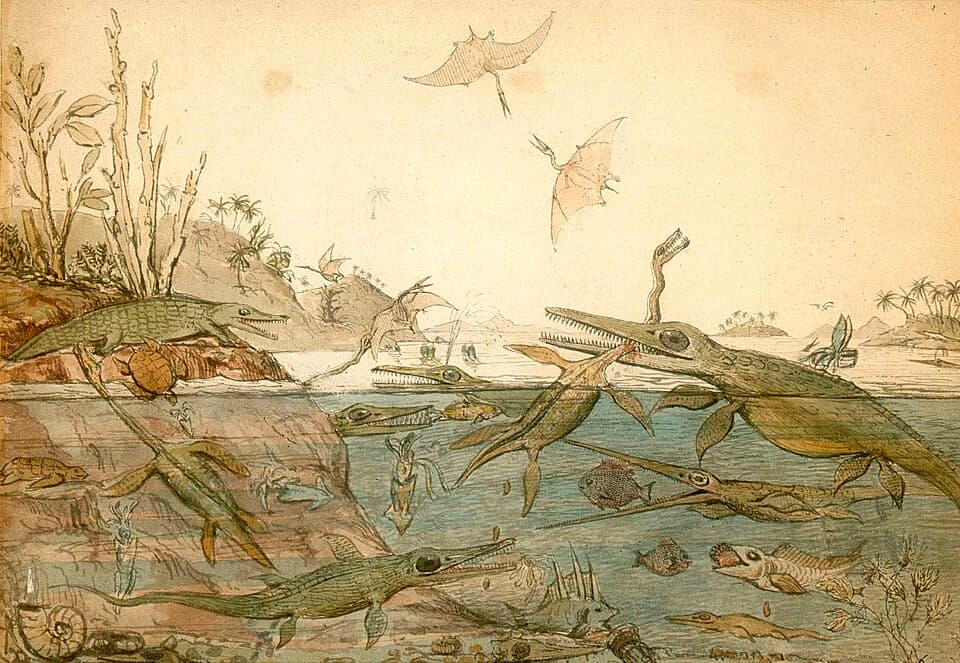
It is in the back room of Church Street, in Lyme Regis, that the Reverend William Buckland meets Mary Anning on a winter morning in 1828. On the workbench, a barely freed Dimorphodon waits for candlelight; outside, the tide is going out and the wind from the English Channel rattles the shutters. The two friends have known each other for years — Buckland has come many times to listen to Mary read the cliff strata — and he arrives that day with his notebooks, determined to understand how this woman without a title divines what the gentlemen of London take years to publish.
—Mary, everything began long before I knocked on your door. Tell me about that monster you and your brother Joseph pulled from the rock in 1811.
I was twelve, William, and Joseph had only uncovered the skull — a jaw as long as an arm, bristling with teeth, embedded in the limestone. The neighbors talked of a crocodile, a fish-lizard; no one knew. It took me months, hammer blow after hammer blow, to free the rest of the skeleton from the cliff. When it lay whole on the table, I understood that this creature existed nowhere else in the world. We sold it for twenty-three pounds to the British Museum — a fortune for us, who barely had enough to eat. But it's not the money I remember: it's the silence of the gentlemen who came to gaze at it, as if the stone itself began to speak of a lost world.
This creature existed nowhere else in the world — the stone itself began to speak of a lost world.
—You know I consider your field readings the most reliable in the kingdom. When I came here, you showed me the layers one by one — how did you learn that alone?
Alone, and at night especially, you who have seen me do it. By day, the cliff teaches me: each stratum has its own color, hardness, and fossils, and I now know that such a bed will give me belemnites and another a large bone. I note everything in my notebook — the exact spot, the height in the rock — because a fossil without its layer says nothing. In the evening, by candlelight, I copy word for word the articles from the Transactions that I cannot buy; I learn them by my wrist as much as by my eyes. I had neither teacher nor college, William — I had the tide and patience.
I had neither teacher nor college — I had the tide and patience.
—And before the sun is high, what throws you onto those slippery pebbles while reasonable men still sleep?
The tide does not wait for me, my friend. It is just after the big tide, when the sea has retreated and a storm has brought down a piece of cliff, that the fresh rock yields its treasures — and you must be there before another wave reclaims them. So I set out at dawn, my wicker basket slung over my shoulder and my hammers of all sizes, the dog at my heels. I walk along the walls, reading the scree with my eyes. Many finds have escaped me for being an hour late; so I rise early, in all weathers, wrapped in my cloak against the Dorset rain.
The tide does not wait for me: you must be there before another wave reclaims the treasure.
—This coast you love has almost taken you, Mary. They say as a child you were struck by lightning — is that true, this story they tell in Lyme?
They tell it so often that I end up believing it myself. I was only fifteen months old; a neighbor was holding me under an elm tree, with two other people, when lightning struck. The three adults died instantly, and I, the sickly child, was picked up alive. My mother used to say that before that day I was a frail, dull girl, and afterward I became lively and curious, as if the flash had awakened me. I don't know, William — but there is a strange justice in it: this coast that strikes with lightning and buries alive is also the one that gave me everything.
The lightning killed the other three and left me alive — as if it had awakened me.
—I still tremble thinking about that landslide last year. Your faithful Tray... would you say a word about it?
It is a wound from which I do not fully heal. We were walking along the cliff as every day, he and I, when a slab of rock broke off without warning. Tray was buried before my eyes, a few steps from me; a moment more and I would have been there too. He had accompanied me for years on these beaches, guarding my finds while I dug further away. I wept, then I took up my hammer again the next day. What can I say — the cliff is my livelihood, and a family to feed leaves no time to mourn a dog. But I never walk under a wall again without looking up.
Tray was buried before my eyes; a moment more and I would have been there too.
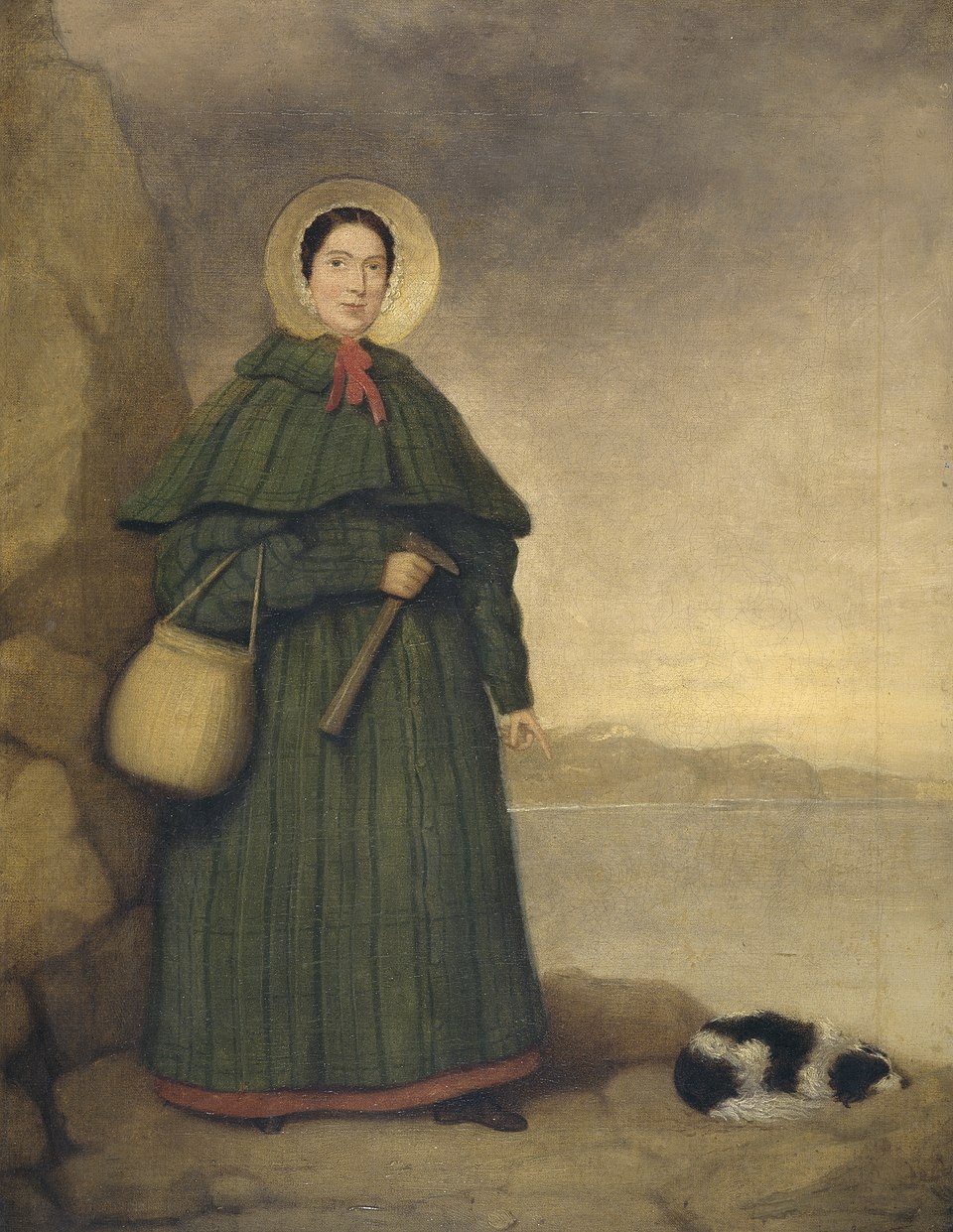
—Now you've been intriguing me with those 'bezoars' you pick up near the skeletons. What did you understand that no one else saw?
It came to me through observation, like everything else. I found these gray, twisted stones always in the same place — in the belly of ichthyosaurs, or close by. They were called bezoars, serpent stones, credited with virtues. But when I opened them, I saw bones, scales, remains of other animals half-digested. I realized they were not stones at all: they were the fossilized dung of reptiles, hardened over ages. Think what that tells us, William — no longer just the shape of an extinct beast, but what it ate, how it lived. The fossil ceases to be a dead bone: it becomes an animal that hunted in those ancient seas.
They were not stones: the fossil ceases to be a dead bone, it becomes an animal that hunted.
—Let's speak frankly, between friends. In 1823, you found that prodigious plesiosaur — and it was Conybeare's name that appeared in the Transactions. Does that gnaw at you?
You know me too well for me to lie. Yes, it gnaws at me, some evenings. I was the one who freed every vertebra of that long neck, I who made sure not a single bone broke; and it was Mr. Conybeare who described it before the Society. He acknowledged, in private and even in his memoir, that without me nothing would have been possible — he called me Miss Mary Anning of Lyme Regis. But the credit goes to the gentlemen who write, never to the woman who digs. I am not admitted to your Geological Society, I do not read my own finds before you. I sell the bones, you keep the glory. Yet without these hands, your fine speeches would have nothing to describe.
I sell the bones, you keep the glory — without these hands, your fine speeches would have nothing to describe.
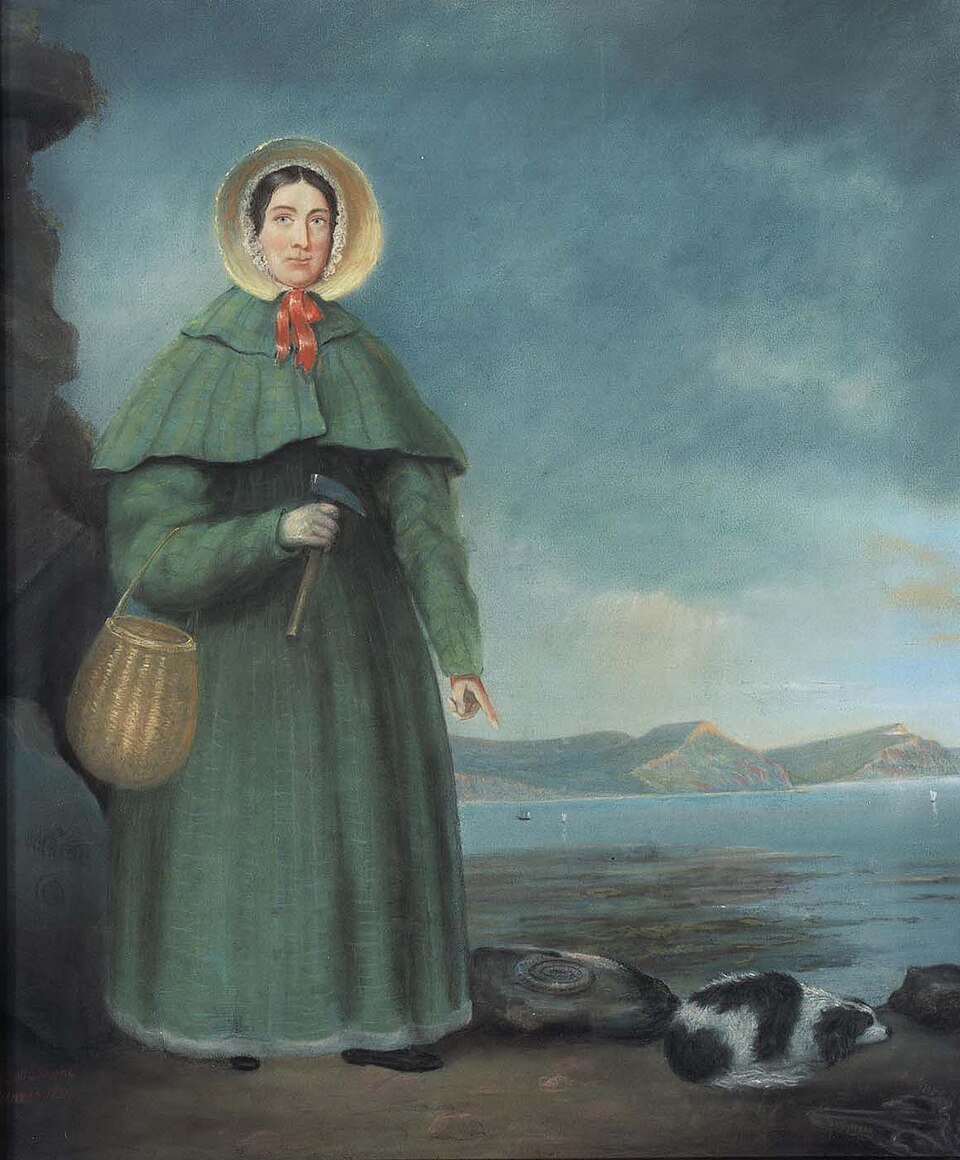
—You know your door is dear to me: how many times have I found you here, among your cabinets? Why do you so willingly receive scholars who keep you at a distance from their circles?
Because this shop is my only platform, William. They close the doors of London to me, but no one can stop me from opening my own on Church Street. You came, you, and Mr. de la Beche, and so many others; you bend over my specimens, I explain the layers to you, and my knowledge passes, even if through your pens. I have no choice of honors, but I have the choice of conversation. And besides, I confess I love those mornings when an educated man falls silent before a bone I understood before him. My cabinet is worth a pulpit — you learn geology there between a belemnite and a cup of tea.
They close London to me, but no one can stop me from opening my door: my cabinet is worth a pulpit.
—When you sell a large specimen to a museum or collector, doesn't your heart ache to see what you spent months freeing?
Heartache, yes, but a full belly, which is better when you are poor. Every bone I free, I know it as you know a face — I saw its shape slowly emerge from the rock, I guessed the whole animal before it appeared. Selling it is parting with it. But without that sale, my mother and I would not eat, and there would be no hammer to go find the next one. So I console my sorrow with one thought: that specimen will go to a great museum, in London, where hundreds of eyes will see it. My 1811 ichthyosaur still rests there. What I could not keep, the world keeps in my place.
What I could not keep, the world keeps in my place.
—One last thing, my friend, before the tide comes back: you who read stone so well, what do you truly believe these extinct creatures teach us about Creation?
That is a dangerous question to ask aloud, William — and you are well placed to know it, you who wear the cassock. I am not a scholar of Scripture, I am a scholar of the cliff. But what the rock tells me, I cannot silence: these ichthyosaurs, these plesiosaurs, they lived and died long before any man set foot on this coast. Entire species have gone extinct, and the Earth bears layer upon layer the record of an immense time. Whether that agrees with the Flood or not, I leave the clergy to argue. I report what I find, faithfully, and I let the stones bear witness. They never lie.
I let the stones bear witness: they never lie.
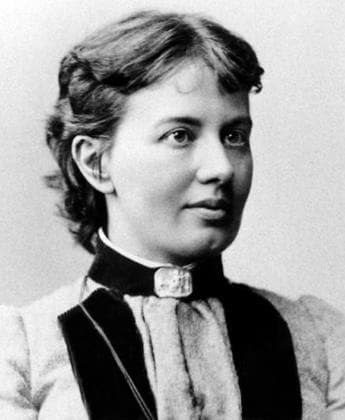
This imaginary interview was generated by artificial intelligence from sources documented in Mary Anning's profile. It dramatises what the figure might have said based on what we know about them, but does not constitute attested historical testimony. For primary sources and factual documentation, refer to the full profile.