Kids interview Mary Anning
by Charactorium · Mary Anning (1799 — 1843) · Sciences · 5 min read
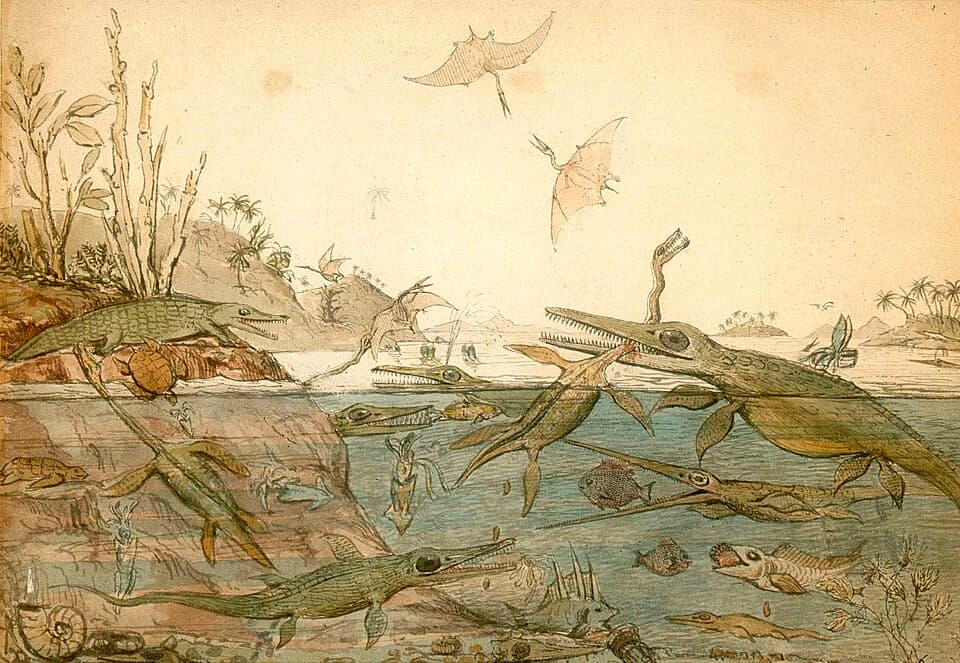
Two twelve-year-old students visit the Lyme Regis cliffs with their school trip. On the beach, a woman in a dark cloak cleans a fossil in her wicker basket. She looks up and smiles at them: Mary Anning agrees to answer their questions.
—What was your very first big fossil? How old were you?
You know, my child, I was still a girl. It was in 1811, on these cliffs. My brother Joseph had found a strange skull, long, full of sharp teeth. Everyone thought it was a crocodile. I dug for months, hammer after hammer, to free the rest of the body. And then, a complete skeleton came out of the rock! An ichthyosaur, a marine reptile that looks like a big dolphin. Imagine a sea monster turned to stone, sleeping there for thousands of years. We sold it for £23 to the British Museum. For my poor family, it was a fortune.
A sea monster turned to stone, sleeping there for thousands of years.
—What was it like to uncover an animal nobody had ever seen?
It was dizzying, you know. That animal no longer existed anywhere on Earth. Not a single living one! In my time, many people thought God would never let a whole species die out. And here, with my own hands, I was pulling out proof to the contrary. My ichthyosaur had truly lived, then vanished forever. When I held its bones in my wicker basket, I thought to myself: Earth is much older than we believe. It gave me chills. Imagine being the first person to look into the eyes of a creature forgotten since the dawn of time.
Earth is much older than we believe.
—What was your day like when you went fossil hunting?
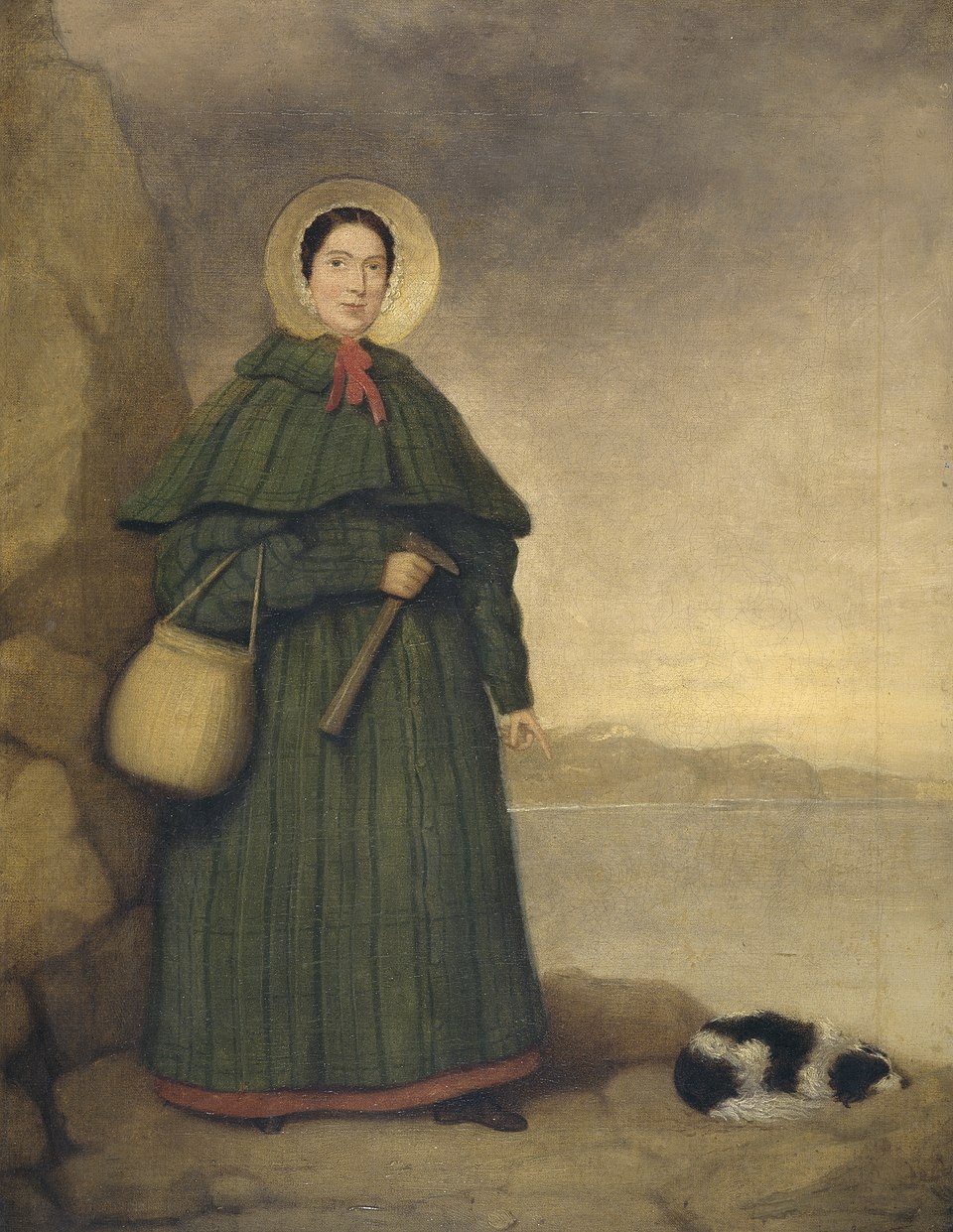
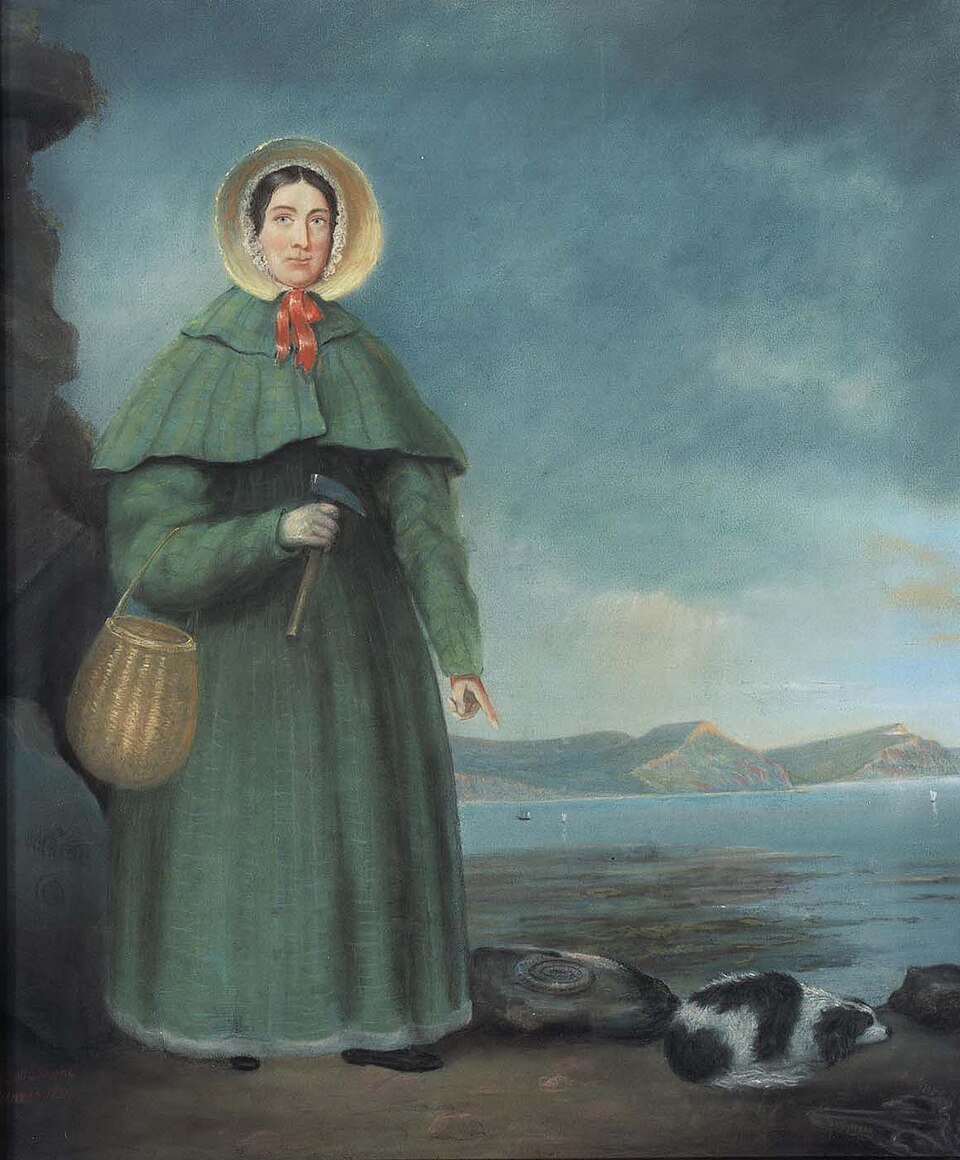
I got up very early, before the high tide. That's the best time, my child: the sea recedes and rain has knocked down fresh pieces of cliff. I set off alone, my basket slung over my shoulder and several hammers of different sizes. A small one for soft rock, a big one for hard. I walked on the slippery pebbles, my cloak against the Dorset rain. In the afternoon, I cleaned my finds in the back shop on Church Street, in Lyme Regis. In the evening, by candlelight, I studied the anatomy of the bones. It was painstaking work, patient, but every stone might hide a treasure.
Every stone might hide a treasure.
—Were you afraid of falling off the cliffs?
Yes, all the time. Those cliffs are treacherous, my child. Rock breaks off without warning, especially after rain. In 1833, a landslide nearly swept me away. My faithful dog Tray, he wasn't as lucky: he was crushed to death right next to me. I cried, believe me. But the next day, I went back to search. Why? Because selling fossils was the only way to feed my family. No salary, no boss: just my hands, my hammers, and courage. Imagine having to face every day the very place that killed your friend.
The next day, I went back to search.
—Is it true you were struck by lightning when you were a baby?
Ah, that story! I've been told it a thousand times. I was fifteen months old. A violent storm broke over Lyme Regis, and lightning struck the group where I was being held in someone's arms. Three people died instantly. Me, the tiny one, I survived. A miracle, the neighbors said. After that, they told I became lively, curious, bright, as if the flash had awakened me. Is it true? I don't know. But I like to think that Nature, from the very beginning, didn't leave me alone. She wanted me out there, on her beaches.
Nature, from the very beginning, didn't leave me alone.
—The nursery rhyme about seashells by the seashore, is that really you?
So they say, my child, and it makes me smile. You might know that English jingle: She sells seashells by the seashore. Many think it's about me. It's true that I sold my finds to tourists and collectors, on the Lyme Regis seafront, in front of my little shop. Visitors came to admire my fossils in the window. So a merchant of stone treasures, by the water's edge... yes, that fits me well. If a song is to remain of me, I like that it's this one.
A merchant of stone treasures, by the water's edge.
—What were the bezoars that you figured out before anyone else?
Good question! Near the skeletons we found strange little stones. They were called bezoars, and nobody knew what they were. I, in 1824, noticed that they contained fish bones and scales. I understood the truth: they were poop! Fossilized droppings, turned to rock. They were named coprolites. That might make you laugh, my child, but it was very important. Thanks to these stone droppings, we learned what the extinct reptiles ate. You see, in science, even the dirtiest object can tell a great story.
Even the dirtiest object can tell a great story.
—Did your fossils bother people who believed in the flood?
Many, yes! In my time, some thought fossils were animals drowned in the great biblical flood. They called this idea diluvianism. But my skeletons told a different story. My plesiosaur, that long-necked reptile, had lived and died long before any flood. That was disturbing, because it meant Earth had an immense history, full of species gone forever. I wasn't a scholar who wrote theories. I pulled the evidence from the rock, with my own hands. And evidence, you see, is stronger than certainties.
Evidence is stronger than certainties.
—Why wasn't your name written on your own discoveries?
Ah, that hurt me a lot. When I found the first complete plesiosaur in 1823, it was a gentleman, William Conybeare, who published the study under his name alone. I, the woman who had pulled it all from the cliff, remained in the shadows. In my time, my child, a poor girl had no place among the learned. The Geological Society of London was closed to women. Yet I knew those fossils better than most of them! Imagine doing the hardest work, and seeing someone else receive the applause. It was unfair, and it happened often.
Imagine doing the hardest work, and seeing someone else receive the applause.
—So nobody ever thanked you?
Yes, thankfully! Not everyone forgot me. The great Swiss scholar Louis Agassiz, who studied fossil fish, gave my name to two species in 1838. He wrote that my name deserved to be remembered by all who love science. Reverend Buckland, he came to my shop and listened to my explanations about rock layers. At the end of my life, they even granted me a small pension for my services. Those marks of respect warmed my heart. Being poor and a woman didn't stop me from being recognized by the greatest.
Being poor and a woman didn't stop me from being recognized by the greatest.
—If we could see you today, what would we notice?
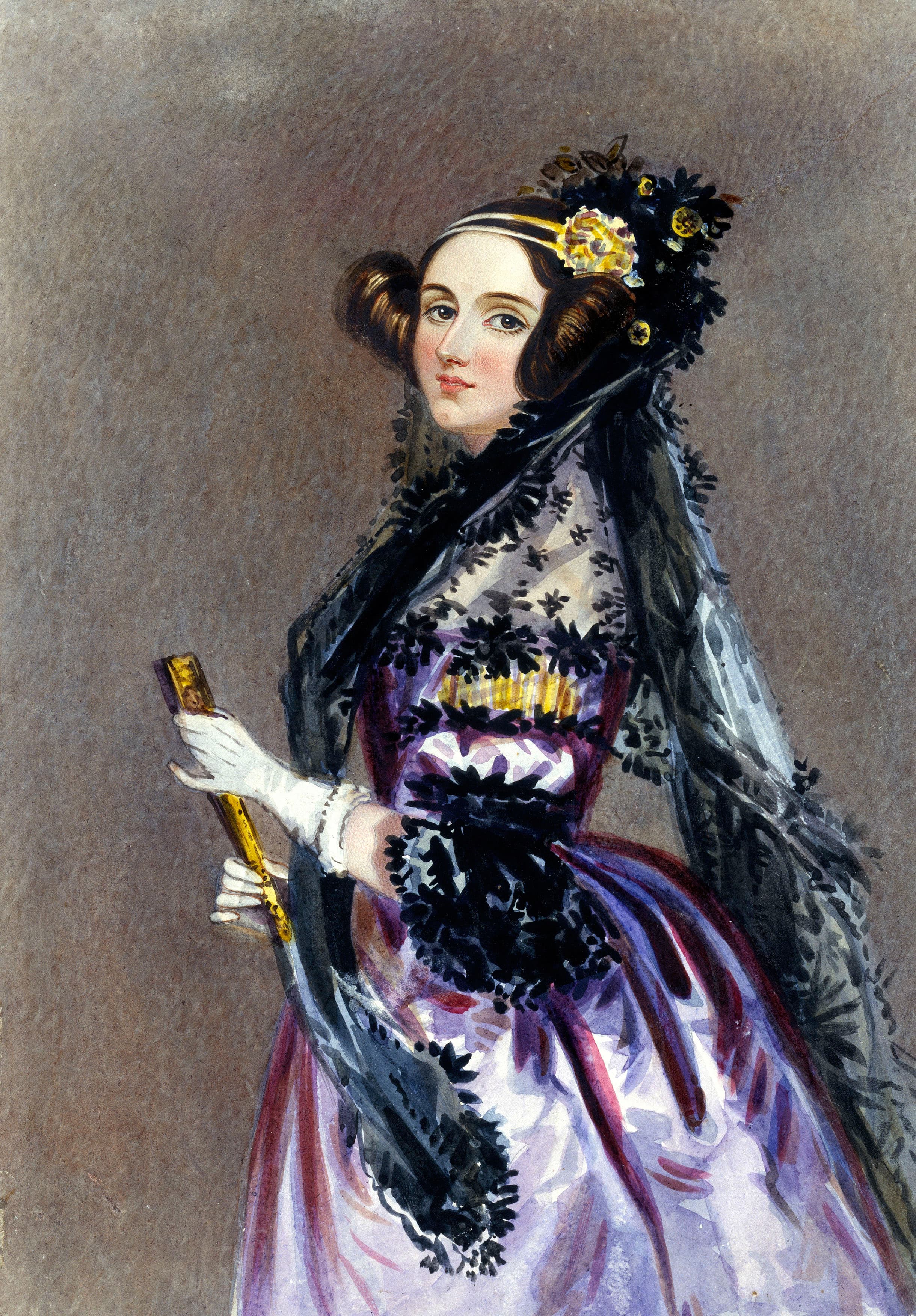
You would see a simple woman, my child, in a dark wool dress and boots worn down by the pebbles. No fine adornment: just my hammers, my magnifying glass, and my notebook where I recorded every layer of rock. My hands would be rough, covered in stone dust. But look beyond: those same hands pulled from the cliff creatures the world had forgotten. Today, my first ichthyosaur is still on display in London. I never had a degree, never went to a school of scholars. Remember this: you can change science without a title, just with patience and curiosity.
You can change science without a title, just with patience and curiosity.
This imaginary interview was generated by artificial intelligence from sources documented in Mary Anning's profile. It dramatises what the figure might have said based on what we know about them, but does not constitute attested historical testimony. For primary sources and factual documentation, refer to the full profile.