Imaginary interview with Mary Shelley
by Charactorium · Mary Shelley (1797 — 1851) · Literature · 5 min read
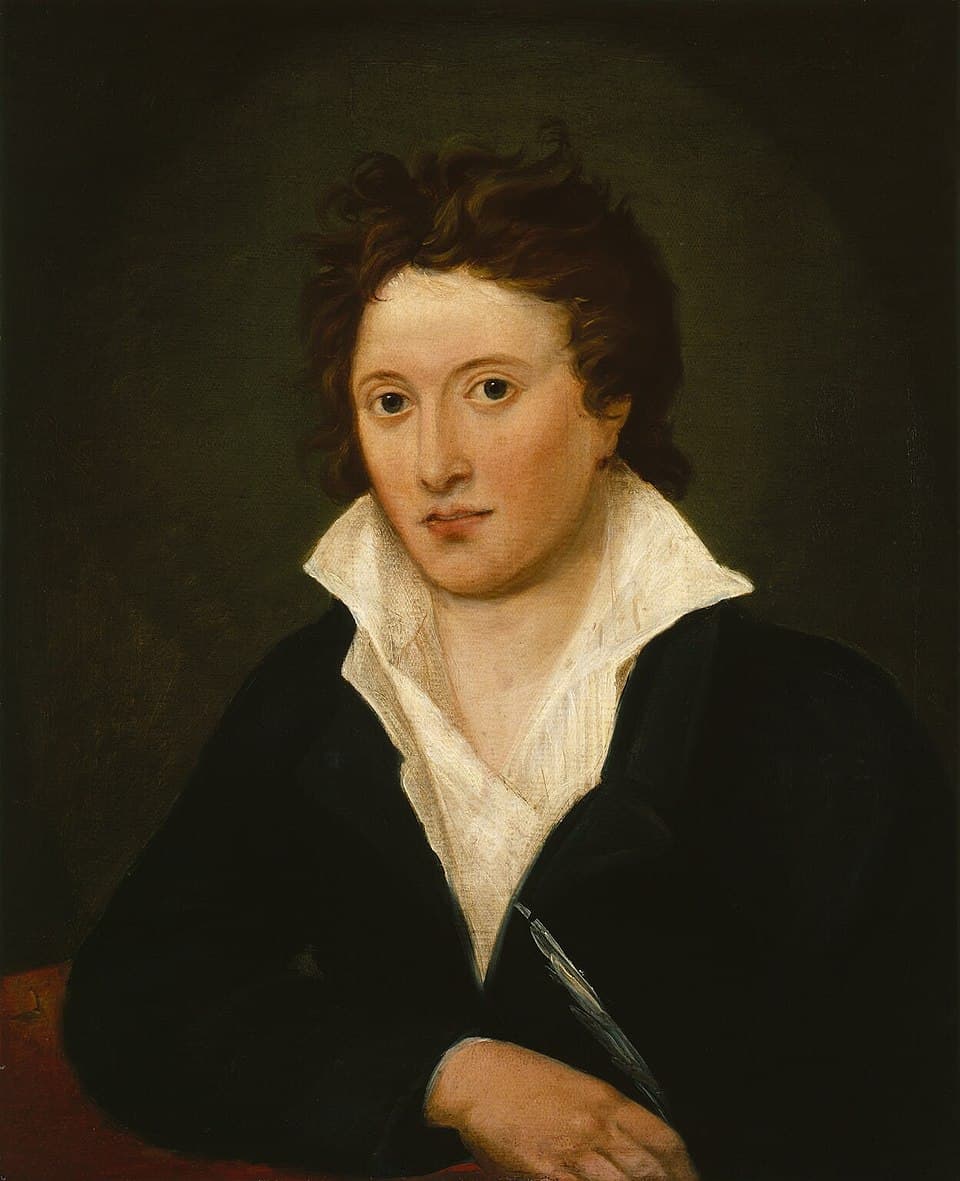
Chester Square, London, a misty Victorian afternoon. In a cluttered drawing room filled with manuscripts and portraits, a woman with grave eyes receives us near an oil lamp she has not extinguished despite the daylight. Mary Shelley is past fifty; her hand rests on a stack of papers — her husband's poems, which she is still editing.
—What do you remember of that summer of 1816 on the shores of Lake Geneva?
The cold, first of all. It was already called the year without a summer — a spring of endless rain, a leaden sky that none of us understood, and which I now know came from a distant volcano. We were confined to the Villa Diodati, above the lake: Percy, Lord Byron, poor Polidori, and I, not yet eighteen. Byron, bored by the rain, challenged us — each to write a ghost story. The others soon gave up. I searched, night after night, for an idea that would freeze the blood as mine had been frozen. It came at last, between waking and sleeping: a pale student kneeling beside the thing he had assembled.
Byron challenged us — each to write a ghost story.
—Where did the idea of a man made by human hands come to you?
From the spirit of the age, if you will. All around me people spoke of galvanism — those experiments where the leg of a dead frog twitched under a spark, where electricity was thought to have the power to recall life. Natural philosophy then opened doors before which our fathers would have crossed themselves. I imagined a man who would go through them all. My doctor does not steal fire from the gods like the ancient Prometheus; he tears it from corpses. That is why I subtitled my book the Modern Prometheus: not to glorify daring, but to remind that every stolen fire comes at a price. The question is never can we create — but what do we owe to what we create.
My doctor does not steal fire from the gods; he tears it from corpses.
—Many have read Frankenstein as a simple horror story. Does that hurt you?
They saw a monster, and they were willing to shudder. But my creature was not born evil — it was born alone, abandoned by the one who had drawn it from nothingness, driven away for its ugliness. Victor Frankenstein's true crime is not giving life; it is fleeing from it, offering neither hand nor word. I grew up close enough to solitude to know what it breeds. When Frankenstein appeared in 1818, anonymously, with a preface by Percy, everyone thought a man had written it. They excused the darkness of the subject. What would they have said knowing the hand was that of a young woman? The creator's responsibility: that is my only monster.
My creature was not born evil — it was born alone.
—You never knew your mother. Yet how did she weigh on your life?
She died eleven days after my birth, and I was raised in her shadow more than in her arms. As a child, in Somers Town, I would go to learn to read at her grave, in St. Pancras churchyard, spelling out the letters of her name engraved there. Mary Wollstonecraft — the author of the Vindication of the Rights of Woman — had become for me a portrait on the wall and books I read endlessly. My father, William Godwin, gave me ideas; my mother, absent, gave me a standard. I grew up convinced that a woman could think as highly as a man, whatever the world murmured around the cradle of a philosopher's daughter.
I would go to learn to read at her grave, spelling out the letters of her name.
—Was writing, as the daughter of two literary celebrities, a burden or a given?
A given, and I confessed as much in the introduction of 1831: as the daughter of two persons of distinguished literary celebrity, it was not singular that I should have thought of writing very early. As a child, I scribbled; my favorite pastime during recreation hours was to invent stories. But a given is not easy. In a milieu where poets all bore men's names, one had to advance cautiously, publish anonymously, let Percy sign the preface. I claimed the Wollstonecraftian heritage while walking on thin ice. One can be born to write and still, every day, have to ask permission to exist.
One can be born to write and still every day have to ask permission to exist.

—In 1822, the sea took Percy. How does one survive such a shipwreck?
One does not survive; one continues, which is not the same thing. We had settled near Lerici, in the Gulf of La Spezia — the very beauty of Italy, those waters Percy loved to sail. A storm was enough. He had loved the boat as he had loved the sublime, without measuring that the sea does not always return what is entrusted to it. I found myself a widow at twenty-four, with a child, Percy Florence, and a desert before me. I refused to remarry. I had better things to do: keep alive what could still be kept.
One does not survive; one continues, which is not the same thing.
—You devoted years to publishing your husband's work rather than your own. Why that choice?
Because his voice risked being silenced, and I could not bear it. In 1839, I gave the Poetical Works of Percy Bysshe Shelley, each poem annotated, prefaced, rescued from oblivion — the work of an ant and a widow. The world considered him scandalous; I wanted it to consider him a great poet. I was judged too self-effacing for serving his memory before my own glory. But I also wrote to support us, novels and stories, biographies for booksellers. I once confessed to Leigh Hunt how much I lacked that necessary self-sufficiency to face the world, that I felt every harshness too keenly. Serving a beloved work was my way of standing upright.
The world considered him scandalous; I wanted it to consider him a great poet.
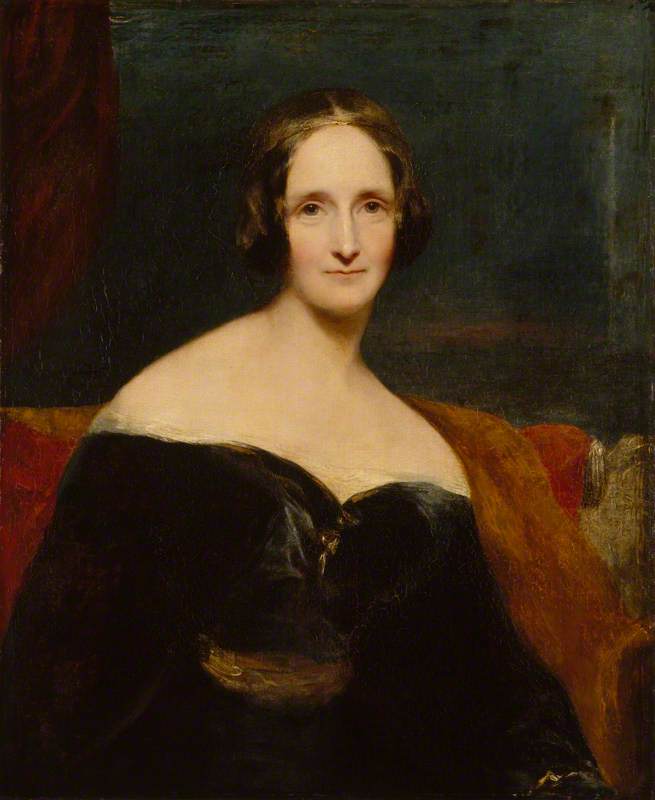
—After Frankenstein, you imagined the end of all humanity. What led you there?
Grief, no doubt. In 1826, I published The Last Man — a novel where a plague gradually wipes out mankind, until the last one, alone on an empty world. It was deemed dark, poorly received, I was reproached for this despair. But I had buried so many of my own: my children Clara and William, taken within months of each other in 1819, then Percy. I had myself experienced what it is to be the last of a circle, the survivor of a Diodati summer where we were five, brilliant, and of whom almost none remained. Writing the end of the world was writing my own.
I had experienced what it is to be the last of a circle.
—There is a novel of yours that your father refused to publish. What made it so fearsome?
Mathilda. I wrote it around 1820, in the months when grief had made me almost a stranger to myself, after the death of my little ones. It is a tale of mourning and intimate darkness, perhaps too bare, too close to my own wounds. William Godwin, my father, deemed it unbearable and kept it under a bushel; it appeared only long after me, in a century I will not see. Some pages one writes not for readers but to keep from suffocating. I spent my nights bent over those sheets, by oil lamp, when the household slept — as my doctor watched over his clandestine work.
Some pages one writes not for readers but to keep from suffocating.
—If you could imagine being read in a century, what would you want remembered about your creature?
That they stop confusing it with its master. They will call the monster Frankenstein, I fear, whereas Frankenstein is the man, and the monster has no name — that is all its distress. If I am still read when all these quarrels are ashes, I would like the question to be heard rather than the thrill: how far can man push his natural philosophy before he must answer for his works? Every age will have its stolen fire, its new spark wrested from the unknown. I merely wrote, at eighteen and on a rainy night, the oldest warning in the world: take heed what you call to life, for it will demand an accounting.
Take heed what you call to life, for it will demand an accounting.
This imaginary interview was generated by artificial intelligence from sources documented in Mary Shelley's profile. It dramatises what the figure might have said based on what we know about them, but does not constitute attested historical testimony. For primary sources and factual documentation, refer to the full profile.