Imaginary dialogue between Le roi Arthur and Merlin
by Charactorium · Merlin · Mythology · 6 min read
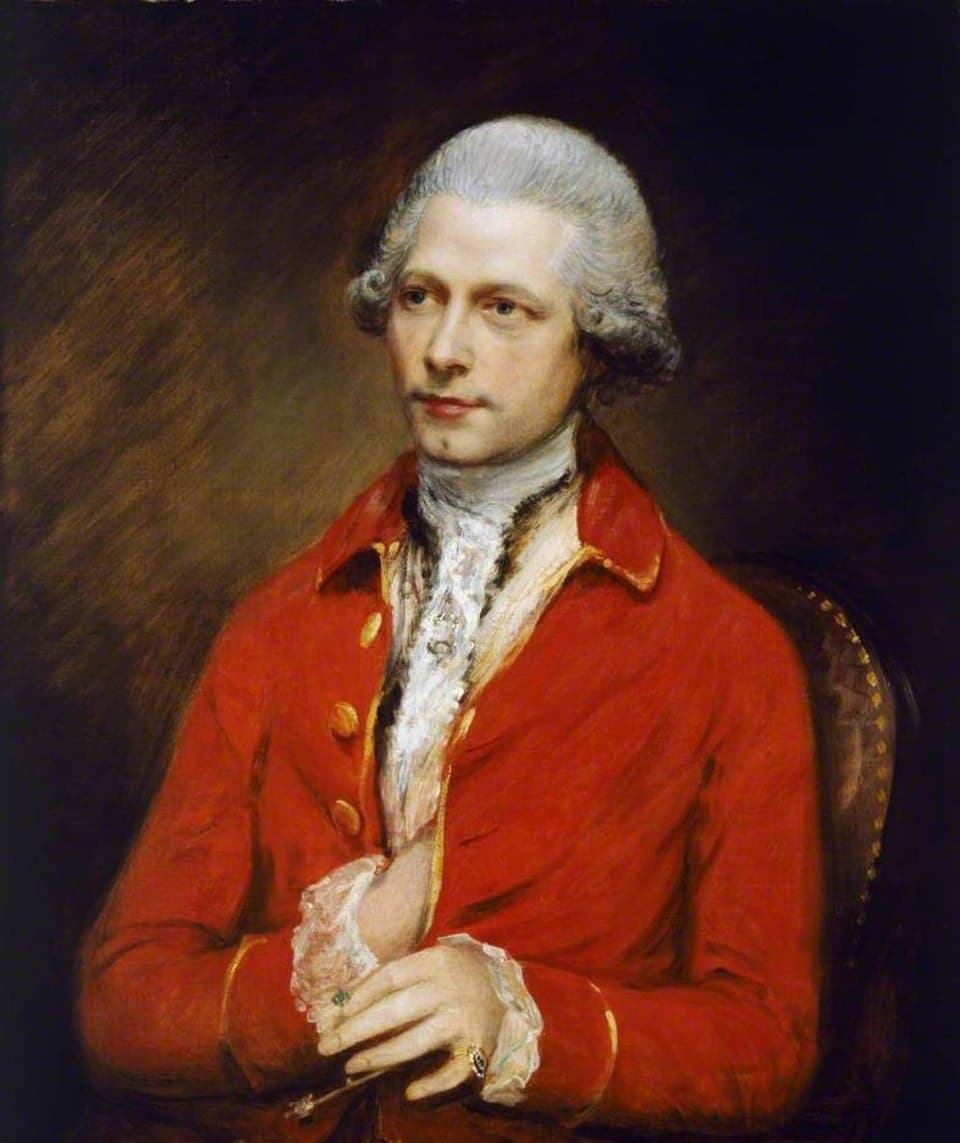
It is in a clearing of the forest of Brocéliande, where the oaks close over the paths like a living vault, that King Arthur comes to find his old counselor. The light breaks in green shards between the leaves, and in the distance one hears a spring that no one can name. They have known each other since before the reign — since Tintagel, since the sword — and the king has come without escort, like a man visiting the one who made him. He sits on a mossy stone and looks at the mage for a long time before speaking.
—Master Merlin, you who arranged everything even before I knew my name — the night of Tintagel, what did you see in me that deserved such a ruse?
Nothing yet, my king, and that is the whole truth that I dare tell only to you. The night I gave Uther the likeness of the Duke of Cornwall, I did not have before my eyes a child already great with glory — I had a necessity. Britain was tearing itself apart, and it needed a king who owed nothing to the clans. So I had you born outside the quarrels, I had you raised in secret so that no one could mark you with their hand. You think I saw you as king; in truth, I first wanted you free. The rest, the test of the sword in the stone, was only a way to show the lords what I alone already knew.
You think I saw you as king; in truth, I first wanted you free.
—Do you remember the day I laid my hand on the sword fixed in the stone? Why entrust my throne to a feat of strength, and not to your word alone?
Because my word, Arthur, the barons would have argued over for ten winters. A sage who appoints a king stirs the jealousy of all who think themselves worthier. But a stone that yields the sword to only one hand — that is a judge no one dares contradict, for it seems to come from elsewhere than men. I put the marvelous at the service of order. You, who are well placed to know, remember the silence of the lords when the blade came to you: that silence I had prepared since your birth. The power of knowledge is better than the force of arms, but sometimes it must borrow the face of wonder to be heard by the powerful.
I put the marvelous at the service of order.
—And the Round Table you had me set up — was it your wisdom or another of your riddles that I have not yet solved?
Both, my king, for wisdom is often a riddle waiting its time. I wanted a table without head or foot, without first or last place, so that none of your knights could say he was better than his neighbor. Consider what ordinary courts are like: they fight for a seat closer to the lord. At your table, the seat says nothing of merit — only actions speak. It is a form I gave to an idea: that the order of a kingdom rests not on rank but on loyalty. I gave you a circle because a circle can only be broken from within. Keep it closed, and no enemy from without will undo you.
I gave you a circle because a circle can only be broken from within.
—They say throughout the kingdom that you moved the giant stones of the Giant's Chant. Tell me true, old druid: by what art did you tear them from Ireland?
By art, my king, and by a truth I told your father Uther: these stones carry within them healing virtues, inherited from the giants who first brought them from the ends of the world. Men wanted to cut them, break them, load them onto oxen — and all failed, for strength alone can do nothing against what was raised by older than us. So I let the stones teach me their own weight, and they came. It is not that I command things: I listen to what they already know of themselves. The men of this time seek a master behind every marvel. But the true mage imposes nothing; he consents to what the world is willing to reveal to him.
The true mage imposes nothing; he consents to what the world is willing to reveal to him.
—Your prophecies run from court to court, in Latin, even to our neighbors. Does it not frighten you that they are used to justify wars?
It saddens me more than it frightens me, Arthur. I said what I saw coming upon Britain and its kingdoms, in veiled words, because the future never delivers itself naked. But sovereigns are impatient: they take my obscure images and twist them until they read permission for what they already desired to do. A king who wants war will always find an omen to bless it. It is not prophecy that leads men — it is their greed that disguises itself as destiny. That is why I speak in riddles: so that he who seeks truth must first purify his soul, while the ambitious find only the reflection of his own hunger.
A king who wants war will always find an omen to bless it.
—When you speak to me of my destiny, should I hear it as a road already traced — or can I still, by my choices, divert it?
You ask the question every king should ask, and few dare. Destiny is not a wall, my king; it is a slope. I see where the slope leads if nothing opposes it, but your will is among those that can plant a stone across the flow. I have seen great shadows rise over your reign — betrayals born of your own blood. Telling you does not bind you: it arms you. A forewarned man chooses differently than a blind man. Never believe those who use my knowledge to tell you that everything is written and that you must therefore resign yourself. I do not read the future to take away your freedom — I read it to give it back to you, fuller, with eyes open.
Destiny is not a wall, my king; it is a slope.
—It is whispered that you were once a wild man, a madman howling after a battle. Is it true that you spoke to the beasts, Merlin?
It is true, and I am not ashamed of it before you. After the Battle of Arfderydd, when I saw those I loved fall, reason left me like water leaves the hands. I fled into the forest of Caledon, and I lived there for whole seasons, naked under the trees, companion to wolves and stags. They thought me lost. But it was there, in that madness, that I first heard what men of courts never hear: the language of the wind, the counsel of springs, the memory of beasts. My wisdom was not born in books, Arthur — it was born in my downfall. He who has never lost everything knows nothing of the worth of the silence of forests.
My wisdom was not born in books; it was born in my downfall.
—You who are born, they say, of a mortal and a spirit — do you feel more of the men I govern, or of the other world?
Of neither fully, my king, and that is my solitude. My mother was a woman of flesh, mortal like yours; my father was of no flesh that men can touch. From him come prophecy and art; from her, the heart that can still love and suffer. I walk on the edge, like this forest where we speak: neither entirely clearing, nor entirely darkness. That is why I can advise you — I see your world from the outside, without being caught in it. But that is also my pain: no king belongs to me, nor any beast. I am the ferryman between two shores and I dwell on none. Never envy me this gift, Arthur; it is paid for by never being at home.
I am the ferryman between two shores and I dwell on none.
—They say a fairy named Viviane learns the secret arts from you. Should I worry, I who need your counsel?
You touch there, my king, upon the only thing my knowledge cannot heal. Yes, I teach Viviane what I know, and I do so knowing what it will cost me. For I have seen my end, Arthur — I have seen it as I see the rest: it will imprison me, by my own words, in a prison of air and leaves from which no charm will free me. You ask why I continue. Because knowledge kept to oneself dies with the one who silences it, and I did not want it to die out. Even the most foreseeing of sages sometimes chooses to love rather than to preserve himself. Do not weep when I am gone: I will have walked toward my fate with eyes wide open.
Knowledge kept to oneself dies with the one who silences it.
—If Brocéliande must one day keep you forever, as you fear, what do you want me to remember of you when you no longer answer?
Remember this, my king: I will not have left you, I will only have changed my dwelling. When this forest closes over me, do not have my tomb searched for, for there will be none. Rather, seek my counsel within yourself — I have sown it there since childhood for this day when my voice would be missing. Keep the Round Table closed, beware of omens offered to flatter your desires, and remember that a king is measured not by his victories but by the justice of his circle. The rest — the marvelous, the moved stones, the prophecies — all that was but a setting. The true gift I gave you, Arthur, is to have taught you to do without me.
The true gift I gave you is to have taught you to do without me.
Read further
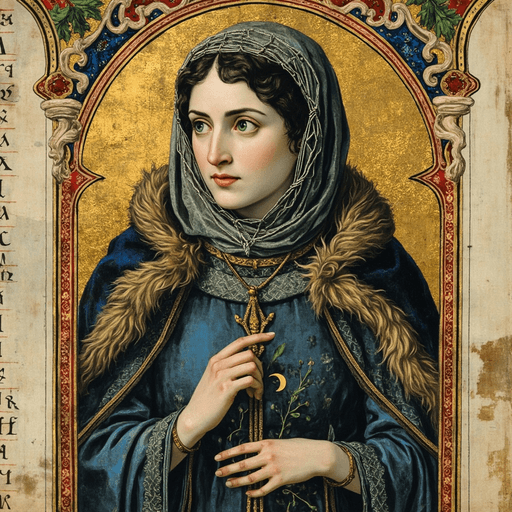
This imaginary interview was generated by artificial intelligence from sources documented in Merlin's profile. It dramatises what the figure might have said based on what we know about them, but does not constitute attested historical testimony. For primary sources and factual documentation, refer to the full profile.