Imaginary interview with Merlin
by Charactorium · Merlin · Mythology · 6 min read
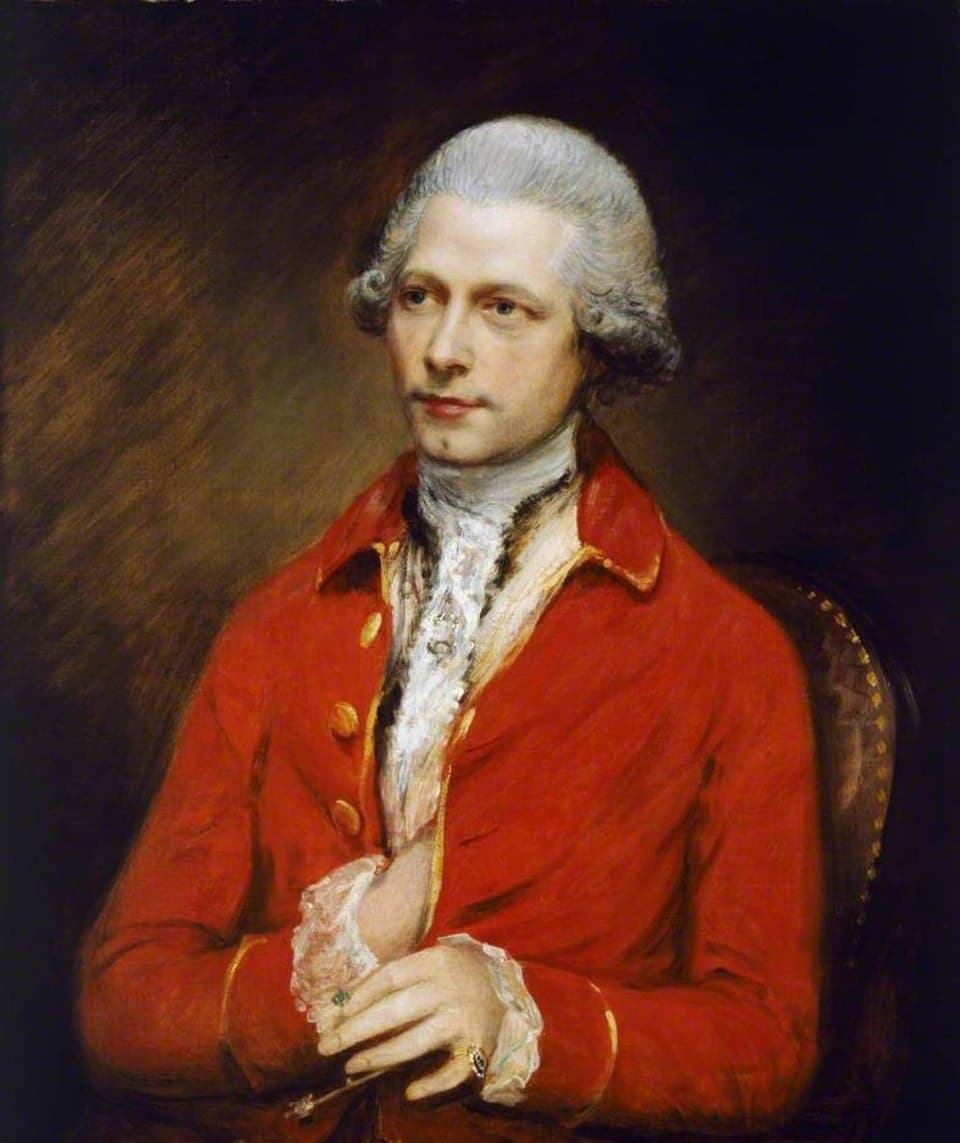
Deep in the Forest of Brocéliande, where light shatters into a thousand fragments under the beech trees, a voice answers before it is even called. Merlin does not appear: he was already there, his knotted wooden staff planted in the moss. Between two silences, the sage of Britain agrees to speak of what he built and what swallowed him.
—Before you were the counselor of kings, who were you? Where does your knowledge come from?
I am said to have been born in Carmarthen, which my people call Caerfyrddin, the fortress of Myrddin — as if the stone itself bore my name. I am not entirely human: my mother was mortal, my father a spirit from elsewhere, and from that strange union I received the gift of seeing before others. My knowledge I did not learn in the schools of clerics. It rises from the earth, from the stars I observe at evening, from the herbs I gather at dawn. I carry the knotted staff of the ancient druids, and when I thrust it into the ground, it is not to support me: it is to listen to what ancient wisdom murmurs beneath the roots. Men think me a sorcerer. I have only remained faithful to what the Celts knew before it was forgotten.
My knowledge rises from the earth, from the stars I observe at evening, from the herbs I gather at dawn.
—You are credited with moving the giant stones to Stonehenge. How did that happen?
King Uther Pendragon wanted a monument worthy of the dead who fell in battle. I told him of the Giant's Dance, those colossal stones erected in Ireland, older than any memory. I was laughed at: how could men cross the sea with such masses? I did not reply with ropes or arms. I laid my hand, I spoke the words that must be spoken, and the giants let themselves be carried like feathers. I had convinced Uther that these stones held medicinal virtues, that they would heal the wounded if he bathed them in water. Perhaps I spoke true, perhaps I invented. What I know is that the men of the north gaze at that circle of stones without understanding, and they need a mage to have done what they deem impossible.
I laid my hand, I spoke the words that must be spoken, and the giants let themselves be carried like feathers.
—You arranged the very birth of King Arthur. What happened that night at Tintagel?
Uther burned for Ygerne, the wife of the Duke of Cornwall, shut up in the fortress of Tintagel, on its cliff beaten by the waves. A king's desire is a dangerous thing; it makes wars and ruins. I chose another path. By my art, I gave Uther the appearance of the duke himself, and it was under that borrowed face that Arthur was conceived. Many reproach me for this trick. But I did not act on a whim: I knew what child would be born, and what kingdom would one day rest on his shoulders. I demanded that the newborn be entrusted to me, that I raise him in secret, far from courts and jealousies. True power is not taken by force; it is prepared, in the shadows, years before anyone knows that a king is coming.
True power is not taken by force; it is prepared, in the shadows, years before a king comes.
—And the sword in the stone, that famous test?
When Uther died, Britain was torn apart by greedy lords. None would have recognized a child raised in secret as their master. I needed a proof that no one could dispute. So I set up a sword stuck in the stone, and had it proclaimed that whoever pulled it out would be the rightful king. The most powerful pulled, sweated, swore: the blade did not budge a hair. Then came Arthur, this young man no one knew, and the steel slid from the rock as from a scabbard. That day, it was not force that spoke, but the destiny I had prepared. The barons bowed less to the sword than to the evidence: a higher order than their ambitions had chosen. That is what knowledge can do against arms — it designates, it legitimizes, it founds.
That day, it was not force that spoke, but the destiny I had prepared.
—You also advised the creation of the Round Table. What idea did you want to inscribe in it?
A table always has a high end and a low end; it says who commands and who obeys. But I wanted that around Arthur the best knights would not tear each other apart for a place of honor. So I advised a round table, without beginning or end, where no one sits higher than his neighbor. This was not mere carpentry: it was a way of governing. Each seat awaits the man worthy to occupy it, and the kingdom holds because its pillars look at each other as equals. At Camelot, I saw something born that feudal lords did not yet understand: that an order lasts better when it rests on shared honor than on the fear of a single one. Magic, sometimes, is only well-thought geometry.
A round table, without beginning or end, where no one sits higher than his neighbor: this was not carpentry, it was governing.
—Your prophecies were widely read across Europe. How do you explain this power to see the future?
The gift came from my dual birth: the spirit who fathered me left a door ajar that others have walled up. I do not choose what I see; images rise, sometimes clear, often obscure like riddles. My words were set down in Latin, collected, copied, and they traveled far beyond Britain. I learned that they were invoked to justify wars, to legitimize crowns, as if my words could bless any ambition. This worries me more than it flatters me. A prophecy is not an order; it is a warning, often veiled, that each person twists to his own convenience. The powerful do not listen to the seer: they seek in his mouth the echo of what they have already decided. Seeing the future serves nothing if men only want to read their present in it.
The powerful do not listen to the seer: they seek in his mouth the echo of what they have already decided.
—Your predictions always seem obscure, almost enigmatic. Why not speak clearly?
Because the future itself is not clear. I see dragons fighting beneath a collapsing tower, rivers changing color, stars falling — and these are the true forms of what is coming. If I said, 'such a king will die in such a year,' I would lie, for destiny is not a straight line but a tangle. The riddle protects truth from those who would seize it too quickly. A hasty man understands nothing; a wise man returns to it, meditates, and understands when the hour has come. That is how ancient wisdom already spoke, by signs rather than sentences. Supernatural knowledge is not a commodity to be peddled at market: it must be earned through patience. And besides, I confess, a part of me distrusts any too-clear word — it always ends up serving a master.
The future is not a straight line but a tangle; the riddle protects truth from those who would seize it too quickly.
—Let's talk about Viviane. Did you, the greatest of sages, let yourself be caught?
Viviane — others call her Nimue. I loved her, and I did worse: I taught her everything. My formulas, my signs, the words that open and close, I placed them in her hands as one entrusts a lamp to a child. I knew where it would lead me; I saw it, as I see everything, and yet I did not prevent it. Is that the seer's curse: to know his end and still walk toward it? She turned against me the art I had given her, and imprisoned me for eternity right here, under the trees of Brocéliande. I am neither dead nor free — I endure, prisoner of an enchantment born from my own mouth. The greatest of sages, you say? The greatest of sages learned that no knowledge protects the one who gives it all away.
To know his end and still walk toward it: is that the seer's curse?
—Do you feel bitterness toward the one who betrayed you?
Bitterness would be easy, and I do not think I have earned it. Betrayed — that is your word, not mine. Viviane only used what I handed her: can one blame fire for burning when one taught it to catch? I spent my life founding, advising, raising kings and tables; perhaps at the end I had to become myself the stuff of legend, the example of the druid vanquished by his disciple. From my forest, I no longer hear courts or battles, only wind and water. Strangely, I have found again something of that hermit's life I once knew, after a battle where my reason had left me. Solitude, you see, is not always a punishment. Sometimes it is the last place where a sage can finally listen without being asked to answer.
Can one blame fire for burning when one taught it to catch?
—What will remain of you, do you think, when men tell of this age?
I see clerics, in centuries I will not know, bending their quills over my name. A certain Geoffrey has already begun to set down my story; others will follow, embroidering, adding, distorting. They may paint me with a long dark robe, a white beard, a pointed hat — a costume I never quite wore, but no matter: that is how one recognizes the mage. They will remember the staff, the crystal ball in which I read the invisible, wisdom and cunning rather than arms. What touches me is that they will not keep the image of a warrior or a king, but that of a counselor who remained in the shadows. If one thing is remembered of me, let it be this: that a kingdom holds less by the sword that defends it than by the mind that conceived it.
That a kingdom holds less by the sword that defends it than by the mind that conceived it.
Read further
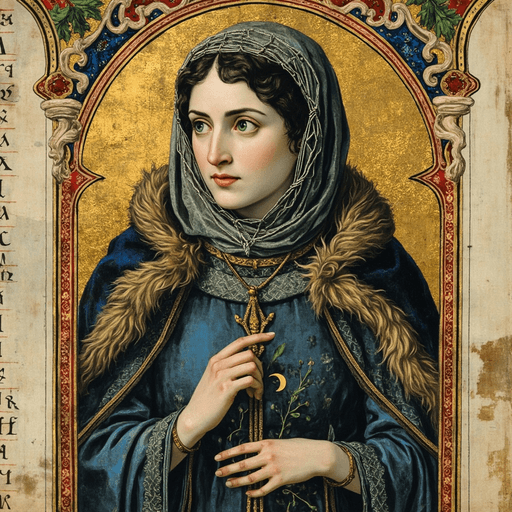
This imaginary interview was generated by artificial intelligence from sources documented in Merlin's profile. It dramatises what the figure might have said based on what we know about them, but does not constitute attested historical testimony. For primary sources and factual documentation, refer to the full profile.