Kids interview Merlin
by Charactorium · Merlin · Mythology · 5 min read
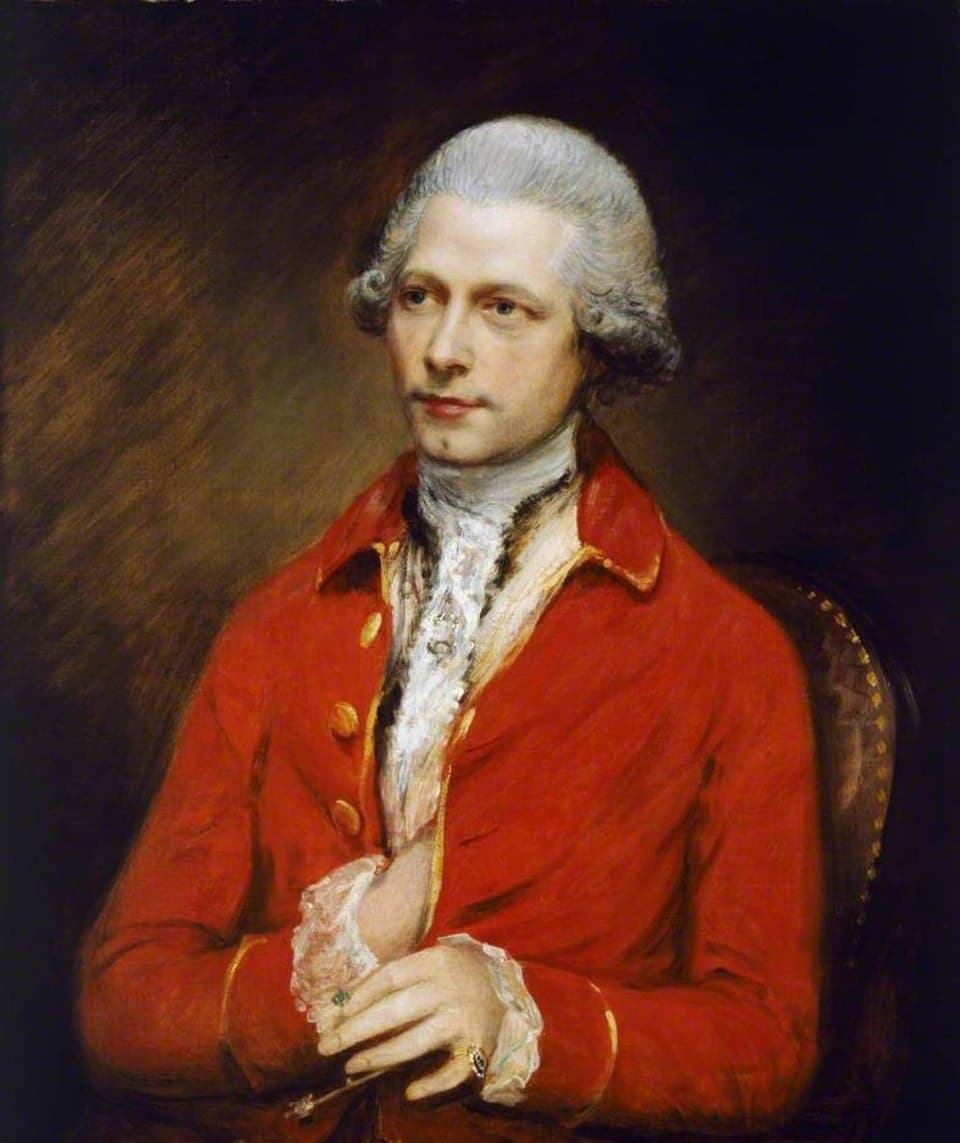
That morning, two sixth-graders on a school trip got lost in a forest in Brittany. At the foot of an old oak tree, a gentle voice called to them: it was Merlin the enchanter. He agreed to answer their questions, with the patience of a grandfather who loves to tell stories.
—Is it true you were born from a dad who wasn't human?
Ah, my child, that's what they say. They say my mother was a real woman, but my father came from another world: a spirit. That's where I get my gifts. Do you know the city of Carmarthen, in Wales? In the old language, it's called Caerfyrddin — that means 'Merlin's fortress.' Imagine a little stone town, set by a river, surrounded by green hills and morning mist. That's where, they say, I came into the world. A child half of here, half of elsewhere.
—They say you built Stonehenge. How did you do that?
You know, that's probably my greatest feat. Far away in Ireland, there stood enormous stones called the Giant's Dance. King Uther Pendragon wanted a monument for his dead. I whispered to him that these stones had a secret: their water healed wounds. So his men tried to pull them with ropes... no use, far too heavy. And then I did my magic. The stones lifted like feathers and crossed the sea. Imagine boulders as big as houses floating in the sky! That place is called Stonehenge.
—How was King Arthur born? Did you have something to do with it?
Ah, here's a story of secrets. King Uther loved a lady, but she was the wife of another, the Duke of Cornwall. She lived in a castle by the sea, Tintagel, perched on a cliff battered by waves. To approach her, Uther begged me for help. So I used my art: I gave Uther the duke's face, feature for feature. No one saw a thing. And from that night a child was born: Arthur. You see? The greatest king of Britain came into the world through a magical disguise.
—And the sword in the stone, and the Round Table, were those your ideas?
A king still a child, no one believed it. How to prove he was the true king? I planted a sword in a rock and said: whoever pulls it out shall be king. Huge knights pulled, strained, sweated... nothing. Young Arthur pulled it out like picking a flower. Later, I advised another idea: a table with no end or head, perfectly round. At a round table, you see, no one is better placed than another. The king and the humblest knight are equal there. That was my way of teaching Arthur that ruling is not about crushing.
At a round table, no one is better placed than another.
—Is it true you could really see the future?
Yes, I saw far into time. I dictated strange predictions, full of dragons and hidden kings. They were written in Latin, the language of scholars, under the name Prophetiae Merlini. And you know what's crazy? Real kings took them seriously! They read them to decide whether to go to war, or to prove their family should rule. Sometimes I looked into a crystal ball, clear as frozen water, and I glimpsed images of the future. But beware: the future is a fog. You see shapes in it, never everything.
—That must have been scary, knowing what was going to happen, right?
You ask the real question, the one that hurts. Yes. Seeing the future is a heavy burden. I knew very early how Arthur would end, and I couldn't change anything. Imagine you know the end of a story you love... you can't enjoy it the same way. My Prophecies spoke of battles and lost kingdoms. I announced them, but I couldn't prevent them. That's the sad secret of a prophet: you see misfortune coming from afar, like a storm on the horizon, and you stand there helpless.
Knowing is not always being able.
—They say you lived all alone in a forest. Why was that?
Ah, few people know that story. After a terrible battle at Arfderydd, I saw so many dead that my reason wavered. I went almost mad. I fled men and went to live in the Caledonian Forest, all alone. There I ate what the earth gives: herbs, wild fruits, river fish. I talked to the deer and the wolves, and believe it or not, they listened. At night, I read secrets in the stars. A druid, you see — a sage of the ancient Celts — doesn't need a palace. The forest was my book.
—And how did it end for you, in the end?
That's the end of my story, and it saddens me. There was a young fairy, Viviane — some call her Nimue. I loved her, and I taught her all my magic. Everything. That was my mistake. One day, in the forest of Brocéliande, she turned my own spells against me. She locked me in an invisible prison: a circle of air, a tower without walls, from which I never emerged. Imagine being a prisoner without bars, just by a charm. The greatest wizard in the world, trapped by his favorite student.
You can be betrayed by what you yourself have taught.
—Do you resent Viviane for doing that to you?
You know, I could have resented her. But no. I saw it coming — I am a prophet, remember. I felt the trap close, and I let it happen. Why? Because I loved her, and a loving heart doesn't suspect enough. In my prison of Brocéliande, I am not unhappy as you think. They say my voice still echoes among the trees, that hikers hear it in the wind. I am not dead, you see. I am only... set aside. Asleep in the forest, waiting.
—Did you know that one day children like us would come and talk to you?
Ha! What a beautiful question to end on. Yes, perhaps. A prophet glimpses bits of the future, remember? I guessed that my name would never die. Writers have put it on parchment, again and again: a certain Geoffrey of Monmouth long ago, then many others in great books like the Lancelot-Grail. As long as my story is told, you see, I am not truly a prisoner. Every time a child speaks my name, a little piece of me wakes up in the forest. So thank you for coming. You have made me, for a moment, a little bit alive.
Read further
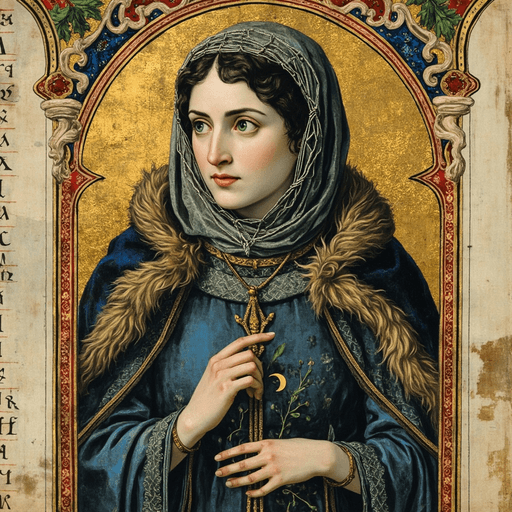
This imaginary interview was generated by artificial intelligence from sources documented in Merlin's profile. It dramatises what the figure might have said based on what we know about them, but does not constitute attested historical testimony. For primary sources and factual documentation, refer to the full profile.