Imaginary interview with Michel de Montaigne
by Charactorium · Michel de Montaigne (1533 — 1592) · Literature · Philosophy · 7 min read

Autumn 1588. The Essays have just been reissued, augmented by a third book, and their author has withdrawn to his château in Périgord. We find him at the very top of his round tower, among his books arranged in a circle, pen in hand and gout in his kidneys. He invites us to sit, casts a glance at his beams covered with maxims, and agrees to talk about himself — his favorite subject.
—How would you describe this place where you write, this tower that shelters you?
You must climb three floors of my round tower to find me. Below is a chapel, above my bedroom, and at the very top my library, where I have arranged nearly a thousand volumes in an arc, so that a single turn of the eye shows them all to me. There, I am at home as nowhere else: neither my wife nor my affairs of Périgord pursue me there. I sit down, I take my quill, I dip it in the inkwell, and I let my thought run like a horse let loose in a meadow. It is here that my Essays were born, not from a plan, but from a daydream that writes itself. A man who does not have such a retreat does not truly possess himself; he belongs to the world and its noise.
—One notices, looking up, these inscriptions on the wood of your ceiling. What are they?
Raise your eyes to my beams: I have had about fifty sentences engraved there, in Greek and Latin, taken from the Ancients and from Scripture. They are there to speak to me when I weaken, like silent friends suspended above my brow. One reminds me that I know nothing for certain, another that death is the common end of all. I did not choose them to play the scholar — I abhor the pedant who fills the memory without forming judgment — but because they gently correct me. The Stoicism of the Ancients long sustained me; today I distrust it a little, for no doctrine holds entirely against life. My beams, they never argue: they keep watch.
—Do you remember the day you lost your friend Étienne de La Boétie?
It was in 1563, and there is no wound I speak of less willingly, nor one that has made me more what I am. Étienne de La Boétie died almost in my arms, carried off in a few days, and with him went half of my soul. We had found each other, he and I, by I know not what force of destiny, before we had even come to know each other well. When pressed to say why I loved him so, I can only answer this: "Because it was him, because it was me." All the rest — reasons, merits, services rendered — is mere embroidery. Since his death I drag everywhere a solitude that nothing has filled, and I have sometimes written the Essays as one prolongs an interrupted conversation.
Because it was him, because it was me.
—Why did you insist on having the writings of this departed friend published?
After his death, I wanted him not to die entirely. In 1571, I had his verses printed and prefaced his pages, to shelter his name from oblivion. He had composed as a young man a bold discourse, Of Voluntary Servitude, where he wondered how so many men consent to serve a single one, who has no power other than that which is lent to him. The troubles of our time, the Wars of Religion, made it a dangerous ember; factions sought to seize it for their quarrels. This grieved me, for his intent was not to incite revolt, but to meditate as a philosopher. I therefore withdrew this text from my own pages, regretfully, so as not to see it dressed in colors that were not its own. To serve a dead friend is still to speak to him.
—You gave a new name to your texts. What exactly do you mean by "essay"?
I am often asked what these Essays are, and I reply that I hardly know myself — which is already my whole point. The word I took from the verb to try: to attempt, to taste, to weigh. I do not claim to teach, I try myself; I put my judgment to the test on everything that comes along, without ever concluding anything definitive. The learned write books about things; I have taken myself as my subject, a frivolous and vain subject, I admit. But I know no one more closely. I paint myself in motion, from one day to the next, inconstant, diverse, undulating. If tomorrow I contradict myself, so much the better: I will have shown a living man rather than a statue. It is a genre that no one had attempted before me, and I find myself quite at ease in it.
I do not claim to teach, I try myself.
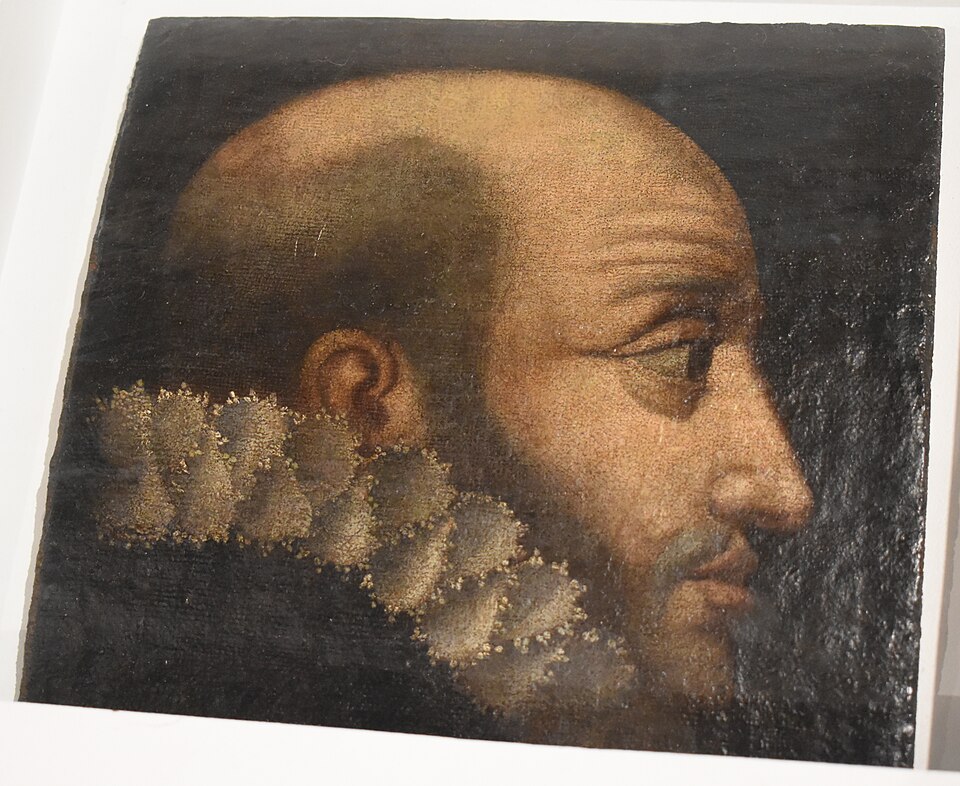
—What would you say to those who demand certainties where you seem to offer only doubts?
I had a medal struck with a balance and these two words: "What do I know?" There is my whole philosophy in three syllables. The older I get, the more I see that our finest certainties are clouds: doctors contradict each other, theologians kill each other, and every country holds as truth what is considered madness beyond its river. The Skepticism of the Ancients taught me to suspend my judgment rather than to rush it. I do not say that one knows nothing — that would still be affirming too much — I say that I doubt, and that I doubt even my doubt. This ignorance is not laziness: it is a school of gentleness. He who knows that he does not know becomes less quick to burn his neighbor for an opinion.
He who knows that he does not know becomes less quick to burn his neighbor for an opinion.
—Is there not some vanity in taking one's own person as the sole subject of a book?
I have been reproached for displaying myself, for taking so small an object — myself — and putting it before the eyes of the world. But here is what I have understood by examining myself: "Each man bears the entire form of the human condition." In probing myself, it is not only Michel I meet, it is man. My fears, my colics, my inconsistencies, my table pleasures — all of this, the king and the laborer also bear. So I do not write to boast, but to hold up a mirror. I chose myself as a book because I had myself at hand, entirely, at all hours, without having to lie about others. And the deeper I descend into myself, the more I touch something common to all. That is why a naked man, well observed, is worth all treatises.
—How did you become mayor of Bordeaux, you who love your retreat so much?
The news reached me in Italy, in 1581: the jurats of Bordeaux had elected me mayor in my absence, without even asking my opinion. At first I wanted to refuse, for I have never liked offices that consume a man entirely. But the king let me know that it was not a matter for discussion, and I returned. I tried to serve without mistaking myself for the mask I wore: the mayor and Montaigne have always been two separate persons. I neither inflamed myself nor fell asleep; I kept the affairs of the city at a distance from my heart, which was sometimes reproached to me as lukewarmness. Yet I was re-elected in 1583, a sign that this moderation was not so displeasing. Governing men is above all preventing them from harming each other; the rest is magistrate's vanity.
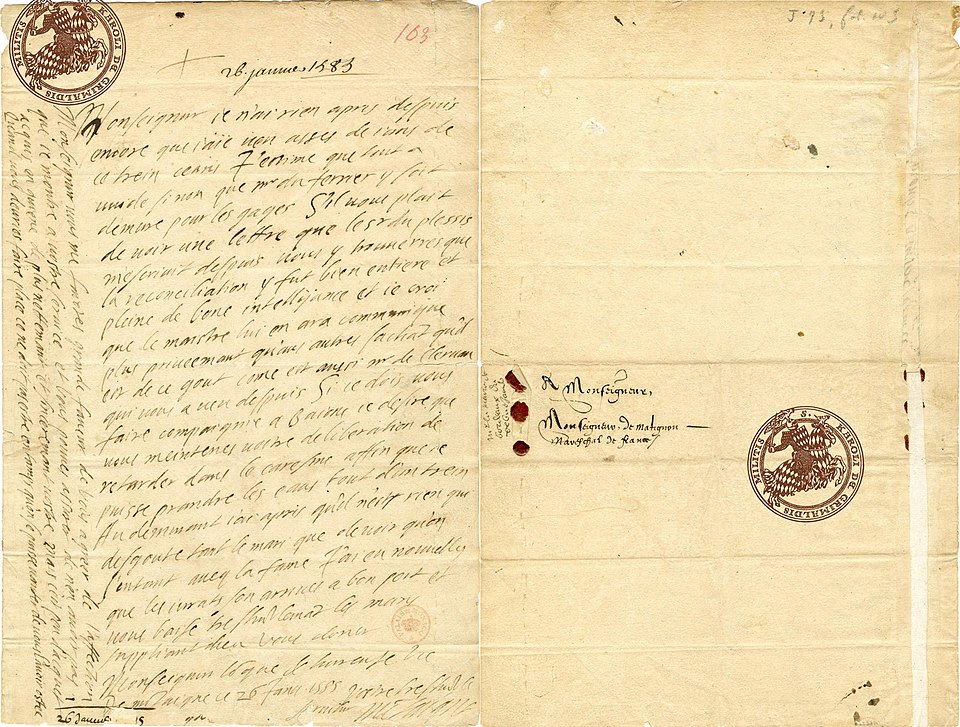
—During the plague of 1585, you left the city. How do you regard this choice today?
In 1585, the plague fell upon Bordeaux like a scythe. My term was ending; I found myself outside the walls with my family, and I was pressed with questions: should I return to die with the city? I chose to flee the scourge and shelter my loved ones, wandering for months from house to house, refused everywhere as plague-stricken. I was blamed for it, and I do not hide it in my Essays: I am neither a hero nor a saint, but a man who clings to life, his own and that of his kin. Death, I have looked at it enough in the face in my colics not to have to seek it out by bravado. Better a living useful man than a magistrate dead in a fine posture. I leave to the Romans their noble suicides.
I am neither a hero nor a saint, but a man who clings to life.
—What drove you, at nearly fifty, to take to the roads of Europe?
Since my forties, I have carried within me a cruel guest: the stone, that gravel that has made me know pains that would make a Stoic cry out. It was partly for her that I left, in 1580, for Switzerland, Germany, and Italy, in search of waters that would deliver me from my ill. My father died of it; I knew the affliction was hereditary and without pardon. But see the strange thing: this illness made me more a philosopher than twenty volumes. It taught me to come to terms with pain, to receive it in fits and to enjoy the respite all the more when it leaves me. In my Travel Journal, I noted my colics as a merchant keeps his accounts, down to the size of the stones passed. I will be found very meticulous; but the man who observes himself suffering still belongs to himself a little.
—What remains of that long journey in Italy, the spas, and Rome?
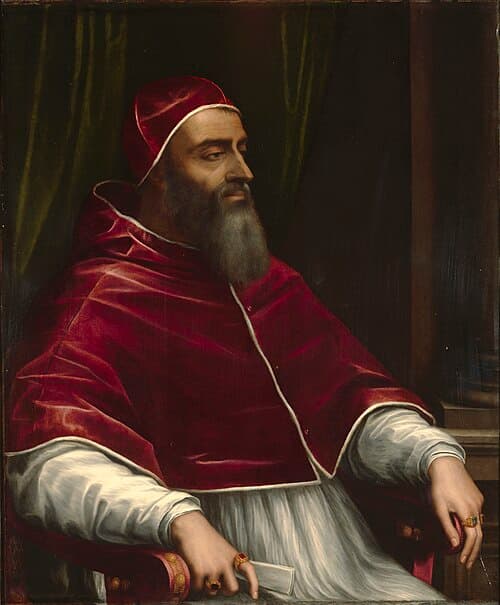
Ah, that journey was one of the greatest pleasures of my life! I went from inn to inn without haste, tasting each country through its tables, its customs, and its baths. At Bagni di Lucca, in Tuscany, I spent my days drinking and bathing in the waters, noting everything: the taste of the spring, its effects, its action on my stone. At Rome, Pope Gregory XIII received me in audience, and the city did me the honor of naming me a Roman citizen — vanity, perhaps, but I admit that parchment tickled my pride more than befits a skeptic. I traveled on horseback, my element, convinced that moving is better than stagnating. The waters cured me of nothing; but they gave me the world to see, and that is the best school for one who wants to rub his mind against that of others.
This imaginary interview was generated by artificial intelligence from sources documented in Michel de Montaigne's profile. It dramatises what the figure might have said based on what we know about them, but does not constitute attested historical testimony. For primary sources and factual documentation, refer to the full profile.