Kids interview Michel de Montaigne
by Charactorium · Michel de Montaigne (1533 — 1592) · Literature · Philosophy · 5 min read

Two middle-school students visit an old castle in Périgord, surrounded by vineyards. At the top of a round tower, in a room full of books, a man in a black doublet greets them with a smile. It's Michel de Montaigne, and he has all the time in the world to answer.
—What's this round room at the very top, with all these books?
You're in my refuge, my child. This is the round tower of my castle, which I set up around 1571. I've stored nearly a thousand books here, in an arc. Imagine: from my armchair in the center, I can see each one at a single glance. Look up at the beams: I've had about fifty phrases engraved there, in Greek and Latin, taken from the old philosophers. They keep me company when I write. With my goose quill and inkwell, I spend hours here reading, then putting my thoughts down on paper.
A thousand books around me, and with a single glance I see them all.
—What exactly did you write about in your famous Essays?
About myself, believe it or not! Surprising, isn't it? In 1580, I published the first two books of the Essays. I even invented the word essay: it comes from the verb 'to try,' meaning to attempt, to taste an idea without claiming to know everything. I took myself as my subject, with my moods, my doubts, my little flaws. Why me? Because by looking honestly at myself, I believe I'm also speaking of you. Every man, even the humblest, carries within him the whole of the human condition. Telling you my life is a bit like holding up a mirror to you.
Every man carries within him the whole of the human condition.
—But isn't it a bit pretentious to always talk about yourself?
Good question, and a clever one! No, my child, it's not pride. I don't think myself greater than others; quite the opposite. I tell how I get up late, around eight or nine o'clock, that I like the good wine from my vineyards, that I often make mistakes. My motto is 'What do I know?': doubt, always. I prefer a mind that asks questions to one puffed up with false certainties. Criticizing a bad tutor, that teacher who fills a child's memory without forming their judgment, that's what really interests me.
Better a doubting mind than a head full of false certainties.
—Did you have a best friend? What was his name?
Ah... you touch the tenderest spot in my heart. His name was Étienne de La Boétie. We understood each other with half a word, as if we had but one soul for two. When asked why I loved him so, I can only answer: 'Because it was he, because it was I.' There is no other explanation for true friendship. He died in 1563, far too young, and I was left broken. Later, I had his text On Voluntary Servitude printed, so that his thought would not die with him.
Because it was he, because it was I.
—You were mayor of Bordeaux? Did you want that position?
Not really, to be honest! In 1581, I was elected mayor of Bordeaux while I was traveling in Italy, hundreds of leagues away. I accepted the office reluctantly, then was re-elected in 1583. You know, it wasn't a peaceful time: France was tearing itself apart in the Wars of Religion, Catholics against Huguenots, those Protestants who were persecuted. In 1585, a terrible plague struck the city. I took my family far from danger, and some reproached me for it. But protecting one's own is not cowardice, my child.
I was elected mayor while traveling at the other end of Europe.
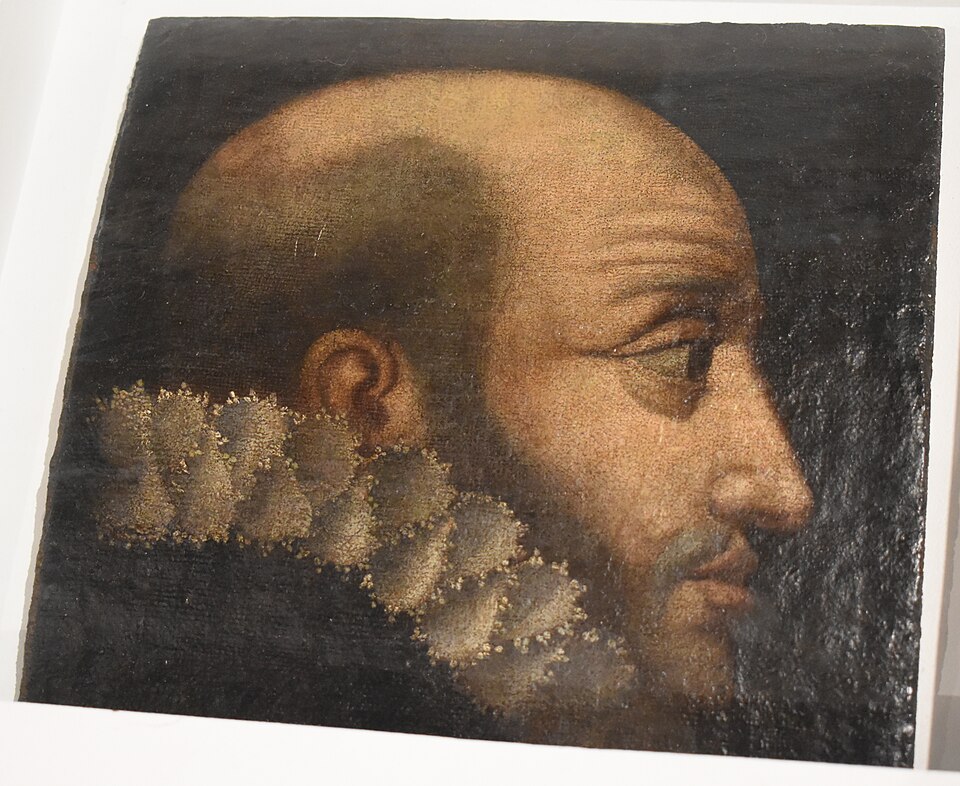
—Were you really put in prison one day?
Yes, and that day I was in a tight spot! It was in 1588. I was on my way to Paris when Catholic soldiers, called the Leaguers, arrested me and threw me into the Bastille, that big prison in the city. Imagine the fear: thick walls, a slamming door, and no idea what awaits you. Fortunately, Queen Catherine de' Medici intervened, and I was freed the same day. People respected me, even in both enemy camps. I always tried to speak to everyone without siding with the hatred of one or the other.
Arrested in the morning, freed in the evening: I was respected in both camps.
—Were you often ill? How was it treated in your time?
Alas, yes. From my forties, I suffered from kidney stones: little stones that form in the body and cause terrible pain. In my time, they didn't know how to remove them. So I went in search of healing waters. I traveled through Italy, bathed in thermal baths, like at Bagni di Lucca in Tuscany. Imagine pools of hot water coming out of the earth, and sick people soaking in them hoping to be cured. Rather than lamenting, I noted everything in my Travel Journal, my pains like a curious observer watching something astonishing.
Rather than complain, I observed my pain as if it were something astonishing.
—What was a long journey like back then, with nothing fast?
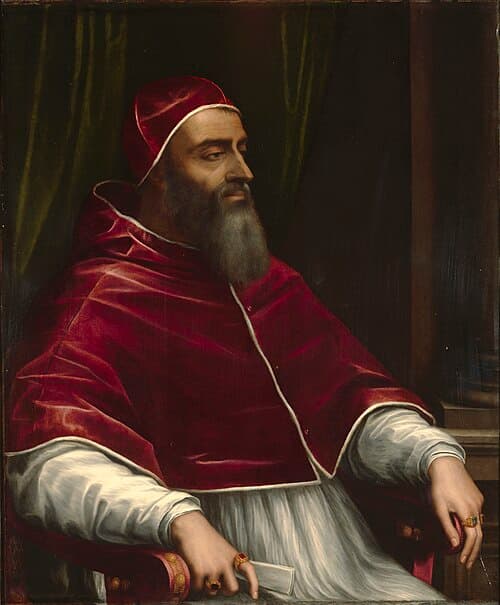
Long, my child, very long! I traveled almost always on horseback, day after day, on dirt roads. Imagine roads with no machine noise, just the step of beasts, dust and wind. My journey to Italy lasted nearly seventeen months! In Rome, I was received in audience by Pope Gregory XIII, and I was even made a Roman citizen: an honor I was very proud of. I discovered other cities, other customs, other ways of living. And each difference taught me not to believe that my own way was the only right one.
Seeing other peoples taught me not to believe I was always right.
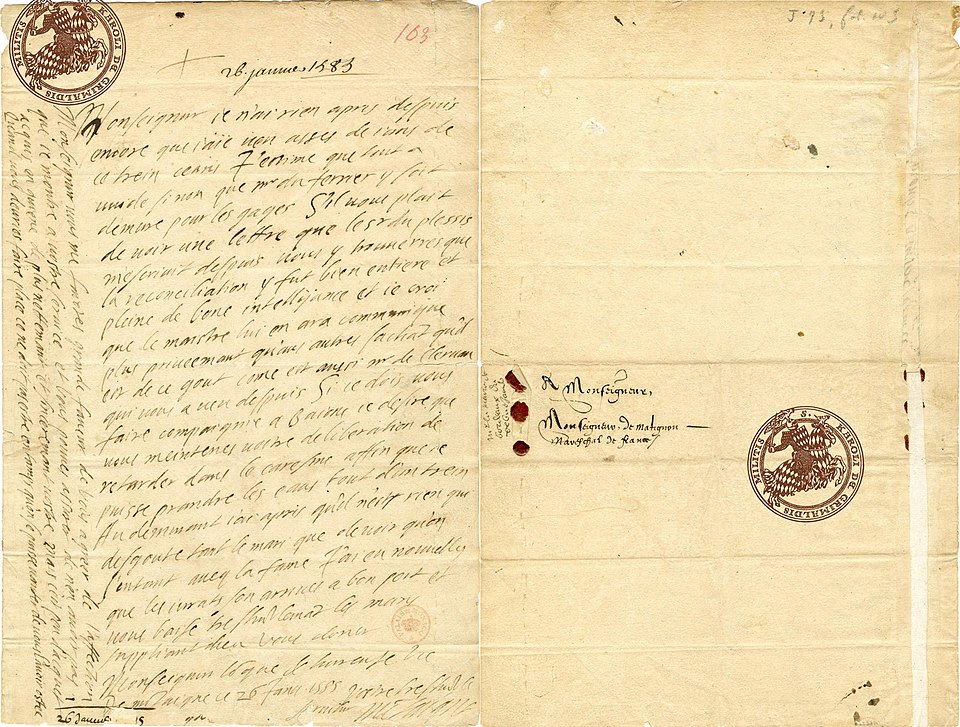
—What did it smell like at your place? What did you eat in the morning?
What lovely curiosity! At home, it smelled of wood beams, fresh ink, and through the window, the scent of vineyards and fields in Périgord. In the morning, I rose late for the time, and had a light snack before going up to write. At noon and evening, I enjoyed good food: poultry, game, fruits from the orchard, and wine from my own vineyards. But in moderation, mind you! I wore the black doublet of nobles, with a white ruff at the collar, that pleated fabric collar. A simple country gentleman's life, and I cherished it greatly.
Wood, ink, and the smell of vineyards: that's the fragrance of my tower.
—Were you afraid of death? Did you think about it a lot?
I thought about it a lot, yes, especially after losing my friend La Boétie. At first, it made me tremble. Then I understood something very simple: by being afraid of dying, we forget to live. So I chose the opposite. I wanted death to find me planting my cabbages in my garden, without worrying about it. You see the image? Continue your little peaceful tasks, rather than wasting your days shivering. We must live among the living, enjoy every moment as a gift. That's the whole art I put into my Essays.
By being afraid of dying, we forget to live.
—And if you're still read today, how would that make you feel?
It touches me more than you know, my child. You see, after my death in 1592, my friend Marie de Gournay, whom I called my 'covenant daughter,' published a new edition of the Essays in 1595, with all the notes I had added by hand. Thanks to her, my words continued their journey long after me. If you read me today and think, 'Hey, he doubts like me, he makes mistakes like me,' then I have won. I didn't want to give you lessons. I wanted to keep you company, across the centuries.
I didn't want to lecture you, but to keep you company across the centuries.
This imaginary interview was generated by artificial intelligence from sources documented in Michel de Montaigne's profile. It dramatises what the figure might have said based on what we know about them, but does not constitute attested historical testimony. For primary sources and factual documentation, refer to the full profile.