Imaginary interview with Michelle Bachelet
by Charactorium · Michelle Bachelet (1951 — ?) · Politics · 6 min read
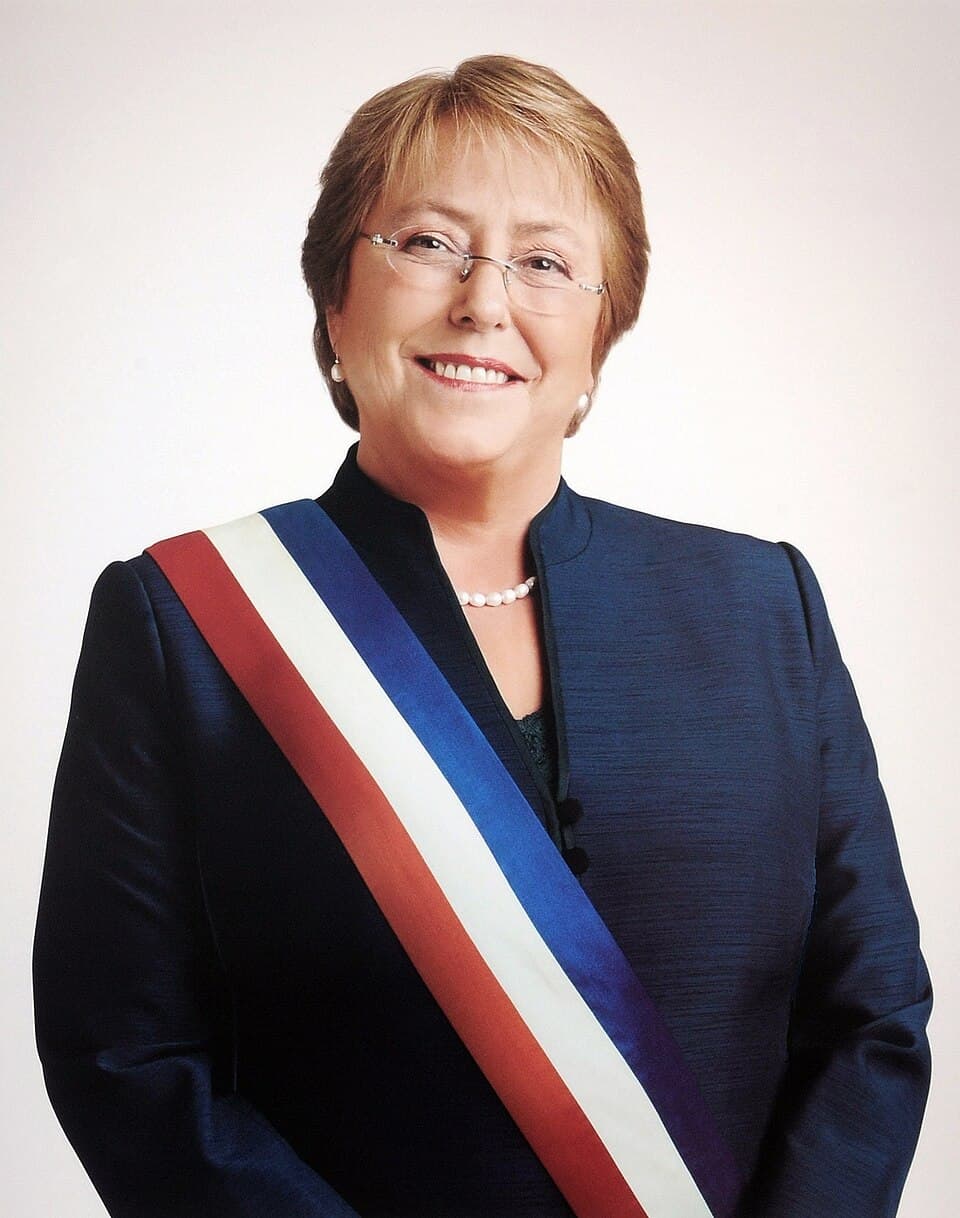
Geneva, late summer 2022. The Palais des Nations has just emptied of its delegations, and Michelle Bachelet is putting away the last files of her term as High Commissioner. Black coffee in hand, she agrees to trace the thread — from Villa Grimaldi to this office on the shores of Lake Geneva.
—Do you remember the day they came for you, in 1975?
You never really put that morning away. January 1975, in Santiago: they took us, my mother and me, to what they euphemistically called a 'house'. The Villa Grimaldi. Today it's a peace park, trees planted in the names of the disappeared; back then, it was the kingdom of the DINA, their blindfolds, their voices always asking the same question. I was twenty-three, I thought medicine would protect me, that they would respect the daughter of a general. They respected nothing. I understood there, in the dark, that a person's dignity is not negotiable based on their name. When I testified before the Valech Commission in 2003, I didn't tell my pain. I told the pain of the other prisoners, because they had no one to speak for them.
I understood in the dark that a person's dignity is not negotiable based on their name.
—How did your father's death shape your entire life?
My father, General Alberto Bachelet, had said no. No to the 1973 coup, no to betraying an oath to the Republic. For that no, he died in prison, his heart broken by the mistreatment of his own comrades in arms. A soldier killed by the army: that is the paradox I have carried all my life. Many in my place would have chosen hatred or permanent exile. I chose to return, to become a doctor, and then one day to sit at the very table from which the order to kill had come. The desaparecidos — those three thousand Chileans swallowed without a grave — became my compass. Everything I did afterwards, at La Moneda and at the United Nations, I did with their faces before me.
—Why did you choose military medicine, in that institution that had broken your family?
Because someone had to go through that closed door. Military medicine was a man's domain, doubly forbidden to a woman whose father had been condemned by the regime. I could have stayed a pediatrician, treating children in poor neighborhoods — that's where my stethoscope really learned its trade. But I wanted to understand the army from within, without fear. Wearing that uniform was the most bewildering act of my youth: putting on the fabric of an institution that had imprisoned my family, and deciding that it was not for it to define what I represented. You rarely reconcile with your tormentors; you can at least refuse to become like them. It is this quiet stubbornness that later led me to the ministry.
You rarely reconcile with your tormentors; you can at least refuse to become like them.
—What did it mean for Chile in 2002 for a woman to be named Minister of Defense?
A silent earthquake. In 2002, I became the first woman Minister of Defense in Latin America — the daughter of a general who died in a cell, now at the head of the generals. I remember crossing a barracks courtyard, reviewing troops who, twenty years earlier, had obeyed Pinochet. No one had written the protocol for such a moment. My role was not to take revenge, but to prove that an army could serve a democracy without threatening it. I worked to bring soldiers closer to the nation, to embed human rights in their training. When floods struck and I climbed onto an amphibious vehicle to reach the victims, Chileans saw something other than a minister: they saw that the country was returning to them.
—How was the idea of that perfect parity cabinet born in 2006?
It was born from a promise I made to myself, and a very simple calculation: if women are half of humanity, why would they be a tenth of power? On the day of my inauguration, March 11, 2006, at La Moneda, I spoke of a society 'more equal between men and women'. Many thought it was just a speech line. Then I appointed my cabinet: as many women ministers as men, for the first time in the world. The press went wild, they predicted incompetence and chaos. Nothing of the sort. Government parity was not a cosmetic quota; it was a demonstration: talent knows no gender, only prejudices invent one. Countries much older than mine have since taken inspiration.
If women are half of humanity, why would they be a tenth of power?
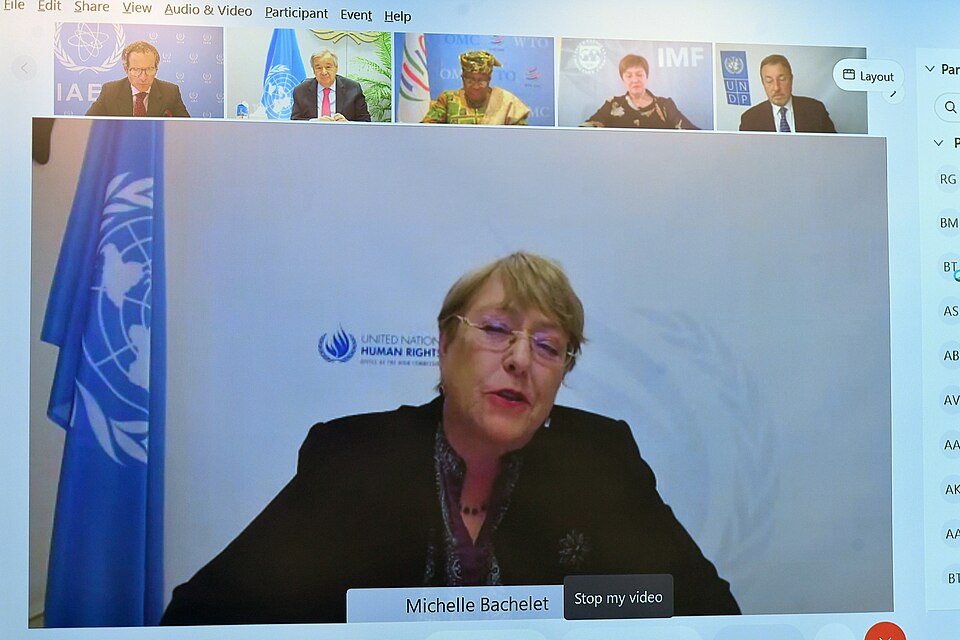
—Leading UN Women after the presidency — was that continuing the same fight?
It was taking it to a global scale. In 2010, leaving La Moneda to become the first director of UN Women in New York was not changing causes, only altitude. At the United Nations podium, I said what I deeply believe: 'Gender equality is not only a fundamental right, it is the necessary foundation for a peaceful, prosperous and sustainable world.' A brand-new institution, to be built stone by stone, given a budget, a voice, credibility. I found again the gesture of my youth: entering an empty house and making it livable. Except this time, the house had to shelter the rights of half the planet, from village women in Africa to factory workers in Asia.
—During your second term, how did you hear the students' anger?
You couldn't not hear it: it filled the avenues. The 'penguin revolution' in 2006, then the great movimiento estudiantil of 2011 — these high school and university students in black-and-white uniforms demanded an end to education turned into a commodity. Chile had one of the most expensive higher education systems in the world, a legacy of the Chicago Boys model. When I returned to power in 2014, I could not answer them with fine words: they had grown up, they voted. On my annotated Constitution — the 1980 one, still marked by Pinochet — I had underlined that article on the right to education. I decided that right would cease to be a privilege reserved for those who could pay.
These students demanded an end to education turned into a commodity.
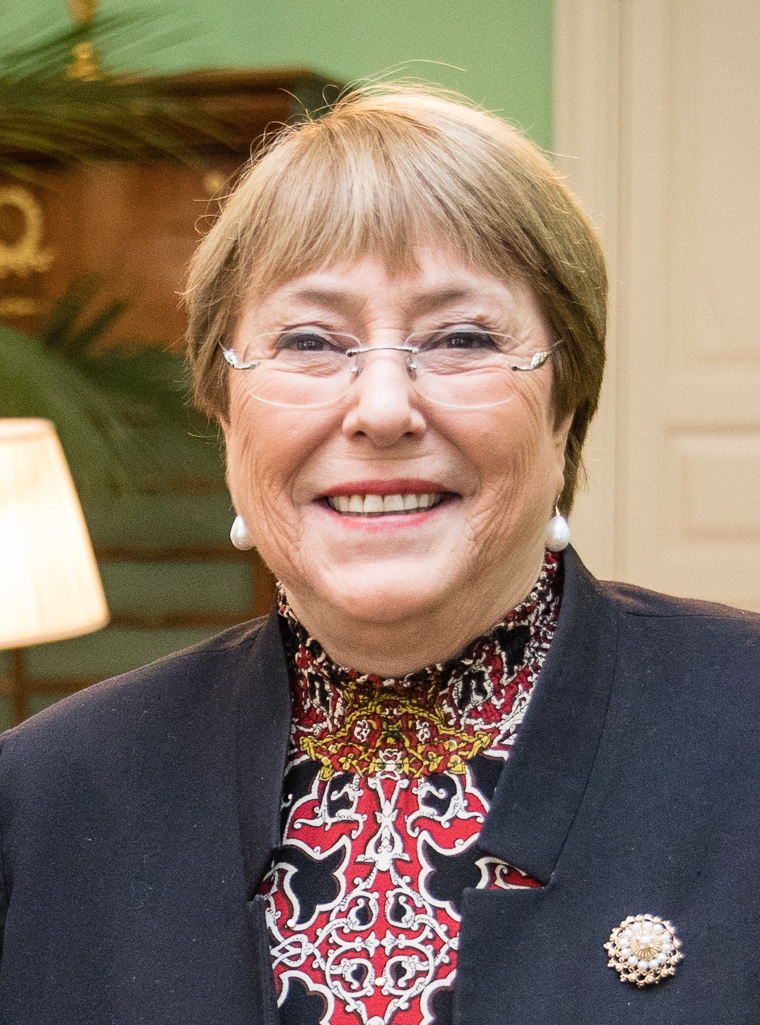
—Was free university education the heart of your reform?
It was its soul. Between 2015 and 2018, we implemented the progressive free tuition of public universities, starting with the most modest families. Imagine a young girl from Santiago, daughter of shopkeepers, the first in her lineage to cross the doors of a university without mortgaging thirty years of family income: that is what it meant concretely. I have always thought that a country is judged by what it offers its poorest children — that was already the spirit of Chile Solidario, the social safety net we had woven from my first term. Education is not an expense; it is the only wealth that no dictatorship can confiscate once it is in a mind. Not everything was perfect; funding remains a struggle. But the breach was open.
Education is the only wealth that no dictatorship can confiscate once it is in a mind.
—What would you say about the weeks surrounding the publication of your report on Xinjiang?
The heaviest of my term in Geneva. At the Palais des Nations, I spent four years signing High Commissioner reports on Venezuela, Ethiopia, Russia — but none generated as much pressure as the one on Xinjiang in 2022. On one side, Uyghur families begging for their suffering to be named; on the other, a great power repeating that I was meddling in its affairs. The report concluded that these treatments could constitute crimes against humanity. I had it published at the last minute, thirteen minutes before the end of my term, it is said. I was criticized for waiting too long, others for going too far. When both sides accuse you of betrayal, it is often a sign that you have told the truth.
When both sides accuse you of betrayal, it is often a sign that you have told the truth.
—How do you stand up to the most powerful states from that Geneva office?
You stand with a weapon both trivial and formidable: a document. The High Commissioner for Human Rights has no army or treasury; it has only public speech, established facts, and the shame they provoke. From that office above Lake Geneva, I learned that the power of a big country is also measured by the energy it deploys to silence you. My phone rang at all hours; capitals threatened to cut off cooperation. The temptation of diplomatic silence is immense — it is so easy to 'preserve dialogue'. But as a child, I knew a country where people had stayed silent while the DINA operated. I know the cost of silence. A human rights institution that censors itself to avoid upsetting anyone is just a piece of furniture.
The power of a big country is also measured by the energy it deploys to silence you.
This imaginary interview was generated by artificial intelligence from sources documented in Michelle Bachelet's profile. It dramatises what the figure might have said based on what we know about them, but does not constitute attested historical testimony. For primary sources and factual documentation, refer to the full profile.