Imaginary dialogue between Ricardo Lagos and Michelle Bachelet
by Charactorium · Michelle Bachelet (1951 — ?) · Politics · 6 min read
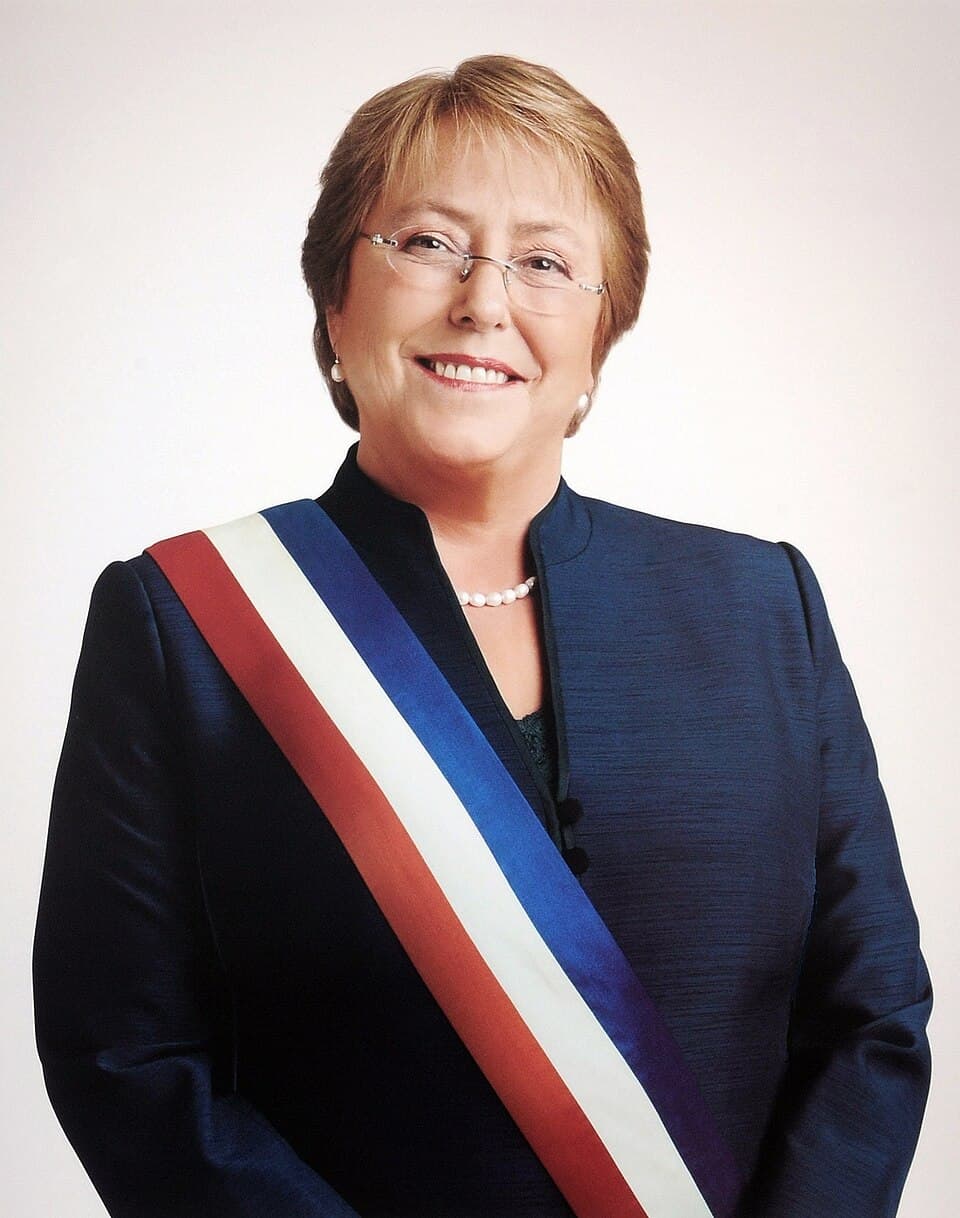
It is in a quiet room in Santiago, at the end of 2022, that Ricardo Lagos meets Michelle Bachelet, just back from Geneva after four years at the High Commission. On the table, two cups of black coffee cool near an annotated copy of the Constitution. They have known each other for more than twenty years — it was he who, in 2000, pulled her from the shadows to make her his minister. Tonight he comes not as a judge, but as a mentor who wants to understand the journey taken.
—Michelle, before I called you to the government, there was 1975, Villa Grimaldi, your mother, your father disappeared. Where did you come back from?
I came back from a place few return from, Ricardo. In 1975, the DINA arrested us, my mother and me, and took us to Villa Grimaldi. My father, General Alberto Bachelet, had refused to support the coup; he died in prison from the effects of torture. I was twenty-three. There you learn that hatred is a dead end, because it devours you before it touches the other. I chose something else: understand, rebuild, heal. You know how much that word defines me. When you have known the desaparecidos from the inside, you don't do politics for power; you do it so that it never happens again. That memory park, today, is my answer to the silence they wanted to impose on us.
You don't do politics for power; you do it so that it never happens again.
—Do you remember, in 2002, when I entrusted you with Defense? The daughter of an officer broken by the army, at the head of that same army. Did I ask too much of you?
You asked the impossible, and that's precisely why I said yes. First woman Minister of Defense in Latin America, in an institution that had destroyed my family — you had to be a little crazy, or else deeply believe in reconciliation. I had already worn the uniform at the Military Health School, I knew these men from the inside. My bet was to reach out to them without forgetting anything. Have soldiers and civilians march together, look the generals in the eye as the daughter of Alberto Bachelet. You saw me come back from some meetings exhausted. But that's when the country understood that a woman could command, and that memory does not prevent turning the page without tearing it.
You had to be a little crazy, or else deeply believe in reconciliation.
—You talk about healing. Did you ever really leave that vocation as a pediatrician, even at La Moneda?
Never. A doctor doesn't hang up his stethoscope; he carries it in the way he looks at people. At La Moneda, I saw poverty curves like reading a clinical file: where it bleeds, who suffers, what needs urgent treatment. That's where Chile Solidario came from, for the poorest families — I wasn't thinking in statistics, I was thinking about those children I had examined in the clinics. Medicine taught me listening, patience before a difficult diagnosis, and humility too. You don't lie to a patient; you shouldn't lie to a people. You who saw me govern, you know I always sought first to understand the pain before prescribing the remedy.
You don't lie to a patient; you shouldn't lie to a people.
—In 2006, your first act was a perfectly balanced cabinet. Many in our Concertación grumbled. Was it a symbol, or more?
Both, and I own it. On the day of my inauguration, March 11, 2006, I spoke of a more equal society between men and women — it wasn't a formula, it was a program. Appointing as many women ministers as men, for the first time in the world, wasn't distributing seats; it was changing who decides. Yes, some of our friends grumbled, you remember better than I. They said there weren't enough 'competent' women. Nonsense: they existed, we just weren't looking at them. Governmental parity forced the whole country to see them. Today other nations do it without even thinking; back then, it was a quiet little revolution, and I am proud of it.
It wasn't distributing seats; it was changing who decides.
—Between us, did you sometimes pay a high price for this image of first woman president? You were watched a lot, perhaps more harshly than a man.
Of course I paid. They scrutinized my clothes, my tone, my way of crying or not crying. A man decides, they say he is firm; a woman decides, they say she is hard or, conversely, too sensitive. I had to govern under a double lens. But you know, Ricardo, I never wanted to be 'the first woman' as a trophy. Above all, I wanted not to be the last, to open the door wide behind me. When a little girl in Santiago sees a woman at La Moneda, her horizon changes without needing a speech. That is the real power of a presidency: not what you do, but what you make imaginable from then on.
I never wanted to be the first woman as a trophy; I wanted not to be the last.
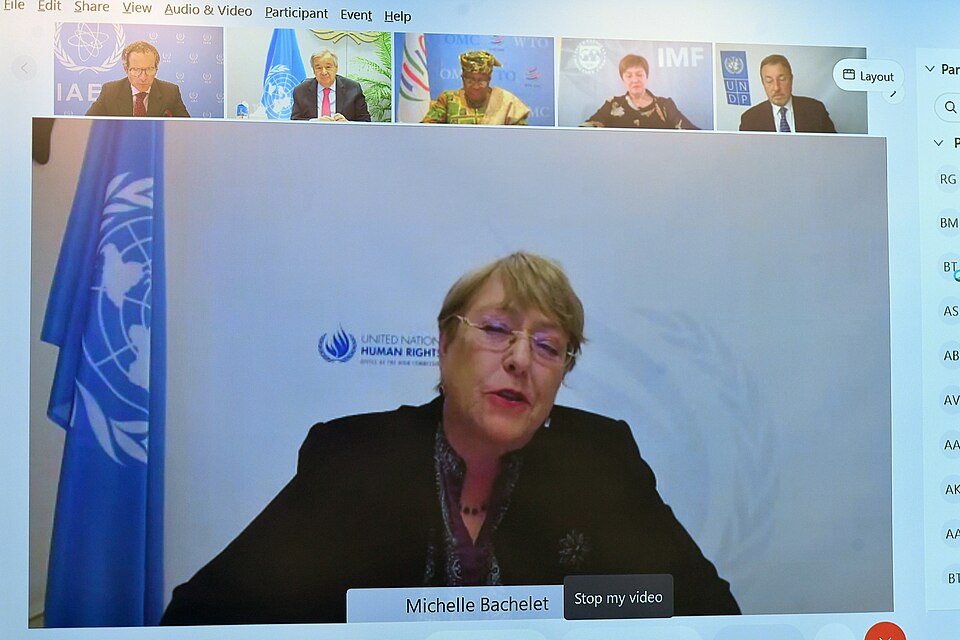
—Your second term faced the student street, the movimiento estudiantil. Free university education in 2015: necessity or concession to pressure?
Necessity, and pride. You remember the legacy of the Chicago Boys: a Chile where higher education was among the most expensive in the world, a commodity rather than a right. The youth said it with their bodies in the street, from the 'Penguin Revolution' in 2006, then in 2011. I listened to them. The 2015 reform began the gradual free education of public universities, so that a child's talent would no longer be condemned by their parents' bank account. It was not a concession wrenched from me; it was a conviction joined by the street. Chilean-style neoliberalism had made school a privilege; I wanted to restore its primary function, that of an elevator that you have no right to disconnect.
A child's talent should not be condemned by their parents' bank account.
—But such a reform costs. Many criticized you for not achieving everything, for hitting budget limits. Do you regret it?
I regret not going further, never going too far. Governing is the art of the possible, you taught me that long before I sat in your seat. Total, immediate free education would have blown the budget; so we made it gradual, starting with the poorest. Some cried betrayal, others irresponsibility — the mark of an honest balance, perhaps. But hundreds of thousands of students from the first deciles studied without paying. That's not nothing; it's even considerable for families who had never sent a child to university. A reform that lasts is better than a promise that bursts. I preferred to lay a solid stone rather than a castle that my successor would undo with a stroke of the pen.
A reform that lasts is better than a promise that bursts.
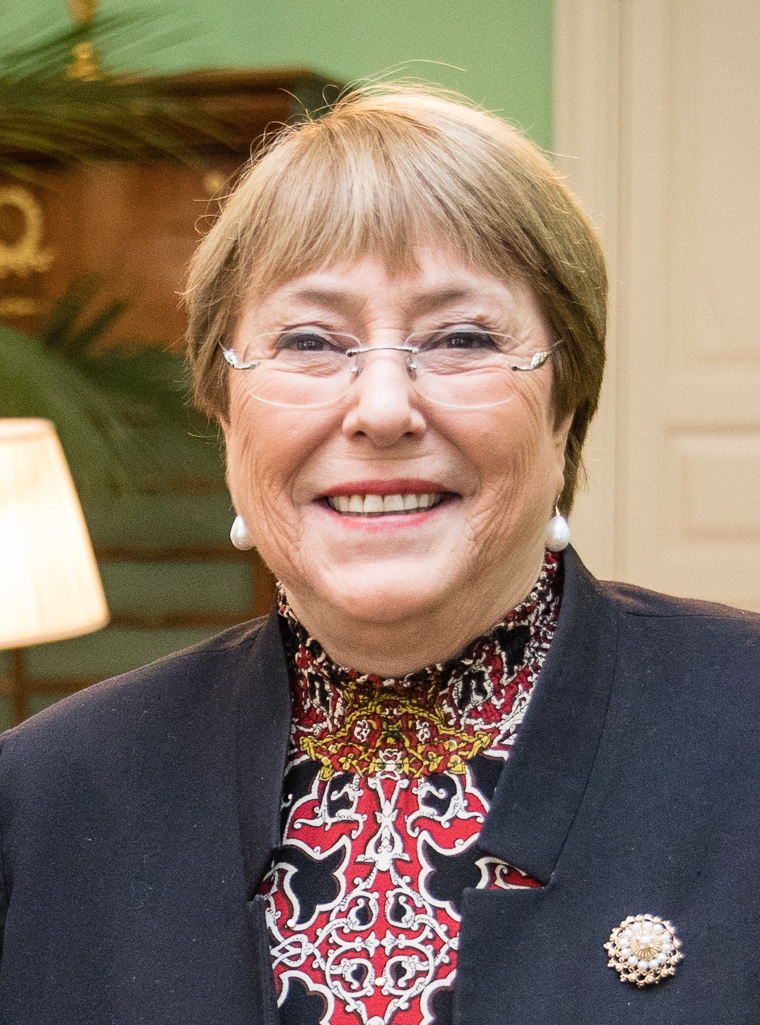
—After Chile, Geneva, the Palais des Nations. You who knew the cells, how do you live denouncing the world's tormentors?
With gravity, and a certain solitude. Leading the Office of the High Commissioner for Human Rights from 2018 to 2022 means carrying the voice of millions of people who no longer have one. Venezuela, Ethiopia, and so many others: with each report, you commit the credibility of the institution and your own. When you yourself were a prisoner at Villa Grimaldi, you don't sign these documents with a light hand; you know what lies behind the numbers. The hardest part is not naming evil; it's measuring how limited our power to end it is. You denounce, you document, you hope that shame will push back the tormentors. It is a slow weapon. But without this written memory, oblivion always wins, and oblivion is the tyrant's best ally.
Without this written memory, oblivion always wins, and oblivion is the tyrant's best ally.
—Your last report, on Xinjiang, in 2022, earned you criticism from both sides. Too late for some, too far for others. How did you decide?
By seeking the truth, not applause. The report concluded that the treatments inflicted on the Uyghurs could constitute crimes against humanity — terrible words, which I did not write lightly. I was accused of complacency toward a great power, then of provocation: proof, no doubt, that the line was right. With a state like China, every comma is a diplomatic battle. Could I publish without full access? Could I remain silent? I chose to publish, at the very minute my mandate ended, so that no one could stifle the document after my departure. Someday I will be told it was imperfect; I will answer that silence, on the other hand, would have been unforgivable. A High Commissioner does not please; he bears witness.
A High Commissioner does not please; he bears witness.
—To finish, Michelle, you whom I have seen minister, president, then voice of the world: what remains, in the evening, of the young doctor from 1979?
Everything remains, Ricardo. In the evening, when I close the files, I am still that woman who earned her medical degree in 1979, upon returning from exile, in a country that had taken everything from me except the desire to serve. Sometimes I listen to nueva canción, Victor Jara, and I remember where we both come from — a wounded Chile that had to be patiently stitched together. I did not change the world; I healed what I could, where I was. The presidency, the UN, they were larger clinics, that's all. And if I am asked my greatest title, I always answer: doctor. The rest is just the way I practiced that profession on a larger scale.
The presidency, the UN, they were larger clinics, that's all.
This imaginary interview was generated by artificial intelligence from sources documented in Michelle Bachelet's profile. It dramatises what the figure might have said based on what we know about them, but does not constitute attested historical testimony. For primary sources and factual documentation, refer to the full profile.