Imaginary interview with Mulan
by Charactorium · Mulan · Mythology · 6 min read
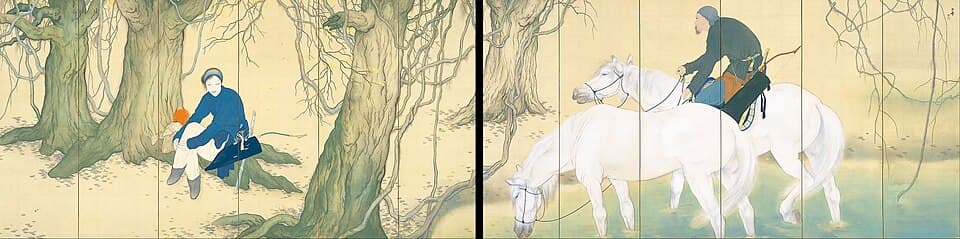
At the threshold of a rammed-earth house, in a small town in northern China, a woman puts away a loom near the central hearth. A warrior's armor rests, folded, on a wooden chest; beside it, a silk dress waits to be taken up again. Mulan agrees to speak, in the fading light, about the twelve years when no one knew who she was.
—First of all, where does this name come from, the one that is still recited today?
I was named Mulan, the magnolia. It is a flower of purity and nobility, one that people love to see blooming at the threshold of honest homes. My mother, I think, hoped for me a gentle life: spinning in the morning, weaving fibers until evening, a long robe with wide sleeves cinched by a belt, and nothing rougher than a needle. But a name is not a promise kept by Heaven. The magnolia holds firm in the cold of the Northern dynasties, and perhaps that is what they meant by calling me thus. When I think back on my youth, I see mostly the oil lamp and my hands reddened by hemp — not the warrior they imagine today.
A name is not a promise kept by Heaven.
—How did you go from that quiet house to becoming a soldier?
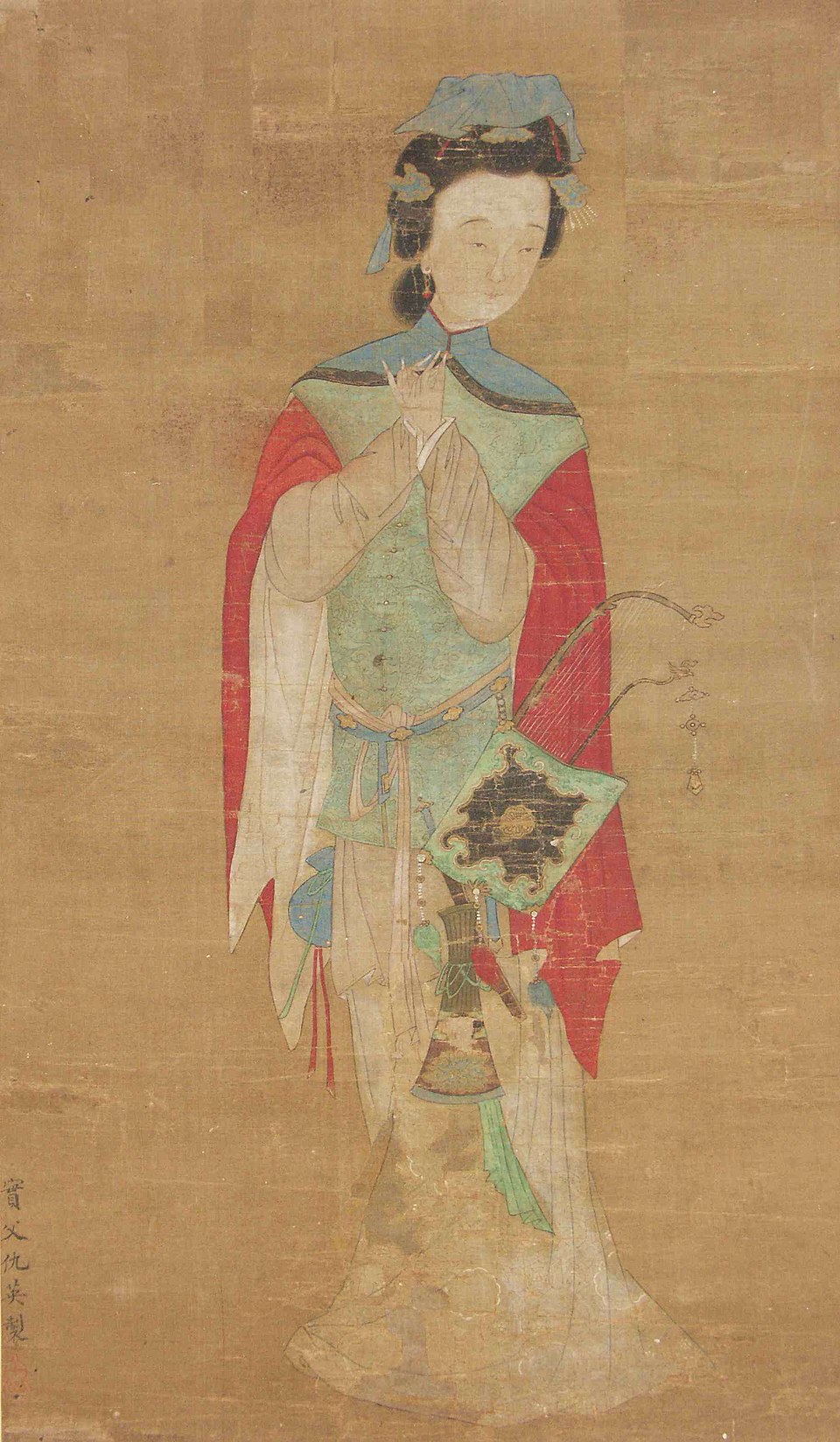
An imperial edict demanded one man per household. My father was old and sick, and I had no elder brother to go in his place. So I did what no girl dared: I took out the warrior armor, the breastplate and arm guards, and I cut my long hair. Cutting one's hair, for a woman of my time, is to cut into one's very name, to break with everything the family honor tablet expects of you. I folded my Hanfu at the bottom of the chest, tied the military insignia, and I became, for twelve years, a soldier among soldiers. Filial piety left me no other path: a father you love comes before the appearance you keep.
Cutting one's hair is to cut into one's very name.
—What would you say about those long campaigns, where no one guessed your secret?
Twelve years, says the poem, and it is true. She enlisted in the army in place of her father and became a soldier for twelve years of campaign. Twelve winters sleeping under the same tent as my comrades, carrying the bow and arrows, wielding the straight sword on the northern frontier, where we repelled the horsemen from the steppes. You do not undress in front of others; you learn to be vigilant, to stand straight in the uniform when your body wants to betray you. The secret was not a lie; it was a discipline of every hour. Fatigue, cold, the fear of battle — all these wear down man and woman alike. And perhaps that was my greatest surprise: under the armor, no one looks for who you are; they only look to see if you hold your rank.
Under the armor, no one looks for who you are; they only look to see if you hold your rank.
—Do you remember the day your comrades finally recognized you?
When the war fell silent, I returned home. I took off the breastplate, put on my old dress, and combed my hair as a woman. And my former brothers-in-arms came to greet me: they stood mute, astonished, they who had been with me twelve whole years without seeing anything. That is where the riddle the children still recite was born: when two hares run side by side, who can tell which is male, which is female? The point is gentle and mocking at once. I never lied aloud; I only ran, like the hare, and no one could distinguish me in the race. That silence of others is my most beautiful victory — more than all the enemies repelled on the frontier.
I only ran, like the hare, and no one could distinguish me in the race.
—Yet the Emperor offered you high rewards. Why did you refuse them?
Received in the imperial capital, I was offered an official post, titles, a place among the palace servants. Many would have bent the knee in gratitude. I asked for only one thing: a swift horse, the fastest to be found, to take the road home. Understand me: I did not set out seeking glory, but to spare my father death in the field. Filial piety is not repaid with a court position. The Confucianism I was raised on places duty to one's family above all ambition. What good would a title have done me, far from the home where I was needed? I saluted the emperor, mounted my steed, and galloped north, toward the lamp and the loom.
Filial piety is not repaid with a court position.
—That return to simple life, how did you experience it after so many years of war?
People think a warrior grows bored at home. That is to misunderstand what I was seeking. To find again the rice of the family meal, the vegetables from the garden, the mat where one sits in the evening by the fire — that was worth more than all the honors of Luoyang. I took up the long robe again, the morning spinning, the gestures I thought I had forgotten under the breastplate. My father was still alive, and that was my entire reward. Virtue, as I was taught, is not to shine: it is to hold one's place in the order of things, to honor the ancestors before the clan tablet. I had worn the armor to preserve that order, not to leave it. To return was to complete my duty, not to abandon it.
—This tension between the flower your name signifies and the sword you carried, how do you understand it?
People say I am made of opposites: the gentleness of the magnolia and the hardness of the straight sword. But I do not feel this rift you imagine. The same hand that pulled the thread at the loom drew the bow on the frontier. A woman of my country knows that valor and tenderness are not mutually exclusive: it takes courage to spin in the cold as to fight the Rouran. The poem chose my flower name on purpose, I think, so that one would never forget that it was a girl who wore the armor. Strength did not turn me into a man; it showed what a woman could accomplish without ceasing to be herself. The magnolia bends under the north wind, but it does not break.
Strength did not turn me into a man; it showed what a woman could accomplish.

—Is there one object, among all those of this double life, that holds the most meaning for you?
The armor, without hesitation — but not for the battles. When I put it on, it was not my body I was covering, it was my father's that I was replacing. Each plate of the breastplate said: he will stay alive at home. Beside it, I keep my Hanfu, that feminine costume I had left behind, carefully folded. The two together tell my whole story better than a thousand words: the girl who becomes a soldier, the soldier who becomes a girl again. And there are my hair, which I had cut — they grew back, as the magnolia grows back after winter. These objects are not trophies. They are the silent witnesses of a duty fulfilled toward the ancestors' tablet and toward an old man I loved.
It was not my body I was covering, it was my father's that I was replacing.
—Your story, you say, is passed from mouth to mouth. How do you imagine it will be remembered?
In my lifetime, they already sang my ballad from village to village, before it was fixed in writing. If I were to dream that people read me in a century, or ten, I would want them to remember not the warrior but the faithful daughter. May children learn by heart the verses where Mulan has no elder brother, Mulan has no elder father — and may they understand why she left. The operas, the tales that will be spun from it will no doubt embellish the sword and the battle; that is the way of storytellers. But the heart of the poem is filial piety, that tender duty that made me cut my hair. As long as that is kept, the rest may be adorned with all the colors one wishes.
—If your legend were ever distorted, what would you most want not to be forgotten?
I know that storytellers add, subtract, invent loves and duels I never knew. Let them do so: a legend lives by transforming itself, as the Ballad of Mulan has been enriched century after century in plays and novels. But let them not forget the essential: I did not take up the armor to prove myself equal to men, nor for the glory I refused at the capital. I took it up out of duty, because a beloved father could no longer march to battle. Everything else — the riddle of the hares, the magnolia, the twelve years — flows from that single act. If that is lost, they will have kept the story and lost its soul. Virtue, you see, makes no noise, but it is what endures.
A legend lives by transforming itself, but let them not forget its soul.
Read further
This imaginary interview was generated by artificial intelligence from sources documented in Mulan's profile. It dramatises what the figure might have said based on what we know about them, but does not constitute attested historical testimony. For primary sources and factual documentation, refer to the full profile.