Imaginary dialogue between Empereur Xiaowen des Wei du Nord and Mulan
by Charactorium · Mulan · Mythology · 5 min read
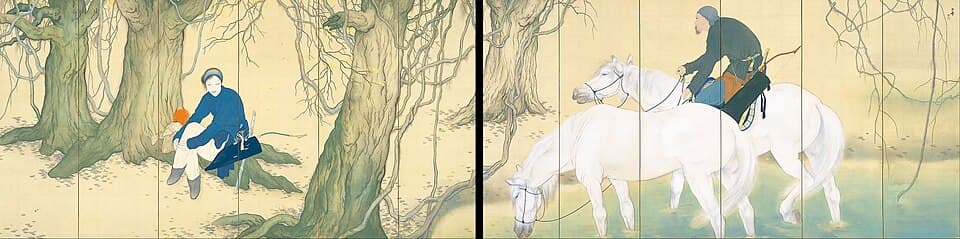
It is in a paved courtyard of the Luoyang palace, in the shade of magnolias whose petals fall on the flagstones, that the Emperor Xiaowen of Northern Wei receives for a second time the one he had honored after the victory. The bronze brazier still smokes with a light incense, and in the distance one hears the horses of the guard. The sovereign remembers the soldier who, before him, had refused titles and positions to ask only for a swift mount. Today, it is a woman in hanfu who stands before him, and he comes to understand what no military report had told him.
—Mulan, when you presented yourself at the troop assembly, you had no elder brother nor a fit father. What drove you to take his place?
Your Majesty, your conscription scrolls had reached our northern village, and my father's name was on them. But he is old, his legs can no longer carry him to the horse. I have no elder brother to answer the call, only a younger sister and a little brother still a child. Before the tablet of our ancestors, I understood that a son was missing from this house, and that I had to become him. It was not audacity; it was my duty as a child. Letting my father march to his death would have extinguished the honor of our lineage. I bought a horse and a saddle, and I left before dawn so that no one could stop me.
A son was missing from this house, and before the tablet of our ancestors, I understood that I had to become him.
—Confucianism says that filial piety comes before all else. Did you never fear betraying that order by taking on a man's role?
Your Majesty, I long weighed this question on the road. The disguise violated propriety, it is true, and my woman's body under the armor was not in its proper place according to the rites. But filial piety is not only obeying customs: it is protecting those who gave us life. If I had respected appearances by letting my father go, I would have betrayed the substance. I chose to serve the substance, even at the cost of ruffling the form. Heaven, I hope, judges hearts before garments. And when I put on my cuirass each morning, I told myself that my father still slept, alive, under our roof — that was enough to ease my conscience.
I chose to serve the substance, even at the cost of ruffling the form.
—My officers reported that you served twelve full years on the borders. How could you keep your secret so long among men?
Twelve winters, Your Majesty, against the Rouran horsemen on the northern frontier. The secret lay in discipline and the soldier's solitude. I had cut my long hair before leaving, I slept clothed, I kept apart at bivouacs and rivers. The cold of the steppes was my ally: everyone bundled up, no one was surprised that I kept my badge and tunic tight. In combat, my bow and sword spoke for me, and a soldier who holds his rank does not invite questions. Fatigue and war erase curiosity. I learned to harden my voice, to walk heavily, to eat quickly. For twelve years, I was to my comrades just another brother-in-arms.
The cold of the steppes was my ally: no one was surprised that I kept my tunic tight.
—You who fought so long in disguise, what weighed on you most: the danger of the Rouran, or this secret carried day and night?
Danger, one gets used to, Your Majesty — an arrow or a saber is a matter of an instant, and armor protects the flesh. But the secret never sleeps. Every gesture had to be watched, every word measured. I laughed with my comrades without ever being able to confide who I really was or where I came from in my heart. It was a second war, more muffled, waged against myself. The hardest was not killing or marching in the snow, but not being able to be mourned as a daughter if I fell. I would have been buried under a false name. That thought, on some nights, weighed heavier than the cuirass on my shoulders.
Danger, one gets used to; but the secret never sleeps.
—When you were presented to me after the victory, right here, I offered you a high post and rewards. Why did you refuse them all?
You remember it, then, Your Majesty. You offered me an official position, titles, gold — enough to elevate my house for generations. But twelve years away from my family had taught me what I truly missed, and it was neither rank nor wealth. I asked only for a good horse, swift, to take the road back to the village as quickly as possible. My father was aging, my mother was waiting for me, and I wanted to cross the threshold of our home before it was too late. Serving the Empire was my duty; serving my parents was my heart. A post at court would have kept me far from them for years more. No honor was worth the face of my father when I would again pass through our door.
Serving the Empire was my duty; serving my parents was my heart.
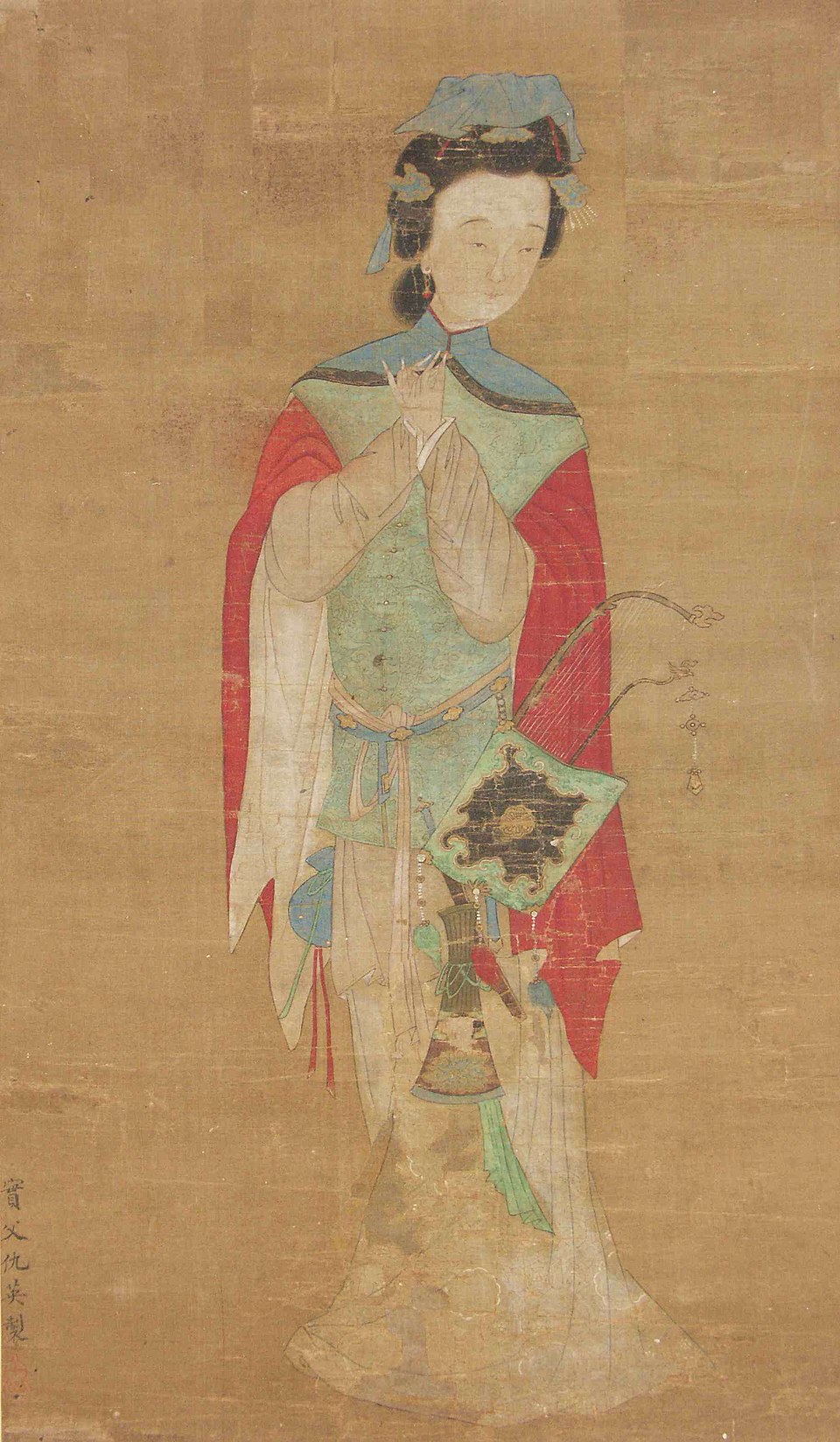
—Many soldiers would have seized my favor to rise. By refusing thus before my court, did you not fear appearing ungrateful to me?
I feared it for a moment, Your Majesty, and that is why I spoke with all the respect I owe you. But refusing a gift is not despising it: it is showing that one has already received something more precious. What you had given me was the honor of having served under your banners and of having seen my father spared by my departure. A title would have added nothing I did not already have. I thought that you, who reform the state and know the price of righteousness, would understand that a loyal subject might simply want to go home. The best gratitude I could offer you was not to sit near your throne, but to return to cultivate the peace your armies had just won.
Refusing a gift is not despising it: it is showing that one has already received something more precious.
—Your name, Mulan, means the magnolia flower, whose trees shade this courtyard. A girl bearing such a name, and waging war — is that not strange?
My parents named me after this flower, Your Majesty, symbol of purity and nobility, for the gentleness they hoped for their daughter. And behold, this flower wore armor for twelve years. I see less a contradiction than a truth: the magnolia blooms early, before the leaves, when the cold has not yet left the branches. It takes strength to open in what remains of winter. A woman too can carry gentleness and valor within her without one driving out the other. I did not cease to be Mulan by taking up the sword; I only showed that a flower could also stand firm against the north wind.
The magnolia blooms before the leaves: it takes strength to open in what remains of winter.

—When you put back on your woman's clothes before your comrades-in-arms, what happened? How did they receive your true nature?
That was, Your Majesty, the most singular moment of my entire campaign. Back in the village, I took off my cuirass, untied what remained of my hair, put on my old dress, and applied rouge at my window, as in the old days. When my former comrades came to greet me, they stood speechless with astonishment: twelve years side by side, and none had guessed that their brother-in-arms was a woman. How can one tell, as they say among us, the male hare from the female hare when both run together in the grass? On the battlefield, no one sees the sex of one who fights well. Their amazement was for me the most beautiful proof: I had held my rank as an equal among equals.
On the battlefield, no one sees the sex of one who fights well.
—Your story is already being sung in the northern villages, I am told. Does it touch you to know your tale is passed from mouth to mouth?
I am told indeed, Your Majesty, that storytellers have made a ballad of it and that children hum it at evening gatherings. It moves me and embarrasses me at the same time. I did not fight so that my name would be sung, but for my father and to serve the Empire. Yet if this song is to last, I wish it to say the right thing: not that a woman knew how to wage war like a man, but that a child loved his father enough to risk his life for him. Let them remember the piety, not the disguise. Villages quickly forget battles; they keep longer the lessons of the heart. If my ballad teaches filial duty to generations, then my service will have borne fruit twice.
Let them remember the piety, not the disguise.
—Last question, Mulan. If in a hundred years only one thing were to be remembered about you, what would you want it to be?
One thing, Your Majesty? Then let it be this: that a northern girl loved her family enough to take the road in her father's place, and that she returned home intact without asking for anything more. Let them forget, if need be, the names of battles and the number of enemies. Let them remember only that one need not be born a boy to bear the weight of a household, nor have a great title to fulfill one's duty. I spun wool in the morning and drew the bow in the evening, and both hands were mine. If a young girl, in a hundred years, draws from this a little courage for her own family, I will be more honored by her than by all the gold on your throne.
I spun wool in the morning and drew the bow in the evening, and both hands were mine.
Read further
This imaginary interview was generated by artificial intelligence from sources documented in Mulan's profile. It dramatises what the figure might have said based on what we know about them, but does not constitute attested historical testimony. For primary sources and factual documentation, refer to the full profile.