Imaginary dialogue between Buzz Aldrin and Neil Armstrong
by Charactorium · Neil Armstrong (1930 — 2012) · Exploration · Sciences · 5 min read
It is on the porch of the farm in Lebanon, Ohio, on an afternoon in the summer of 2009, as the fortieth anniversary of Apollo 11 approaches, that Buzz Aldrin comes to see his former commander. The light falls on a wooden table where an old annotated flight manual still lies. The two men have known each other since the astronaut selections of the sixties and shared, alone in the world, the few hours of the Sea of Tranquility. Aldrin has not come as a journalist: he comes to find the man behind the silence that Neil has cultivated for so long.
—Neil, even before we climbed into Eagle together, there was Gemini 8 in 1966. That wild spin at 400 km, do you think about it?
I think about it more often than people imagine, Buzz. We had just completed the first orbital docking in history, and suddenly the spacecraft began to spin faster and faster. At that rate, you lose consciousness in seconds. I didn't panic: I shut down the faulty system and used the reentry thrusters to stabilize the vehicle. It wasn't courage; it was applied engineering under pressure. But I think that was the day NASA knew I would keep a cool head when it came time to land a module on the Moon. You don't become a test pilot for the thrill; you become one to solve the problem before it kills you.
It wasn't courage; it was applied engineering under pressure.
—Do you remember our descent in Eagle? The ground was coming up, alarms were sounding. What did you see, at the controls?
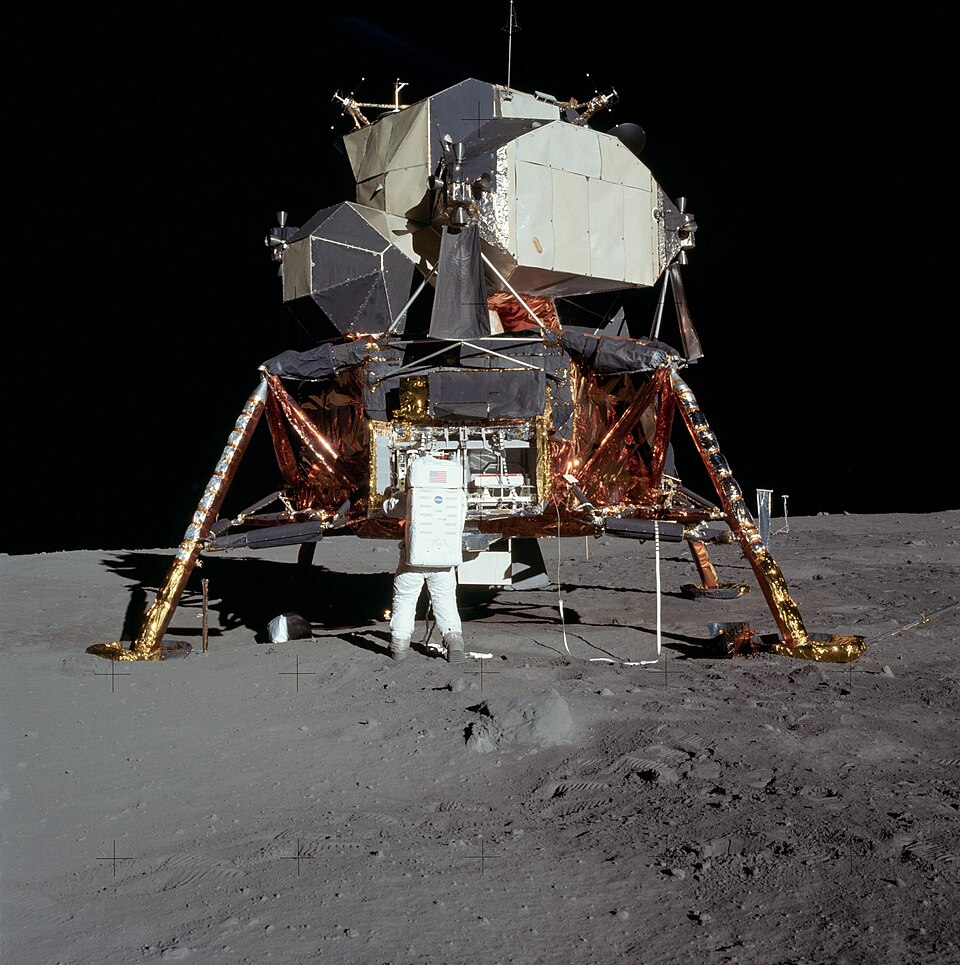
I saw a field of boulders where the computer wanted to set us down, Buzz. You were reading out altitudes and speeds, and I was looking for a flat spot beyond that crater. I switched to semi-manual control and glided the module further. Houston was calling out the fuel running low — we had barely seventeen seconds of reserve left when the pads touched. I didn't feel fear; I didn't have time. All my attention was on the dust kicking up and obscuring the ground. If I had hesitated one more second, we would have had to abort and climb back up. We landed Eagle, and only then did I hear my own breathing.
I didn't feel fear; I didn't have time.
—When you announced Tranquility Base here, the Eagle has landed, what happened inside you at that precise moment?
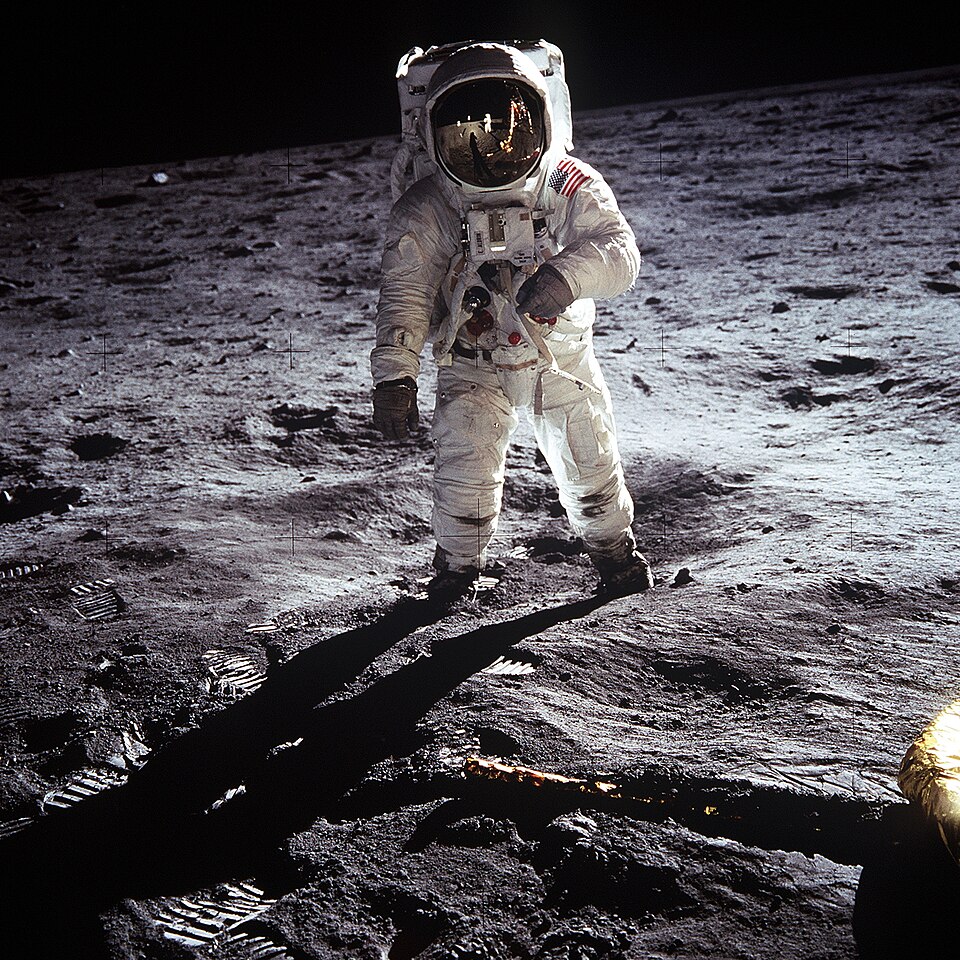
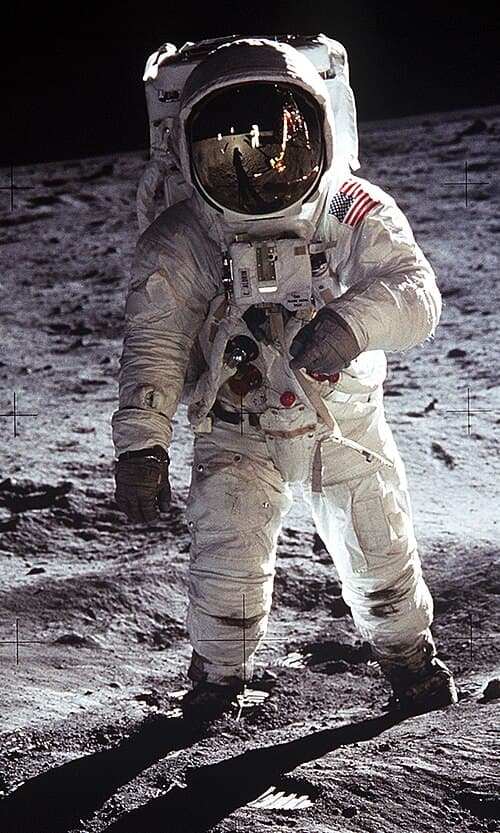
Immense relief, more than pride. For years, thousands of engineers had worked to make that landing possible, and the thought of disappointing them was unbearable. When contact was confirmed, I thought first of the ground crews, all those holding their breath in Houston. You and I still had everything to do: check systems, prepare the EVA, monitor for any leak. You don't congratulate yourself in those moments; you check boxes. The real vertigo, I think, came only later, looking through the window at that gray, silent landscape. We were two men standing on another world, and the Earth fit in the palm of an upraised hand.
We were two men standing on another world, and the Earth fit in the palm of an upraised hand.
—I have to ask you, Neil: one small step for man. The little word a — did you really say it that morning?
I said it, Buzz, I'm convinced. That's one small step for a man, one giant leap for mankind — the phrase only makes sense with that a, otherwise I'd be saying humanity takes a small step and a giant leap, which is nonsense. But the radio communications from the Moon were choppy with static, and the a got lost in a dropout. I'm not going to fight about it forever. A phrase, once spoken, no longer belongs to you; it becomes the property of everyone who heard it. If the world has remembered a slightly imperfect version, so be it. What matters isn't the grammar; it's that hundreds of millions of people looked up at the sky that night and thought it was possible.
A phrase, once spoken, no longer belongs to you; it becomes the property of everyone who heard it.
—You carried in your pocket fragments of the Wright brothers' Flyer. Why that gesture, which you told almost no one?
Because nothing we accomplished came out of nowhere, Buzz. In 1903, at Kitty Hawk, two tinkering brothers flew a machine of wood and cloth for twelve seconds. Sixty-six years later, we walked on the Moon. I carried a piece of wood and a piece of fabric from their airplane because I wanted those two moments to touch, so people would understand there are no miracles, only a long chain of curious and stubborn people. The space conquest is told as a race against the Soviets, and it was that. But at heart, it's the story of a single species slowly learning to leave the ground. I was just a link, not a beginning.
There are no miracles, only a long chain of curious and stubborn people.
—You collected over twenty kilograms of rocks up there. For the pilot you are, what mattered most: the gesture or the science?
The science, without hesitation. People remember the steps and the flag, but the heart of the mission was bringing back those samples. I filled the sealed boxes with regolith and rock fragments as methodically as possible, knowing that laboratories around the world would study them for decades. That gray soil had never been touched, never altered by water or wind; it carried the memory of billions of years. Walking on the Moon was a symbol, I admit, and a useful one in the context of the Cold War. But I was an engineer before I was an image. What we brought back in those boxes is worth far more than my footprints, which will eventually be erased by micrometeorites.
I was an engineer before I was an image.
—As early as 1971, you left NASA to teach at Cincinnati. The rest of us continued to carry that legacy. Why did you step back so quickly?
Because I never recognized myself in the hero they wanted to create, Buzz. You know better than anyone that we weren't alone: we were the visible tip of four hundred thousand people. Continuing to sign autographs and cut ribbons would have felt like stealing credit that wasn't mine. I preferred to teach aerospace engineering to students, to pass on something useful rather than repeat myself on podiums. The Ohio farm, the privacy — it wasn't shyness or contempt for people. It was a way to stay true to who I am. A man can accomplish a great thing and then have no desire to make it a career.
They wanted a hero; I was only the visible tip of four hundred thousand people.
—Here on this farm, far from the spotlight, are you happy, Neil? Is this really the life you wanted?
I think so, yes, in my quiet way. In the evening, I listen to music, read technical reports no one asks me to read anymore, look at the fields. Janet and the kids paid a price for Apollo, those years I was in Houston or in simulators more often than at home; today's privacy is also a debt I owe them. I never had a taste for social events, you know, the cocktails and speeches. What makes me happy is understanding how things fly, and explaining it to someone who wants to learn. Fame is noise; eventually you wish for silence. And silence, here under this Ohio sky, I have finally found.
Fame is noise; eventually you wish for silence.
—One last thing, my friend. If the world could remember only one thing from that July 20, 1969, what would you have chosen?
Not my name, Buzz, nor even both our names. I would have wanted them to remember the plaque we left on the leg of Eagle: that men from the planet Earth set foot on the Moon, and they came in peace for all mankind. That is the only message that will survive up there when we are gone, in a place with no wind or rain to erase it. We went at the height of rivalry between blocs, and yet we engraved a word of peace. That is what I hope will be remembered: not that an American won a race, but that human beings, together, did something thought impossible.
We went at the height of rivalry, and yet we engraved a word of peace.
This imaginary interview was generated by artificial intelligence from sources documented in Neil Armstrong's profile. It dramatises what the figure might have said based on what we know about them, but does not constitute attested historical testimony. For primary sources and factual documentation, refer to the full profile.