Kids interview Neil Armstrong
by Charactorium · Neil Armstrong (1930 — 2012) · Exploration · Sciences · 5 min read
That morning, two young visitors on a school field trip pushed open the door of a small, quiet room. Sitting across from them was a smiling, unassuming old gentleman: Neil Armstrong, the first man to have walked on the Moon. They had prepared their questions, their hearts pounding.
—How old were you when you started dreaming of going into the sky?
You know, my child, I dreamed of airplanes long before rockets. I was born in 1930 in Wapakoneta, a small town in Ohio, surrounded by fields. Imagine a quiet place, no big cities for miles, just the sound of the wind and sometimes an airplane engine passing high overhead. I would look up and tell myself: one day, that will be me up there. Later, for my mission, I carried a small piece of wood and fabric from the Wright brothers' very first airplane, from 1903. That was my way of connecting my childhood dream to that great journey.
I would look up at the sky and tell myself: one day, that will be me up there.
—Is it true that before the Moon, your spacecraft started spinning on its own?
Yes, and I was very scared, I'll admit it! It was in 1966, during my Gemini 8 mission. We had just completed the very first docking between two spacecraft in orbit, a major achievement. And suddenly, everything started spinning, faster and faster, 400 kilometers above Earth. Imagine a merry-go-round that goes wild and you can't stop it. My body was spinning, my vision blurring. I took the controls manually, calmly, and managed to stabilize the craft in a few seconds. That day, I learned that a pilot must keep a cool head when everything goes crazy.
A pilot must keep a cool head when everything goes crazy around him.
—Were you afraid of dying at that moment?
Fear, you know, I set it aside. Not because I'm brave like in the stories, but because I had a job to do. When everything was spinning on Gemini 8, I didn't have time to cry or scream. My mind was entirely on the buttons, on the controls. Imagine you're sliding on ice: you don't think about the fall, you think about regaining your balance. It's the same. Fear, I think, comes mostly afterward, when you're back home and you think about what could have happened. In the moment, you just have to act, quickly and correctly.
Fear often comes afterward, when the danger is already past.
—To land on the Moon, is it true there was almost no fuel left?
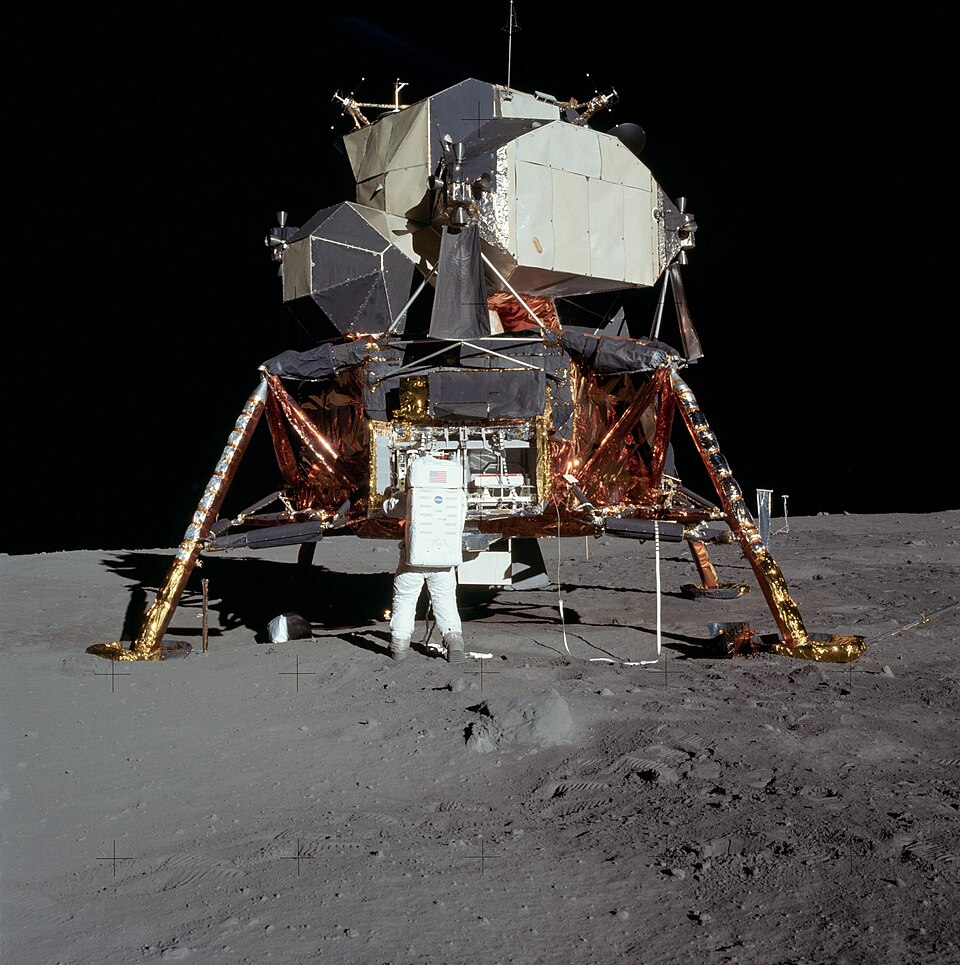
That's true, and it was the most tense moment of my life. On July 20, 1969, I was descending toward the Moon in the Eagle module, our small lunar lander. But just below us was a crater full of big rocks. If I landed there, we would break apart. So I took manual control to search for a flat spot, a little farther away. Meanwhile, the fuel was running low, low... In the end, we had only 17 seconds of reserve left. Houston, back on Earth, was holding its breath. I kept my eyes fixed on the gray ground.
There were seventeen seconds of fuel left, and all eyes were fixed on the ground.
—What did you say when you finally managed to land?
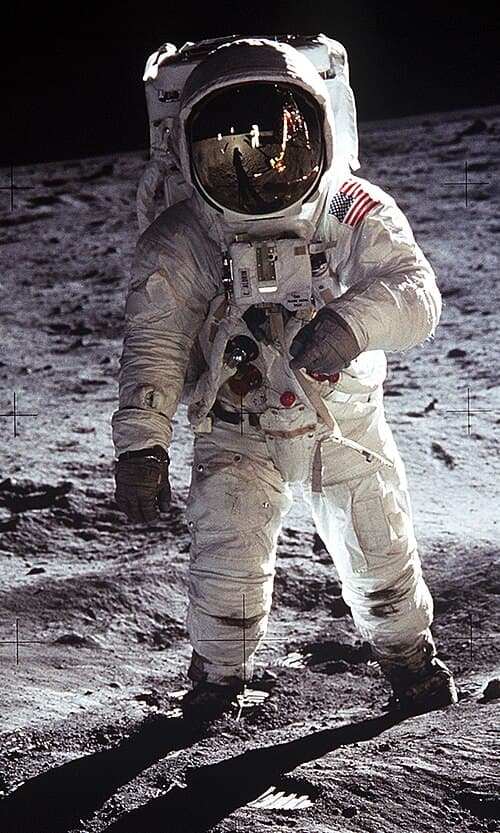
When the pads touched the ground, I spoke these words, and they remained in history: “Houston, Tranquility Base here. The Eagle has landed.” The Sea of Tranquility is the name of the place where we had landed. Imagine a vast gray desert, silent, without a sound, without a plant, without a breath of wind. And us, two little humans from very far away. In my chest, my heart was beating hard. I was surprised, relieved, and happy to have succeeded.
The Eagle has landed: three words, and a whole world held its breath.
—Your famous words on the Moon, they say a word was lost, is that true?
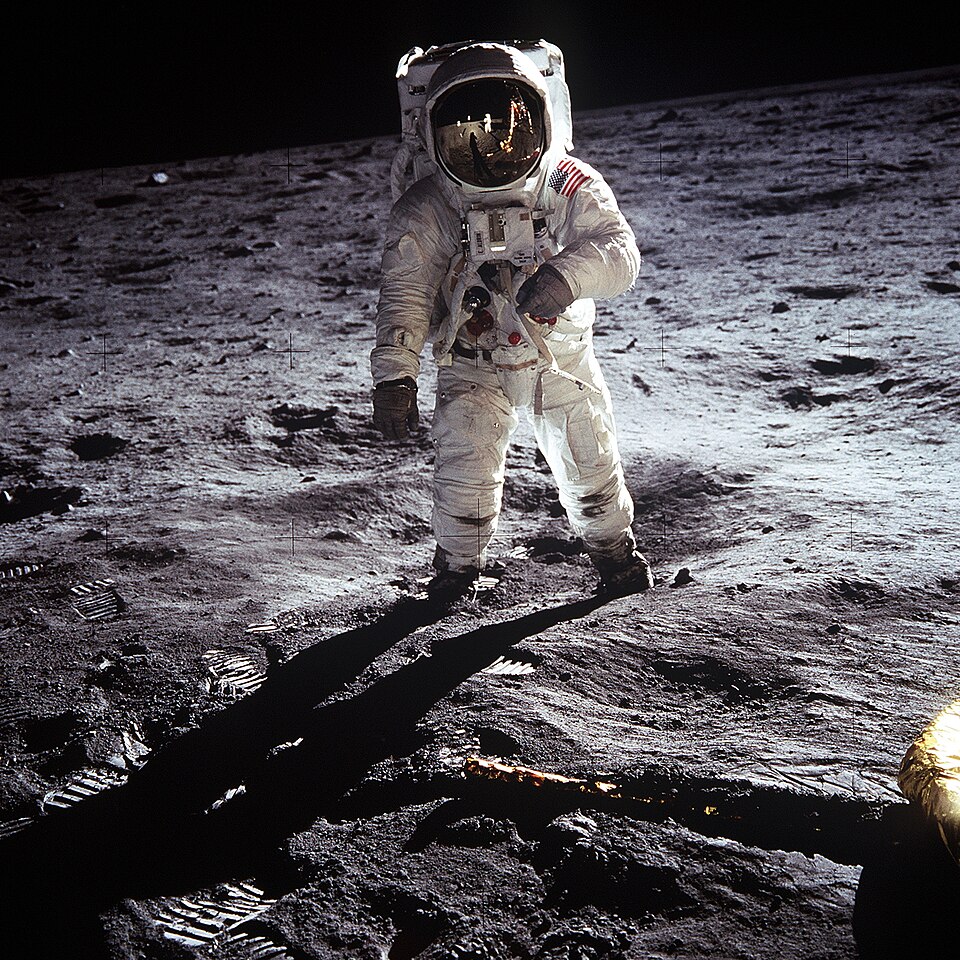
Ah, you've read your lessons well! As I set foot on the surface, I said: “That's one small step for a man, one giant leap for mankind.” But between the Moon and Earth, the radio waves crackled, like a distant voice you can barely hear. The small word “a” was swallowed by static. I've always said I said it. But you can't hear it clearly on the recordings. And ever since, people still argue about it. You see, even a tiny word can spark debate.
One small step for a man, one giant leap for mankind.
—What was it like walking up there? What did the Moon look like?
It was another world, my child. The ground was covered in fine gray dust, called regolith, the result of billions of years of meteorite impacts. I collected about 21 kilograms of it in special boxes, for the scientists back on Earth. To a journalist, I later said the Moon was “a grey place, very white, chalky grey.” Imagine a beach without a sea, without color, where every step leaves a clear footprint that will never fade, because there is no wind or rain. And above, a pitch-black sky, even in broad daylight.
Every step left a footprint that would never fade, for up there, there is no wind or rain.
—Why was it so important to go to the Moon before other countries?
In my time, two great powers were competing without directly fighting each other: the United States and the Soviet Union. This was called the Cold War. Instead of fighting with weapons, they measured themselves in science and space: that was the Space Race. In 1957, the Soviets launched Sputnik, the first satellite. In 1961, their cosmonaut Gagarin went into space before us. Our president Kennedy then promised to send a man to the Moon before 1970. Imagine two teams racing to the same summit. On the plaque left up there, we wrote: “We came in peace for all mankind.”
We came in peace for all mankind.
—After that you were super famous, did you like being a hero?
No, my child, and that might surprise you. I never liked being called a hero. For me, that mission was the work of thousands of people: engineers, workers, technicians in Houston. I was just the one who set foot first. In 1971, I left NASA to become a professor of engineering at the University of Cincinnati. I loved teaching young people, like I'm talking to you today. I turned down almost all interviews, I rarely signed autographs. I didn't want to live in the spotlight. I just wanted to be a normal man who had an extraordinary chance.
I was just the one who set foot first; the rest was the work of thousands of hands.
—And after that, how did you live? Like everyone else or strangely?
Like everyone else, or almost! I settled on a farm in Ohio, in Lebanon, far from the noise and the photographers. I loved the land, the quiet, the peaceful evenings. Before the Moon, I already lived in an ordinary suburban house with my wife Janet and my children. In the evenings, I didn't go to big parties. I read technical reports, listened to music. You see, you can have walked on the Moon and still prefer the silence of a farm afterward. If I can leave you with one thing: do great things, but never forget to stay yourself, simple and honest.
You can have walked on the Moon and still prefer the silence of a farm afterward.
This imaginary interview was generated by artificial intelligence from sources documented in Neil Armstrong's profile. It dramatises what the figure might have said based on what we know about them, but does not constitute attested historical testimony. For primary sources and factual documentation, refer to the full profile.