Imaginary dialogue between Jules Verne and Nellie Bly
by Charactorium · Nellie Bly (1864 — 1922) · Exploration · Literature · 5 min read

It is in the study of his house in Amiens, where a wall map still bears the pins of a certain journey, that Jules Verne meets Nellie Bly in the spring of 1895. The oil lamp illuminates shelves laden with atlases and sea stories, and the smell of old paper floats in the room. They met six years earlier, when the journalist stopped at his home in the midst of her race around the globe; the novelist, admiring and somewhat paternal, wants to understand what his books had never dared imagine—a lone woman defying the entire earth. He questions her as a curious host, she answers as a friend.
—I've been told that at eighteen a simple letter, written in a fit of anger, opened the doors of a newspaper for you, miss. What article had so outraged you?
That is the exact truth, Monsieur Verne. A columnist for the Pittsburgh Dispatch had published a piece—What Girls Are Good For—to explain learnedly that a girl's place was in the home, sewing and keeping quiet. I was eighteen at the time, with no experience, and my blood boiled. I seized my pen and wrote to him that this article was a disgrace to his newspaper; I signed Lonely Orphan Girl, without even giving my name. Instead of throwing it in the wastebasket, the editor-in-chief ran an ad to find me and offered me work. That is how a young girl's anger became a profession—and what a profession, you can judge for yourself!
That is how a young girl's anger became a profession.
—You also lived, they say, among the factory girls of New York. How does a lady slip into a world that is not her own?
One slips in only by ceasing to be a lady, monsieur. I would shed my dresses for old worn-out clothes, roughen my speech, and present myself for hire like any hungry girl. In those workshops, the girls sewed twelve hours a day for a few pennies, then returned to tenements where entire immigrant families were packed in. I knew the weariness of their hands, the fear of the foreman, the stale air of the dormitories. To write the underside of our Gilded Age, it is not enough to observe from outside: you must breathe it in. What the fine gentlemen called prosperity, I saw from within, and it was misery under a gilding.
—But how do you retain so many details without being unmasked? A novelist scribbles at his desk; you have neither desk nor leisure.
That is the whole point, Monsieur Verne: you do not scribble under the eye of a suspicious guard. I learned to hold everything in my head—faces, exact words, the menu of a meal, the number of blows received by a dormitory neighbor. In the evening, or once released, I would set these memories down on paper before they faded, by lamplight, sometimes until dawn. Memory is my true notebook. For one false detail, and the whole edifice crumbles: no one will believe anything I claim. That is why I trust my eyes more than my notes—the eyes, they do not lie and cannot be confiscated.
Memory is my true notebook.
—Before racing around the world, you had yourself locked up among the mad. What novelist's imagination would have dared such a plot? Tell me about Blackwell's Island.
None of your novels, Monsieur Verne, would have dared that plot, and yet it was all true. I practiced in front of a mirror to take on a bewildered look, then passed myself off as insane in a boarding house for young girls. The doctors declared me deranged without hesitation—it suffices to be a woman alone and a little strange. At Blackwell's Island, I experienced ice-cold baths, disgusting food, brutal attendants. The worst, you see, is that the asylum is a human rat-trap: you get in easily, you never get out. I would have remained locked up forever if my newspaper had not come to reclaim me after ten days.
The asylum is a human rat-trap: you get in easily, you never get out.
—And once you regained your freedom, did your account really change the fate of those unfortunates, or was it just a one-day scandal?
It was not a one-day scandal, monsieur, and I take my greatest pride from it. My account appeared in the New York World and had the effect of a bombshell; I was summoned before a grand jury that wanted to visit the asylum in turn. This time the authorities had been warned: the most mistreated inmates had disappeared, the food had suddenly improved. But the evil was now known, and the city had to vote considerable sums for the care of the insane. I do not believe in journalism that merely reports. If my ten days of hell spared a single defenseless woman an ice-cold bath, they were worth all the hardship in the world.
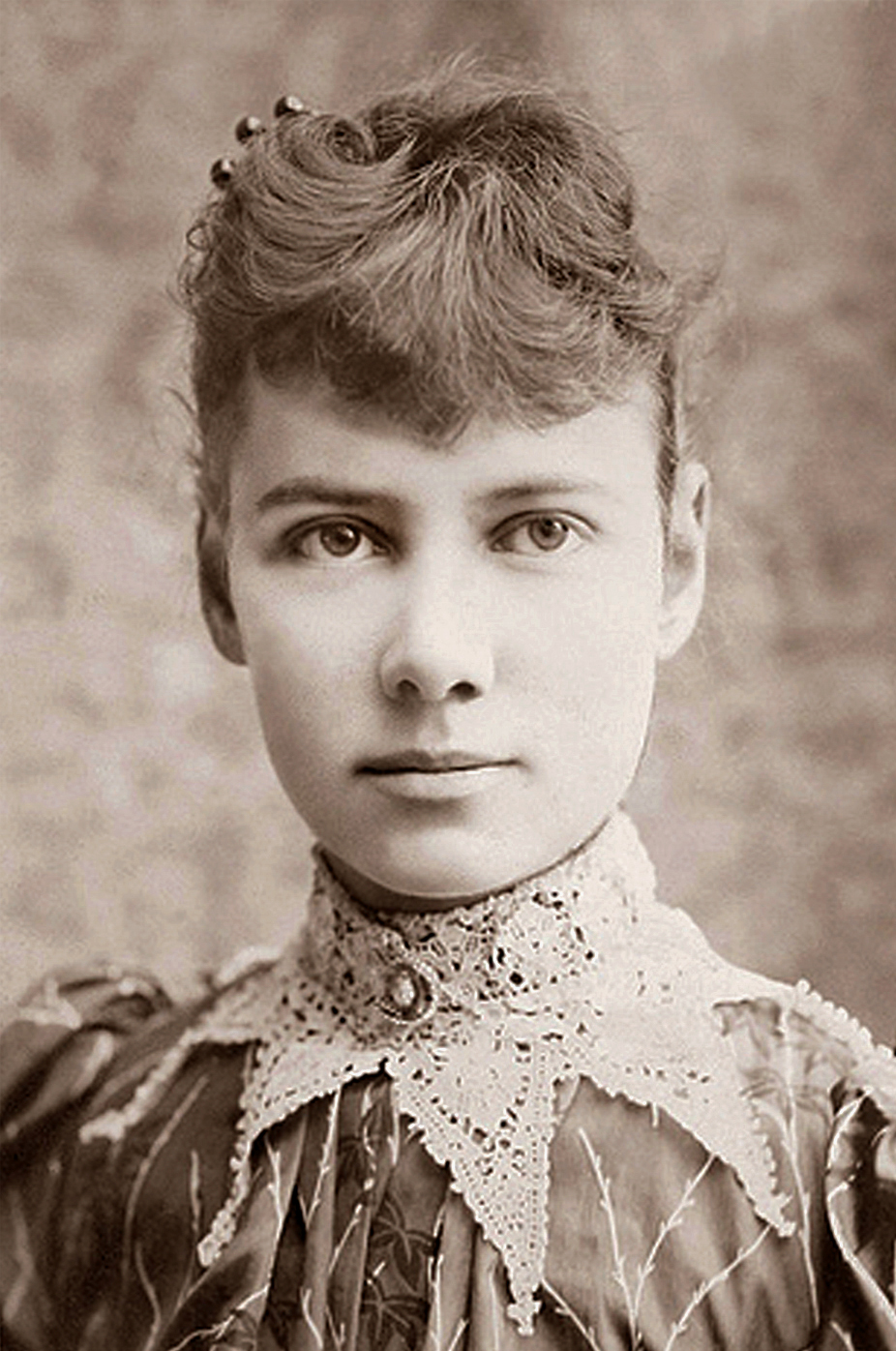
—Miss, when you did me the honor of stopping here, in Amiens, in the midst of your race, why this detour that cost you such precious hours?
You know well, Monsieur Verne: I would not have crossed France without knocking on your door for anything in the world. Your Phileas Fogg had been my imaginary companion since childhood; meeting the one who had inspired the idea was worth a few lost hours. I remember your wall map studded with pins, and Madame Verne who kissed me like a daughter. You asked me if I would pass through Bombay; I replied that I had not a minute for detours—except that one. Deep down, this detour was not one: it was returning to the source of the challenge before going out to win it.
—They swore to you that a woman could not travel without a trunk of dresses. How much luggage did you take to go around the world?
A single bag, monsieur, no bigger than a hatbox, and they swore to me it was impossible. I had stuffed in two caps, some linen, a toilet kit, and my money sewn into a purse around my neck. Men travel with trunks; I wanted to prove that a woman could leave one morning and circle the globe without being weighed down. Seventy-two days, six hours and eleven minutes: trains, steamers, rickshaws, and that storm delay on the Pacific that nearly lost everything. I have always had the comfortable feeling that nothing is impossible for anyone who expends a little energy in the right direction—and always at the last moment, because that is how I work.
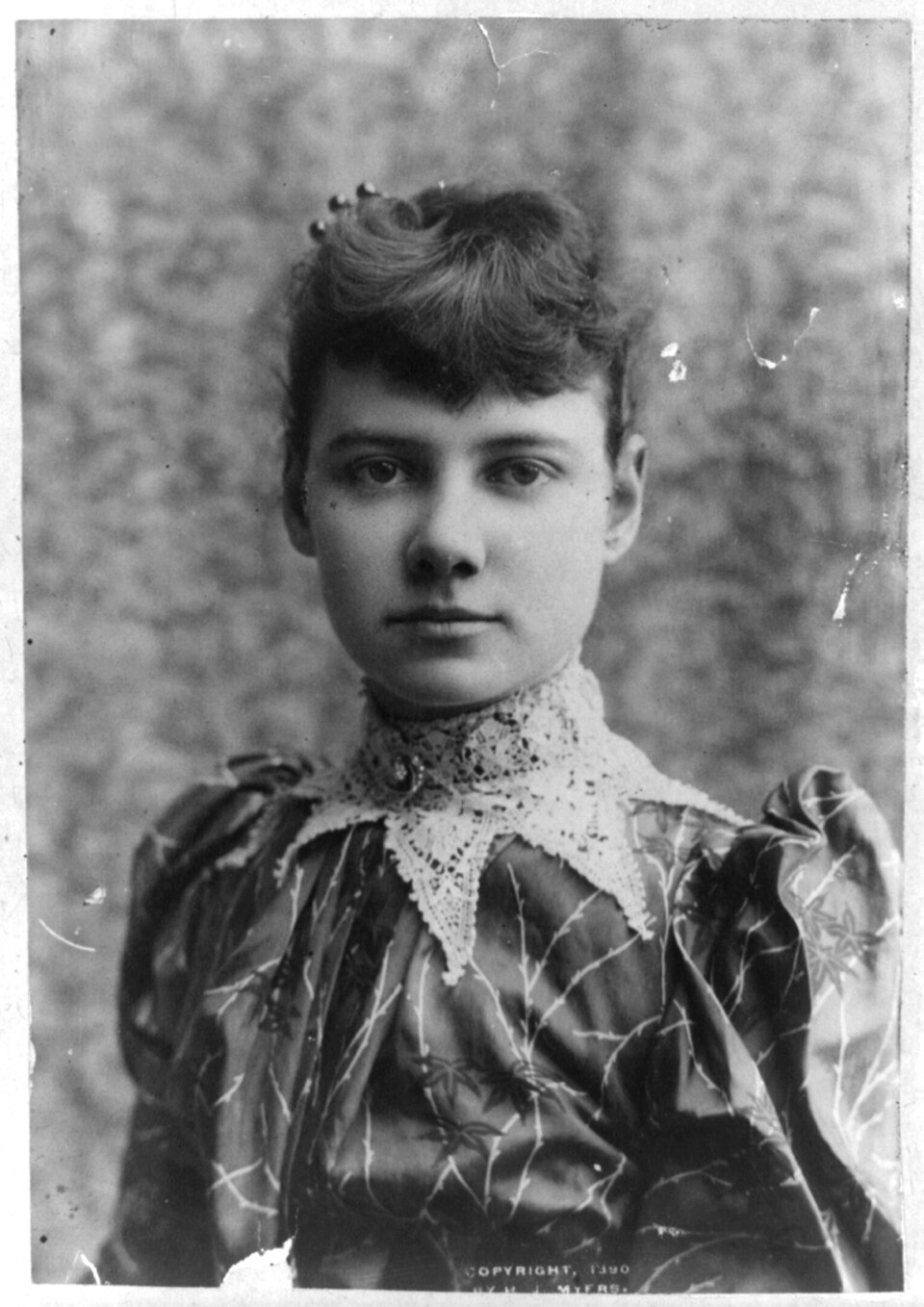
—You have seen Yokohama, Colombo, Hong Kong—everything I have only traveled in imagination. What memory did you bring back from those distant shores?
You who have dreamed of them so much, monsieur, you would laugh at my most precious memory: a monkey! I bought it during my stop in Japan, and it made the rest of the journey with me, nearly getting me into a thousand troubles at customs. From Yokohama, I keep the memory of evening lanterns, rickshaw rides, and a politeness I had seen nowhere else. But at every stop, time pressed me: I did not have an hour to dawdle, and I chafed when a steamer was late. I would have liked to be you, free to linger on every coast. I was racing against a clock, and the world went by as if from the window of a train hurtling at full steam.
—A woman, alone, through so many lands of men—did you never tremble, at night, in the cabin of an unknown steamer?
Tremble? I had no leisure for it, monsieur. I had been told that a woman could not travel without a protector at her side; I left without either, and nothing untoward happened to me. Of course, there were difficult moments—a shady port, a delay that threatened everything, a raging sea where I thought the record lost. But fear, you see, is a luxury for those who have time. I had only a clock to beat, and you do not bargain with a clock. I believe that a good dose of energy drives out fear better than all the knights-errant in the world.
—One last question, my friend. My Phileas Fogg was only ink and paper; you surpassed him in flesh and blood. Do you resent him, or thank him?
How could I resent him, Monsieur Verne, when it was you who brought him into the world? Your Phileas Fogg accompanied me like a challenge whispered in my ear: if he did it in eighty days of imagination, why not me in fewer, and for real? When your congratulatory telegram reached me upon my return, I wept—for the man who had dreamed the race saluted the one who had run it. You taught me one thing, you novelists: you never invent entirely in vain. Your paper dreams end up walking on their own legs. Mine was called Nellie Bly, and it circled the earth in seventy-two days.
Your paper dreams end up walking on their own legs.
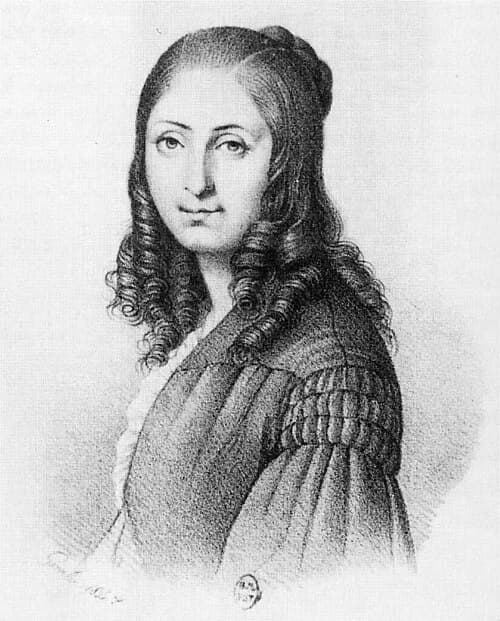
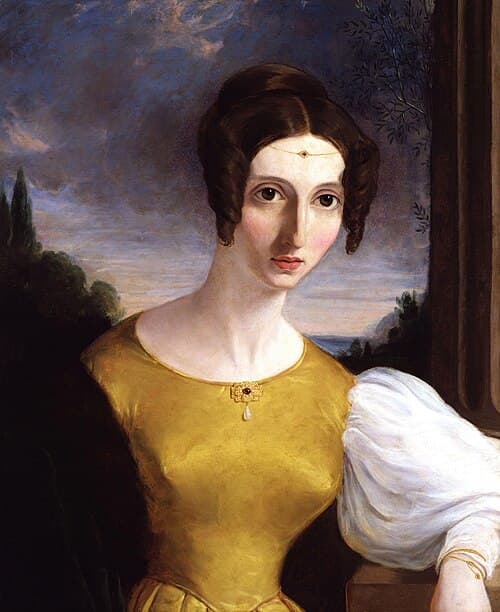
This imaginary interview was generated by artificial intelligence from sources documented in Nellie Bly's profile. It dramatises what the figure might have said based on what we know about them, but does not constitute attested historical testimony. For primary sources and factual documentation, refer to the full profile.