Kids interview Nellie Bly
by Charactorium · Nellie Bly (1864 — 1922) · Exploration · Literature · 5 min read

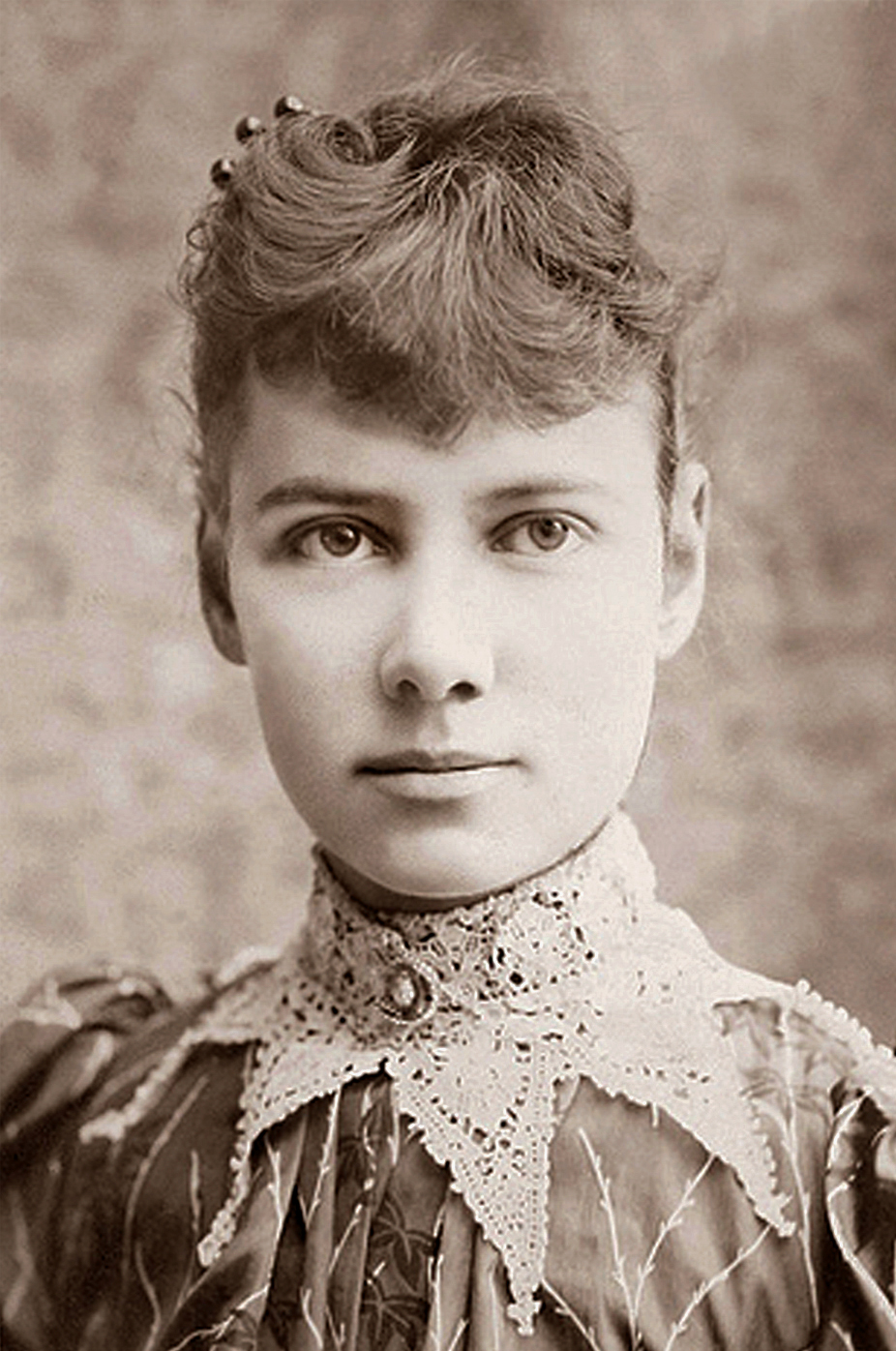
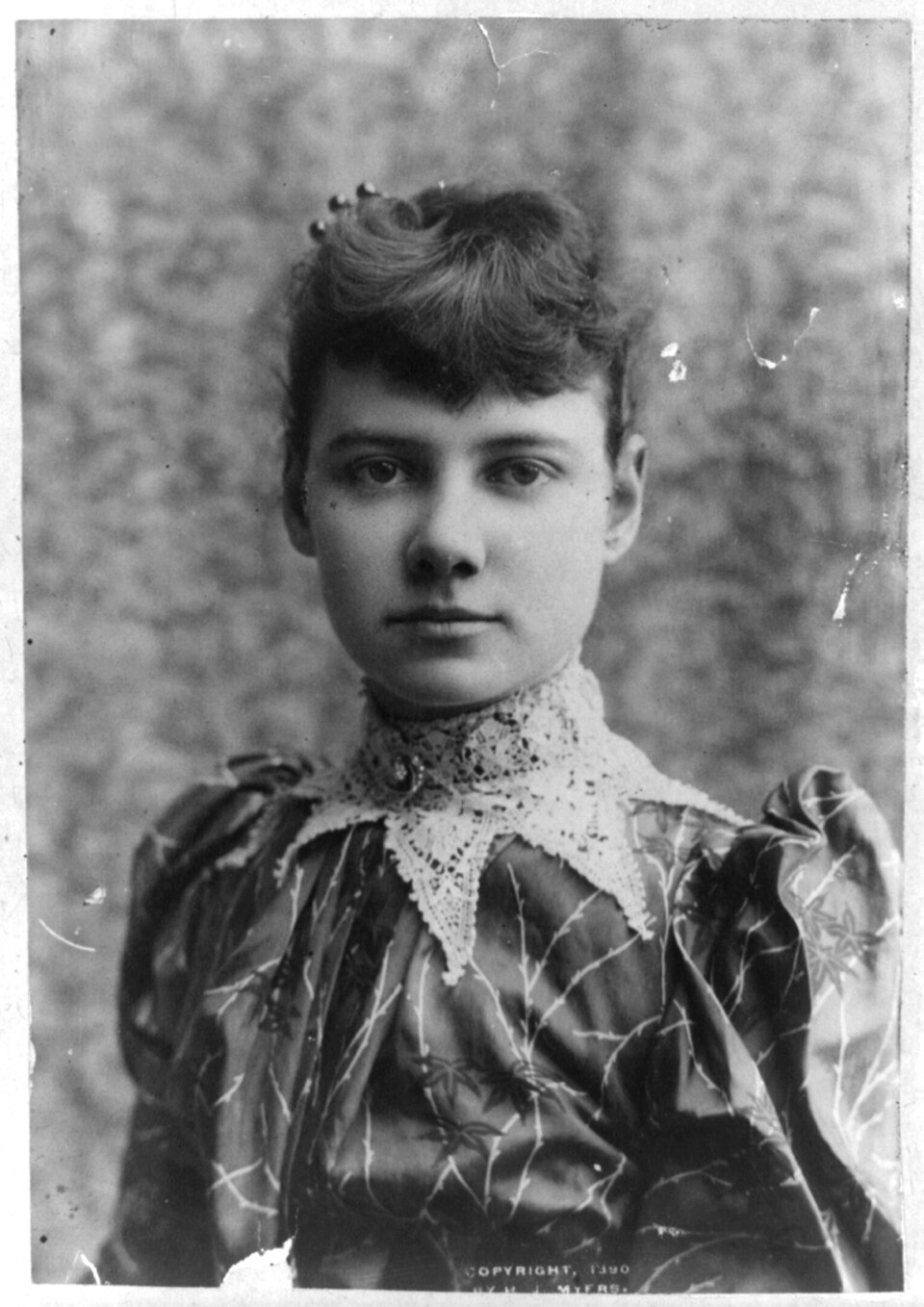
That morning, two young visitors of twelve pushed open the newsroom door. A lady in a dark wool dress awaited them, notebook in hand. Her name was Nellie Bly, and she had agreed to answer all their questions.
—How old were you when you became a journalist?
I was 18, my child, and I knew nothing of the trade. One day, I read in the Pittsburgh Dispatch an article saying that girls were good for nothing but keeping house. That made me angry! I took a pen and wrote to the paper that this article was a disgrace. Imagine my surprise: the editor-in-chief, the gentleman who decides everything in a newspaper, did not get angry. He offered me a job! I had no experience, just anger and desire. You see, sometimes a letter written from the heart changes an entire life.
A letter written from the heart can change an entire life.
—What was Pittsburgh, the city where you grew up, like?
Imagine a city full of smoke, my child, with factories spewing blackness day and night. In Pittsburgh, there were the rich on one side and, on the other, entire families working for almost nothing. As a little girl, I was called Elizabeth Jane Cochran, not yet Nellie Bly. Growing up there, I saw with my own eyes that life was not fair for everyone. Some had beautiful houses, others were cold. That marked me forever. It was that city that gave me the desire to tell the truth about the people no one ever listens to.
—Is it true that you pretended to be mad? Why?
Yes, it's true, and I was a bit scared, I admit. In 1887, I wanted to know how women locked up in the Blackwell's Island asylum near New York were treated. Nobody wanted to listen to those patients. So I decided one thing: to tell the truth, I had to go in myself. I pretended to be mad, and I was committed for ten days. Imagine ice-cold baths, vile food, violent guards. It was, as I wrote, a real human rat-trap. My story so shocked the public that the asylum was reformed immediately.
To tell the truth, sometimes you had to live it yourself.
—Were you afraid at night, locked up in there?
Yes, my child. At night on Blackwell's Island, I didn't know if I would ever get out. I had written my book Ten Days in a Mad-House remembering that it was easy to get in, but almost impossible to get out. Once the gate closed, nobody believed you when you said you were fine. What kept me going was thinking of the other women, those who would stay after me. They couldn't write. I took notes in my head, in secret, to tell their stories outside. When morning came, I told myself: hold on, your silence will save them.
—How did you investigate without being recognized?
Ah, that was quite an art, my child! For my reports on New York factory girls, I dressed simply and slipped in among them in the factories. I lived in the tenements, those overcrowded, poor buildings where immigrant families were crammed. If I had pulled out a notebook, I would have been unmasked immediately! So I remembered everything in my head: faces, words, meager wages. Only in the evening did I write. This was called stunt journalism, a report where the journalist acts instead of watching from afar. I preferred to live things to tell them better.
I lived things in order to tell them better.
—How did it feel to see how the factory girls lived?
It tugged at my heart, you know. In the New York workshops, women worked from morning to night for a few coins, never complaining. We were in the middle of the Gilded Age, that time when America was becoming very rich, but that wealth went only to a handful of people. Meanwhile, these factory girls went home at night to tiny rooms, tired and underfed. I ate beside them, I slept like them. Imagine a room where ten people live crowded together. That's what I wanted to show comfortable readers: behind their fine newspapers, there were those lives.
—Is it true that you traveled around the world all alone?
Absolutely, and all by myself! In November 1889, I left New York with a single small leather travel bag. Just one, can you believe it? People said a woman couldn't travel without ten trunks and a chaperone. I wanted to prove otherwise. I boarded steamships, took trains, crossed seas. I constantly checked my pocket watch, because every minute counted. My idea? To beat Phileas Fogg, that hero invented by Jules Verne who went around the world in 80 days. He was imaginary; I was very real.
They said a woman needed ten trunks; one bag was enough for me.
—What beautiful things did you see during this great journey?
So many things, my child! I stopped at the port of Yokohama, Japan, in December. There, everything was different: the houses, the clothes, the food. I tasted dishes I had never imagined, and I noted everything with curiosity. Fancy that, I even bought a little monkey there that accompanied me all the way to America! But I didn't dawdle too much: I had to catch every boat on time. I returned to New York in 72 days, 6 hours, and 11 minutes. A world record! The journey taught me that the Earth is vast, but a determined woman can circle it.
—Did you really meet Jules Verne during your race?
Yes! And it's one of my fondest memories. In the middle of my journey, I made a detour to Amiens, France, to meet Jules Verne at his home. He had written Around the World in Eighty Days, the book that had given me my challenge. Imagine: me, the very real journalist, sitting in the living room of the writer who had invented Phileas Fogg. He was curious, warm, and he followed my adventure on a large map hanging on the wall. It was as if dream and reality shook hands. He even sent me a congratulatory telegram at the end.
Dream and reality shook hands that day in Amiens.
—What does it feel like to beat a fictional character?
It's a strange kind of pride, you know! Phileas Fogg existed only in the pages of a book from 1872. He took 80 days, on paper. I, in flesh and blood, took 72. But the most important thing was not the record. What I wanted was to show the little girls of my time that they didn't have to stay meekly at home. A woman can also leave, dare, cross oceans. Jules Verne had imagined a hero; I wanted to become a heroine for real. And if someday you doubt what you can do, remember my little bag.
A writer had imagined a hero; I wanted to become one, for real.
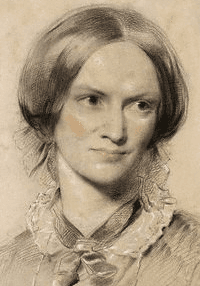
This imaginary interview was generated by artificial intelligence from sources documented in Nellie Bly's profile. It dramatises what the figure might have said based on what we know about them, but does not constitute attested historical testimony. For primary sources and factual documentation, refer to the full profile.