Imaginary dialogue between Winnie Madikizela-Mandela and Nelson Mandela
by Charactorium · Nelson Mandela (1918 — 2013) · Politics · 6 min read
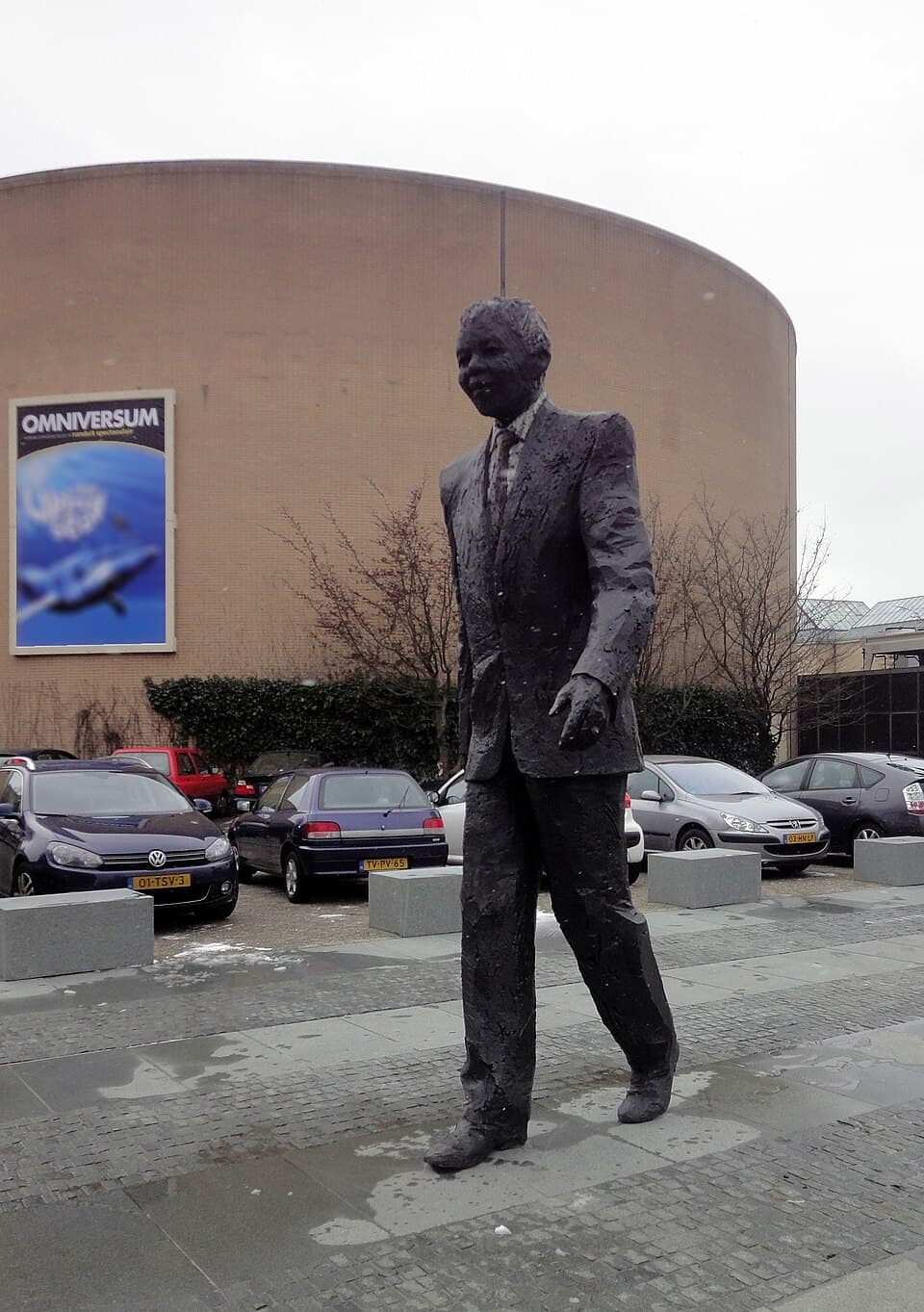
It is in the small house on Vilakazi Street, in Soweto, that Winnie finds Madiba one evening in 1991, shortly after his release. Golden light falls on a batik shirt draped over the back of a chair, and the smell of umngqusho simmers from the kitchen. They loved each other, separated by bars for twenty-seven years, and she carried the struggle outside while he led it inside. Tonight, she comes not as an activist but as a woman who finally wants to hear the man behind the legend that was stolen from her.
—Madiba, on Robben Island, I imagined you broken. But you wrote me calm letters. What did you do with your mornings there?
You know, Winnie, I got up at five-thirty to the bugle, then we were taken to break stones at the limestone quarry, the sun so white it burned our eyes. But this forced labor, we turned it around: between two swings of the pick, we discussed law, history, strategy. We called it our university. I also cultivated a small tomato garden in the courtyard — it was one of the few places where a prisoner could exercise control over something living. And at night, in my two-square-meter cell, I secretly filled notebooks that I buried underground. They took my body, but my mind — I kept it out of their reach.
They took my body, but my mind — I kept it out of their reach.
—You so rarely let me see your fear. Were there nights, in that cell, when you doubted you would ever see the light of day again?
Yes, and to you alone I can say it. There were nights when the cold of the floor seeped through the mat and I wondered if I would die behind these walls without having held you in my arms again. But doubt, you see, I never let it survive until morning. I told myself that a man who fights for a just cause has no right to bargain with his conscience. I thought of you holding on outside, harassed, exiled to Brandfort, and I was ashamed to complain. Your strength shamed me as much as it carried me. So I reread, I wrote, I prepared the future as if it were certain — because preparing it was already making it possible.
Doubt, I never let it survive until morning.
—Many have criticized you for taking up arms. You, the lawyer, the man of the Freedom Charter, why did you found Umkhonto we Sizwe in 1961?
Because Sharpeville, in 1960, killed the illusion. Sixty-nine of our people shot in the back while they protested unarmed against the passes. We had turned the other cheek for decades, in the manner of Gandhi, and the regime answered with machine guns and the banning of the ANC. What is left for a man when all peaceful doors are closed? I co-founded Umkhonto we Sizwe, the Spear of the Nation, to strike at the infrastructure of power, never at human lives — at least at first, that was our absolute rule. At the Rivonia trial in 1964, I told my judges: I have cherished the ideal of a free society, and if necessary, it is an ideal for which I am prepared to die. It was not a taste for violence, Winnie. It was a refusal of resignation.
It was not a taste for violence. It was a refusal of resignation.
—In 1985, Botha offered you freedom in exchange for renouncing the struggle. Our daughter Zindzi read your refusal in Soweto. Why did you say no?
Because a freedom bought at the price of one's soul is not freedom. Botha wanted me to walk out a broken man, disavowing everything our comrades died for, so he could tell the world that Mandela had capitulated. I preferred to turn the question back on the oppressor: it was not for me to prove my good faith, but for him to free the people. I had Zindzi say, before that immense crowd, that your freedom and mine cannot be separated. What kind of man am I if my wife and my people remain in chains while I walk free? That no cost me five more years. But it made me freer in my cell than I would have been under their conditions.
A freedom bought at the price of one's soul is not freedom.
—On February 11, 1990, I took your hand in front of the gates of Victor Verster, the whole world watching. What did you feel crossing that threshold?
When I squeezed your hand and raised my left fist, Winnie, I was seventy-one years old and had not seen Johannesburg for nearly thirty years. My heart pounded like a young man's. But behind the emotion, I knew one thing for certain: there would be no turning back. I wanted to say it that very day, in Cape Town: our march to freedom is irreversible. That word, irreversible, I held like an oath. The strangest thing was that crowd of faces I did not know and who loved me — children born during my detention chanted my name. I understood that day that I no longer quite belonged to myself. I was leaving one prison to enter a vast expectation.
Our march to freedom is irreversible — that word, I held like an oath.
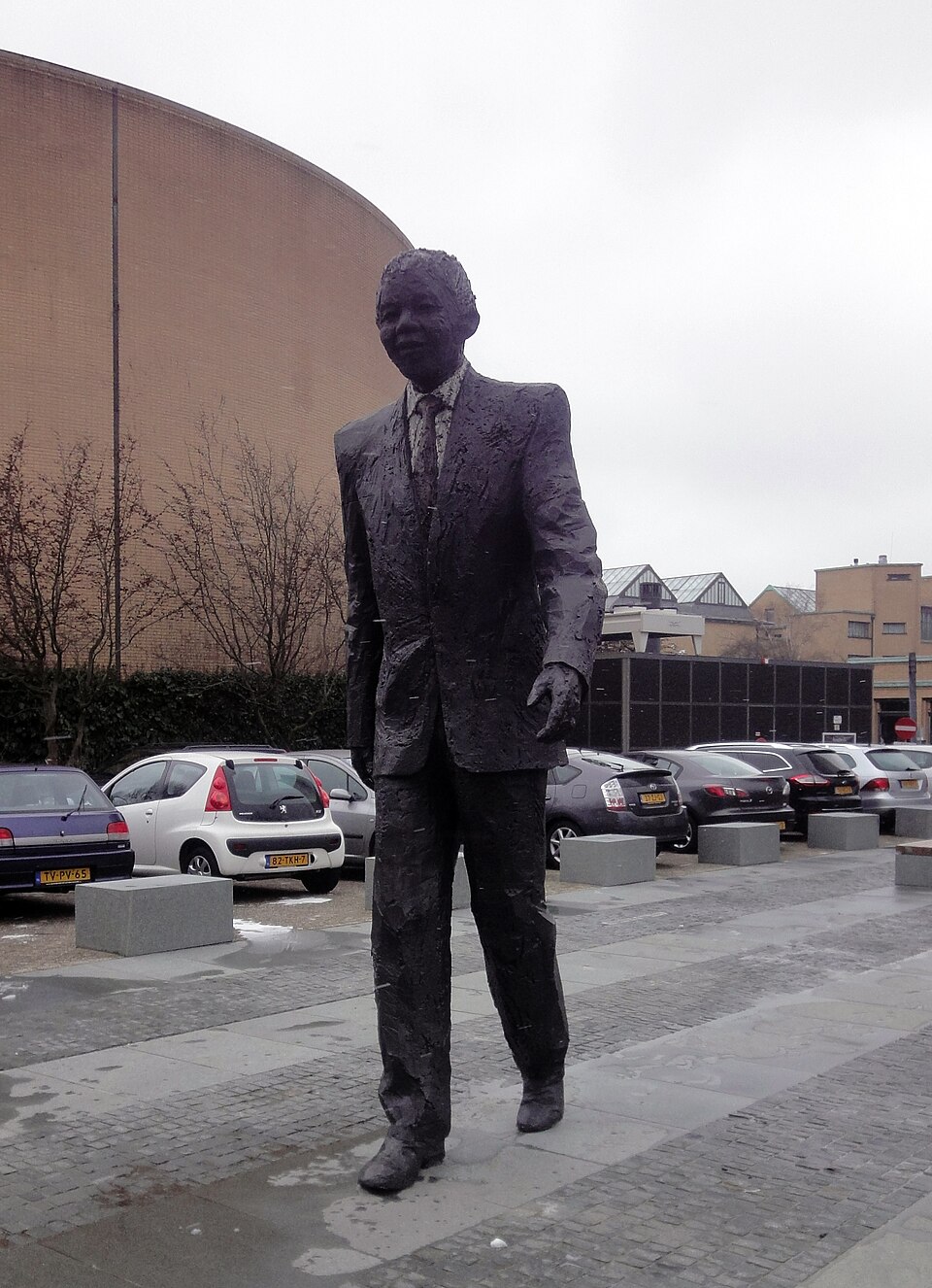
—You refuse the suit and tie of heads of state; you carry that Thembu chief's staff. Why are you so determined to show the Xhosa blood that runs in you?
Because for half a century we were told that to be respectable, a black man must dress, speak, and think like a white man. I refuse that humiliation even in my clothes. The chief's staff, the knobkerrie, says where I come from: the Madiba clan, the Thembu royalty, a land that was noble long before the colonists arrived. Those colorful shirts you see me wearing, I chose them over the tie, to remind that our culture does not have to apologize for existing. When people call me Madiba, it is not the president they greet, but a son of Qunu, the village where I herded cattle as a child. That is where, you know, I want to be brought one day, according to the rites of our ancestors.
Our culture does not have to apologize for existing.
—You already speak of reaching out to the Afrikaners who broke us. How can you forgive those who made me suffer so much, who made you and our children suffer?
I understand your anger, Winnie, and I do not ask you to extinguish it like blowing out a candle. Mine burns too. But I learned one thing behind bars: if I leave prison hating my jailers, then I will always be their prisoner. Our elders had a word for it, Ubuntu — I am a human being only through other human beings. Even the Afrikaner guard is my brother in humanity, whether he knows it or not. Building a nation of forty million souls on vengeance is preparing the next bloodbath. I want a justice that heals, not a justice that maims. That does not mean forgetting; it means refusing to let yesterday's suffering dictate tomorrow's hatred.
If I leave prison hating my jailers, I will always be their prisoner.
—But the people thirst for revenge after so many years. How will you make them accept this reconciliation, which many will see as weakness?
By showing them that reconciliation is not surrender, but the weapon of the strong. The weak take revenge; only a people sure of their victory can reach out without trembling. I plan to create a commission where the apartheid torturers must publicly confess their crimes, in full light, before the families. Let them name the disappeared, tell where the bodies are — that is the justice I want, a truth that does not hide. Amnesty for full confession, yes, but not forgetting, never forgetting. And then there will need to be gestures, Winnie, gestures that the whole country will see. Take a symbol of the whites and make it a common flag. The people understand symbols better than speeches. Give them an image of brotherhood stronger than their rancor, and they will follow you.
The weak take revenge; only a people sure of their victory can reach out without trembling.
—You mention a gesture that would strike people's minds. Do you already have in mind which symbol of white domination you would turn into an emblem for all?
I think about it, yes, though the time is not yet come. Take rugby, that sport the Afrikaners cherish as their national honor, and which our people hate because it was so long the face of the oppressor. Imagine that one day I wear the green jersey of the Springboks — that jersey so many of our people would want to burn. What a scandal at first, what a slap to the hardliners on both sides! Then, if the team wins and I hand the trophy to its Afrikaner captain before tens of thousands of spectators, the whole country will understand in an instant what a thousand speeches would not say: this country belongs to everyone. You do not reconcile a nation by decree, Winnie. You reconcile it by images that children will never forget.
You do not reconcile a nation by decree, but by images that children will never forget.
—One last thing, Madiba. Those long years without me, without the children — what did prison teach you that freedom never would have?
Patience, Winnie. That patience I did not have as a young hot-tempered lawyer in Johannesburg, eager to overturn everything. My tomato garden taught me better than any master: you prepare the soil, you plant, you water, and you wait, knowing that not everything depends on you. Prison taught me that climbing a great hill only reveals one thing — that there are many more hills to climb. It also taught me the value of what I took for granted: a child's laughter, your hand in mine, the simple act of choosing where to place my steps. I know the price of these things now. And perhaps that is why I want to offer them to all, without distinction of color, to this country that has taken so much from me and yet has not broken me.
Climbing a great hill only reveals one thing: that there are many more hills to climb.
This imaginary interview was generated by artificial intelligence from sources documented in Nelson Mandela's profile. It dramatises what the figure might have said based on what we know about them, but does not constitute attested historical testimony. For primary sources and factual documentation, refer to the full profile.