Kids interview Nelson Mandela
by Charactorium · Nelson Mandela (1918 — 2013) · Politics · 5 min read
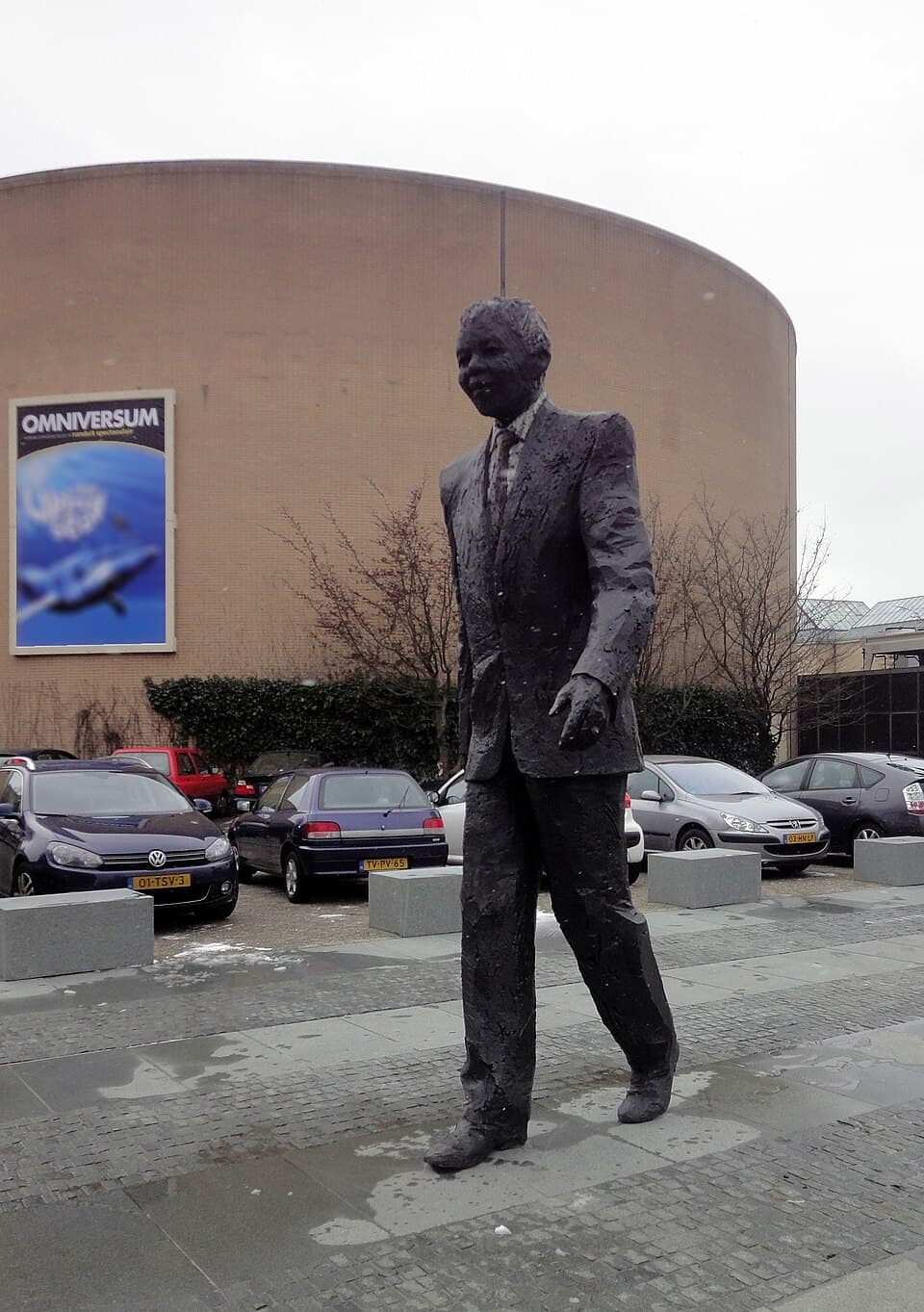
Two 12-year-old students, on a school trip, have the chance to interview an old gentleman with a huge smile. He wears a colorful shirt and looks at them like a grandfather. Nelson Mandela invites them to sit down.
—What was your village like when you were little?
You know, my child, I was born in Mvezo, then I grew up in Qunu, a small village of green hills. Imagine herds, round huts, and children playing in the dust all day long. My real first name is Rolihlahla. And in my clan, they call me Madiba — that's my family name, among the Thembu, a people of herders and chiefs. I was a little barefoot cattle herder. I didn't know yet that I would experience great things. But already, I loved that red earth. At the end of my life, it's there, in Qunu, that I wanted to rest forever.
I was a little barefoot cattle herder.
—Is it true you disguised yourself to escape the police?
It's true! For a time, I had to hide. The police were looking for me everywhere. So I disguised myself as a chauffeur, and I traveled under a false name: David Motsamayi. Imagine: I drove a car pretending to be a simple employee, while I was the most wanted man in the country! They nicknamed me 'the Black Pimpernel.' But in 1962, they caught me anyway. I was afraid, yes. Not for myself — for my people, who needed the struggle to continue. Being brave is not not being afraid. It's moving forward even when you tremble.
Being brave is not not being afraid. It's moving forward even when you tremble.
—Were you afraid of being sentenced to death at your trial?
Yes, my child. At the Rivonia trial, in 1964, the judge could have sent us to death. So I decided to speak loud and clear before the whole court. I said I dreamed of a country where Blacks and Whites would live together, as equals. And I ended with these words: 'It is an ideal for which I hope to live... But if necessary, it is an ideal for which I am ready to die.' Imagine the silence in the room. My heart was beating hard. I was not sentenced to death, but to life imprisonment. They sent me to an island.
An ideal for which I am ready to die.
—What was your prison on the island like?
They called it Robben Island, a wind-beaten island off the coast of Cape Town. My cell was tiny: barely larger than a classroom desk. I slept on a mat laid on the cold floor, without toilets, without water. Every morning at half past five, a bugle woke us. They took us to break stones in a white limestone quarry, under a sun so strong it burned my eyes. I wore an orange jumpsuit. Imagine: they gave me less food than the white prisoners, just because my skin was black. I stayed there for eighteen years. Eighteen years on that rock.
—How did you keep from going crazy in prison?
Good question, my child. I had two secrets. The first: a small garden. They let me cultivate a few tomato plants and vegetables in the yard. Imagine the joy of seeing something alive grow in a place of stone! That garden taught me patience, and I shared my tomatoes with my comrades. My second secret: we talked constantly. We taught each other history, law, politics. We jokingly called it 'the University of Robben Island.' I also wrote my story at night, in secret, on notebooks buried in the garden. Prison wanted to extinguish my spirit. It never could.
Prison wanted to extinguish my spirit. It never could.
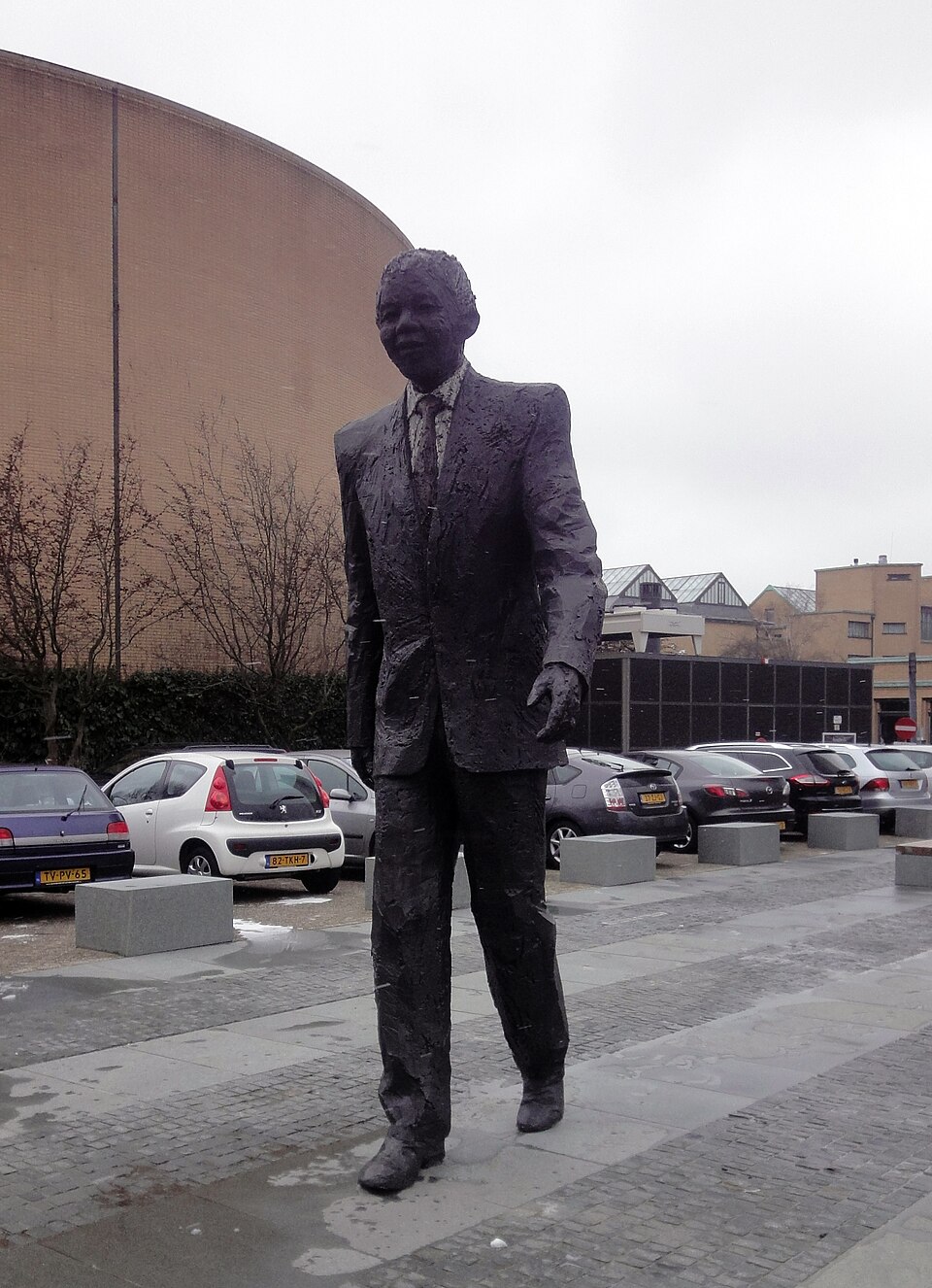
—Why did you decide to take up arms? That's violent.
You're right, that's a difficult question, and it pained me. For years, we protested nonviolently, as Gandhi had done. We marched, we sang. But in 1960, at Sharpeville, the police fired on an unarmed crowd: sixty-nine dead. People who held nothing in their hands. So, with a heavy heart, I helped found an organization we called Umkhonto we Sizwe — 'the Spear of the Nation.' We targeted buildings, bridges, never people. I didn't like violence, my child. But when you are struck and never listened to, sometimes you have to make yourself heard another way.
—You were offered to leave prison and you said no? Why?
It's true, and it surprises many people! In 1985, President Botha made me an offer: 'You go free, but on one condition — you publicly renounce the struggle.' Imagine: after so many years locked up, freedom right there, within reach! I could have said yes in a second. But I refused. My daughter Zindzi read my response before a huge crowd: 'Your freedom and mine cannot be separated.' Do you understand? A freedom offered to me alone, while my people remain in chains, is not true freedom. It's a trap disguised as a gift.
Your freedom and mine cannot be separated.
—Is it true you wore a rugby jersey to reconcile the country?
Ah, you know that story! In 1995, I had become president. Our rugby team, the Springboks, was playing the World Cup final. The problem was that this green and gold jersey was the symbol of the Whites, those who had oppressed us. Many Blacks hated that team. So I did something unexpected: I put on that jersey, number 6, and went to congratulate the captain in front of sixty-three thousand people. Imagine the shock, then the huge roar of joy from the stadium! With a simple piece of cloth, I told everyone: this country belongs to all of us, together.
With a simple piece of cloth, I said: this country belongs to all of us.
—How did you manage to forgive those who had imprisoned you?
That's the hardest of all, my child. Twenty-seven years of my life were stolen from me. I could have come out with a heart full of hate. But I understood one thing in prison: resentment is like drinking poison and hoping the other person falls ill. In our culture, we have a very old word: Ubuntu. It means that a human being becomes fully human only through others. So I chose forgiveness, not forgetting. I created a great Commission where the perpetrators came to confess their crimes in public. We called our new country the 'rainbow nation': all colors, united under one sky.
Resentment is like drinking poison and hoping the other person falls ill.
—If we met you on the street, what would we notice first?
You might laugh, because I refused the gray suit and tie of other presidents! I wore large, brightly colored shirts with African patterns. They even called them 'Madiba shirts.' For ceremonies, I sometimes held a chief's staff, a knobkerrie, like my herder ancestors. You would also see an old gentleman who smiles a lot and loves children. My dream is that you, wherever you live, know one simple thing: no one is born hating another because of their skin. If they can learn to hate, they can also learn to love.
If they can learn to hate, they can also learn to love.
This imaginary interview was generated by artificial intelligence from sources documented in Nelson Mandela's profile. It dramatises what the figure might have said based on what we know about them, but does not constitute attested historical testimony. For primary sources and factual documentation, refer to the full profile.