Imaginary interview with Noah
by Charactorium · Noah · Mythology · 6 min read
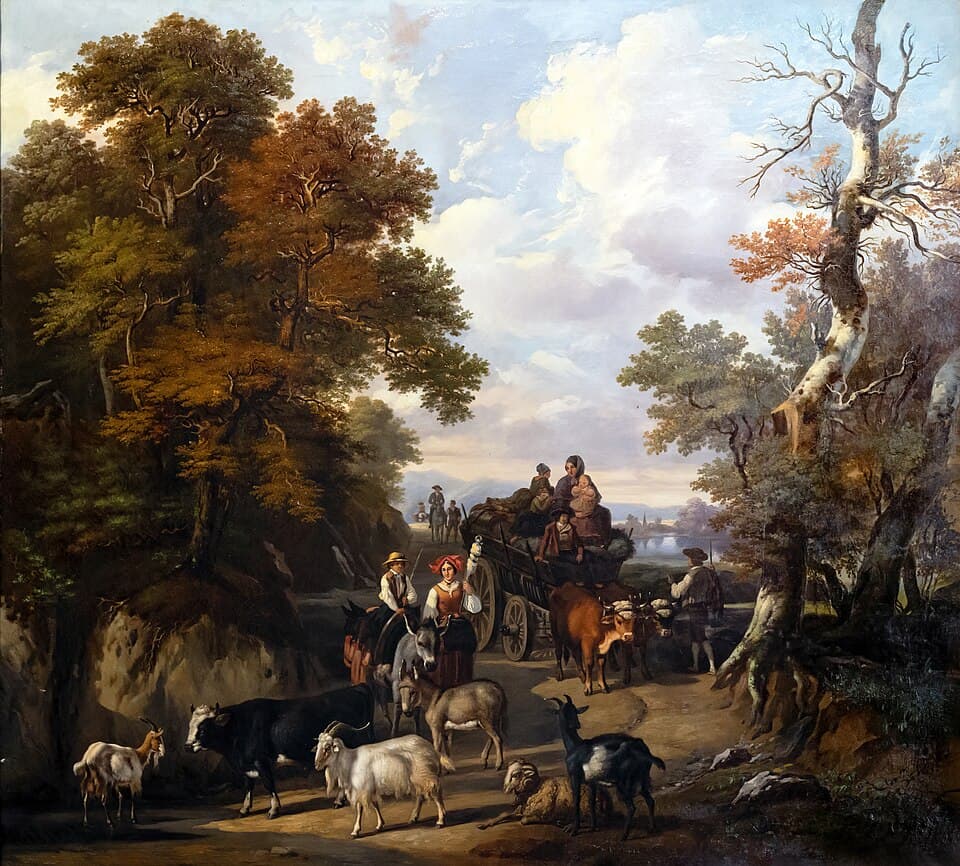
The construction site still smells of pitch and green wood. In the shadow of Mount Ararat, where the great hull has finally come to rest, an old man with a white beard sits on a beam, his hands hardened by one hundred and twenty years of labor. He agrees to tell of the Flood, the waiting, and the bow that split the sky.
—How did the order to build this ship come to you?
The voice came to me while the earth was full of violence, and it gave me numbers before it gave me planks. Three hundred cubits long, fifty wide, thirty high: I was to build a wooden chest, caulk it with pitch inside and out, cut a single window and a single door. I did not ask why a man of the third millennium should raise such a mountain of cedar far from any sea. I took my carpenter's tools, and I began. For one hundred and twenty years, my neighbors laughed as they passed the construction site; I struck the wood while they plowed. Walking with God, you see, is not understanding God: it is obeying before understanding, and raising the ax each morning on a word that no eye yet confirms.
Walking with God is not understanding: it is raising the ax each morning on a word that no eye yet confirms.
—One hundred and twenty years on a single work: what kept you standing in the face of mockery?
Doubt strikes harder than the mallet, believe me. Every season, I saw my sons Shem, Ham, and Japheth grow up at the foot of a hull that no river carried, and every season a neighbor asked me what fish I hoped to catch so high on dry land. I had no answer but the pitch under my nails and a chest that rose, plank after plank. Faith, at my age, is not a flame: it is a habit of the hands. One returns to the wood because one returned yesterday. I learned that the Ark is not built by a great surge of the soul, but by an enormous number of small stubborn gestures, performed without proof, until the day the sky splits and justifies the ax.
—Do you remember the day the animals entered the Ark?
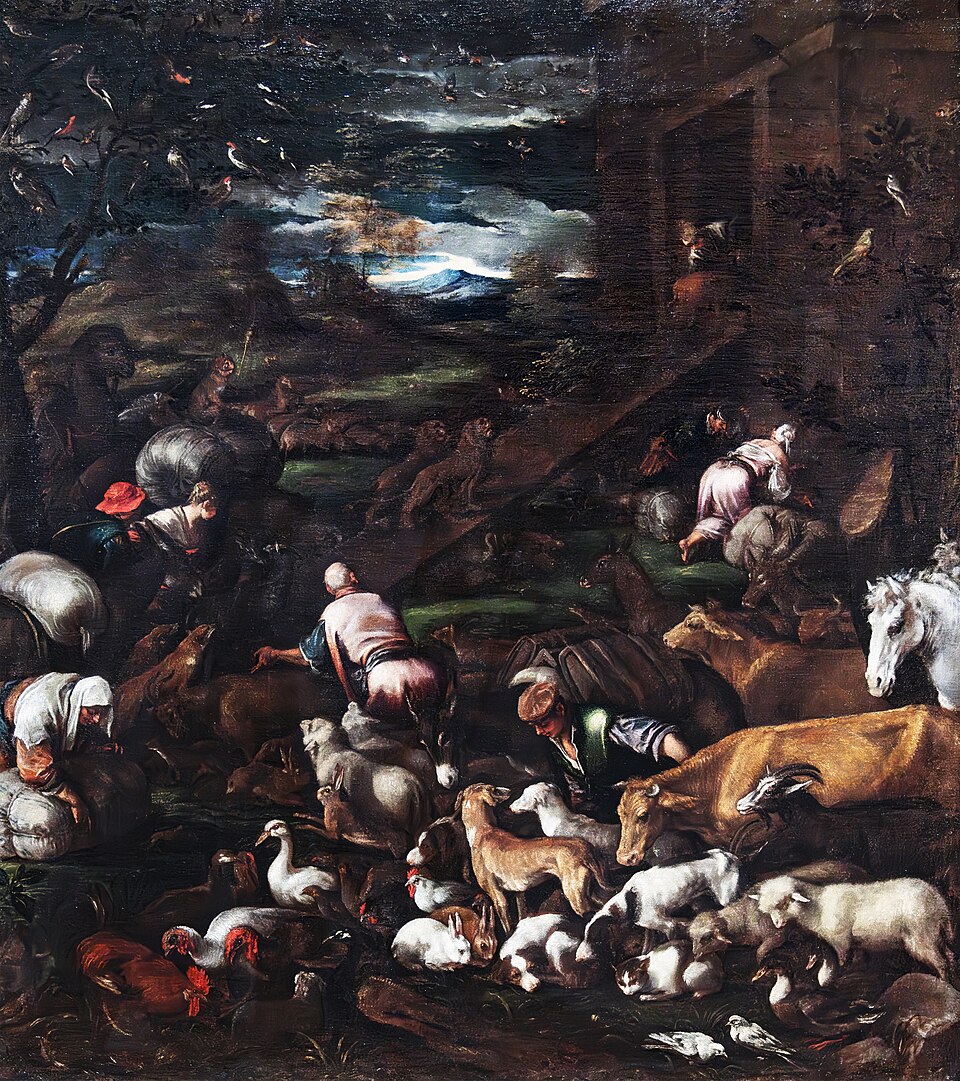
I did not run the steppes to catch them with a snare; I would not have known how. The word had told me to bring in a pair of every species, two by two for unclean animals, seven by seven for clean — and of that, I had no idea how. Then one morning, the horizon stirred. They came by themselves, the heavy and the creeping, the beast and the dove, descending the hills toward my single door as if answering a call my ear could not perceive. I counted, I placed, I fed. That silent procession made me tremble more than the Flood itself: for I understood that day that the saved animals were not my work, but a deposit entrusted to me, and that I was only the guardian of a creation that escaped me.
They came by themselves, answering a call my ear could not perceive.
—What did the charge of all those beings shut under the same roof mean to you?
Imagine a wooden house where the roar answers the bleat, where the smell of the beast mingles with that of straw, and where only eight human souls watch over all the breath of the world. We were few in number, as will be said long after me: my wife, my three sons, their wives. Every day, we had to carry the grain, clean, soothe. At night, under the pounding of the waters against the hull, I listened to this ark full of life breathe and told myself that all creation now fit within the width of fifty cubits. It was not pride: it was a weight. Saving is not a heroic moment; it is getting up again to feed hungry beasts while outside the whole world disappears.
—How did you know the waters were finally beginning to recede?
When the chest came to rest against the rock of Mount Ararat, I did not cry victory: we saw only water, everywhere, flat and gray to the edge of the sky. I first released a raven; it went, came, went again, never bringing me news, circling above the drowning. Then I took a dove in my hands and threw it toward the open. The first time, it returned with empty claws: no land to set foot on. I waited seven days, my heart suspended like a man watching for dawn after too long a night. Patience, in a closed ark, is a harder trial than the storm: you have done the bulk of the work, and all that remains is to wait for a sign that no longer depends on your hands.
Patience, in a closed ark, is harder than the storm.
—And that famous branch, what memory do you have of it?
The dove returned on the evening of the second sending, and in its beak it held a fresh leaf: an olive branch, green, torn from a tree that was breathing again somewhere under the receding waters. I tell you simply: I wept. That little branch weighed heavier in my hand than the three hundred cubits of wood I had nailed. It meant that the earth was beginning to bear again, that the roots still held, that life had not been entirely erased. Men, long after me, will make this branch the sign of peace; for me, that evening, it was first the sign that I would soon smell the wet earth under my feet again, and no longer the smell of wood and pitch.
That little branch weighed heavier than the three hundred cubits of wood I had nailed.
—After coming down from the Ark, what did you feel before the world washed clean?
An immense silence, first. No more violence, no more clamor of men: only the wind on a bare land and the drying mud. I built an altar and offered sacrifice, for a man who has received so much cannot keep his hands empty. And it was there that the word sealed with me a covenant new: never again would water submerge the whole earth, never again would all flesh perish by the Flood. That promise was not a bargain; it was a gift. In the time of wrath, it is said that I was the salvation of a remnant of the world — but I know well that I did not deserve this remnant by my strength. I was only the man found righteous in his generation, and who held his ax to the end.
—Why a bow in the sky, rather than a word, to seal this promise?
Because a word is forgotten, and a sign is seen. The voice told me that it placed its rainbow in the cloud, and that whenever the waters of the sky gathered above men, this bow would appear to remind them of the covenant: not a threat, but a reassurance. Consider: the bow of a warrior, but unstrung, turned toward the sky, disarmed. My sons, and my sons' sons who will repopulate the earth, will look up after the storm and see this curve of light without having known the Flood. They may not know why their heart calms at the sight. I know: it is the memory of a wrath that swore never to return, written in colors for those who did not see the waters rise.
The bow of a warrior, but unstrung, turned toward the sky, disarmed.
—What was your first act as a man in this world begun anew?
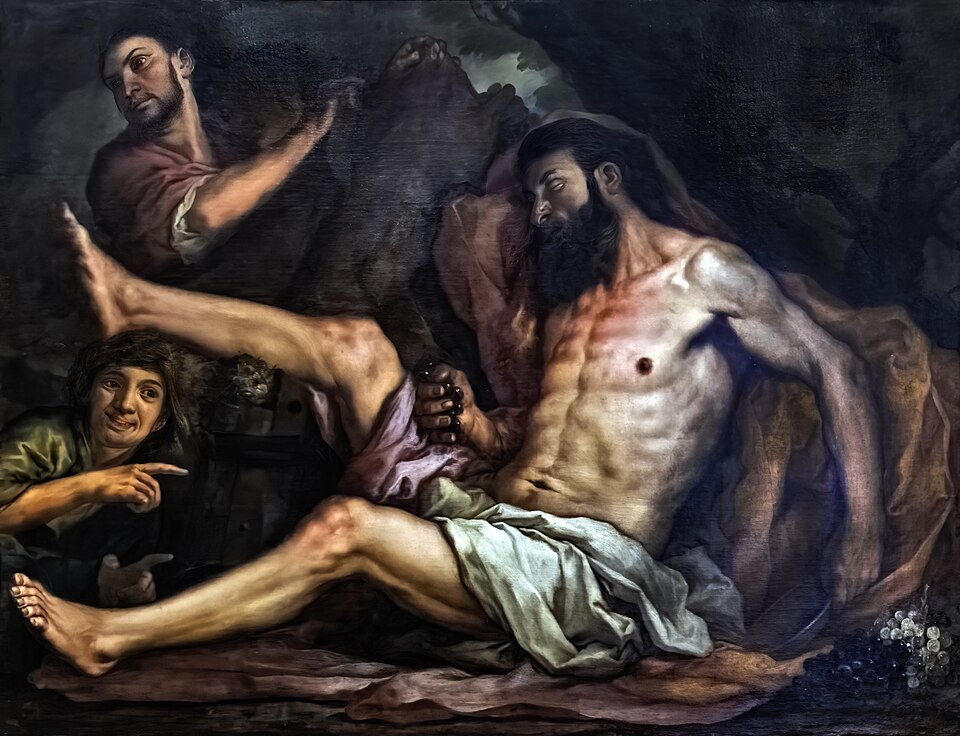
I scratched the earth. After being the guardian of a floating ark, I became again what I was before everything: a man who rises before dawn for his beasts and his crops. I planted a vine. People are sometimes surprised that the savior of a world tends a vine; but that is precisely what it means to begin again: not to do miracles again, but to put one's hand back to ordinary cultivation, to wait for the sap to rise, for the grape to darken. Civilization is not reborn from a great speech; it is reborn from a furrow. I was the first, they say, to draw wine from the vine in this new world — and I learned, to my cost, that man returned to the earth also becomes a fallible man again. To begin again is not to be perfect: it is to resume the work, with its joys and its weaknesses.
Civilization is not reborn from a great speech; it is reborn from a furrow.
—How do you feel thinking of your sons charged with repopulating the whole Earth?
A gravity, more than pride. Shem, Ham, and Japheth came out of the Ark with their wives, and from these few households will descend, says the blessing, all the peoples that will cover the earth. Think of the vertigo: every nation to come, every language, every city — from the banks of the Euphrates to the ends of the world — is contained in these three young men who still sleep under my roof. I will not see half of what they will engender. My role ends where theirs begins: I saved a seed, it is for them to spread it. A patriarch is not one who possesses the future; it is one who entrusts it. I carried the breath of the world on the water for forty days; it is now for them to carry it on dry land, for a thousand generations.
A patriarch is not one who possesses the future; it is one who entrusts it.
This imaginary interview was generated by artificial intelligence from sources documented in Noah's profile. It dramatises what the figure might have said based on what we know about them, but does not constitute attested historical testimony. For primary sources and factual documentation, refer to the full profile.