Imaginary dialogue between Sem and Noah
by Charactorium · Noah · Mythology · 6 min read
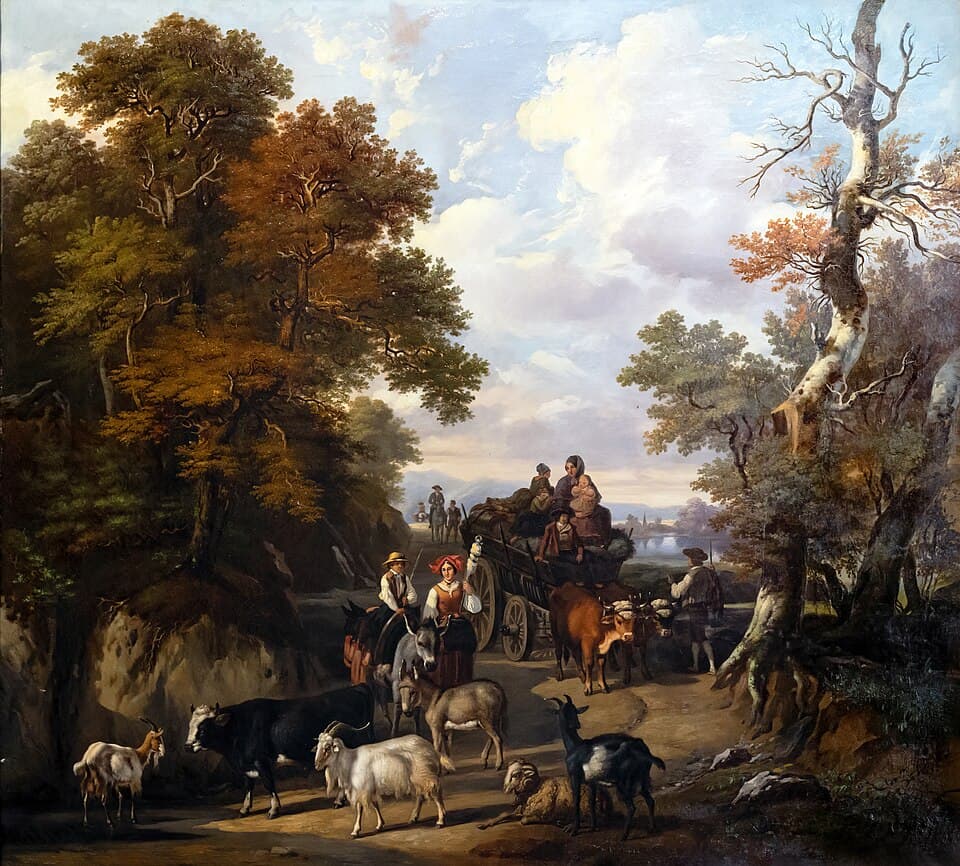
It is on the slopes of Mount Ararat, where the hull of the Ark finally rests on dry land, that Shem joins his father one evening when the air still smells of pitch and wet wood. Below, the vine Noah has just planted stretches its first tendrils in the dried mud. The eldest son, who shared every day of the voyage, comes seeking the words that the ordeal had kept silent. In the distance, a bow of colors slowly fades above the receded waters.
—Father, here we are both on Ararat, saved. When the Lord spoke to you, did you feel worthy of this grace?
Shem, my son, you have seen me with your own eyes and you know I am but a man. The Lord did not seek strength or knowledge in me: he looked at my heart and found it upright in a generation that had become filled with violence. I walked with him, simply, as one walks beside a father. When his word seized me, I did not weigh whether I was worthy — had I done so, I would have demurred. I only obeyed, day after day, because righteousness is not a merit one carries but a path one holds. You who have seen me tremble some nights know that my faith was never without fear.
Righteousness is not a merit one carries but a path one holds.
—One hundred twenty years shaping those beams! Do you remember, father, how our neighbors laughed seeing you build a ship far from any sea?
I remember it better than my own name, Shem. They walked past the worksite, mocking the old man raising a hull of three hundred cubits on dry land. One hundred twenty years, my son — a whole lifetime splitting cypress, coating it with pitch inside and out, without a single drop of rain yet. But a measure had been given to me, precise to the last cubit, and I would not subtract a single one. Your child's hands, then your man's hands, have gripped these same wooden pegs. Building so long without seeing the sky darken — that was my prayer: believing in the storm that no one saw coming.
Building so long without seeing the sky darken — that was my prayer.
—When you wielded the adze and the mallet, father, did you think more of the wood under your fingers or of the word you received?
Of both, for they were one. A carpenter knows his wood as a shepherd knows his flock: I felt under the blade where the cypress gave way, where it needed to be riveted tighter. But every blow of the mallet answered an instruction, and the gesture of the tool became that of obedience. One does not save the world with great thoughts, Shem — one saves it by fitting two planks so that no water passes between them. I loved this labor as much as I feared it. When my arms weakened, I told myself that the Lord does not ask for heroes, but for workers who finish their task. And the task was finished, to the cubit.
One does not save the world with great thoughts — one saves it by fitting two planks.
—On the day of boarding, I saw them come of their own accord, two by two. How did you know, father, to welcome so many beasts without giving in to fear?
I had fear, Shem, do not think otherwise. But when the beasts came down from the hills, walking toward the Ark without any of us driving them, I understood that it was no longer my work. The predator next to the lamb, the bird of prey near the dove — who but the Lord could thus pacify creation? We brought the clean beasts in by sevens, and the unclean by twos, according to what had been told me, so that after the ordeal there would be enough to offer and to begin again. I did not know how it would all fit in the hull; I stopped calculating and let it happen. That was the day my trust weighed heavier than my reason.
That was the day my trust weighed heavier than my reason.
—While the waters rose outside, father, what did you feel thinking of those the Ark had not received?
A weight I have never set down, my son. People speak of salvation, of the closed Ark and the eight of us safe; they speak less of what one hears when the world drowns outside. Those neighbors who mocked, those cities full of violence — they were men nonetheless, and the wrath that struck them was no joy to me. I had preached, in my clumsy way, building in the open for years: whoever wanted to understand could understand. But few listened. When the rain fell forty days, I did not triumph, Shem. I mourned a world, shut inside the planks that same world had seen born under my hands.
I did not triumph. I mourned a world.
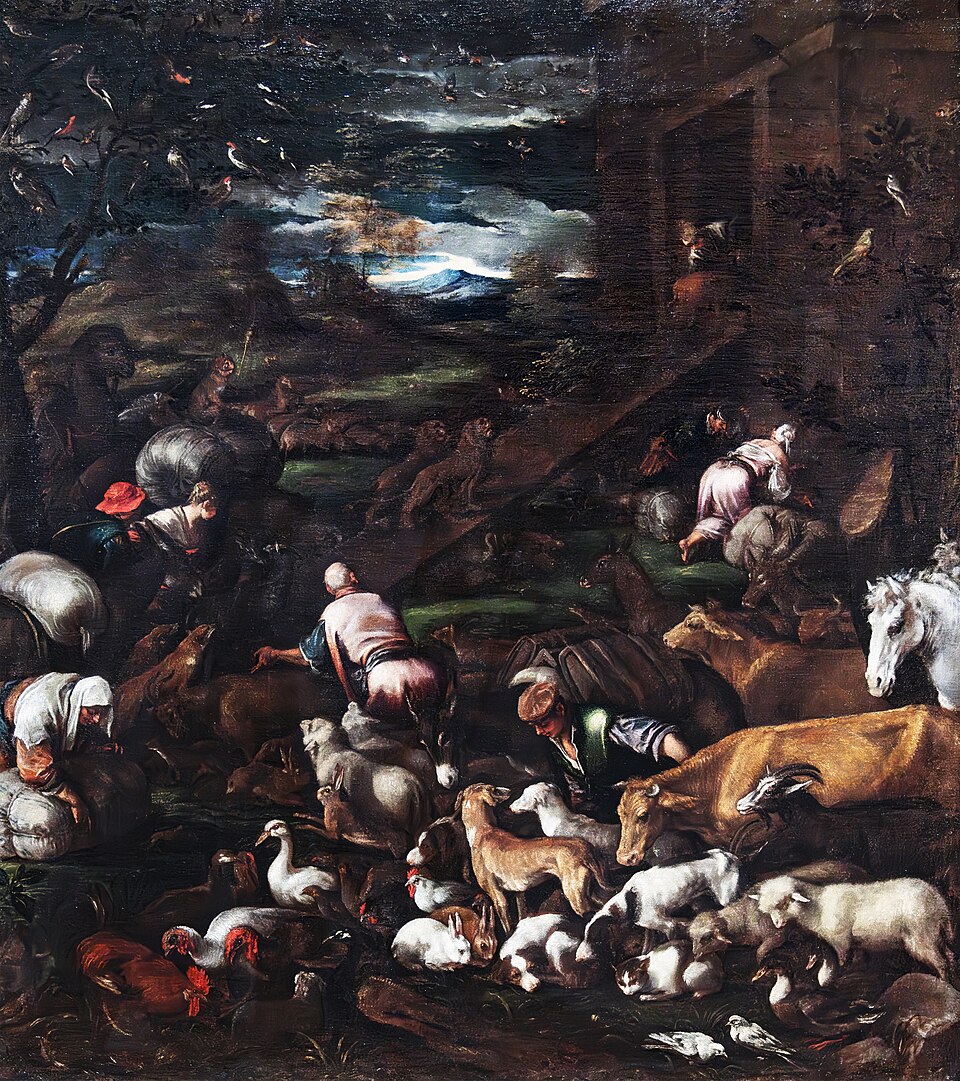
—Do you remember, father, how our hearts pounded when you released the raven, then the dove? Why entrust our fate to a bird?
Because lighter eyes than ours were needed to go see if the earth still breathed. The raven left and returned, coming and going, telling me nothing. So I released the dove, and the first time it found no place to set its foot and returned to my hand. You remember the silence in the Ark, Shem? We were all waiting for the same sign. Then I sent it again, and in the evening it came back with an olive branch in its beak, green, torn from a living tree. In that moment I knew the waters were receding, that under the flood an olive tree had survived and greened. A simple branch told me what no words could: life was more tenacious than wrath.
A simple branch told me what no words could: life was more tenacious than wrath.
—And that bow of colors that has just appeared above the waters, father — what did it mean to you when the Lord showed it to you?
Look at it again, Shem, before it fades: it is the Lord's writing in the sky. When we left the Ark and I built an altar, a covenant was given to me — not for me alone, but for you, for your brothers, for your children and all the beasts that came out with us. Never again will the waters overwhelm the whole earth: such is the promise. And so that no generation forgets it, the bow appears in the cloud after the rain. When you see it, long after I am gone, remember that your father heard this word with his own ears. It is not an ornament of the sky — it is a signature, and the Lord does not erase what he signs.
It is not an ornament of the sky — it is a signature, and the Lord does not erase what he signs.
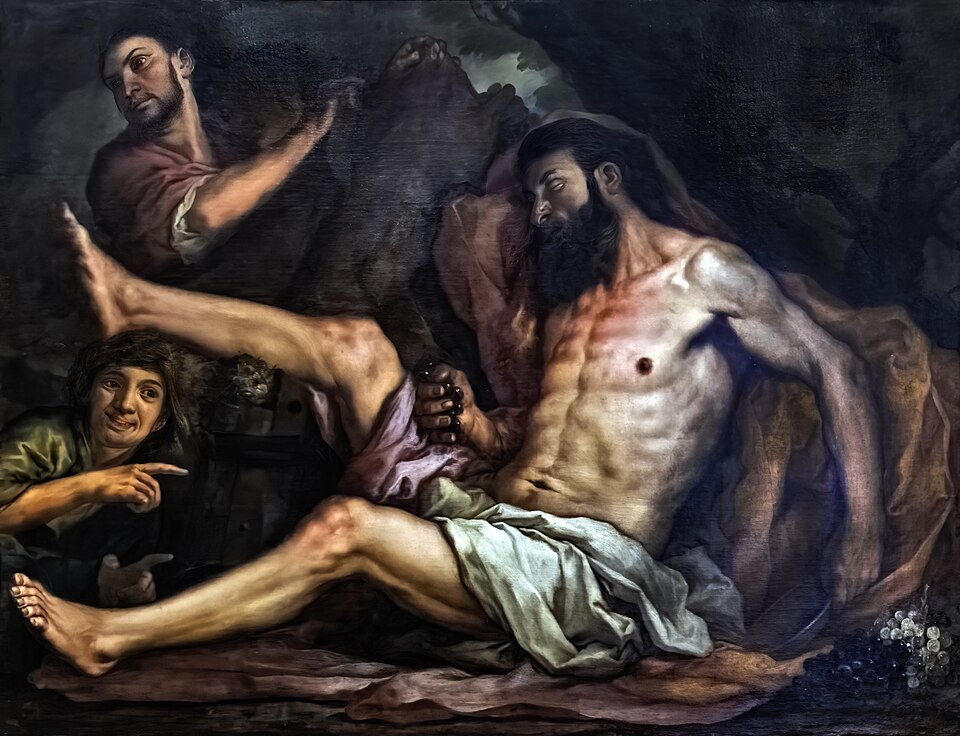
—You, my brother Ham, Japheth and our wives: upon us alone now rests the human race. Does this burden not frighten you, father?
It would frighten me if I bore it alone, but it rests on you three as much as on me. You the eldest, Shem, Ham, and Japheth — from you will come the peoples, languages, nations that will cover the emptied earth. When the Lord told us to be fruitful and multiply, he did not ask us to be numerous out of pride, but to give life to a world he had just spared. I knew a world drowned in violence; I want the one you build to remember the uprightness that saved us. Do not think the burden too heavy, my son: one man was enough to keep a promise, three sons will be enough to repopulate a land. The rest belongs to those who come after you.
One man was enough to keep a promise, three sons will be enough to repopulate a land.
—Why, among all that needed to be regrown, did you choose to plant this vine first on the slope, father?
Because after the ordeal, man needs something more than bread to keep him standing, Shem. The vine demands patience: you plant it without seeing its fruit for seasons, as you build an ark without seeing the storm. By sinking these cuttings into the dried mud, I was telling the earth that it could begin to give again, and telling us that it was permitted to live, no longer merely to survive. Wine gladdens the heart of man, and our heart sorely needed it after so much mourning. I was the first to break the ground to plant the vine; I also knew its excess, and you know that better than others. But that too is starting the world anew: regaining the right to have a heart that rejoices.
Starting the world anew is regaining the right to have a heart that rejoices.
—Now that all is accomplished, father, what would you have me keep of you to pass on to my own sons?
Keep this, Shem, and repeat it without embellishment: your father was neither a prince nor a sage, only a man who walked upright and finished his work. When you are mocked for believing in a storm that no one sees, hold firm as I held for one hundred twenty years. When misfortune strikes around you, never think yourself saved by your own merit alone. And when you see the bow in the cloud, teach your sons that the Lord keeps his word, even toward a humanity that had forgotten him. I leave you neither gold nor city, my son: I leave you a covenant and a vine. The rest, it is yours to build, plank by plank, as I taught you.
I leave you neither gold nor city: I leave you a covenant and a vine.
This imaginary interview was generated by artificial intelligence from sources documented in Noah's profile. It dramatises what the figure might have said based on what we know about them, but does not constitute attested historical testimony. For primary sources and factual documentation, refer to the full profile.