Kids interview Noah
by Charactorium · Noah · Mythology · 5 min read
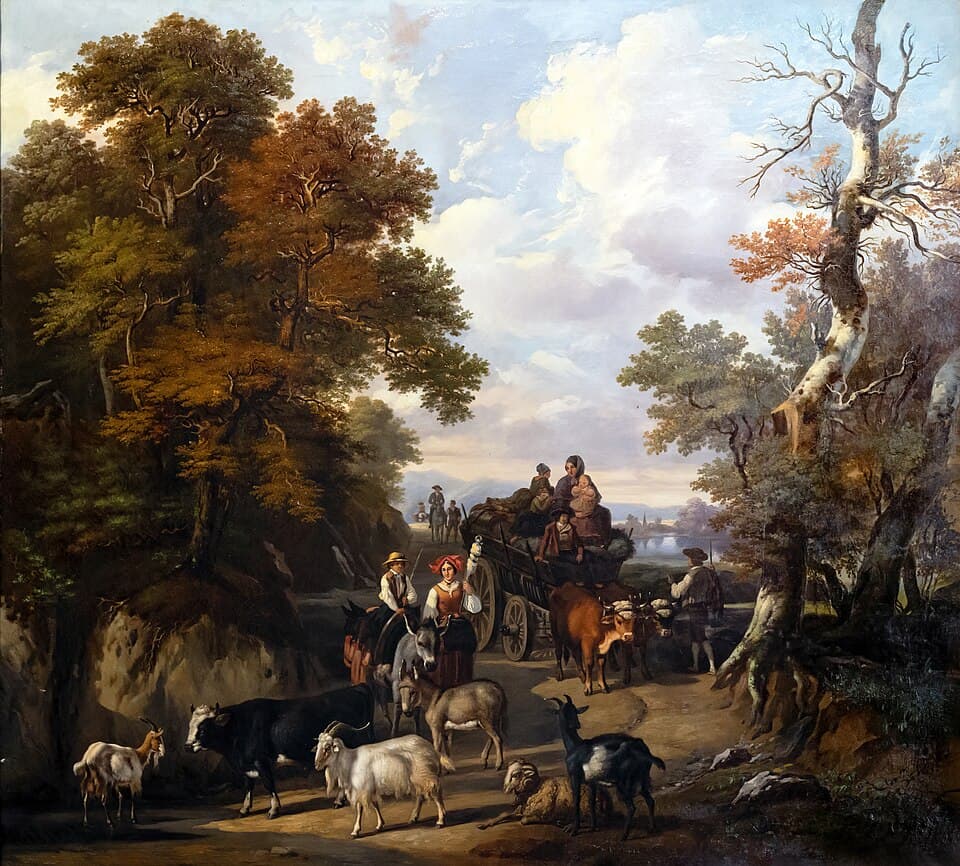
That morning, a class on a field trip stops in front of an old man with a long white beard, sitting near a great wooden boat. Two young visitors step forward, shyly, then the questions come tumbling out. The man smiles: his name is Noah, and he has all the time in the world.
—What was your life like before the Flood, with all the people around you?
You know, my child, it was a difficult time. Around me, the earth was full of violence — people fought, stole, betrayed one another. Imagine a village where no one trusts anyone anymore. I tried to stay upright. They said of me that I walked with God, meaning I listened to His voice instead of the voice of anger. I even warned others: “Disaster is coming, change your ways!” But very few listened to me. It's sad, you see, to shout into the void. I was like a lone watchman, awake while everyone sleeps.
I was like a lone watchman, awake while everyone sleeps.
—Weren't you afraid to be the only one thinking differently from others?
Of course I was! Courage isn't not being afraid. It's moving forward anyway. Imagine you're the only one in your class to say “No, that's not right,” while everyone laughs at you. That was my life back then. The ancient texts say I was “found righteous and perfect,” but I didn't feel perfect, you know. I felt small. Only, I preferred to be small and upright, rather than big and crooked. I learned one thing: you don't need to be many to be right. You just need to listen to your conscience, even when it speaks softly.
You don't need to be many to be right.
—How do you build such a huge boat all alone? Did it take long?
Oh my, very long! Tradition says I worked on it for one hundred and twenty years. Can you imagine? Longer than a human lifetime today. God gave me precise measurements: three hundred cubits long — a cubit is the length of your forearm. In total, almost one hundred and forty meters! Imagine a boat as long as ten houses lined up end to end. With my carpenter's tools, I cut the wood, I assembled it, I covered it with pitch so the water wouldn't get in. The neighbors mocked: “A boat, far from the sea?” Me, I hammered, I sawed, I kept going. Every nail was an act of trust.
Every nail was an act of trust.
—People must have thought you were crazy, right? How did that make you feel?
You guessed right! Building a giant ship on dry land, without knowing where to sail... it seemed insane. Mockery stings the heart, my child. But I had received exact instructions, and I followed them to the letter. Imagine being entrusted with a huge secret that no one believes: you carry that weight alone. In the morning, I got up before dawn, checked my animals, then returned to my planks. Year after year. Patience, you see, is a form of faith that walks slowly. The wood, at least, didn't mock me. It obeyed my hands.
Patience is a form of faith that walks slowly.
—And all the animals, how did they get into the Ark? Did you catch them?
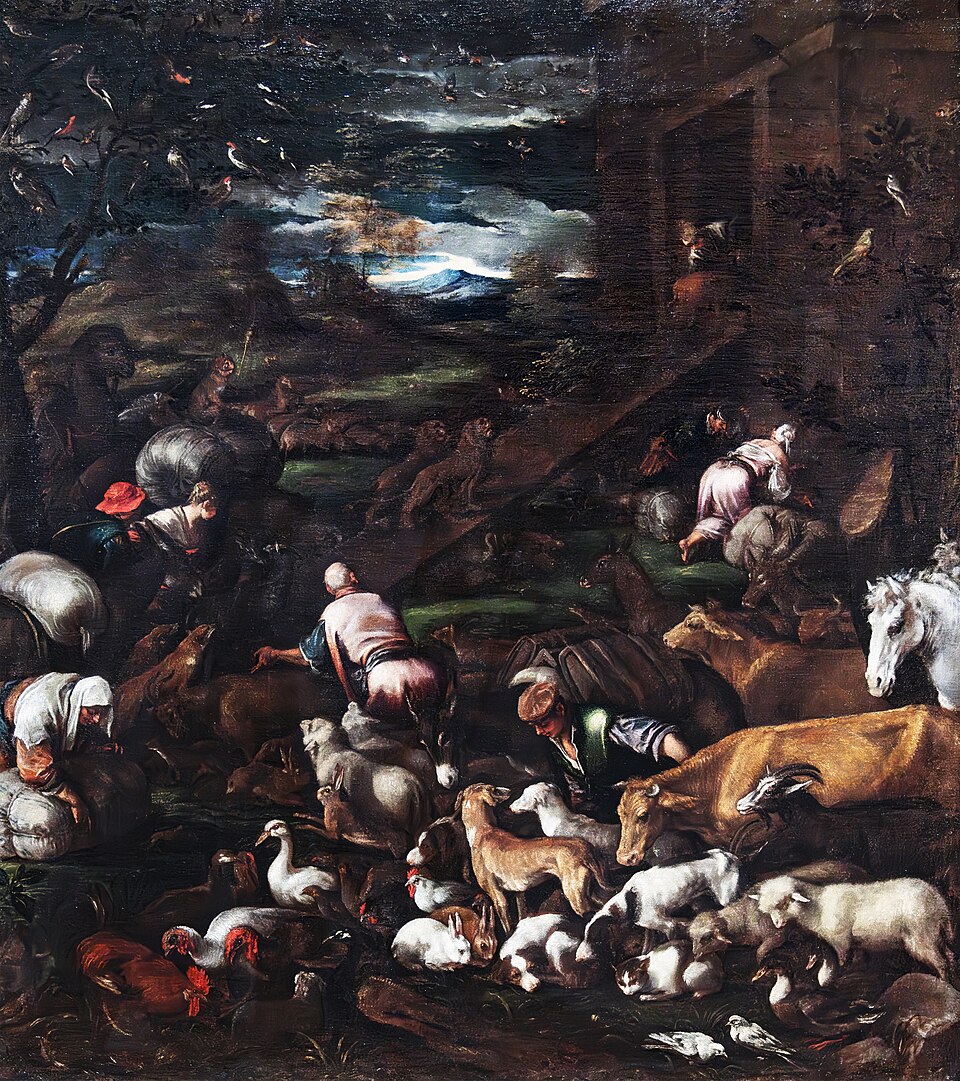
No, my child, and that's the most astonishing part! I didn't chase any. They came by themselves! Two by two for some species, seven by seven for others. Imagine the scene: a long line of animals moving all by themselves toward the ship's door — lions, birds, ants, elephants. You could hear cries, wing beats, trampling. I only had to open the door and welcome them. It was as if all of creation knew it had to be saved. I watched, heart pounding, and I thought: this world deserves to be protected.
All of creation knew it had to be saved.
—What did it smell like inside, with so many animals locked up for so long?
Ah! You ask the real question! Imagine a giant stable, closed for weeks, with rain pounding on the roof day and night. It smelled strong, believe me: wet straw, animals, smoke. It was dark, you could hear the water hitting the wood constantly. The Flood lasted forty days and forty nights. With my family — we were eight in all — we fed, cleaned, comforted the frightened animals. It was tiring, but alive. In the evening, we huddled together, and I listened to all this little saved world breathing. In that din, there was something sweet: we were together, and we were alive.
In that din, there was something sweet: we were alive.
—How did you know the water was receding? Did you look out a window?
Almost! I couldn't see outside well, so I had an idea. First I released a raven, which flew far away without really returning. Then I sent a dove, a gentle little bird. The first time, it came back: there was nowhere to land, everything was still underwater. I waited. Then I released it again — and it came back with an olive branch in its beak! Can you imagine my joy? That little green branch meant: the earth is breathing again, the trees are growing back. Since that day, the olive branch has been the universal sign of peace.
A little green branch said: the earth is breathing again.
—After all that, did the rainbow really appear? What did it mean?
Yes, my child, and I will never forget that moment. When we came out of the ship, God made a promise: never again would He destroy the earth by water. This is called a covenant — a great agreement, like a given word that cannot be taken back. And to seal this promise, He stretched a rainbow across the sky. Imagine, after weeks of gray rain, that bridge of colors above you! Red, yellow, blue, like a smile in the clouds. From now on, every time you see a rainbow after a storm, remember: it is the sign that after fear, life always begins again.
After fear, life always begins again.
—Where did the boat finally stop? Where did you get off?
The ship came to rest on top of a high mountain, Mount Ararat, in the northern lands. Imagine: after so many days floating on water, finally feeling the boat stop, firm, on solid ground. What relief! We opened the door, and the air smelled of wet earth, new grass. The animals rushed out, free, in all directions. My three sons — Shem, Ham, and Japheth — came out with their wives. The world was empty and new, just for us. It was both frightening and wonderful: everything had to be started over, and it was up to us to do it.
The world was empty and new, and it was up to us to remake it.
—And after that, what did you do in this brand new world?
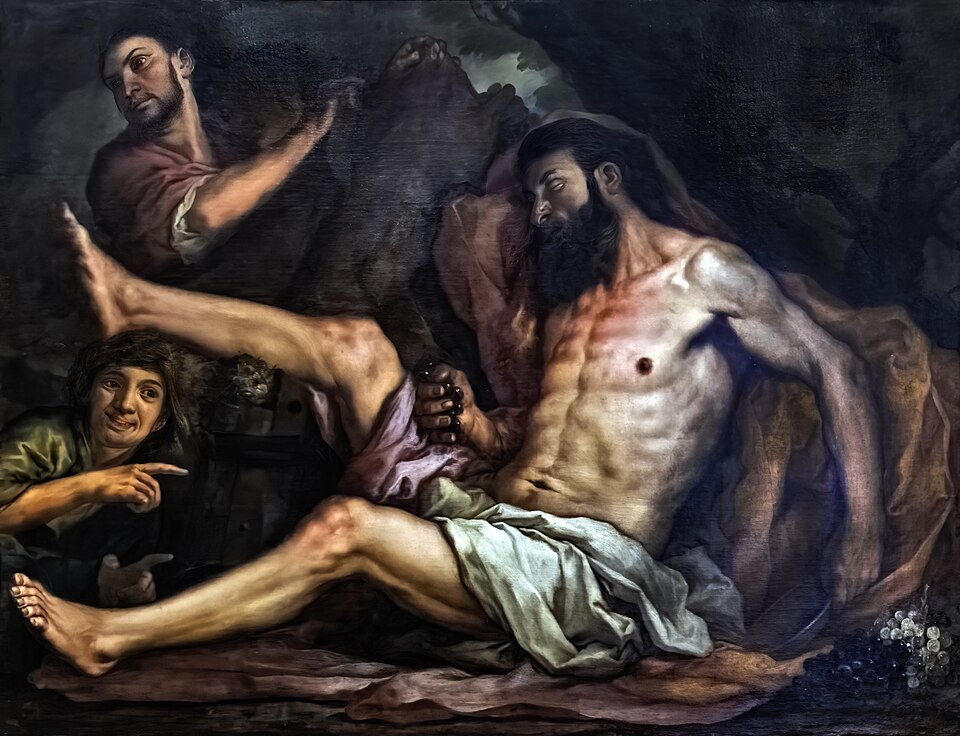
We set life going again, very gently! My sons started families, and their children populated the whole earth — they say all peoples descend from them. As for me, I rolled up my sleeves and planted a vineyard. Yes, I am the first that tradition shows cultivating grapes to make wine! Imagine: picking up a spade, turning the soil, seeing the first shoots emerge. After the great emptiness, planting was saying “yes” to tomorrow. Building a boat was saving life; planting a vineyard was giving it flavor again. Starting over, you see, that's true courage.
Saving life is good; giving it flavor again is even better.
This imaginary interview was generated by artificial intelligence from sources documented in Noah's profile. It dramatises what the figure might have said based on what we know about them, but does not constitute attested historical testimony. For primary sources and factual documentation, refer to the full profile.