Imaginary dialogue between Épiméthée and Pandora
by Charactorium · Pandora · Mythology · 5 min read
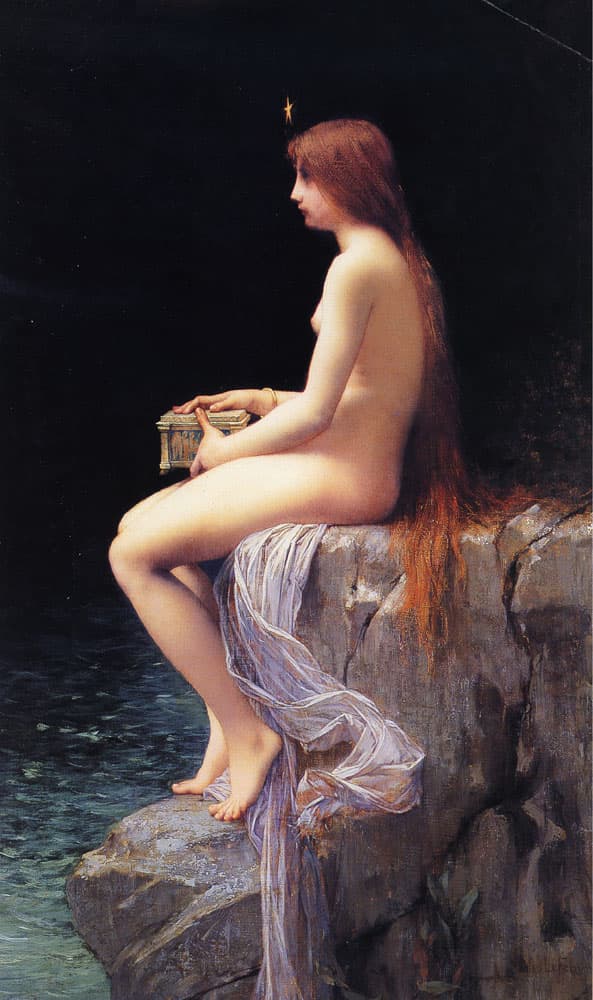
It is at the threshold of our home, in Boeotia, that Epimetheus comes to sit beside Pandora one evening when the earthenware jar still lies empty and gaping in the shadow of the hearth. The oil lamp's light trembles on the overturned lid. They have known each other since the day Hermes led her to him, a gift of the gods he could not refuse. And he, whose name means 'he who thinks too late', comes this evening to ask her what he has never dared: why.
—The day Hermes led you to my threshold, Pandora, you had barely been born from the hands of the gods. What do you remember of that first morning among us?
You remember, Epimetheus: I emerged from the earth like a goddess, and yet I was not immortal. Hephaestus had fashioned me from water and clay on the order of Zeus. Each Olympian bent over me: Athena taught me the arts of weaving, Aphrodite placed upon my face a troubling grace, Hermes slipped persuasion into my mouth. I was named Pandora, 'she who has received all gifts'. But I did not yet know that these gifts were not for me — they were the bait. I was a beauty made to be given, and you, you welcomed me without guessing what I brought.
I was a beauty made to be given, and you, you welcomed me without guessing what I brought.
—Your brother Prometheus had warned you against any gift from Zeus. Did you know, when you married me, why the gods had crafted me?
I did not know, and that is the cruelest part. Zeus was furious: your brother had stolen fire to give to men, and a punishment equal to that affront was needed. I am that punishment, Epimetheus. Works and Days says it bluntly: I was the baneful gift, the hidden price of fire. Men had lived until then without hardship, separate from misfortune. I was sent to restore the balance the gods wanted: a gift for a gift, fire for woman. You received me because you always think after you act — and your brother, he had begged you to refuse everything.
I was the baneful gift, the hidden price of fire: a gift for a gift.
—The jar here, sealed, I told you never to open. What happened in your heart that day, before the lid?
You forbade me, I remember, and your voice was grave. But the gods who had molded me had also placed in me that thirst for knowledge, that desire to open what is closed. The jar — the earthenware pithos — called to me. I told myself: just one look, and I will close it. My fingers lifted the lid, and immediately they escaped in a cloud: disease, old age, sorrow, death, all the evils we did not know. I tried to close it, too late — you who bear that name, you know what 'too late' means. Evil was upon the world, and it was my hand that had released it.
Just one look, I told myself, and I will close it. My fingers lifted the lid.
—When you saw the evils fly through the house, Pandora, did you resent me for leaving you alone with the jar?
No, my husband, I did not resent you — how could I resent you, who had warned me? The fault is mine, and yet I believe the gods had written it before my birth. They made me curious as one sharpens a blade, knowing what I would do. I carry the weight of this act, but I am only an instrument in the hand of Zeus. You think too late, I acted too soon: together, we sealed the destiny of men. We are bound by that as much as by our union. And every suffering that arises among mortals now traces back to that single afternoon, in this room, near this lamp.
You think too late, I acted too soon: together, we sealed the destiny of men.
—They say that one thing, however, did not escape from the jar. When you closed the lid, what remained at the bottom, trapped?
Hope, Epimetheus. Elpis remained alone, held beneath the rim, when all else had flown away. For a long time I wondered why it had not followed the evils. Is it a good kept for men, or another evil, locked away from them? I believe it is a consolation: even burdened with sufferings, mortals will henceforth be able to hope, and this hope will sustain them where they would fall. The jar that released misfortune also kept for them this last breath. That is the strange balance of my act — I spread all evils, but I held back what allows us to bear them.
I spread all evils, but I held back what allows us to bear them.
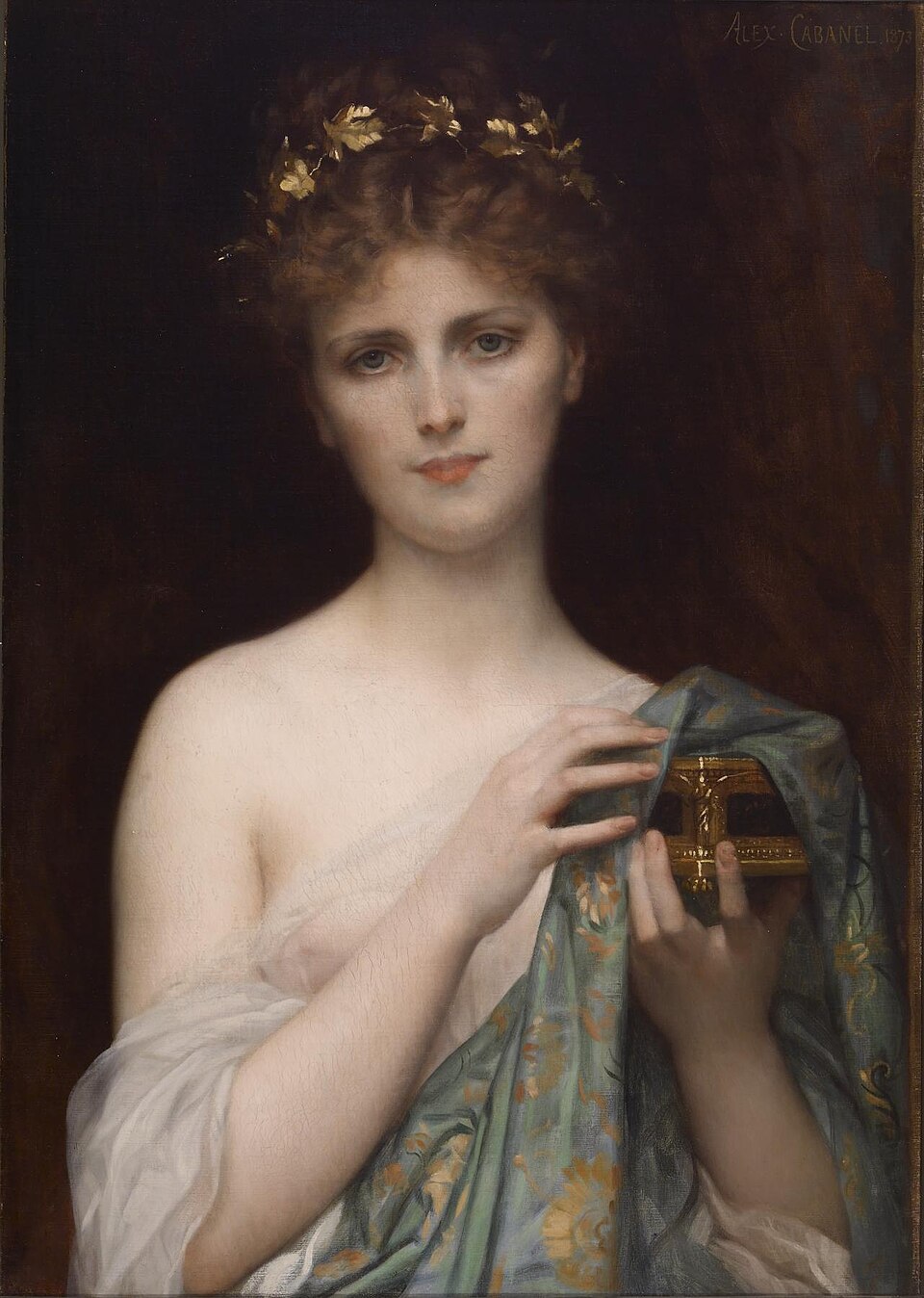
—This Hope left at the bottom, do you truly believe it helps us, who must now live with all these released evils?
I want to believe it, and you need it more than anyone. Imagine what our life would be without it: diseases, sorrows, approaching old age — and nothing to lift our eyes toward tomorrow. Elpis does not erase suffering, but it prevents us from drowning in it. That is why the story that will be told of us is not merely a story of misfortune. It explains where evils come from, yes, but also why men, despite everything, continue to sow, to build, to unite. The jar tells the origin of sorrow; Hope tells why it does not finish us.
Hope does not erase suffering, but it prevents us from drowning in it.
—You bear the gifts of all the Olympians, Pandora. Do you feel grateful for these gifts, or trapped by what they have made of you?
Both at once, my husband. The beauty of Aphrodite, the arts of Athena, the speech of Hermes: these gifts are magnificent, and yet they do not truly belong to me. They were chosen not to adorn me, but to make me irresistible to men — so that you could not refuse me. I am a work of the gods before I am a woman. When I weave at the loom, I feel Athena's hand guiding mine; when I speak and am listened to, it is Hermes who smiles. I received all gifts, and the greatest of them was never to know what was mine and what was a trap.
I am a work of the gods before I am a woman.
—A blind bard named Hesiod, they say, already sings our story throughout Boeotia. What do you think of this voice that repeats your deed from village to village?
It is a strange thing, Epimetheus, to hear one's own life carried by the mouth of another. Hesiod sings in his Theogony and in Works and Days how I was born from the earth, clothed by Athena, and how I opened the jar. His word travels farther than I ever will. But I fear what it fixes: he portrays me as the source of men's misfortune, the 'beautiful evil' that one can only love at one's own loss. This image will survive me, more tenacious than the evils I released. Men will forget that the gods willed me thus; they will remember only my hand on the lid.
His word travels farther than I ever will — but I fear what it fixes.
—When men tell of this evening, Pandora, do you think they will keep me at your side, or remember only you and your jar?
You will always be there, my husband, for our union is as much a part of the story as the jar. The marriage to Epimetheus seals the destiny of men: without your welcome, I would never have crossed this threshold. But I know, they will remember above all my name and my act. You, they will cite as the one who thinks too late, the imprudent brother of wise Prometheus. It is unfair to both of us: me reduced to curiosity, you to improvidence. Yet what we truly lived — this house, this lamp, this shared fear when the evils burst forth — that, no song can tell. It is too intimate for the story.
They will reduce me to curiosity, and you to improvidence — but what we lived, no song will tell.
—One last question, Pandora. If Zeus were to hand you that jar again today, knowing all you know, would you leave it closed?
You ask me if I could undo what I am. I would like to tell you yes, my husband — leave the lid sealed, spare men disease and death. But the gods did not make me to resist; they made me to open. That is the reverse hubris: not my own pride, but that of Zeus who wanted to punish and knew that a creature like me would yield. If the jar returned, perhaps curiosity would prevail again. But then I would ensure one thing: keep Hope at the bottom, as the first time. For even in remaking misfortune, I would save what allows us to bear it.
The gods did not make me to resist; they made me to open.
This imaginary interview was generated by artificial intelligence from sources documented in Pandora's profile. It dramatises what the figure might have said based on what we know about them, but does not constitute attested historical testimony. For primary sources and factual documentation, refer to the full profile.