Imaginary interview with Pandora
by Charactorium · Pandora · Mythology · 5 min read
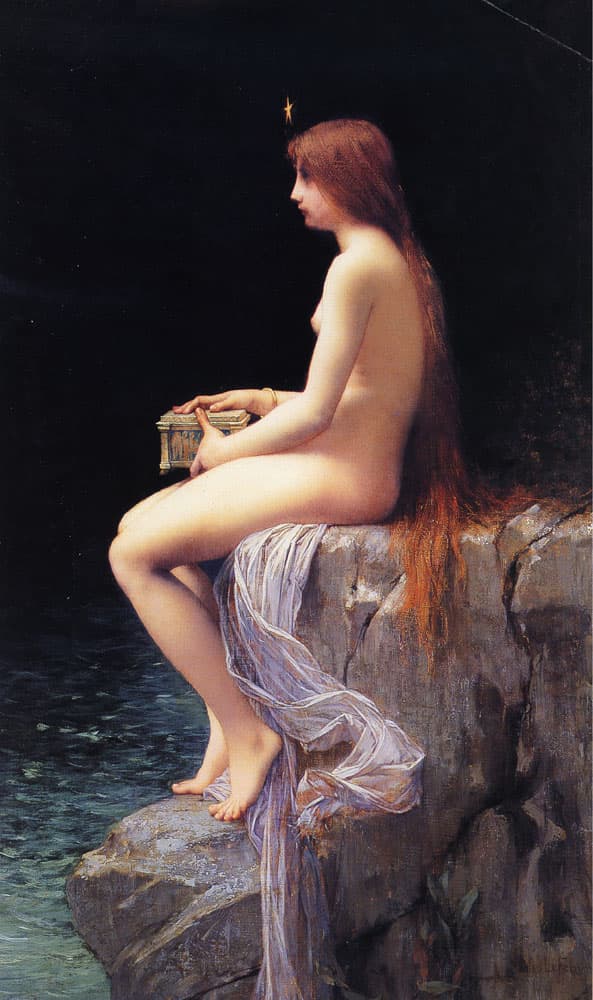
On the slopes of Mount Olympus, where the gods shaped her from water and earth, a young woman adorned in gold agrees to revisit the first day of the world as she lived it. She speaks slowly, as one unwinds a spindle thread. Here is Pandora.
—How did you come into the world, you who have neither mother nor childhood?
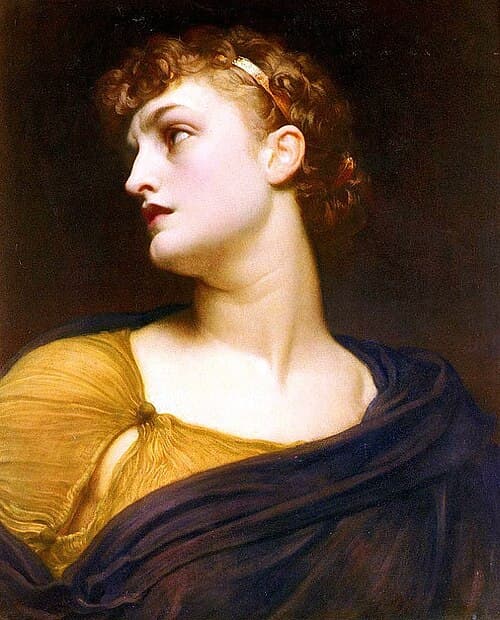
I did not grow: I was fashioned. Hephaestus, the lame smith, mixed earth with water at the order of Zeus, and from that clay he drew my features, a voice, a strength equal to that of goddesses. Then each Olympian bent over me as over a work to be completed: Athena taught me the arts of weaving, Aphrodite placed beauty on my face, Hermes slipped persuasion into my mouth. They clothed me in an immaculate chiton, girded with a gold diadem. My very name says it: she who received all gifts. I was born adult, adorned, and already destined to be offered.
I did not grow: I was fashioned.
—Why did the gods deem it necessary to create you?
Because a Titan had stolen fire. Prometheus stole it from the gods to bring to men, and Zeus, who sees far, did not strike the thief alone: he wanted mortals to pay as well. I am that payment. Before me, they say, the race of men lived without women, apart from torment. My coming broke that solitude. I was made beautiful so the trap would be sweet, seductive so I could not be refused. I know what this says about me in the mouths of poets: the first woman conceived as a punishment, a beautiful evil. I have carried that gaze from the beginning, and it weighs heavier than my diadem.
I was made beautiful so the trap would be sweet.
—Tell us about your arrival at Epimetheus's home.
I was led to Epimetheus, Prometheus's brother, as one carries a gift wrapped in ribbons. His brother had warned him: never accept anything from Olympus, send the gift back. But Epimetheus — his name means 'he who understands too late' — looked at me and forgot the warning. Hesiod calls me that baneful gift, and he is right to say so: I was the gift that should not have been opened before myself. Our union sealed something larger than a marriage in Boeotia: the fate of all humanity hung on that distracted yes. I entered his house not as a wife, but as a sentence made amiable.
I was the gift that should not have been opened before myself.
—Let's talk about that jar. What did you know about it before you opened it?
I only knew that it was forbidden to me. A large sealed pithos, a clay jar like those for storing oil and grain, except this one was never to be opened. Epimetheus had told me, and the gods too, without explaining what it contained. That was the torment: I had been given persuasion, arts, beauty, and on top of all that, a silent prohibition. A closed jar in a house is a question that does not fall silent. Every day I passed it while spinning my wool, and every day the lid seemed to weigh a little less. I was made curious as I was made beautiful: it was inscribed in the work.
A closed jar in a house is a question that does not fall silent.
—And the moment you lifted the lid?
I cannot say whether it was a gesture or a fall. I placed my hand on the seal of the pithos, and the lid gave way as if it had been waiting for that. At once they came out — disease, old age, sorrow, death — not as a visible herd but like a mist that spreads and cannot be caught. I tried to close it, too late: what escapes such a jar cannot be put back. That is what people remember of me, the moment when the world of men ceased to be ignorant of suffering. Hesiod made it the event that explains why your life is mixed with so many ills. I created nothing that day: I only opened.
I cannot say whether it was a gesture or a fall.
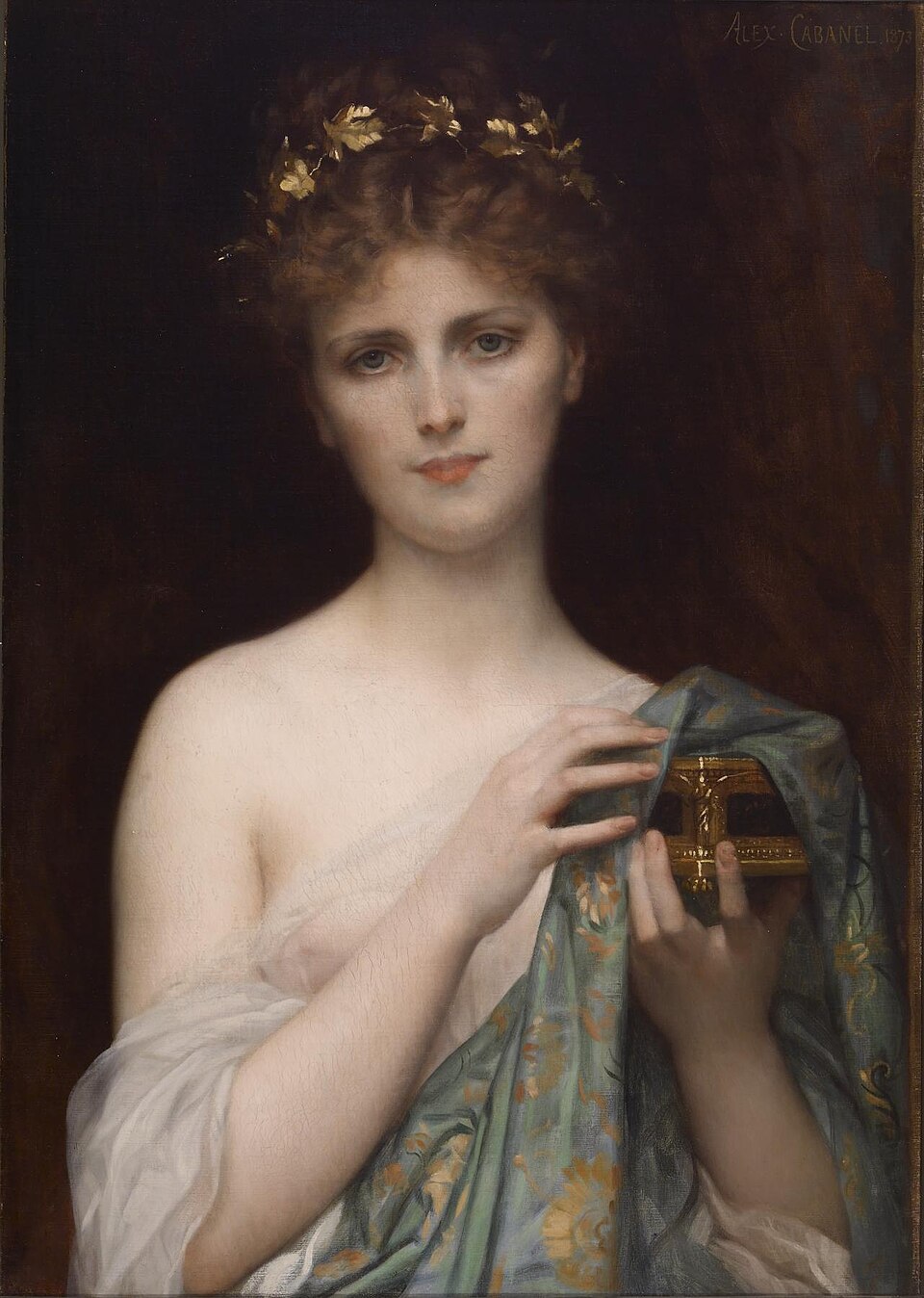
—Yet, they say, something remained at the bottom. What was it?
Hope. Elpis, in my language. When all the evils had fled, a single presence remained under the rim of the jar, sheltered by the lid I had slammed shut too late for the others and just in time for her. I kept her. People still argue about what this means: did she stay to console us, or was she held prisoner away from men? I do not decide — the accounts do not decide either. But I know that without her, the gesture would have been pure disaster, and with her, it becomes something stranger. I released suffering and I kept what can bear it. That is my entire myth held in a clay jar.
I released suffering and I kept what can bear it.
—What would you say to those who see your story as a simple lesson about curiosity?
That they have read only half the jar. Yes, my story is what your scholars call an etiology: a tale that explains where the world's ills come from, as others explain storms or seasons. But to reduce it to 'do not be curious' would be to forget the Hope that remained at the bottom. If the gods had wanted only a lesson, they would have let the jar empty entirely. Instead, they allowed a consolation to survive the disaster. I believe my myth speaks less of my fault than of your endurance: you live among the plagues I let out, and yet you continue. That obstinacy is what slept under my lid.
They have read only half the jar.
—You still bear the gifts of the gods. Are they an honor or a burden?
The two are mingled in me. Athena taught me to hold the distaff and handle the kalathos, the basket where wool is stored; those gestures I would repeat without bitterness, for they are true and useful. But the other gifts — the beauty Aphrodite gave me, the persuasion of Hermes — were not placed in me for my benefit. They were the bait. When a gift is designed to trap the receiver, can it be called a gift? I wear the gold diadem and the chiton woven for goddesses, and every ornament reminds me that I was adorned as one prepares an offering. My name says I received everything. It does not say that nothing was given for my own sake.
When a gift is designed to trap the receiver, can it be called a gift?
—How do you experience the gaze that poets have cast on you and, through you, on all women?
With the weight of centuries on my shoulders. Hesiod sang of me in the Theogony and the Works and Days, and from his voice I became the model of a suspicion: woman as a beautiful evil, as a mouth that eats what man has labored to produce. I did not write those verses, I endure them. My curiosity was made the flaw of an entire sex, my opening of the jar the proof of a shared weakness. I know this gaze owes as much to the fears of the men of my time as to my own story. But a figure does not choose what she embodies. I was fashioned to carry meaning, and that meaning has outlived me far beyond the house of Epimetheus.
I did not write those verses, I endure them.
—If one thing should be remembered about Pandora, what would you want it to be?
That I am both the gift and the jar. Zeus sent me as a trap-gift to Epimetheus, and I carried within me a second sealed trap: one inside the other, two containers that should not be opened. But do not remember only the misfortune I spread upon the earth of men. Remember that at the bottom of all this remains Hope, like an ember under the ash of the hearth. Hesiod called me baneful gift, and he was right; yet a baneful gift that keeps hope in reserve is not quite a curse. I am the beginning of your condition: mixed, suffering, and yet capable of enduring. That is what I leave, more than the curiosity I am blamed for.
I am both the gift and the jar.
This imaginary interview was generated by artificial intelligence from sources documented in Pandora's profile. It dramatises what the figure might have said based on what we know about them, but does not constitute attested historical testimony. For primary sources and factual documentation, refer to the full profile.