Kids interview Pericles
by Charactorium · Pericles (493 av. J.-C. — 428 av. J.-C.) · Politics · 5 min read
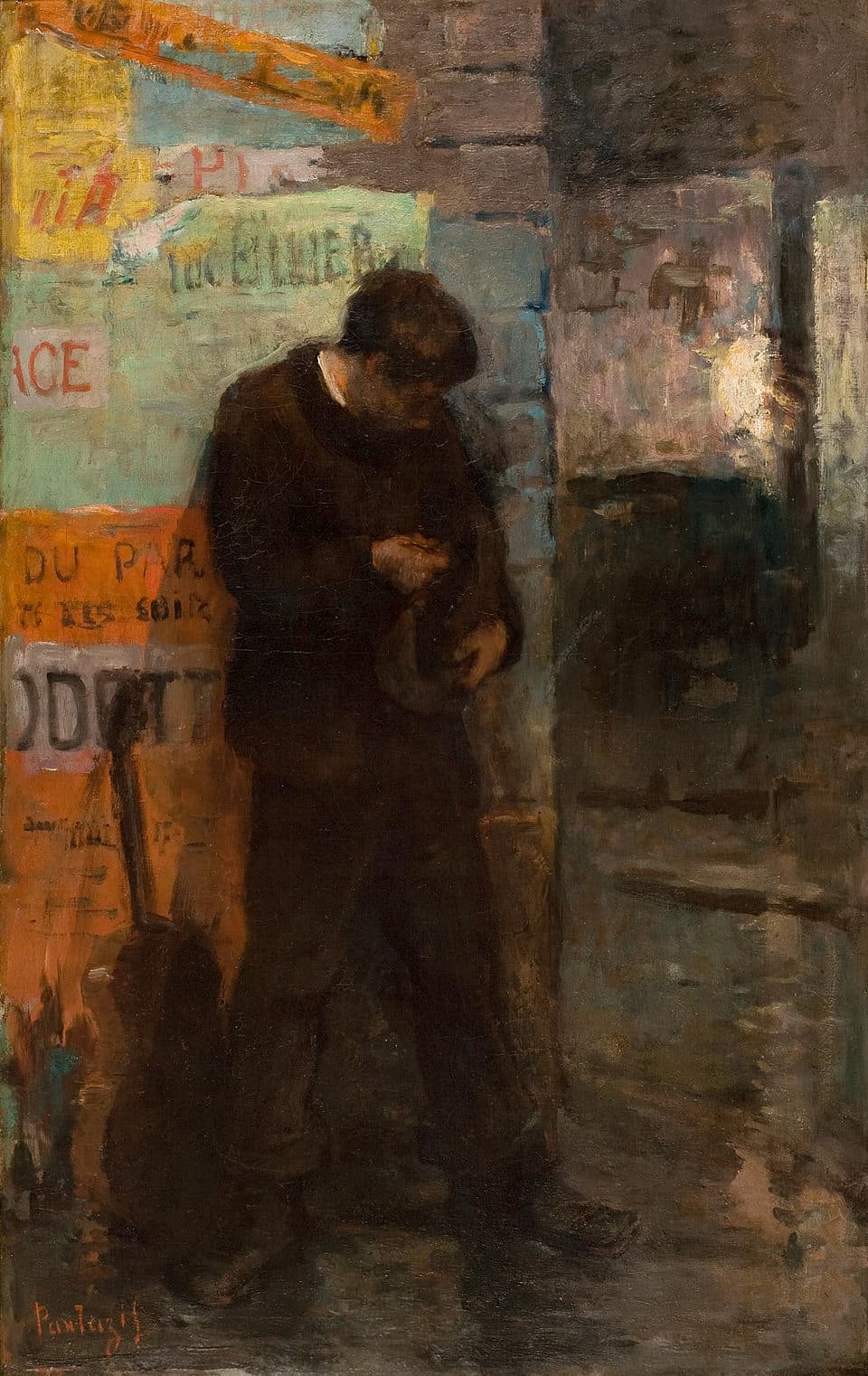
Two twelve-year-old visitors arrive one morning on the Acropolis, out of breath from climbing the hill. There, in front of the still-white columns of the construction site, an old man in a bronze helmet waits for them with a smile. His name is Pericles, and he has agreed to tell them everything.
—Is it true that people made fun of the shape of your head?
Ah, you've heard that story! Yes, my child, it's true. I had a rather long skull, a bit pointed at the top. The comic poets of Athens nicknamed me Onion-head — imagine an elongated onion, you get the idea. So I often kept my bronze strategos helmet, my war commander's helmet, on my head, even in the city. People thought it was out of military pride. In truth, it also hid my funny skull! You know, a leader must be careful about his image. I showed myself rarely, so that people would listen to me better when I spoke.
They thought I was proud of my helmet. It mainly hid my funny head.
—They say you never cried. Was that true, even when things were serious?
That's what they said of me, yes. I was the man who doesn't tremble, who keeps his calm in the storm. And then a great illness came upon Athens, in 430 before your birth by almost twenty-five centuries. A terrible plague. It carried off my two sons. Before everyone, at the funeral, I, the impassive one, broke down in tears. I could no longer hold back. You see, a man can hold out for years against enemies, and break for his children. A father's grief is stronger than any armor in the world.
A man can hold out against enemies and break for his children.
—You had made a law about citizenship, but later you bypassed it. Why?
You put your finger on something that still weighs on my heart. In 451 BC, I had a law passed: to be a citizen of Athens, you needed two Athenian parents. Strict, my law. But my companion Aspasia came from elsewhere, and our son, because of my own rule, was not a citizen. When my other sons died, I had to beg the Assembly to make an exception for him. Imagine that: asking forgiveness for the law you yourself made. That day I learned that a just rule can become cruel for the one who wrote it.
I had to beg them to break the law I had myself written.
—What was it like to build something as huge as the Parthenon?
Come, look behind me! This temple, the Parthenon, we started it in 447 BC. Every morning, at dawn, I climbed this hill with my friend Phidias, the greatest sculptor in Greece. The architects Ictinus and Callicrates brought me small clay models — imagine a tiny temple you can hold in your hands. And all around, hundreds of workers, the sound of hammers on marble, white dust everywhere. I checked everything myself. I wanted Athens to become the most beautiful city in the world. And you know what? You came to see it. That means we succeeded.
I wanted the most beautiful city in the world. You came to see it: we succeeded.
—Why were you so keen on building such beautiful buildings?
Good question, my child. It wasn't just for show! At the entrance to this sacred hill, I had the Propylaea built, a monumental gateway, immense. And lower down, the Odeon, a large covered hall for music — the first in the city. Imagine entering a place so large that your voice gets lost. I wanted every Athenian, even the poorest, to look up and feel proud. A beautiful city makes its inhabitants better. Stone lasts longer than men. These walls still tell our story, thousands of years after me.
A beautiful city makes its inhabitants better.
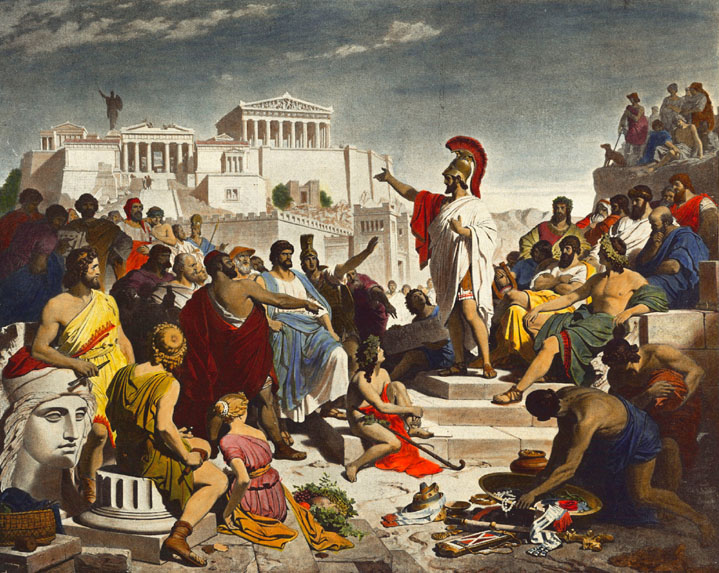
—Is it true that you paid poor people to do politics?
Exactly! And many rich people resented me for it, you can believe me. In Athens, citizens had to judge trials and vote on laws. But imagine a poor farmer: if he spends his day at the Ecclesia — that's our people's assembly, on the hill of the Pnyx — he doesn't earn his bread. So I created the misthos, a small allowance, a few coins, for those who sat. They were given a little bronze token. Thanks to that, the poor could participate like the rich. Democracy is just a beautiful word if only the rich can come.
Democracy is just a beautiful word if only the rich can come.
—What was a day like when you had to convince everyone?
In the morning, I went to the Agora, the main square, to greet people, feel their mood. In the afternoon, I climbed the Pnyx. There, thousands of citizens sat on the hill, facing the speaker's platform. No microphone, my child — you needed a carrying voice! I prepared my speeches for hours, I weighed every word. Imagine having to convince an entire crowd just by speaking, without shouting, calmly. That was my real power. I was not a king. Every day, the people could say no. I had to convince them, again and again.
I was not a king. Every day, the people could say no.
—You were accused of stealing money from other cities. Was it true?
Ah, the accusation that followed me all my life... Listen carefully. Several Greek cities had united in the Delian League, to defend themselves against the Persians. Each paid a tribute, the phoros, into a common treasury kept on the island of Delos. Around 454 BC, I had this treasury brought to Athens. And with it, I paid for the Parthenon. A rival, Thucydides son of Melesias, accused me of adorning myself with the allies' gold like a coquettish woman. Harsh, isn't it? But I thought: we protect them, they pay for our shield. I leave it to you to judge whether I was right.
They paid for our shield. Did I have the right to make a temple of it?
—Did you think it was fair that Athens commanded all the other cities?
You ask the tough question, and I like that. At first, the Delian League was an alliance of equals against the Persian enemy. But little by little — between 454 and 430 BC — Athens became the boss. The other cities paid, obeyed, no longer really had a choice. An empire, in short. Was it fair? I'll be honest with you: I believed Athens deserved to command, because it was the most brilliant. But I know I can be reproached for turning friends into subjects. Force and justice do not always walk hand in hand.
Force and justice do not always walk hand in hand.
—One day there was an eclipse and everyone was scared. Were you too?
No, I was not scared — and that allowed me to help others. It was in 431 BC, our fleet was leaving for war. Suddenly, in broad daylight, the sun hid, the sky became dark. My pilot was trembling, paralyzed with terror! So I took my cloak and put it over his eyes. Does that hurt you? I asked. No, he said. I replied: between my cloak and the eclipse, the only difference is the size of what hides the light. Nothing magical. Just something, up there, passing in front of the sun.
Between my cloak and the eclipse, the only difference is the size.
—You had a philosopher friend who got into trouble. What happened?
Yes, my dear Anaxagoras. A great mind, a man I loved. But he dared to say something dangerous in my time: that the sun was not a god, but a huge ball of fire, a burning stone. Imagine saying that when everyone prays to the sun! He was accused of impiety, of insulting the gods. They wanted him dead. I had to use all my influence, beg, maneuver, to save him and get him out of Athens alive. You know, defending a friend when the crowd demands his head — that is true loyalty. I have never regretted it.
Defending a friend when the crowd demands his head — that is true loyalty.
Read further
This imaginary interview was generated by artificial intelligence from sources documented in Pericles's profile. It dramatises what the figure might have said based on what we know about them, but does not constitute attested historical testimony. For primary sources and factual documentation, refer to the full profile.