Imaginary dialogue between Déméter and Persephone
by Charactorium · Persephone · Mythology · 5 min read
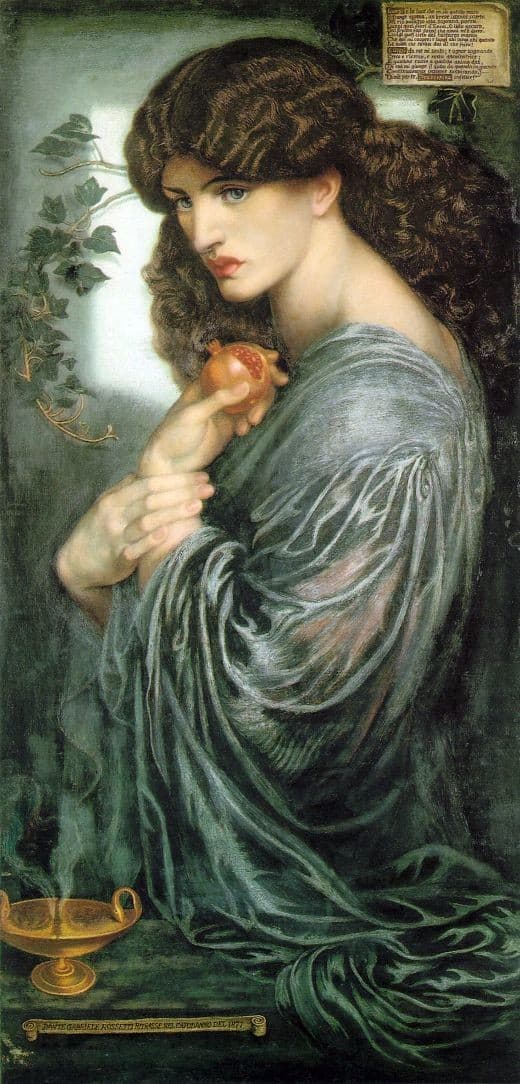
It is on the heights of Eleusis, where the mother's torch so long sought the daughter, that Demeter is reunited with Persephone for the brief time they are together. The meadow smells of ripe wheat and cut pomegranate; in the distance, one can make out the mouth of darkness through which her daughter descends each autumn. The mother has wept so much over these six months of absence that she finally dares to ask what she dreads to hear. And the queen of the dead, still warm from the spring she brings back, agrees to speak.
—My daughter, tell me about that day in the plain of Sicily, near Enna: what were you doing when the earth opened?
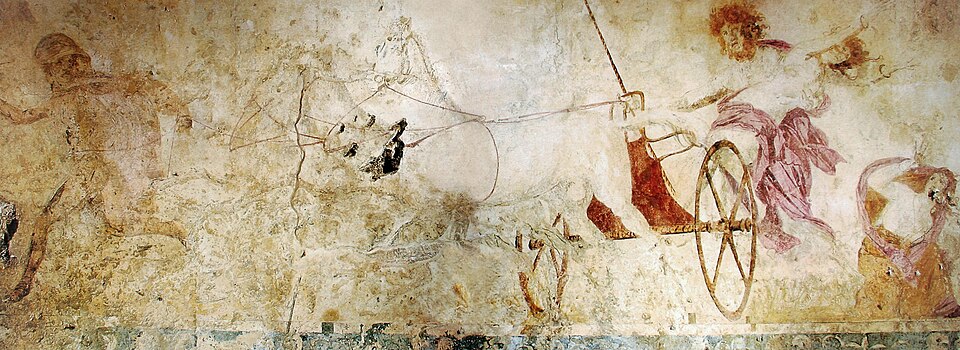
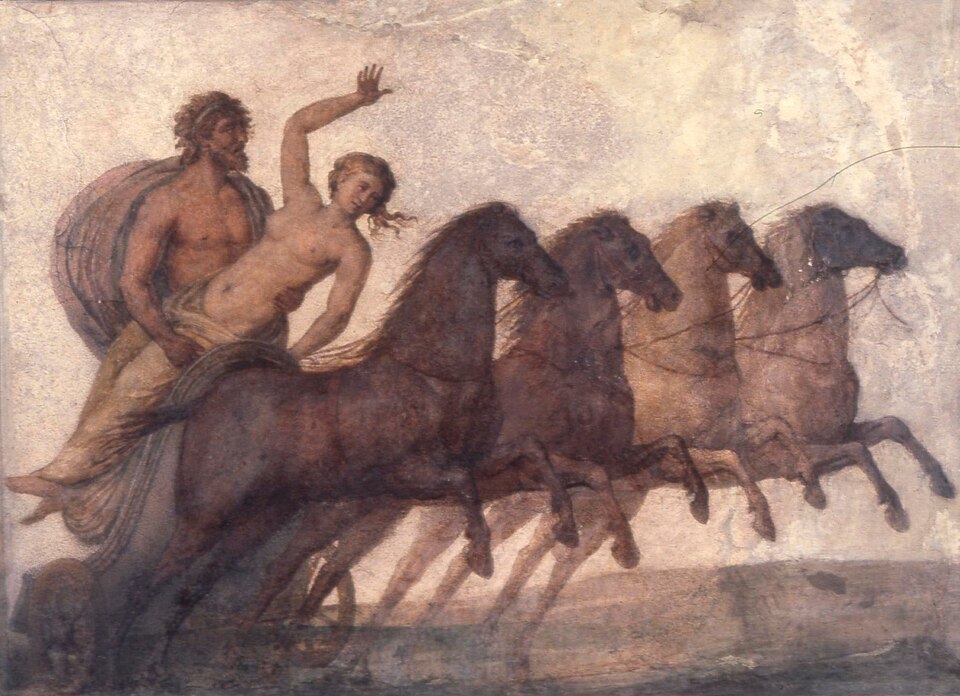
You know how I loved those meadows, Mother — you who let me play there so often. I was picking flowers with my companions, reaching for a narcissus more beautiful than the others, and the earth groaned. The ground split open and Hades burst forth on his chariot drawn by black horses. He seized me before I could understand. I let out a piercing cry that no one heard — not even you, and that hurt me most of all. The Fields of Nysa where I laughed became, in an instant, the threshold of my other life. I was only a young girl, and I descended a queen without willing it.
The ground split open and Hades burst forth: I was only a young girl, and I descended a queen.
—And that pomegranate, my child — why did you eat its seeds, when they bound you to him forever?
Do not think I did it out of gluttony, Mother. In the Underworld, whoever tastes the food of the dead belongs to the realm of the dead: such is the law, older than the gods. I took only a few seeds — six, they say — and each cost me a month away from you. When Zeus ordered my return, that fruit was already within me and no one could erase it. That is why I ascend to you when the wheat turns green, and descend again when the earth closes. The pomegranate is not only my chain: it is the very measure of the seasons that mortals owe to you. Without those seeds, there would be neither absence nor return, nor this spring that I bring back to you today.
Each seed cost me a month away from you; the pomegranate is the very measure of the seasons.
—When you are absent from my arms, I let everything wither and the world freezes. Do you know that, down there in the darkness?
I know it, Mother, and that thought accompanies me beneath the earth. I am the only one who can cross the three worlds: Olympus where I was born, the earth where you wait for me, and the Underworld where I reign. When I descend, you weep and stop the sap; the cold is only your grief spread over the fields. When I ascend, your joy makes the buds burst. Thus our two hearts alone command the rhythm of the world. Mortals think they endure the whim of the sky: in truth, they endure the love of a mother and the return of a daughter. I carry death within me for six months, and rebirth for the other six — a living bridge between what ends and what begins again.
The cold is only your grief spread over the fields; your joy makes the buds burst.
—You are depicted as a victim torn from me. But what do you really become, down there, beside your dark husband?
Stop seeing me only as the child stolen from you, Mother. The young girl of the meadow has learned to wear the gold crown and the scepter. Every afternoon, I sit beside Hades and the Furies, I listen to the complaints of souls, I ensure respect for the eternal laws of the realm. The dead do not tremble only before my husband: they seek me out for justice. I have made my captivity a throne. I deny nothing of the daughter you cradled, but I have grown in the shadow as the grain grows under the earth before rising. One does not become queen of the dead without ceasing to be prey.
I have made my captivity a throne: one does not become queen of the dead without ceasing to be prey.
—Tell me truly, my daughter: in that palace of black marble, do your days resemble a life or an exile?
They resemble a reign, Mother, and that is different from exile. I wake between walls of black marble veined with gold, I preside over rites that honor the dead, I converse with Hades about the affairs of the realm before receiving new souls. In the afternoon, I judge; in the evening, I share the sacred meal among nymphs and shades. I feed on ambrosia as on Olympus, but it is the pomegranate I tasted here that defines me. Do not think I am unhappy every moment — I have learned to love the solemnity of this timeless place. But when the moment comes to ascend to you, no throne holds me back: I run.
I have learned to love the solemnity of this place — but when the hour comes to ascend, I run.
—Right here, at Eleusis, mortals celebrate our story in secret. What do they seek in these Mysteries that they reveal to no one?
They seek what you and I already know, Mother: that the descent is not the end. Here, at Eleusis, where your torch lit your long quest, the initiates relive our ordeal — your pain, my abduction, our reunion. Under the seal of silence, they are shown that the soul too can cross the shadow and reappear. That is why thousands of pilgrims come every year, for generations, hoping for a better fate after death. The initiation rite promises them what my cycle accomplishes: the night does not have the last word. I am proud that our sorrow has become, for the living, a hope. Few maternal griefs are thus transformed into consolation for the whole world.
They are shown that the soul too can cross the shadow and reappear: the night does not have the last word.
—When I finally searched for you, torch in hand, across the whole earth — did he, Hades, tell you where he was hiding you?
No, Mother, and it was Helios the Sun, who sees everything from the sky, who guided you to me. Hades had taken me along paths that no living being treads, in a chariot so fast that the meadows of Nysa were already fading behind us. I cried out your name and yours alone; but the Underworld stifles voices. You wandered for days without eating, your torch splitting the night — I felt it, even beneath the earth, as one feels a distant warmth. When I learned that you refused to feed the earth until you had me back, I understood that your love was stronger than the order of the gods. No queen of the dead has ever been sought with such obstinacy.
You wandered for days, your torch splitting the night — I felt it, as one feels a distant warmth.
—Great Zeus, your father, decided: six months above, six months below. Do you find this division just, my child?
Just, I do not know, Mother; but it is the only division that lets us both live. If I had remained entirely in the Underworld, your grief would have sterilized the earth forever and mortals would have perished. If I had returned for good, the tasted pomegranate would have broken the law of the underworld. Zeus cut the pain into two equal parts, like one splits a fruit. Poets say sometimes three months, sometimes six — the count matters little: it is the alternation that counts. I belong to two realms and two loves, and I cannot renounce either. This regulated division has become the very breath of the year.
I belong to two realms and two loves: this regulated division is the breath of the year.
—Before the narcissus and the black chariot, do you remember the two of us in the fields, when no one separated us?
I remember it every day spent in the shadow, Mother — it is that memory that makes me ascend. We walked among the ears of wheat, you taught me the names of plants and the secret of harvests, and I knew nothing of the Underworld. I was the daughter of the rising grain, as you are the goddess who makes it grow. That time is not lost: I find it again every spring, when I ascend and the earth turns green beneath your steps. But I am no longer quite the one I was then. I now carry within me winter as much as summer. And perhaps it is better this way: a daughter who never descends would not know how sweet the return is.
A daughter who never descends would not know how sweet the return is.
—In all these stories that men will pass down, how do you want us to be remembered, my daughter?
Let it be remembered, Mother, that we never ceased to belong to each other, despite the earth and death between us. Let it be said that the goddess of the Underworld was first a beloved daughter, and that a mother stood up to the gods to get her back. Mortals pray to us together at Eleusis, they mingle your torch with my pomegranates, your wheat with my shadowy realm. They are right: we cannot be separated without throwing everything out of balance. When I descend, let them not only mourn the cold, but let them hope for my return. And when I ascend, let every flower remind them that no night, even an underground one, lasts forever. That, I believe, is what we two leave to the world.
We cannot be separated without throwing everything out of balance: let no night, even an underground one, last forever.
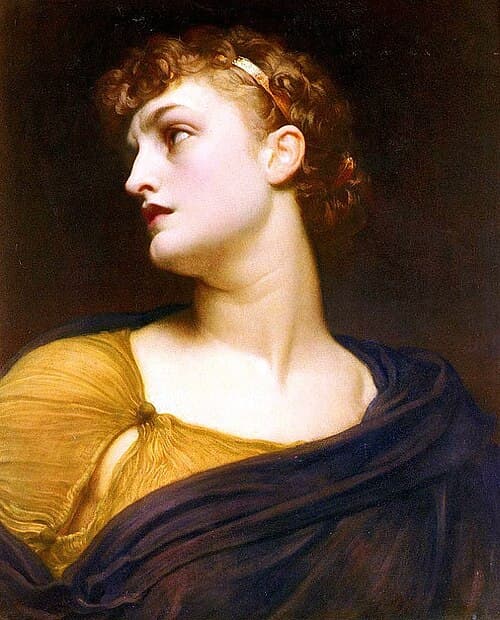
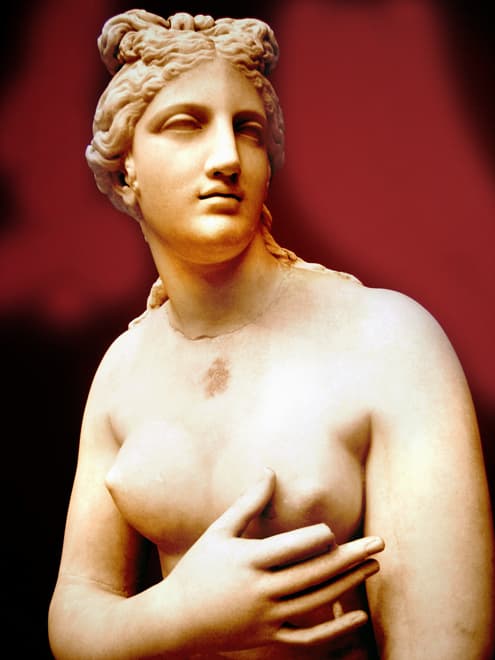
This imaginary interview was generated by artificial intelligence from sources documented in Persephone's profile. It dramatises what the figure might have said based on what we know about them, but does not constitute attested historical testimony. For primary sources and factual documentation, refer to the full profile.