Imaginary interview with Pierre Corneille
by Charactorium · Pierre Corneille (1606 — 1684) · Literature · 6 min read

Paris, winter 1675. In a modest candlelit dwelling, far from the bustle of the theaters that made his glory, an old man with a lively gaze receives us among his manuscripts. Pierre Corneille, the father of French tragedy, agrees to look back on sixty years of love, honor, and quarrels.
—You first wore the lawyer's robe in Rouen. How does one go from the bar to the stage?
I was born in Rouen in 1606, into a legal family, and I was naturally destined for the bar. I pleaded at the parliament of Normandy, the Roman law book open on my table, believing my life would be entirely spent between verdicts and pleadings. Then one day I saw actors perform, and I understood that one could plead differently: no longer for a client, but for a passion, before a pit that judges without deliberating. The law never left me, however; it taught me to build a dilemma like one builds a case, to weigh the pros and cons of a torn soul. My tragedies are cases that no one can win without losing everything.
—It is said that a romantic disappointment led you to write your first comedy. What happened?
I was young, and I loved a young lady whose hand I could not obtain. From this vexation was born Mélite, in 1629, my first comedy. I put into it the torments of a thwarted love, but in a tone that Paris had not yet heard: more natural, closer to the conversation of honest people than to conventional furies. The success was unexpected — I dared not hope for it. Such is the strange alchemy of our craft: a private sorrow, which one thought interested only oneself, becomes on stage something that hundreds of strangers recognize as their own. That evening, I confided to my goose quill more than I would have told a confessor. And the theater returned my pain as glory.
—Le Cid was an immediate triumph in 1637. Do you remember those first performances?
January 1637, at the Théâtre du Marais. I never saw such fervor again. Spectators crowded in, and people in Paris said 'beautiful as Le Cid' to praise anything admirable. I had taken my subject from the Spaniard Guillén de Castro, but I had turned it into a tragicomedy where love and honor tear each other apart mercilessly. Rodrigue, ordered to avenge his father by striking the father of his beloved, utters that cry that the whole pit knew by heart: 'O rage! O despair! O enemy old age! Have I lived so long only for this infamy?' Believe me, to feel an entire hall hanging on twelve syllables of alexandrine is an intoxication that no pleading had ever given me an idea of.
To feel an entire hall hanging on twelve syllables of alexandrine is an intoxication.
—Yet this triumph sparked a resounding quarrel. How did you experience it?
Success attracts jealousy like a candle attracts moths. Hardly had Paris acclaimed me when the Académie française, brand new, founded by Richelieu, was asked to judge my play. Chapelain wrote those Sentiments in which I was reproached for having Chimène marry her father's murderer — something, they said, contrary to good morals and verisimilitude. Le Cid was debated in every salon, pamphlets flew from all sides. I raged, and yet I must confess: this quarrel, by causing a scandal, carried my name further than my verses alone would have. One never quite forgives a work for having pleased before permission was granted for it to please.
—Today we speak of the 'Cornelian dilemma.' What fascinates you so much about these impossible choices?
What you so name is nothing other than man placed before two duties he cannot fulfill together. My former profession as a lawyer prepared me for it: at the bar of Rouen, I saw cases where the law itself contradicted itself, where one had to sacrifice one justice for another. In the theater, I tighten the vise even more. Rodrigue must choose between his love and his honor; Polyeucte, between his wife and his faith as a converted Christian. What matters to me is gloire — not vain renown, but that greatness of soul that makes one prefer duty to happiness. My heroes are not great because they triumph; they are great because they renounce. And the spectator, seeing them decide, measures what he himself would dare if he were in their place.
My heroes are not great because they triumph; they are great because they renounce.
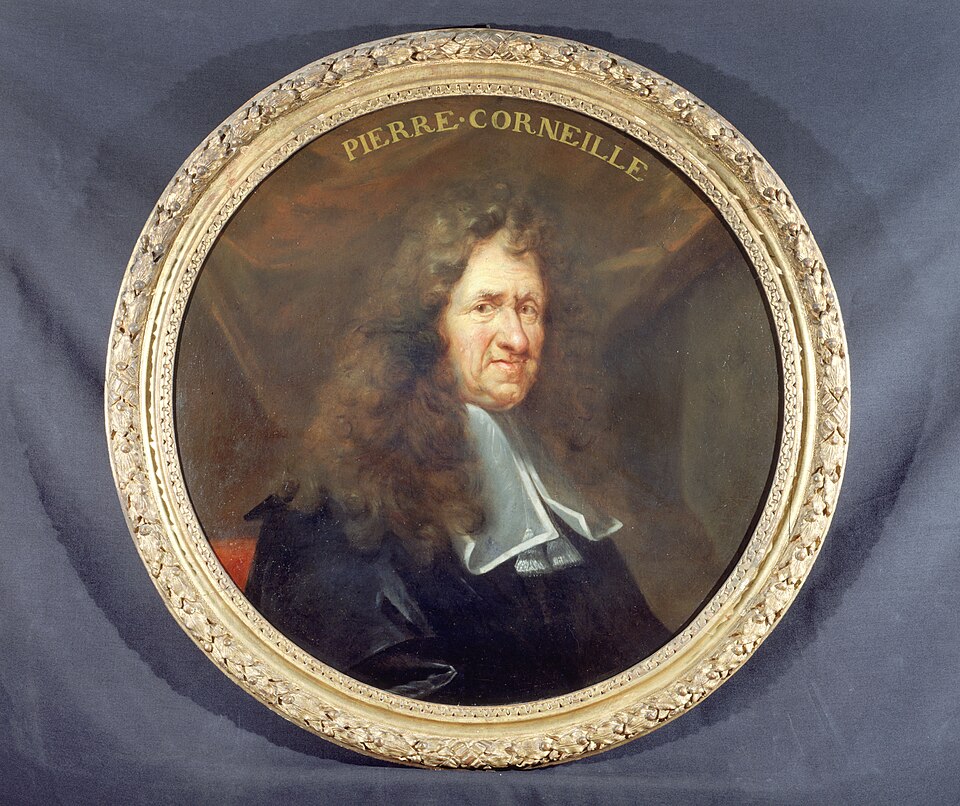
—In Horace, Camille curses Rome with unprecedented violence. Why push a character that far?
Horace, in 1640, I took from Livy: two families, the Horatii and the Curiatii, sacrificed in combat so that Rome might prevail over Alba. The brother kills the enemy, but that enemy was the fiancé of his sister Camille. So Camille, mad with grief, turns against the fatherland all the fury of her broken love: 'Rome, the sole object of my resentment! Rome, to whom your arm comes to immolate my lover!' I needed that curse. For the glory of the city costs nothing if one does not show what it crushes. The sacrifice of the individual in the name of the fatherland, I never sang of it without making its blood price heard. A tragedy that does not make the reason of state tremble has not earned its name.
—The scholars reproached you for poorly respecting the rules. What did you really think about it?
I wrote it bluntly to the Abbé de Pure: 'I never knew the rules well, and I always distrusted my ability to apply them rigorously; but I always tried to please the public.' That is my profession of faith. These gentlemen wanted the action to fit within twenty-four hours, in a single place, in a single plot — the famous rule of the three unities. Very well, I learned to comply; Horace satisfied them. But I never believed a play is valuable for its docility. Verisimilitude, decorum — all that serves when it supports emotion, and harms when it stifles it. One does not move a pit with a regulation. One moves it with a man who suffers.
One does not move a pit with a regulation. One moves it with a man who suffers.
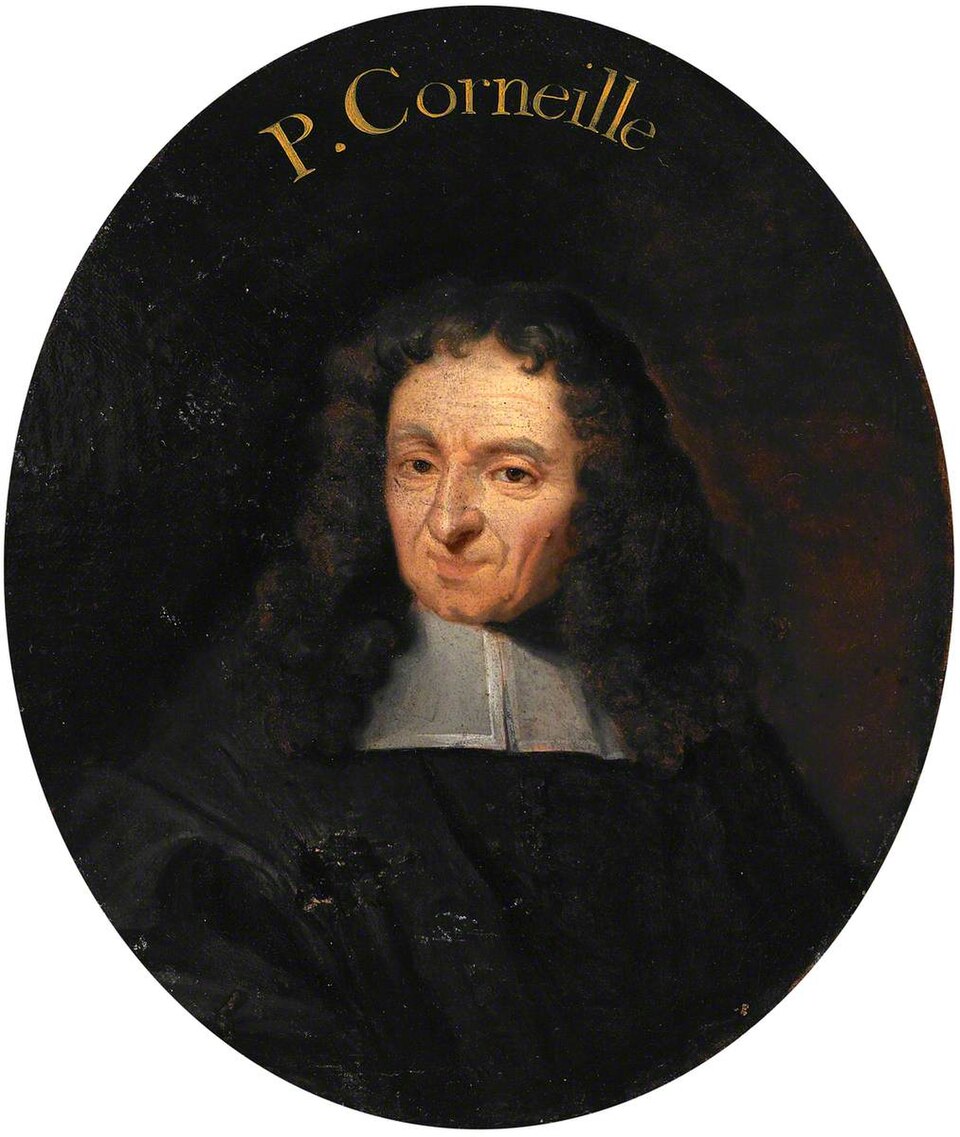
—With hindsight, how did you yourself judge Le Cid, years after the quarrel?
In 1660, in the Examen I placed before the play, I acknowledged without false modesty: 'This play has so many advantages on the side of brilliance that dazzles, that it has suffered little on the side of rules, from which it deviates in some respects.' You see, I do not deny my deviations; I claim them. Le Cid dazzles, and that is precisely what the public forgave it when the scholars condemned it. The pit, standing, noisy, quick to hiss as to weep, does not consult the Academy before loving. It is my true judge. I spent my life courting that fickle crowd rather than the cenacle of the learned — and if I am still read in a century, it will be thanks to it, not to them.
—A young playwright named Racine rose to glory. How did you welcome his rise?
Jean Racine... He was old enough to be my son, and the court became infatuated with him as one tires of old furniture for new. I gave Suréna in 1674 — my last tragedy, and perhaps the tenderest, the most heartbroken of all. One senses in it, I believe, a man who knows that the stage is slipping away from him. The public was already running toward another sweetness, another music of verse, more flowing than mine. I will not speak ill of his talent; I will only say that it is cruel to see taste shift under your feet like sand. I had built heroic tragedy; he invented the tragedy of passion. Two neighboring kingdoms — but there is never room for two kings on the same throne.
There is never room for two kings on the same throne.
—Your last years were darkened. What remains for a man when favor departs?
Bitterness remains, I will not hide it from you. Boileau, entirely devoted to Racine, showed little mercy for my old age, and fashion relegated me to the shadow where it stores yesterday's glories. I knew hardship, almost poverty, I who had made all Paris run to the Marais. In the evening, by candlelight, in my home, I sometimes reread that old cry of Rodrigue, 'O enemy old age,' and I smiled to find my own figure there. But consider: a man of the theater does not write for the favor of a season. He writes for that invisible pit of times to come, which he will never see. If my heroes stand after me as they stand in the storm, then the court may forget me — posterity, perhaps, will raise me up.
Read further

This imaginary interview was generated by artificial intelligence from sources documented in Pierre Corneille's profile. It dramatises what the figure might have said based on what we know about them, but does not constitute attested historical testimony. For primary sources and factual documentation, refer to the full profile.