Kids interview Pierre Corneille
by Charactorium · Pierre Corneille (1606 — 1684) · Literature · 5 min read

Two young visitors, on a school field trip, push open the door of an old candlelit house. An elderly man awaits them, a little stiff, a goose quill resting near an inkwell. It is Pierre Corneille, and he seems touched that children have come to see him.
—What was your job before you wrote plays?
You know, my child, I was a lawyer in Rouen, in Normandy. I went to court to argue cases, with my big law books. Imagine a serious young man, in a dark suit, spending his days among papers. And then one day, I went to see actors perform a play. My heart leaped. I realized I wanted to write for the stage, not plead in court. But my lawyer's training never left me: it taught me how to build disputes, arguments. That's why my heroes struggle with impossible choices, as in a real trial.
A lawyer pleads a case; I make two hearts plead at once.
—What was your very first play about?
My first play was called Mélite, in 1629. It was a comedy, a love story. I'll tell you a secret: I had fallen in love with a young lady I could not marry. It caused me great sorrow. So I took that sorrow and turned it into funny and tender scenes about thwarted love. I took it to Paris, my heart pounding, unsure of anything. And the audience laughed, applauded! Imagine your surprise if something you did in secret suddenly pleased an entire hall. That day, my real life began.
I took a broken heart and made all of Paris laugh.
—Is it true that one of your plays sparked a big quarrel?
Oh yes, and what a quarrel! In 1637, I presented Le Cid. It's the story of a young man torn between his love and his honor. The audience adored it; people almost fought to get into the hall. But some very important scholars at the Académie française were not pleased. They thought I did not respect the rules of theater. They wrote a long text to criticize me. All Paris talked about it, in the streets, in the salons! Imagine your drawing posted everywhere, and people arguing whether it was good or bad. Deep down, that quarrel made me even more famous.
They criticized me everywhere — and the more they criticized me, the more they read me.
—Did it hurt you, being criticized like that?
Of course it stings, my child. When you work hard on something, and they say you were wrong, it squeezes the heart. The scholars blamed my heroine, Chimène, for still loving the man who had killed her father. They said it was shocking. I believe a heart can be torn like that, precisely. Later, I wrote that my play had so much beauty that it suffered little from straying from the rules. You see, I stood firm. I wanted first to move people. Rules are useful, but moving an entire hall — that is my true craft.
Rules serve the play; the play does not serve the rules.
—How did you write your verses? Did it take long?
Very long, and that's a good thing! I worked with my goose quill dipped in the inkwell, often in the evening by candlelight. I wrote in alexandrines: twelve-syllable verses, split into two equal halves, like two steady steps. I would rewrite them, cross them out, search for the striking word. Listen to this one, from my hero Rodrigue: "Ô rage ! ô désespoir ! ô vieillesse ennemie !" Can you feel how it rumbles? Imagine a blacksmith hammering metal until the blade sings. I hammered my words until they resounded through the hall.
I hammered my words like a blacksmith, until they sang.
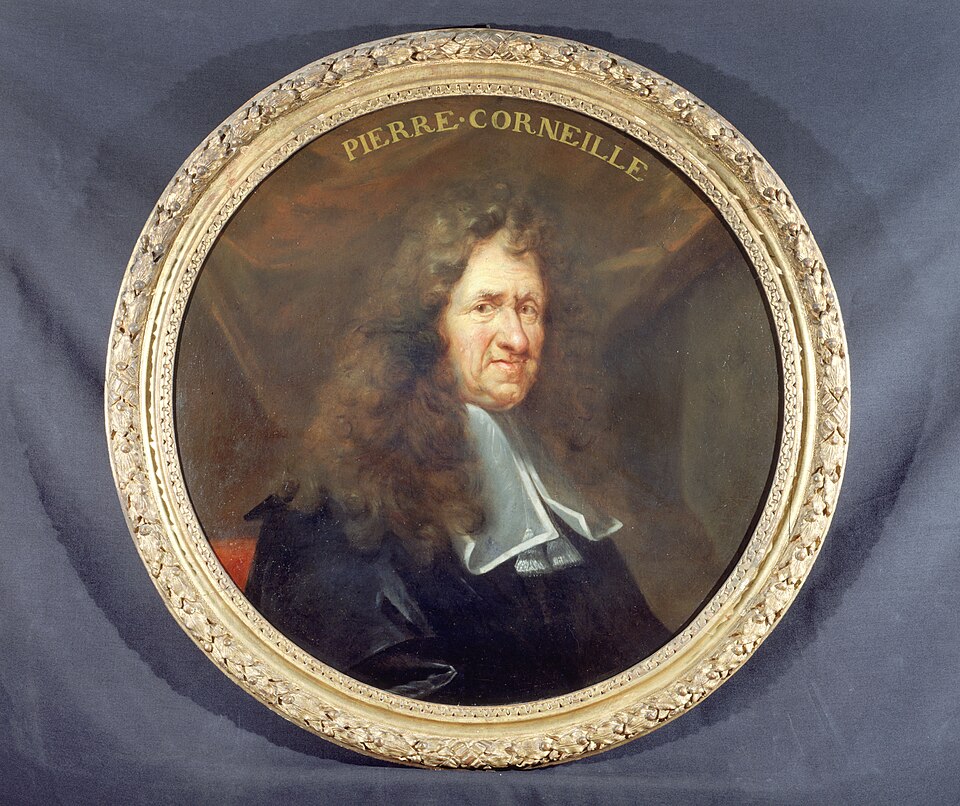
—What is a 'Cornelian dilemma'? They say it comes from you.
That's true; they named it after me, and I am a little proud. A Cornelian dilemma is when you must choose between two things you love equally, and it hurts either way. In Le Cid, Rodrigue loves Chimène, but he must avenge his family's honor by fighting the father of the woman he loves. Whatever he does, he loses something. Imagine being asked to choose between your best friend and your brother: impossible, right? That is what I loved to put on stage. Because in those moments, you discover who you truly are.
It is in the impossible choice that we discover who we are.
—Did you only write love stories?
Oh no, I also loved great stories of courage and country! In Horace, in 1640, I tell an old Roman story: three brothers must fight to defend their city. It is terrible, because on the other side are friends, almost family. One of my heroines, Camille, is so angry she curses her own city, Rome. You see, I loved those moments where duty and heart tear each other apart. My law studies had taught me to weigh pros and cons. On stage, I turned that balancing act into a battle of the soul.
Duty on one side, the heart on the other: that is my true battlefield.
—They say you were very shy. Is that true?
That is absolutely true, and it surprises people! My heroes speak loudly, with magnificent verses. But me, in person, I was clumsy with words. In front of others, I stammered, I blushed. And worst of all, I recited my own verses very poorly! Imagine a cook who prepares a delicious dish but cannot serve it without spilling everything. My admirers were sometimes disappointed to hear me. But it does not matter. My strength was not in my voice; it was in my pen. The shy man I was became a giant when he wrote, in the evening, in the silence.
I was small when I spoke, and a giant when I wrote.
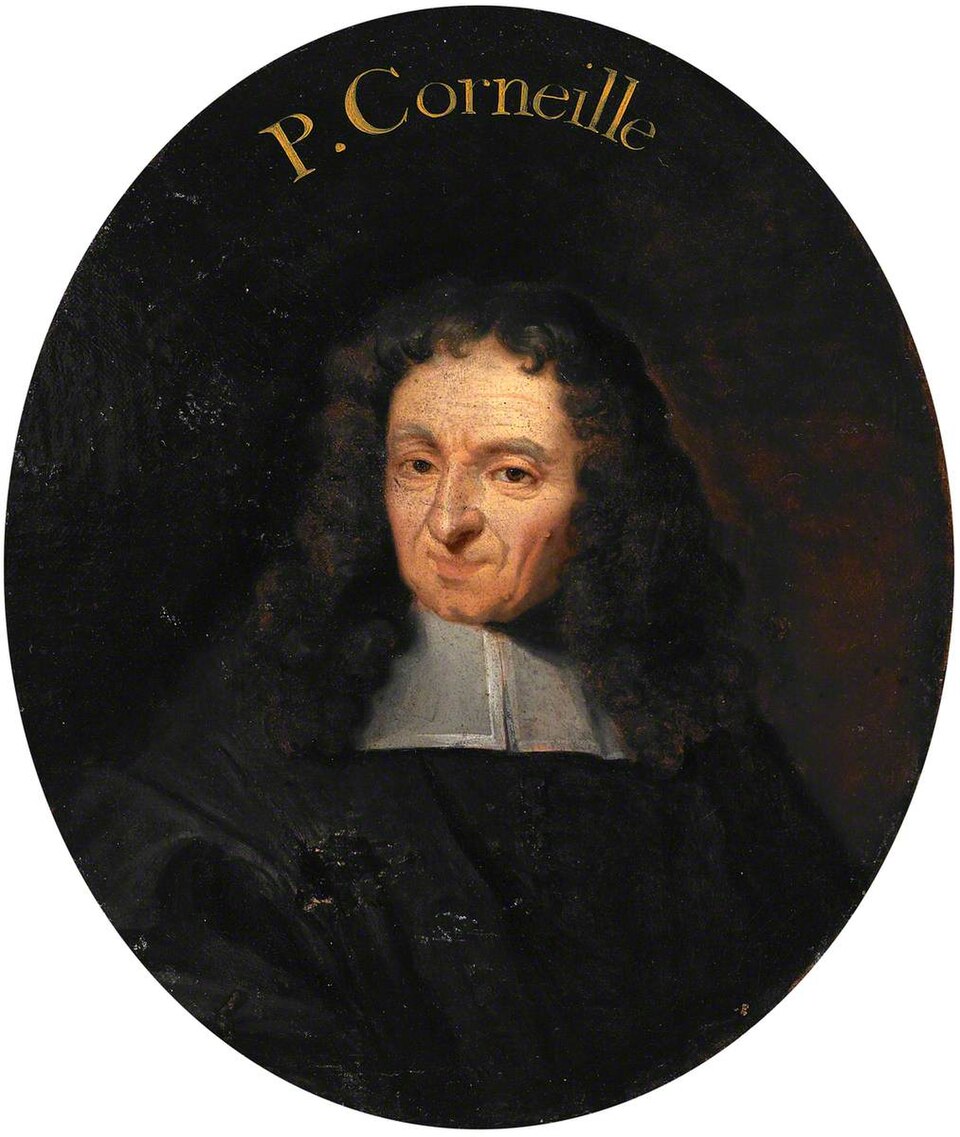
—What did you really think of the rules of theater?
I will be honest with you, my child. One day, I wrote in a letter that I had never really known the rules, and that I doubted my ability to follow them. But that I had always tried to please the audience. You see, some scholars lived for their complicated rules: the action must last one day, take place in one place... I watched the pit, those standing spectators who shouted their joy or boredom. It was them I wanted to reach. A rule that prevents moving a child or an old man — what is it good for? Theater is first about heartbeats.
A rule that prevents moving people is useless.
—How does it feel when a younger person becomes more famous than you?
Ah... you touch a sensitive spot there, my child. Toward the end of my life, a very talented young man arrived: Jean Racine. The audience came to adore him, and to forget me a little. In 1677, his play Phèdre triumphed, and mine, Suréna, went almost unnoticed. I knew less money, less applause. It hurts, I will not lie. Imagine you have been leading the race, and suddenly everyone looks at someone else. But I console myself: my plays are still performed today. The glory of an evening fades; verses, they cross the centuries.
The applause of an evening fades; verses, they last for centuries.
—If we could tell you one last thing, what would you like to hear?
What a lovely question. You know, I ended my life a little sad, in Paris, far from the great successes of my youth. So to know that children like you, so many years later, still read Rodrigue and Chimène... that is worth all the applause in the world. I would like to hear that my heroes still speak to you, that you understand their heartbreaking choices. When you one day hesitate between two things that matter to you, think of them. Theater is not made to be admired from afar, like a statue. It is made to help you feel your own heart better. That is my greatest reward.
My heroes are not statues: they are here to help you feel your heart better.
Read further

This imaginary interview was generated by artificial intelligence from sources documented in Pierre Corneille's profile. It dramatises what the figure might have said based on what we know about them, but does not constitute attested historical testimony. For primary sources and factual documentation, refer to the full profile.