Imaginary dialogue between Jean Racine and Pierre Corneille
by Charactorium · Pierre Corneille (1606 — 1684) · Literature · 5 min read

It is in the old master's Parisian lodgings, one autumn evening in 1679, that Jean Racine comes knocking. A low candle lights the cluttered desk of papers, and the quill still dries in the inkwell. The two men have known each other for fifteen years, since the younger man staged his first tragedy; the public pits them against each other in two fierce camps, but this evening Racine does not come as a rival — he comes to question the one who first forged the French hero. Corneille receives him with a somewhat weary courtesy, in which the Norman's pride still shows through.
—Master, before the theater you wore the robe at the parliament of Rouen. How does a lawyer come to write for actors?
You guessed it, Racine: one never quite leaves the courthouse. I pleaded in Rouen, I debated Roman law, and it was there, believe me, that I learned to build a dilemma. A tragedy is nothing but a trial where two duties accuse each other, and where no judge can decide without cost. I was young, one evening I was taken to a performance, and I saw what my alexandrines could do that my pleadings could not: move an entire audience with a single thrill. I never stopped being a lawyer; I merely changed my bar.
A tragedy is nothing but a trial where two duties accuse each other.
—They say that once, a young lady slipped through your fingers, and that from this sorrow was born Mélite. Was pain your first school?
What young man has not loved without obtaining anything? I loved a young lady whose hand was not granted me, and failing to win her, I put her into verse. Mélite, in 1629, was born of that defeat. The Parisian public laughed and recognized itself, and I learned something I never forgot: what tears us apart makes the best of our material. You will know this better than I one day. Thwarted passion only asks to become theater; you just have to not lie about what you yourself have felt.
What tears us apart makes the best of our material.
—Your heroes always choose honor over love. Rodrigue, Horace... Where does this taste for torn souls come from?
Because that is where man reveals himself entirely. A character who has nothing to sacrifice does not interest me: I want him to love and to have to strike the one he loves. Rodrigue mourns his father and kills Chimène's; there is no happy ending, only a greatness wrested from suffering. That is what they call the dilemma today, and I am willing to have my name attached to it. Glory, you see, is not about defeating the enemy, it is about conquering oneself before all. I shape my alexandrines for that: that they stand upright like a man who refuses to bend.
Glory is not about defeating the enemy, it is about conquering oneself before all.
—You speak of the alexandrine as a weapon. At work, in the evening by candlelight, how do you seek the right verse?
I seek it long, and I cross it out even more. Believe me, these verses that people think gushed forth in a single breath, I have reworked them twenty times with the quill, in the evening, when Paris sleeps. An alexandrine must strike at the caesura like a sword blow falls true: six syllables that rise, six that cut. I weigh each word so that it carries both the meaning and the pride of the character. You who write so quickly, they say, will find me laborious; but I prefer the verse that resists to the one that flows. A hero does not speak as one breathes — he speaks as one fights.
I prefer the verse that resists to the one that flows.
—Forty years later, the quarrel of Le Cid still rumbles. This play brought you both glory and cabal: do you regret it?
Regret it? Never! Le Cid was performed in 1637 and all of Paris lost its head; people fought at the doors of the Théâtre du Marais. But success is a crime in the eyes of some. The Académie, which the Cardinal had just founded, took it upon itself that Chimène married her father's murderer, and they cried out about implausibility, contempt for good morals and the rule of the three unities. They put me on trial for pleasing too much. I let the learned talk and kept the public: it is they who judge in the last resort. A play that dazzles may well depart from the rules in some respects.
Success is a crime in the eyes of some.
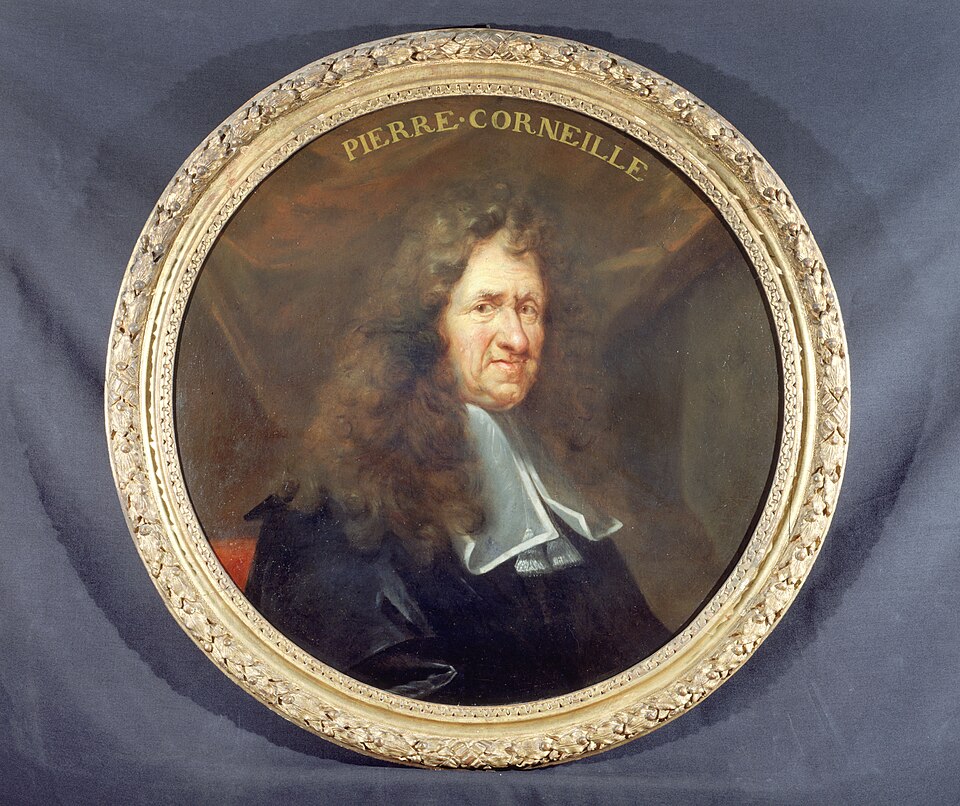
—You were reproached for not following the rules. Deep down, do you believe in verisimilitude and the three unities, or is pleasing enough?
I will confide in you what I hardly admit: I never really knew the rules, and I have always been wary of applying them strictly. The learned devised them after the fact, as one builds a grammar on an already spoken language. Verisimilitude, fine, I consent to it: the public must be able to believe. But the unity of time that confines a great action to a single day, the unity of place that nails it to a set — these are chains I wear because I must, not because I love them. My true judge has always been the pit. If the audience shudders, I have obeyed the only rule that counts.
The learned devised the rules after the fact, as one builds a grammar on an already spoken language.
—Strange thing: these verses so full of fire, they say you recite them very badly. Does the man belie his work?
You touch on a sore spot. Yes, Racine, I speak poorly and I read even worse; my voice betrays my verses and disappoints those who hear me recite. God gave me the alexandrine and denied me conversation: in society I remain awkward, gauche, unpleasant. In the evening, I was once seen at the salons, at the Hôtel de Rambouillet, among the wits and the préciosité — I was always a bit of a Norman bear among the delicate. My greatness I put entirely on paper. The man is shy, but the verse is afraid of no one. Never trust my mouth: believe my pages.
The man is shy, but the verse is afraid of no one.
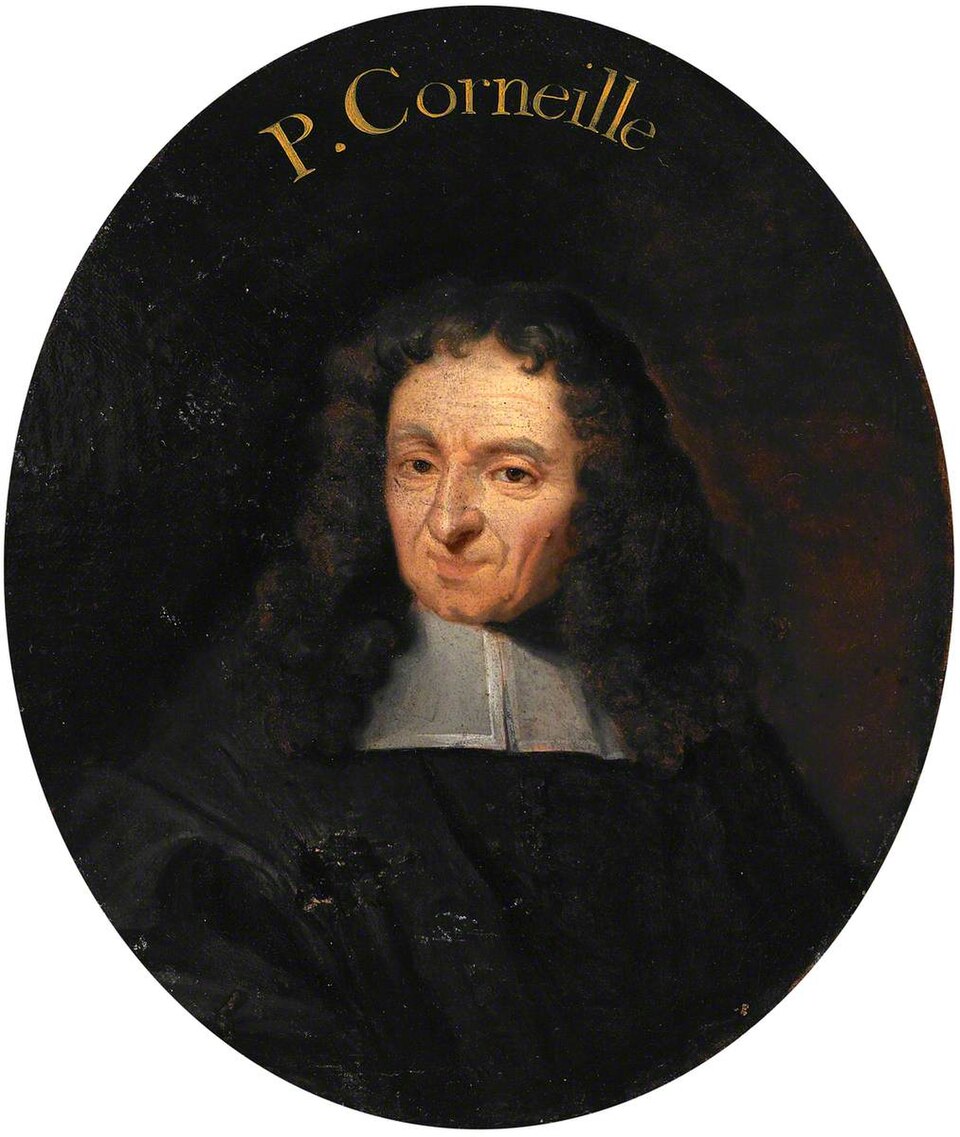
—You knew the time of Richelieu, the splendor of the salons, the Cardinal's favor. What remains of that world, this evening?
Ashes still warm, my young friend. Cardinal Richelieu was both my patron and my censor; he commissioned plays from me and judged me on Le Cid, and when he died in 1642, I lost at once a protector and a torment. The salons where they debated love and fine language went out one after another. I have seen the reign of the great king change tastes, demand more tenderness and less Roman pride. The world I belong to, you see, already speaks a language that is aging. You arrive as it departs — that is the order of things, and I only half complain about it.
The world I belong to already speaks a language that is aging.
—Master, let us be frank: ever since my Phèdre appeared and your Suréna fell silent, the public pits us against each other. Does that hurt you?
How could it not sting a little? Suréna, in 1674, was my last, and I love it because it is sad like an ending. Then your Phèdre came, and they said old Corneille must give way. Boileau supports you, the public follows you, and I see my receipts shrink and my house grow quiet. Yes, it embitters me. But I will not do you the injustice of hating you: you write well, too well to be mistaken. I will only tell you this — fashion will pass over you as it passes over me. Beware of believing that you are loved forever.
Fashion will pass over you as it passes over me.
—When you look back, from Le Cid to Suréna, what would you like to remain of Pierre Corneille?
Not my glory nor my quarrels, which are only noise. I would like them to keep the hero I forged: that man placed between two duties, who chooses the harder one and sticks to it. If in a hundred years a young man reads Rodrigue and feels rising in him the desire to conquer himself, then I will not have written in vain. I was a lawyer, I pleaded for the greatness of the soul against the ease of the heart. The rest — favor, cabals, decline — is only theater dust. Work, Racine, and never complain: we are only bearers of fire. Mine still burns a little; yours is just beginning.
We are only bearers of fire.
Read further


This imaginary interview was generated by artificial intelligence from sources documented in Pierre Corneille's profile. It dramatises what the figure might have said based on what we know about them, but does not constitute attested historical testimony. For primary sources and factual documentation, refer to the full profile.