Imaginary dialogue between Ulysse (Odysseus) and Poseidon
by Charactorium · Poseidon · Mythology · 6 min read
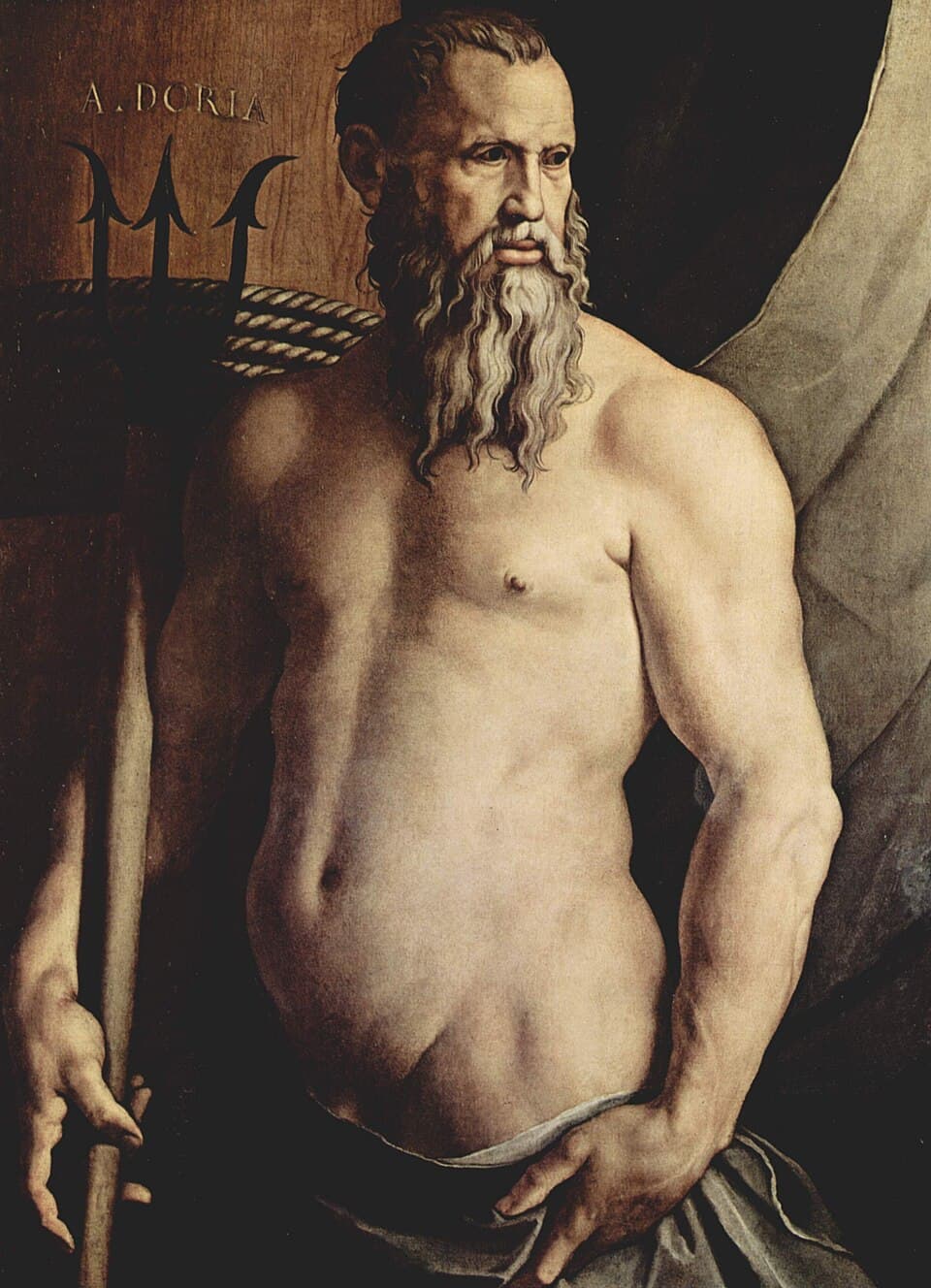
It is on a foam-beaten shore, somewhere between Ithaca and the columns of the open sea, that the traveler Odysseus advances alone, sandals wet, toward the mass that has risen from the waves. The air smells of salt and seaweed burned by the sun; in the distance, a sail snaps against a mast. The mortal knows this god all too well: for ten years he has endured his storms for having gouged out the eye of Polyphemus. He comes not as a suppliant this time, but as a man who wants to understand the wrath that pursues him from wave to wave.
—Shaker of the Earth, they say that you and your brothers drew lots for the domains of the world. Was the sea imposed on you, or did you choose it?
You ask the real question, son of Laertes. When Cronus was overthrown, we drew lots — Zeus, Hades, and I, sons of the same father. Zeus received the vast sky, Hades the misty realm of the dead, and to me fell the gray sea. People think the lot was blind; know that it was just. I did not beg for the waters; they already resembled me. What roars, what heaves the earth and splits it, what obeys only its own fury — that is my portion. Zeus thunders above men; I thunder below, in the keel of your ships. And do not forget, sailor: the sky is gazed upon, but it is on MY domain that you crawl to return home.
Zeus thunders above men; I thunder below, in the keel of your ships.
—For ten whole years you have thrown me from storm to storm. Tell me frankly, Shaker: was it justice, or simple paternal spite?
You dare ask me to my face? I like that, Odysseus — other mortals grovel, you question. Polyphemus was my blood. You gouged out his single eye, then, drunk on your cunning, you shouted your true name across the waves. That was your mistake: not blinding the Cyclops, but naming yourself. A god who knows your name can pursue you. So I raised against you every reef, every rock, every treacherous calm. Justice? Spite? For us, the two are one. A father avenges his son; a god punishes pride. But know this: if I let you live, it is because your cunning pleased me too much to drown you outright.
That was your mistake: not blinding the Cyclops, but naming yourself.
—You always carry that three-pronged trident. When you raised it against my raft, I thought I saw the world split. What do you truly hold in that weapon?
You saw it up close, yes, and few men can still speak of it. My trident is not a spear, sailor. Its three prongs are three empires: the salt waters you sail, the fresh waters that spring from the earth, and the earth itself that I shake as I please. With a single blow I open springs or dry them up, I raise waves like mountains or lay them flat. When you saw me rise on your path, the very seabed heaved under my will. Men call me the Shaker of Earth — that is not flattery, it is a warning. Keep that image, Odysseus: this trident, I never brandish for nothing.
Its three prongs are three empires: the salt waters, the fresh waters, and the earth that I shake.
—They say that at Athens you lost to Athena, your salt water defeated by her olive tree. You, so powerful — how did you accept that verdict?
Ah, you touch a wound that the sea has never washed. I struck the rock of the Acropolis and made a spring gush forth — but a spring of salt water, in my image, unyielding. Athena planted her olive tree, and men chose the tree that nourishes rather than the water that threatens. I yielded the city, so be it. But look at the coast, Odysseus, you who hug the shores: the promontory of Sounion is mine, my temple still dominates the strait, a landmark for every sailor returning. They took only one city from me; the shores of the whole world remain my kingdom. A goddess rules the Acropolis — but it is before MY cape that you lower your sail in trembling.
They took only one city from me; the shores of the whole world remain my kingdom.
—Before raising anchor, I have so often poured wine into the waves for you. Do these offerings of sailors, Shaker, truly count in your eyes?
They count, Odysseus, more than you think — and your case proves it by the reverse. The sailors who honor me before departing, who slaughter a black bull on the shore or pour wine into the foam, those I see. At Corinth, on the Isthmus, games are held in my name season after season; athletes from all over Greece come to honor the master of the seas. Sacrifice does not buy my favor, but it says that I am acknowledged. You, you see, it was not forgotten blood that angered me — it was pride that thinks itself without debt. A man who fears me, I toss about; a man who ignores me, I break. Pour your wine, sailor. The sea has a long memory.
A man who fears me, I toss about; a man who ignores me, I break.

—They say you are the father of the first horse, and I have seen you cleave the waves on a team not of this world. What beast pulls your chariot?
You have a sailor's eye, son of Laertes. Yes, I brought forth the horse, that nervous, untamed force that gallops as the wave rears — that is why in Thessaly I am venerated as much as a horseman as master of earthquakes. On the waves, my chariot is drawn by hippocamps, half-horse half-fish, who part the water before me without ever troubling it. Each morning I inspect my domain, from the depths where my palace of coral and gold rises to the shores you hug. The horse on land, the hippocamp under the wave: the same power, two kingdoms. When you feel your ship rear under a swell, remember — it is my team passing, and the sea is but its mane.
The horse on land, the hippocamp under the wave: the same power, two kingdoms.
—When the earth trembles and ports collapse, men say it is your anger. Is it truly you who shake the ground beneath our feet?
Who else, sailor? They think me god of the sea alone because they see me rise from the waves — but my trident strikes rock as well as foam. When the earth splits, when city walls crumble and springs change course, it is my hand beneath. Men call it a scourge; I call it a reminder. The land you think firm rests on my domain, and nothing is stable unless I will it. Even your Ithaca, son of Laertes, stands on ground I could open. I do not say this to frighten you — you are past that age — but so you know: there is no shore where one escapes the Shaker.
They think me god of the sea alone; but my trident strikes rock as well as foam.
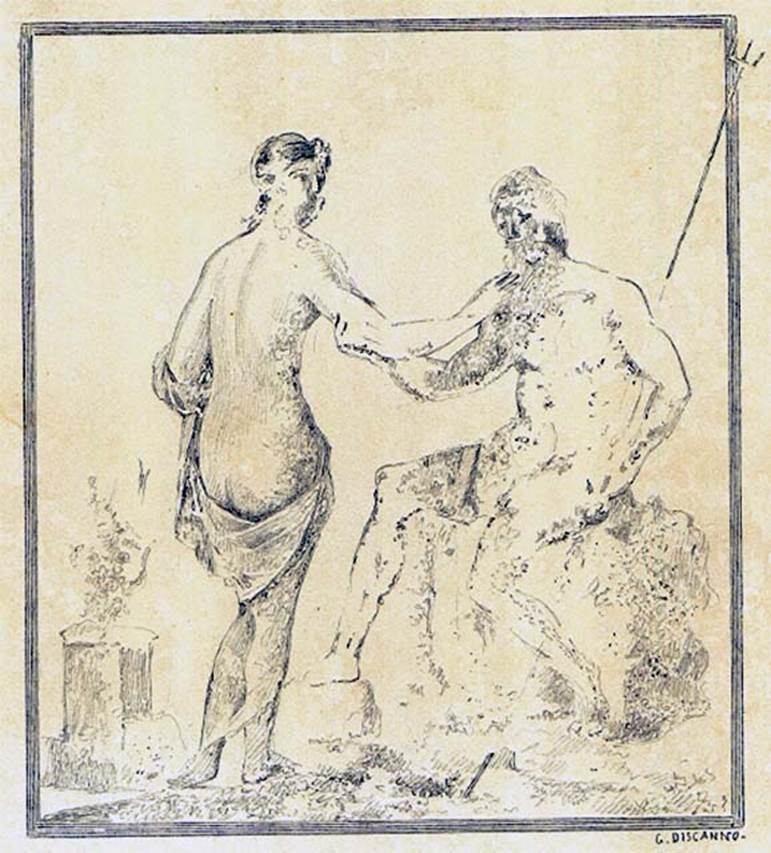
—You pursued me relentlessly, and yet here I am alive before you. Why did you never swallow me whole, Shaker?
Do you think I lacked the power? With a flick of my trident I could have laid your raft at the bottom without leaving a plank. But the Moirae spin a thread that even I do not cut at will: it was granted you to see your land again. I could delay, break your fleets, drown your comrades, make you crawl on shores naked and nameless — that, yes. Kill you against fate, no. And besides, I admit, your cunning amused me. A god grows bored, sailor, facing only trembling suppliants. You schemed, you resisted, you almost insulted me. I punished you as one trains a rival one respects, not as one crushes an insect. Go home — but never forget who let you return.
I punished you as one trains a rival one respects, not as one crushes an insect.
—You speak of Sounion, of your temples on every cape. Deep down, do you prefer to rule over the shores of mortals or over the Olympus of the gods?
A question from a man who has truly seen neither! I sit on Olympus when the assembly of the gods demands it, beside Zeus, at feasts of ambrosia and nectar — it is my right as son of Cronus. But my heart is not in those halls. My true palace rises in the depths of the waters, built of gold, silver, and coral, peopled with Nereids and beasts no mortal names. Olympus is the seat of power; the shores, they are where I am prayed to, where I am feared, where the sailor scans my mood before casting off. A god worshiped from afar is a living god. Give me a wave-beaten cape and a temple where blood is offered to me: I leave the thrones of heaven to others.
A god worshiped from afar is a living god.
—One last thing, Shaker. Now that I know the weight of your wrath, how can a man like me finally make peace with the sea?
You learn fast, for a mortal. Peace with me is not bought with a single bull or a single prayer cried in the storm. You must, they say, walk far from the waters, an oar on your shoulder, to a land of men who know neither the sea nor salt in their bread — and there, plant that oar and offer me sacrifice. The day your oar is taken for a winnowing shovel, then only will my grudge fall silent. Understand the lesson, son of Laertes: one does not tame the sea, one learns its humility. Pride destroyed you before Polyphemus; humility will restore you to Ithaca. Pour the wine, plant the oar, and perhaps you will die old, far from the waves, of a gentle death from a placid sea.
One does not tame the sea, one learns its humility.

This imaginary interview was generated by artificial intelligence from sources documented in Poseidon's profile. It dramatises what the figure might have said based on what we know about them, but does not constitute attested historical testimony. For primary sources and factual documentation, refer to the full profile.