Kids interview Poseidon
by Charactorium · Poseidon · Mythology · 5 min read
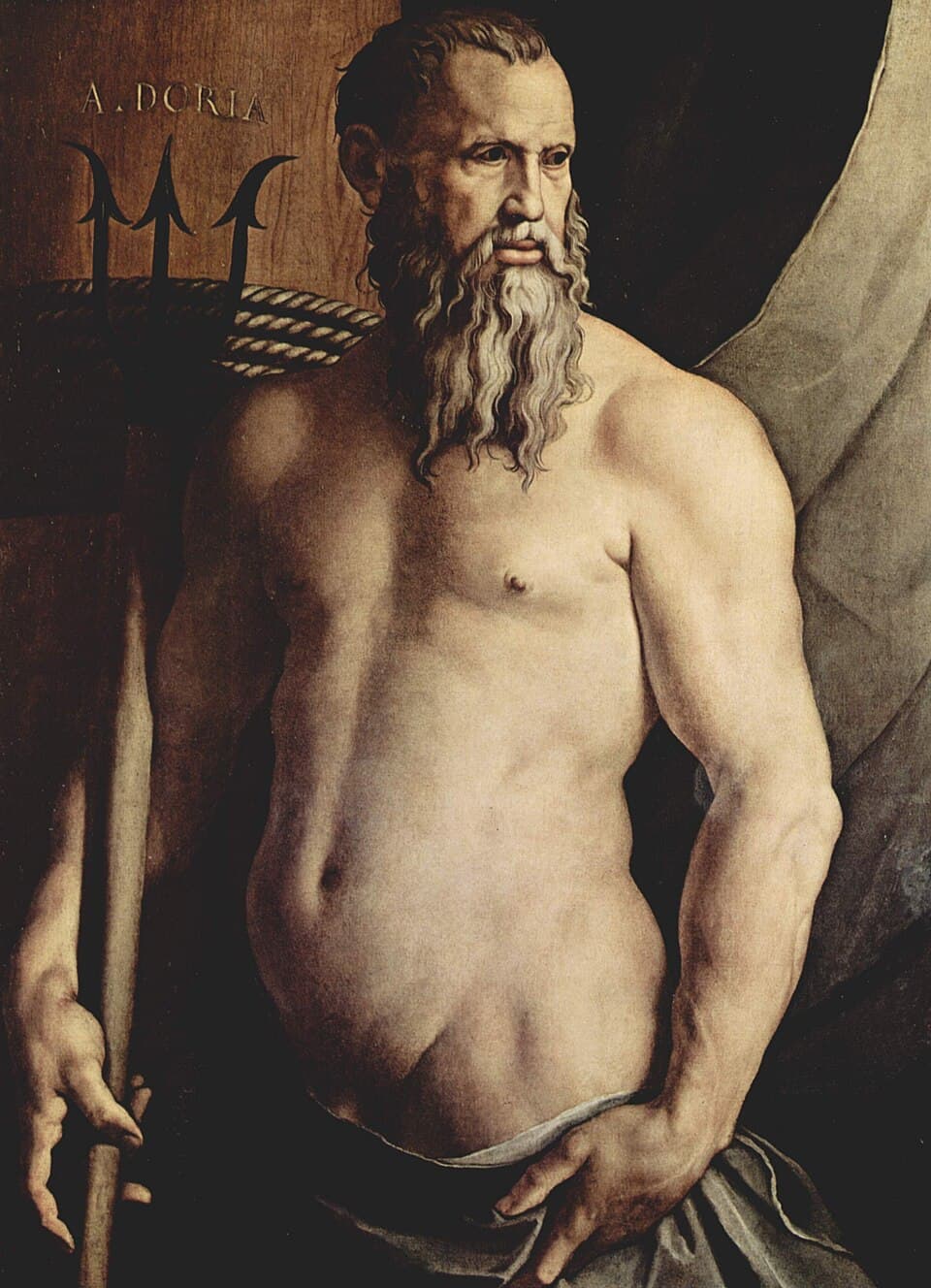
Two young visitors, on a field trip by the sea, found an old ruined temple battered by the waves. There, a deep voice rises from the water: it is Poseidon, the god of the seas, who agrees to answer their questions.
—Is it true that you divided the whole world with your two brothers?
Yes, my child, and listen closely to how it was. We were three brothers, sons of Cronus: Zeus, Hades, and myself. Once our father was defeated, we had to divide the world. Imagine three children drawing lots for the biggest piece of cake. Zeus received the vast sky. Hades, the dark realm of the dead, under the earth. And me? I received the gray sea, immense and tumultuous. The poet Hesiod tells this division in his Theogony. Since that day, every wave, every storm, every depth belongs to me. It was no modest gift, you know: the sea surrounds all the lands of men.
My brothers got the sky and the dead; I got the whole sea.
—Do you live on Mount Olympus with the other gods, or somewhere else?
Both, would you believe! I go up to Olympus for the great assemblies of the gods, up there where Zeus sits. But my true home is deep in the oceans. Imagine a palace built not of stone, but of gold, silver, and pink coral. No human will ever descend there. In the morning, I harness my chariot to hippocamps — creatures half horse, half fish — and I cross the waves to inspect my kingdom. Around me live the Nereids, sea nymphs, and a thousand strange creatures. When a god lives underwater, my child, he is never cold, and silence never weighs on him.
My home is a palace of coral that no human will ever see.
—Why do you always have that big three-pronged staff in your hand?
Ah, my trident! It is no mere staff, my child. It is a weapon with three sharp points, and each point has a meaning. They speak of my power over fresh waters, salt waters, and even the earth that trembles. For I command not only the waves. When I strike the ground with my trident, the earth opens and rumbles — that is what you call an earthquake. The poet Homer calls me 'the god who shakes the earth.' Imagine for a moment the solid ground beneath your feet, and then suddenly it moves like the sea. That is my wrath. The Greeks even engraved my trident on their coins so they would never forget.
I strike the ground with my trident, and the earth trembles like the sea.
—What was the scariest thing you could do when you were angry?
You really want to know? The most terrible was the storm. Imagine sailors on a small wooden boat, far from any land. Suddenly the sky darkens, the wind howls, and the waves rise like mountains. That is me. When a mortal offended me, I raised the whole sea against him. But I can also make the solid earth tremble: I am called a chthonic deity, that is, a god linked to the forces under the ground. That is why Greek sailors feared me. Before setting sail, they offered me sacrifices, so that I would be gentle with them. A god of the sea, my child, is both loved and feared.
When I got angry, the waves rose like mountains.
—Why did you hold such a grudge against Odysseus, the hero of the journey?
Ah, Odysseus... his very name still stirs me. Do you know what he did? He blinded my son. My son was Polyphemus, the Cyclops, a giant with a single eye in the middle of his forehead. Odysseus drove a burning stake into that single eye to escape his cave. What father would endure that? So I pursued him for ten whole years across the seas. Storms, shipwrecks, monstrous waves: every time he thought he was returning home, I cast him back out to sea. The poet tells it all in the Odyssey. It was not cruelty, my child. It was a father grieving for his wounded son.
He blinded my son; what father would have forgiven that?
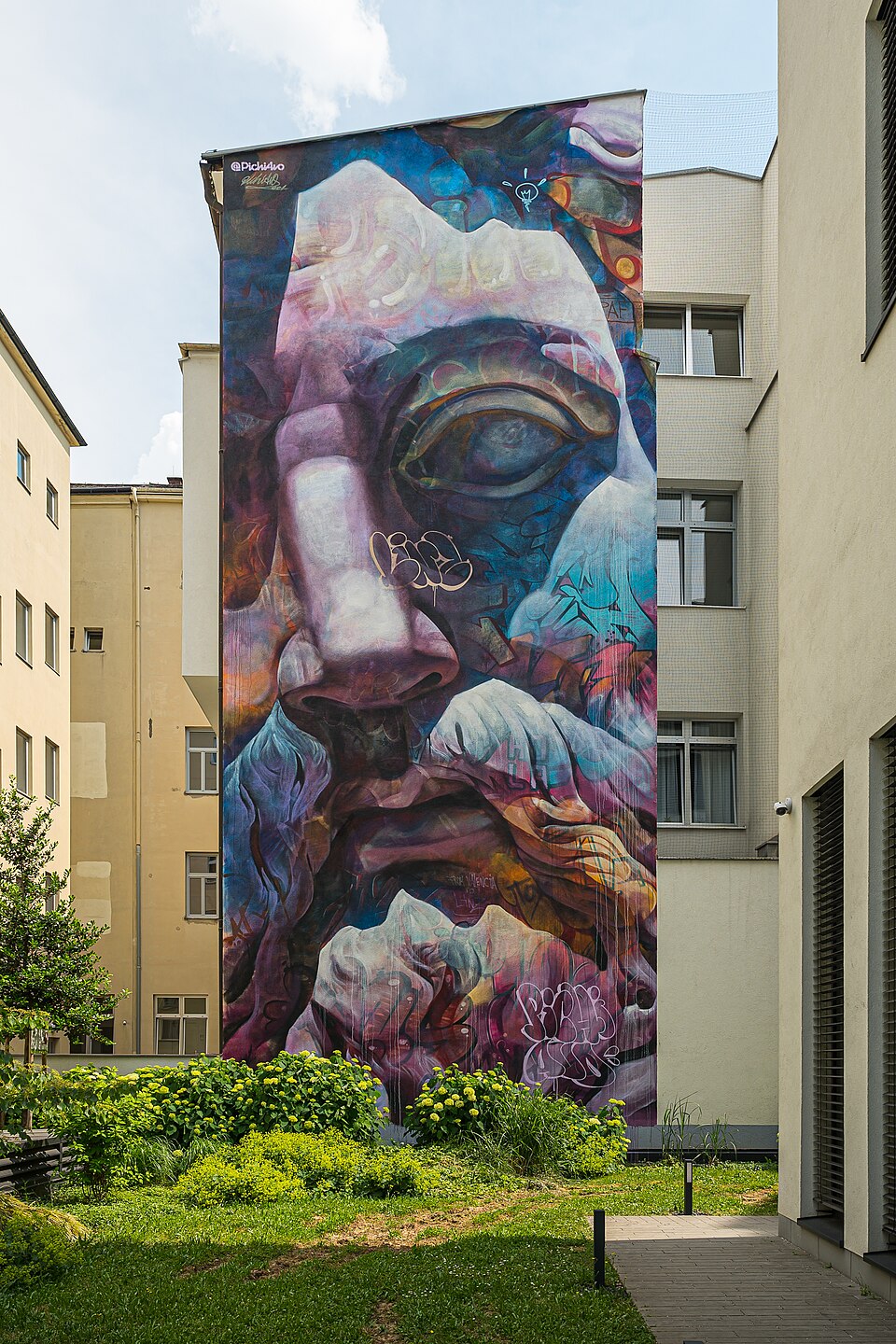
—Ten years chasing someone, isn't that too long? Weren't you tired?
Tired? My child, a god does not tire like you after a long walk. We are immortal — that means we never die and time does not wear us out. Ten years, for me, is like a breath. But you are right about one thing: anger, it wearies the heart. Odysseus was cunning, terribly cunning. Every time I thought I had drowned him, he clung to a plank and survived. Imagine chasing someone who always slips through your fingers like a wet fish. In the end, even a god must let go. Fate had decided that he would return home. And against fate, my child, even I can do nothing.
Against fate, my child, even a god can do nothing.
—Is it true that you lost a city because of a tree?
Alas, yes... and that story still stings my heart. A great city was looking for a patron god. Athena and I both wanted it. So we held a contest: each had to offer the finest gift to the inhabitants. I struck the rock with my trident and made a spring of water gush forth. Magnificent! But the water was salty, like the sea — you could not drink it. Athena planted an olive tree. A tree that gives fruit, oil, wood, shade. The inhabitants chose her gift. And the city was called Athens, in her honor. I kept my sanctuaries on the coasts, but the city I lost.
I offered seawater; she offered a tree that nourishes.
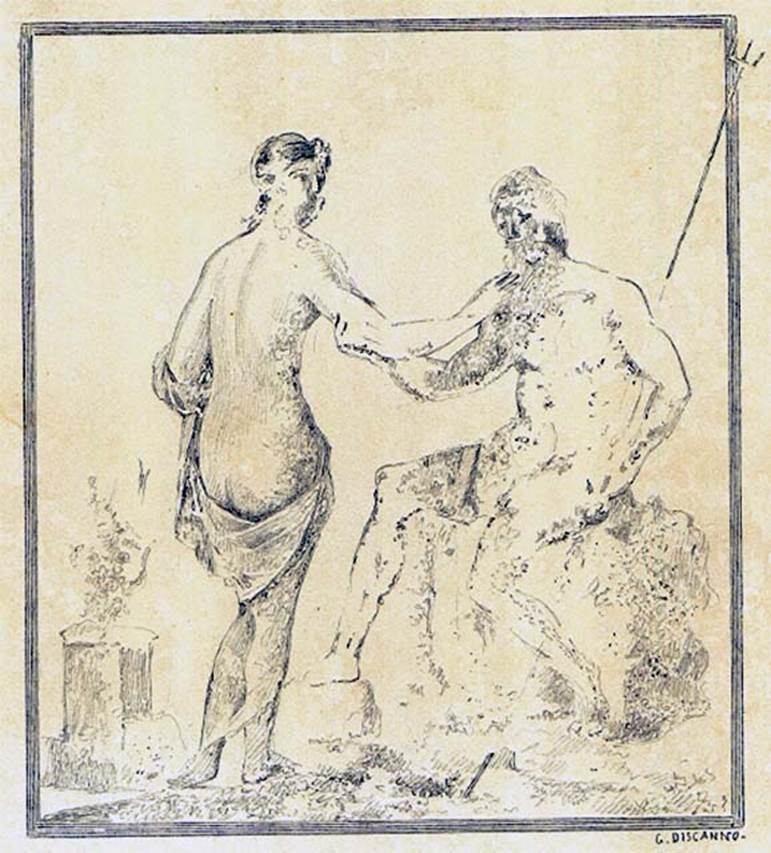
—They say you created horses? How do you create a horse?
That is one of my finest works, my child! I am called the creator of the horse, that proud and swift animal. Look closely at a wave galloping toward the shore, its mane of white foam at the crest: that is where the horse comes from, from the moving sea. In Thessaly, a region of Greece, I was worshipped precisely as the protector of horsemen and horses. The people there honored the god who tames both the waves and the galloping beasts. Imagine: the same hand that raises storms shaped the fastest animal of men. The sea and the horse, my child, share the same wild power. That is why they have always been linked to me.
Look at the foam of a galloping wave: that is where the horse comes from.
—What exactly did sailors do to make you kind to them?
They took great care of me, and I thanked them for it. Before setting sail, Greek sailors offered sacrifices to me: animals, sometimes fish, placed on an altar in my honor. It was their way of saying 'protect us.' And they built temples for me by the water. The most beautiful stood at Cape Sounion, in Attica, high on a cliff above the waves. Imagine a lost, tired sailor who finally sees the white columns of my temple shining in the distance: he knew he was approaching home. These sanctuaries were both prayers and landmarks. A sailor who honored me slept more peacefully, believe me.
My temple on the cliff told the lost sailor: you are nearing home.
—Were there big festivals for you, like games or competitions?
Oh yes, and what festivals! Near Corinth, where the land narrows between two seas, they celebrated the Isthmian Games in my honor. Every two years, athletes came from all over Greece to run, wrestle, and compete near my sanctuary. Imagine the crowd, the shouts, the dust, the oiled young men sprinting — all to honor the god of the seas! Corinth was a city of sailors and traders; it depended on the waves, and thus on me. Honoring Poseidon was not just praying: it was running, singing, gathering. That is how my memory was passed down, from generation to generation, never forgotten.
They did not just pray to me: they ran and sang for me.
This imaginary interview was generated by artificial intelligence from sources documented in Poseidon's profile. It dramatises what the figure might have said based on what we know about them, but does not constitute attested historical testimony. For primary sources and factual documentation, refer to the full profile.