Imaginary interview with Poseidon
by Charactorium · Poseidon · Mythology · 7 min read
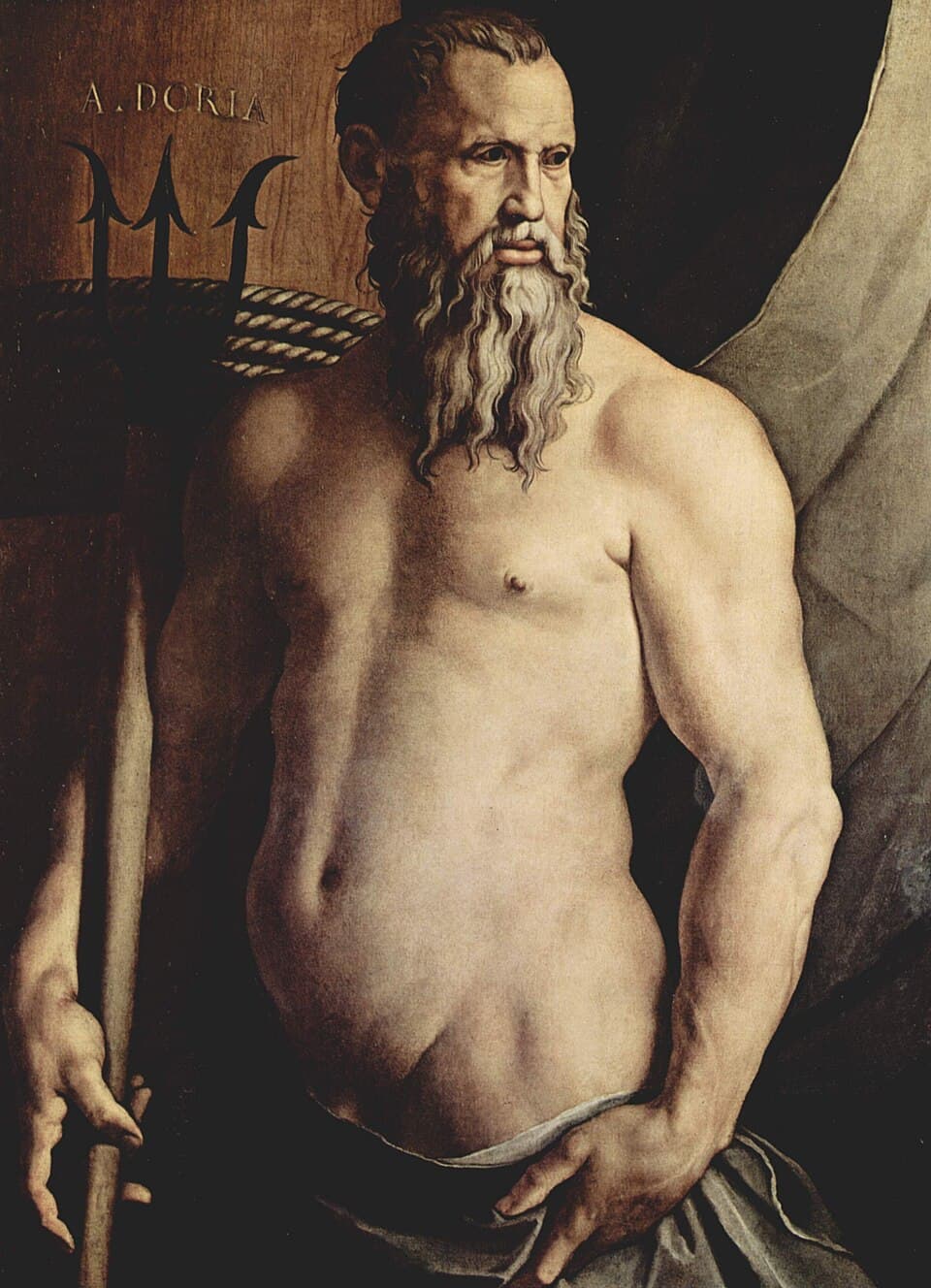
The promontory of Sounion, at the hour when the sun falls into the Aegean Sea and the temple columns cast their long shadows over the waves. The air smells of salt and warm stone. The god does not appear: he surfaces, like a swell taking shape, his trident resting on his shoulder, his beard dripping with foam. He consents to speak of the sailors who pray to him, of the brothers with whom he shared the world, and of a man named Odysseus whom he pursued for ten long years.
—How were the three kingdoms of the world divided among you and your brothers?
We were three sons of Cronos, born from the same womb and the same night. When the old one was overthrown, we had to divide what remained without tearing the sky apart. The lots were shaken. Zeus drew the vast sky, Hades the misty kingdom of the dead, and I received as my portion the gray sea — the tumultuous expanse that encircles all inhabited land. Hesiod, in his Theogony, sang of this division as one sings of a just thing, and he is right: none of us three was cheated. The sky commands from on high, the dead wait below, but it is the water that touches everything, that wets every shore and carries every ship. I did not draw the worst lot. Let Zeus think himself the eldest because he thunders; I shake the ground under his temples when he offends me.
The sky commands from on high, the dead wait below, but it is the water that touches everything.
—Do you unreservedly accept Zeus's authority over Olympus?
I sit on Olympus when the assembly of the gods requires it, and I take my share of the ambrosial feasts as a brother among brothers. But let no one be mistaken: my true throne is not up there, among Zeus's clouds. It is at the bottom of the waters, in a palace of gold and coral where the Nereids serve me and where my chariot hitched with hippocamps always waits ready. Zeus has the sky by lot, not by right of primogeniture — we drew equal shares. I respect him, I do not obey him like a servant. When Troy was falling and my anger smoldered, I thought more than once of standing up to him. The sea bows to no one; it withdraws, it returns, it gnaws at the coast with patience. Such is my character: I yield on the surface and work in the depths.
The sea bows to no one; it withdraws, it returns, it gnaws at the coast with patience.
—What does that trident you carry on your shoulder represent?
Three points, for three empires. Look at it well: it is not a simple fisherman's fork. The first prong commands the salt waters that gird the world; the second, the fresh waters that spring from rocks when I will it; the third strikes the earth itself and makes it tremble to its foundations. They call me the Earthshaker, and that name I wear better than a crown. Strike the sea with the trident and the waves rise like mountains; strike the shore and cities collapse. The Greeks understood this: they engraved this weapon on their coins, at Corinth and elsewhere, so that every exchange of goods passes under my sign. A man who holds a coin stamped with my trident holds, without knowing it, a fragment of my sovereignty in the hollow of his palm.
Three points, for three empires: the salt waters, the fresh waters, and the earth I make tremble.
—Do you remember how you travel through your domains?
When I leave my palace in the depths, I harness my chariot to hippocamps — those creatures half-horse, half-fish that know no fatigue. The sea opens before the axle, the waves lie down, and the monsters of the abyss come out of their caves to recognize their king passing by. It is no accident that I am said to have created the horse: I struck the ground with my trident, and from the rock sprang the galloping animal, brother of the wave that rears and falls back. See a sea whipped up by the wind: these are my horses running, manes of foam in the wind. See a rider of Thessaly launched at a gallop: it is still my work. The horse and the swell are one and the same thing, one and the same fury half-tamed, and I am master of both.
The horse and the swell are one and the same thing, one and the same fury half-tamed.
—Why did you pursue Odysseus with such relentlessness?
He blinded my son. Polyphemus, the Cyclops, had only one eye, and that cunning man of Ithaca gouged it out with a red-hot stake, then fled laughing at his false name. What father would endure that? I took the sea in my hands as one takes a cloth, and I shook it. For ten years, I raised terrible storms and monstrous waves against him, I cast him from shore to shore, I shattered his raft when he thought himself saved. Homer sang of this anger in the Odyssey, and he exaggerated nothing. I am reproached for my rancor; but what is the sea, if not a memory that does not forget? I did not kill Odysseus — the Fates had promised him to his hearth. I only made him pay for every mile of his return, drop of salt after drop of salt.
What is the sea, if not a memory that does not forget?
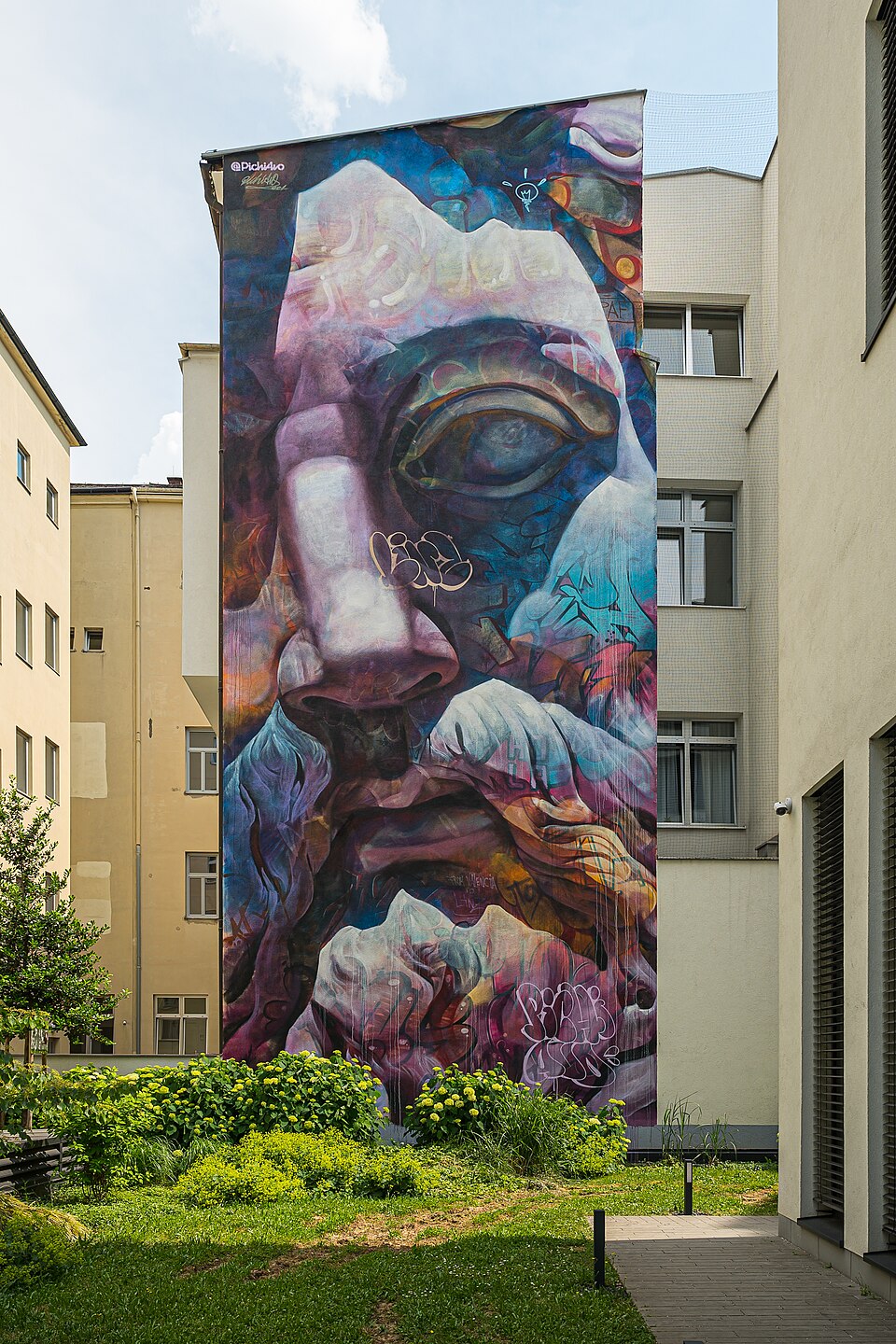
—How do you respond to those who judge your vengeance disproportionate?
Disproportionate? A mortal mutilated a son of the deep and boasted of it aloud across the waves. Pride calls for punishment; that is the oldest law the sea knows. Greek sailors have always known this, they who offer me sacrifices before casting off: they know that I can unleash the storm if they forget me, and that an offended god does not forgive with a shrug. Odysseus tasted my patience as one tastes a reef under the hull. But see: I harassed him, I did not destroy him. I measured my anger to the crime, ten years for a gouged eye and an insolence. Such is the justice of the gods: not gentle, but exact. He who takes to the sea must know to whom he entrusts his keel, and what he must fear if he lacks respect for the powers below.
The justice of the gods is not gentle, but exact.
—Do you remember the day you contested Athens with Athena?
How could I forget? On the rock of the Acropolis, before the assembled inhabitants and the other gods as witnesses, we were each to offer the city a gift that would decide its patronage. I raised my trident, I struck the rock — and a spring gushed forth, wide and powerful, an image of all that the sea brings: fleets, trade, empire over the waves. But the water I had brought forth was salty, in my image, and the Athenians hesitated. Then Athena planted her olive tree, which gives oil, wood, fruit, and peace. They chose the tree over the spring. I lost the city. I do not hide it, and my anger was great. Yet go to Sounion, go to the capes of Attica: my sanctuaries still watch there. One can lose a city and keep its shores — the sea takes back from the side what is refused it head-on.
One can lose a city and keep its shores.
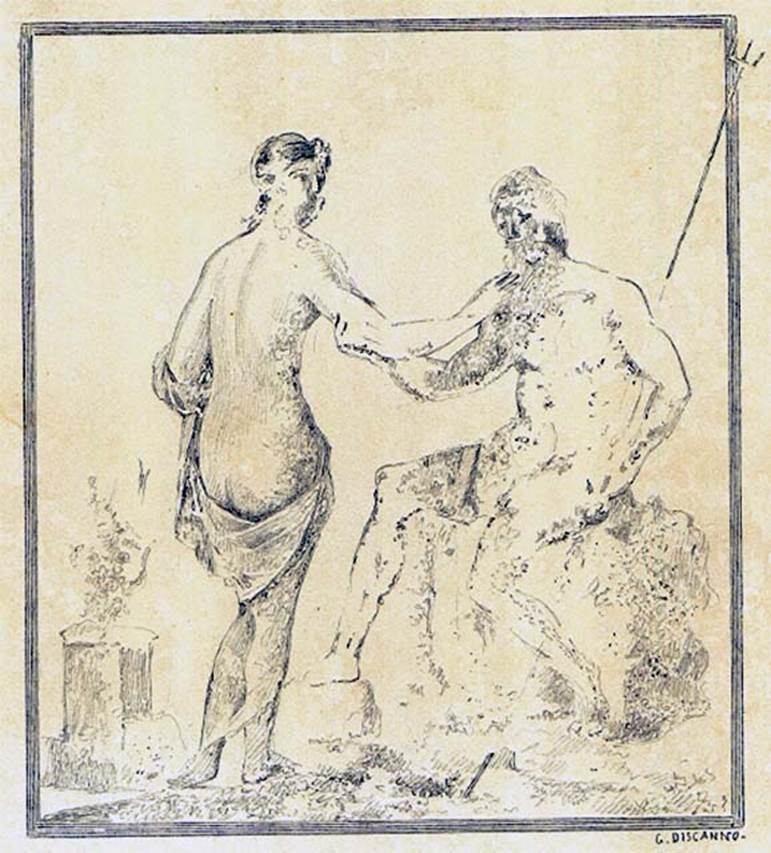
—What do you retain from this defeat at the hands of your niece?
A lesson, and a tenacious grudge, I admit. Men often prefer the peaceful fruit to brute power; Athena's olive tree nourishes without threatening, while my salt spring carried within it the roar of storms. I understand their choice, even if it cost me. But let no one think that I therefore withdrew from Attica in a sulk. Every maritime city knows that it lives only by my grace: without calm seas, no imported grain, no triremes returning to port, no wealth. Athens crowned Athena on its hill, but it was still to me that its sailors turned when facing the Persians off Salamis. The goddess holds the summit of the city; I hold the sea that nourishes it and the ground that bears it. Which of the two, in the end, truly governs the fate of an island people?
The goddess holds the summit of the city; I hold the sea that nourishes it.
—How did Greek sailors honor you before setting sail?
With blood and prayer, as is fitting. Before casting off, the Greek navigator never failed to offer me a sacrifice — a black bull thrown into the waves, wine poured on the water, a beast slaughtered on the port altar. They knew the price of my favor and the cost of my neglect. A calm sea is laid by me; a devastating storm is raised by me. My temple at Sounion, where we speak, raised its white columns at the top of the cape so that the sailor, from the farthest point of his return, would see my sanctuary even before his homeland and know to whom to give thanks. That is why the entire Mediterranean basin was covered with coastal altars in my name. The man who entrusts his life to a wooden hull quickly learns humility; and humility, on the water, takes the form of an offering.
The man who entrusts his life to a wooden hull quickly learns humility.
—What place did the Isthmian Games hold in your cult?
Every two years, near my sanctuary on the Isthmus, at Corinth, the Isthmian Games were celebrated in my honor. Athletes came from all over Greece — runners, wrestlers, charioteers — to measure their strength under my gaze, for the strength of bodies pleases me as much as the strength of the waves. The Isthmus is that narrow neck of land pressed by the sea on both sides, the very place where my empire encircles Greece: no place was more fitting for homage to me. Corinth, a city of sailors and merchants, lived by its two ports and knew what it owed me. There, they ran, they wrestled, they offered crowns — not of laurel as at Olympia, but of pine, the tree of the shores used to build hulls. Honor the god of the sea with the wood from which ships are made: that is a piety I understand.
Honor the god of the sea with the wood from which ships are made: that is a piety I understand.
This imaginary interview was generated by artificial intelligence from sources documented in Poseidon's profile. It dramatises what the figure might have said based on what we know about them, but does not constitute attested historical testimony. For primary sources and factual documentation, refer to the full profile.