Imaginary interview with Primo Levi
by Charactorium · Primo Levi (1919 — 1987) · Literature · 6 min read
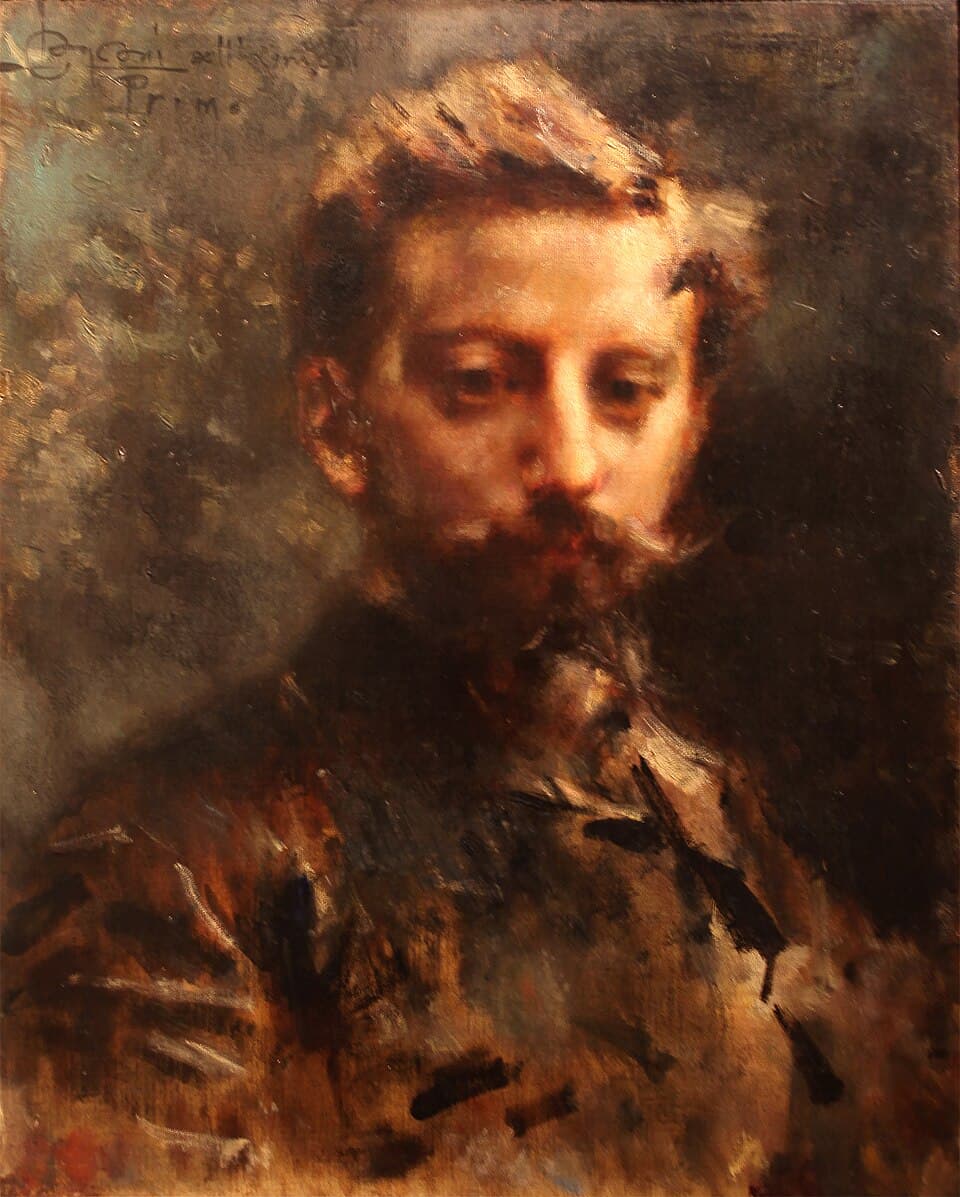
Turin, a winter evening, on the third floor of a bourgeois building on Corso Re Umberto. Primo Levi welcomes us into the study where he writes in the evening, his typewriter still open, as if the smell of the varnishes he made all his life still hung in the air. The man speaks softly and chooses his words with the slowness of a chemist weighing his reagents.
—Do you remember the day you received your chemistry diploma?
In 1941, I received my diploma from the University of Turin with, printed in black and white, three words that weighed more than the grade obtained: di razza ebraica, of Jewish race. Three years earlier, in 1938, Mussolini had enacted the leggi razziali, and overnight a boy from Turin like me had become a stranger in his own city. I was tolerated in the laboratories as one tolerates a draft. I learned chemistry all the more fiercely because at least it didn't ask for my papers. A molecule ignores race; it reacts or it doesn't, that's all. I did not yet know that this cold discipline would one day save my life.
A molecule ignores race; it reacts or it doesn't, that's all.
—How does a chemistry exam go when the examiner wears an SS uniform?
It was winter 1944, at Auschwitz-Monowitz. It was announced that a chemical Kommando was being formed for the Buna-Werke factory, and an exam was required to get in. Picture the scene: a skeletal Häftling, dirty, in striped clothes, standing before Dr. Pannwitz, he clean, seated, looking at me as one looks at a fish through the glass of an aquarium. He questioned me about synthesis, about the states of matter. I had long forgotten the taste of a real meal, but I had not forgotten my Mendeleev. I answered. That look, that wall of glass set between him and me, I carried it for years: he wasn't trying to find out if I was competent, but what species I belonged to. And yet my answer, that day, was worth an extra ration of life.
He looked at me as one looks at a fish through the glass of an aquarium.
—What did that laboratory, right in the heart of the camp, concretely represent?
Joining the Chemical Commando meant exchanging the freezing of the construction sites for a roof and relative warmth. In the economy of the Lager, that was enough to make the difference between February and spring — in other words between dying and lasting. I even stole, I admit, a few laboratory items that were bartered for bread. Much later, writing The Periodic Table, I understood that each element of the table held a fragment of my life: the cerium of those little lighters we tinkered with at Auschwitz, the carbon that closes the book. Chemistry was not just knowledge; it was a grammar for reading the world, and there, a rope to hold onto above the void.
Chemistry was not just knowledge; it was a rope to hold onto above the void.
—What did you see happening during what were called the selections?
The Selektion was the great silent violence of the camp. A transport arrived, and on the platform, with a single gesture, an SS divided the living: work to the right, gas chamber to the left. We quickly learned to recognize those the camp slang called the Muselmänner, those emptied men, emaciated to the extreme, who had stopped fighting, looking, almost being. They already walked toward the smoke without knowing it. For a long time I believed that we had to tell first about those, the drowned, those who never had a voice. But how can one bear witness in the name of someone who truly hit bottom? We, the survivors, are not the true witnesses. The true witnesses are them, and they did not return.
The true witnesses are them, and they did not return.
—How do you explain that such an essential book almost never found readers at first?
In 1947, I brought the manuscript of If This Is a Man to Einaudi, and they turned it down. It came out with a small publisher, De Silva, in two thousand five hundred copies, many of which, I was told, ended up in a flooded basement. Italy then wanted to rebuild, dance, forget; my story came at the wrong time. It took until 1958 and the reprint by Einaudi for the book to finally meet its readers and be translated everywhere. I have often thought that books, like elements, have their own reaction time, and you cannot force it. I had written to bear witness, not to complain; I simply had to learn the patience of one who throws a bottle into the sea.
Books, like elements, have their own reaction time, and you cannot force it.
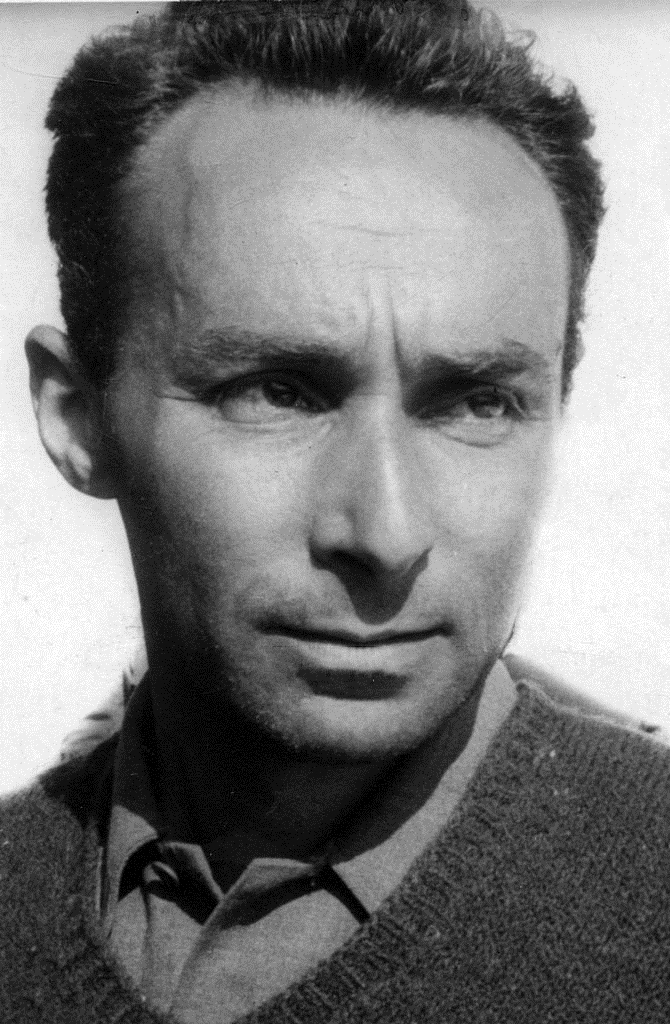
—Why did you choose such a restrained tone to express the unspeakable?
Because screaming does not transmit. In the camp, we discovered that our language itself was at fault. In The Truce, I wrote this sentence that sums it all up: 'Now, for the first time, we realized that our language lacks words to express this offense, the demolition of a man.' So I opted for sobriety, the tone of a report, almost of a chemist's log. No adjectives that shout, no pathos. I wanted the reader to judge on the facts, as one reads the result of an analysis. This is what was later called testimonial literature: not to weep before the reader, but to hand him the facts, naked, and trust him to conclude.
No adjectives that shout: I wanted the reader to judge on the facts.
—What were your days like, split between the factory and writing?
For nearly thirty years, I was a chemist at the SIVA varnish factory in Settimo Torinese, where I became technical director. Mornings: analyses, problems with peeling paint, meetings; I kept my lab notebooks with the rigor I had been taught. Evenings: back in the apartment on Corso Re Umberto, I sat down at my typewriter. I never opposed these two trades. The chemist learns to observe matter without cheating, to name correctly, to measure: that is exactly what a page demands. My colleagues thought me a bit crazy for covering sheets after my days. For my part, I sincerely believe that without the factory, I would never have known how to write that way.
Without the factory, I would never have known how to write that way.
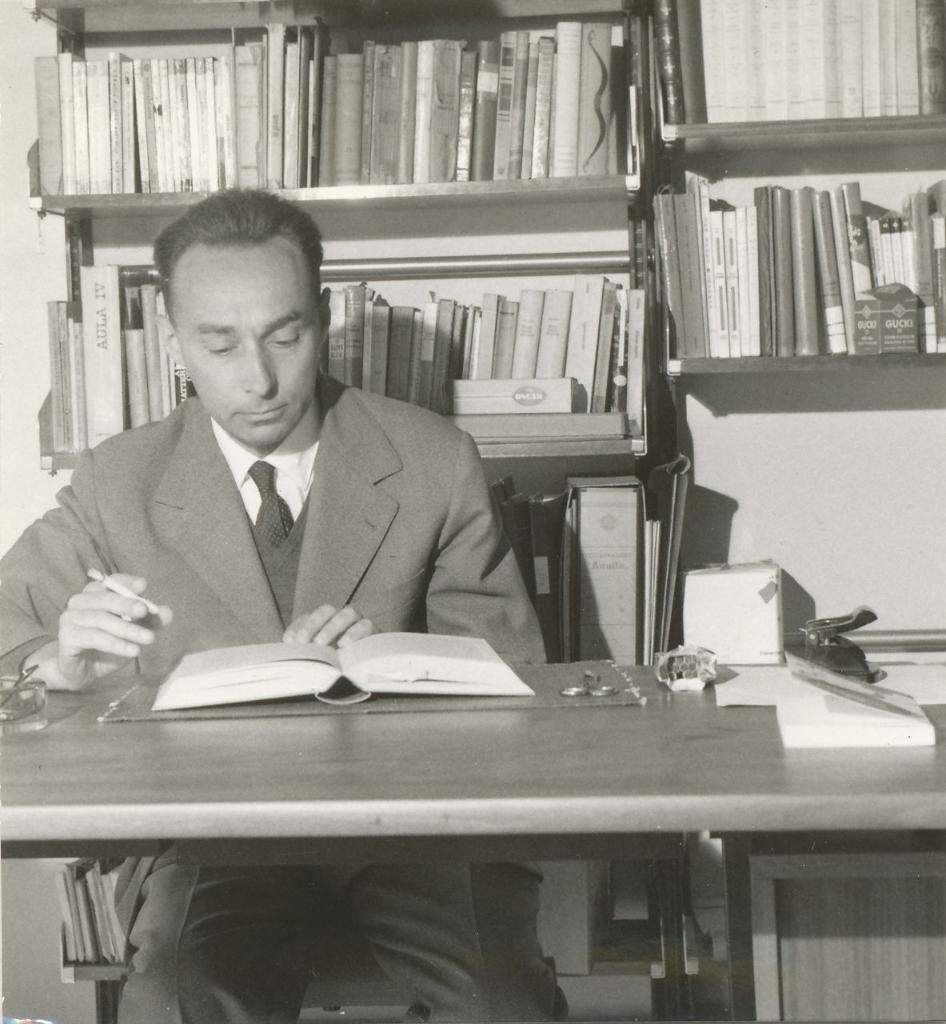
—How did the idea of a whole book built on the periodic table come to you?
It had been simmering for a long time. I love this sentence I placed at the beginning of The Periodic Table: 'Chemistry is the art of separating, weighing, and distinguishing: these are three exercises useful also to him who undertakes to describe events.' Each element of Mendeleev's table has a character, almost a biography: argon inert and discreet like some of my Piedmontese ancestors, impure zinc that finally reacts, carbon, that vagabond that circulates from stone to living things. So I wrote twenty-one stories, one per element, where my life as a chemist and my life as a man merge. The novelist Saul Bellow had words for this book that touched me. For me, it was above all proof that science and memory speak the same language.
Carbon, that vagabond that circulates from stone to living things.
—You coined the notion of the 'gray zone.' What exactly does it cover?
In my last book, The Drowned and the Saved, in 1986, I wanted to put an end to a comfortable illusion: that of a world neatly divided between perpetrators on one side and victims on the other. The reality of the Lager was murkier. There existed a gray zone, an uncertain band where prisoners — the Kapos, the men of the Sonderkommandos forced to serve the ovens — collaborated to gain an extra day of survival. To judge them from our comfortable chairs would be dishonest. The Nazi system had this diabolical refinement of shifting part of its own guilt onto its victims. I absolve no one; I only ask that before judging, we ask ourselves what we would have done, hungry, in their place. Memory, I know, is a wonderful but fallacious instrument.
Before judging, let us ask ourselves what we would have done, hungry, in their place.
—A student once asked you how men could have done that. What did you answer him?
It was in an Italian school; a boy asked me the question that always comes back: how could men have done that? One would like them to have been monsters, a separate species, reassuring because different from us. But I answered him that the most terrible thing, precisely, is that they were ordinary. Civil servants, fathers, zealous employees. The leggi razziali of 1938 were not applied by demons, but by bureaucrats who stamped forms without looking up. That is why I spend my evenings in classrooms rather than resting: to repeat to young people that this happened, therefore it can happen again. Every generation must stand guard. That, I believe, is the only lesson I can bequeath.
This happened, therefore it can happen again: every generation must stand guard.
This imaginary interview was generated by artificial intelligence from sources documented in Primo Levi's profile. It dramatises what the figure might have said based on what we know about them, but does not constitute attested historical testimony. For primary sources and factual documentation, refer to the full profile.