Kids interview Primo Levi
by Charactorium · Primo Levi (1919 — 1987) · Literature · 5 min read
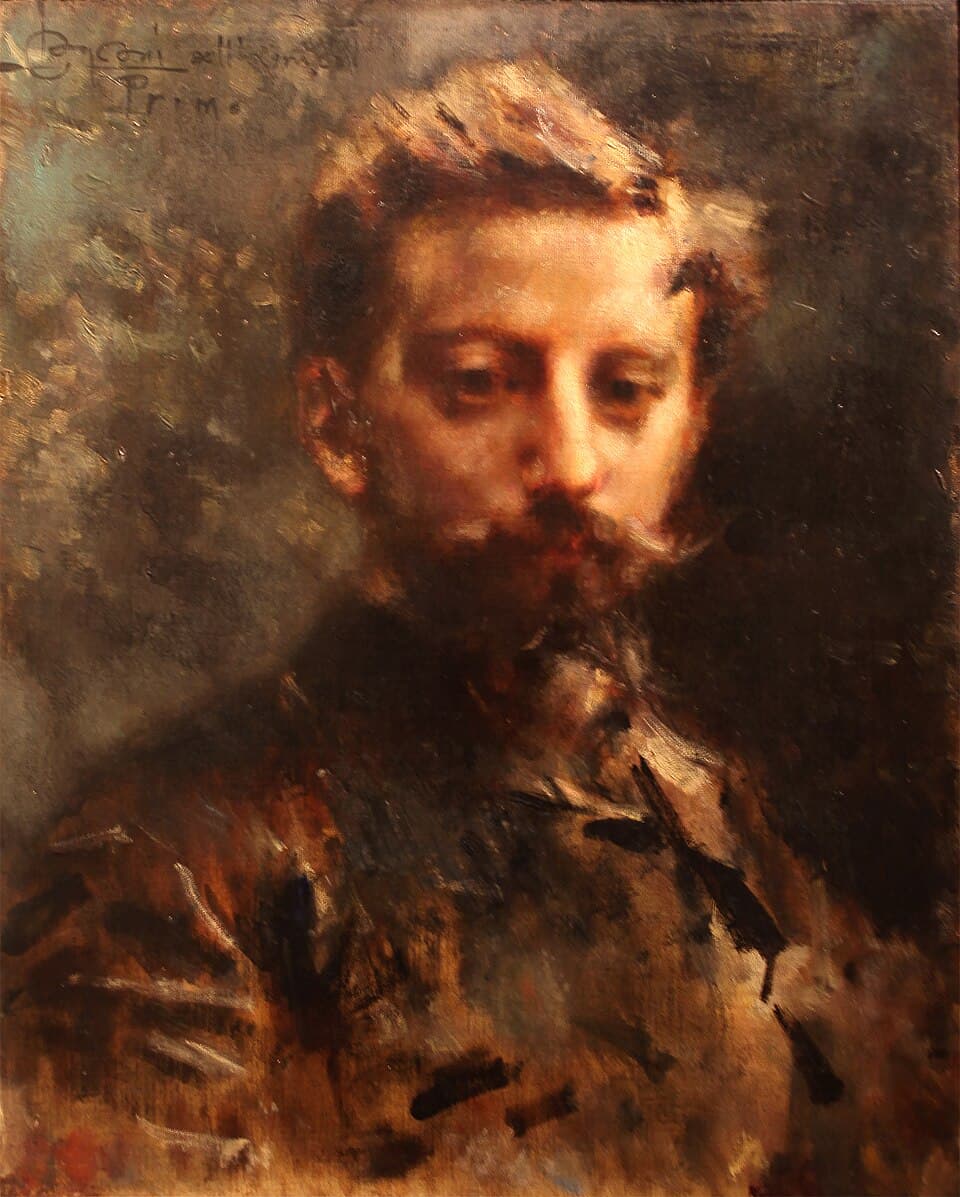
Two young visitors, twelve years old each, came with their class to meet an old gentleman from Turin. He awaits them in his apartment, near his typewriter. His name is Primo Levi, and he has promised to tell them everything, gently.
—How old were you when you took the chemistry exam in front of the soldier?
I was twenty-four, my child. It was in 1944, at Auschwitz-Monowitz. Imagine a school exam, but where your life depends on the grade. An SS officer questioned me about chemistry, standing, frozen, starving. I answered like a diligent student. And you know what? It saved me. I was taken into the Chemical Commando, that is, the team that worked in the factory laboratory. There, it was a little less cold, a little fewer blows. My white lab coat, my formulas learned at the University of Turin — all of that suddenly protected me. The science I loved became a roof over my head.
The science I loved became a roof over my head.
—And after the war, did you continue doing real chemistry?
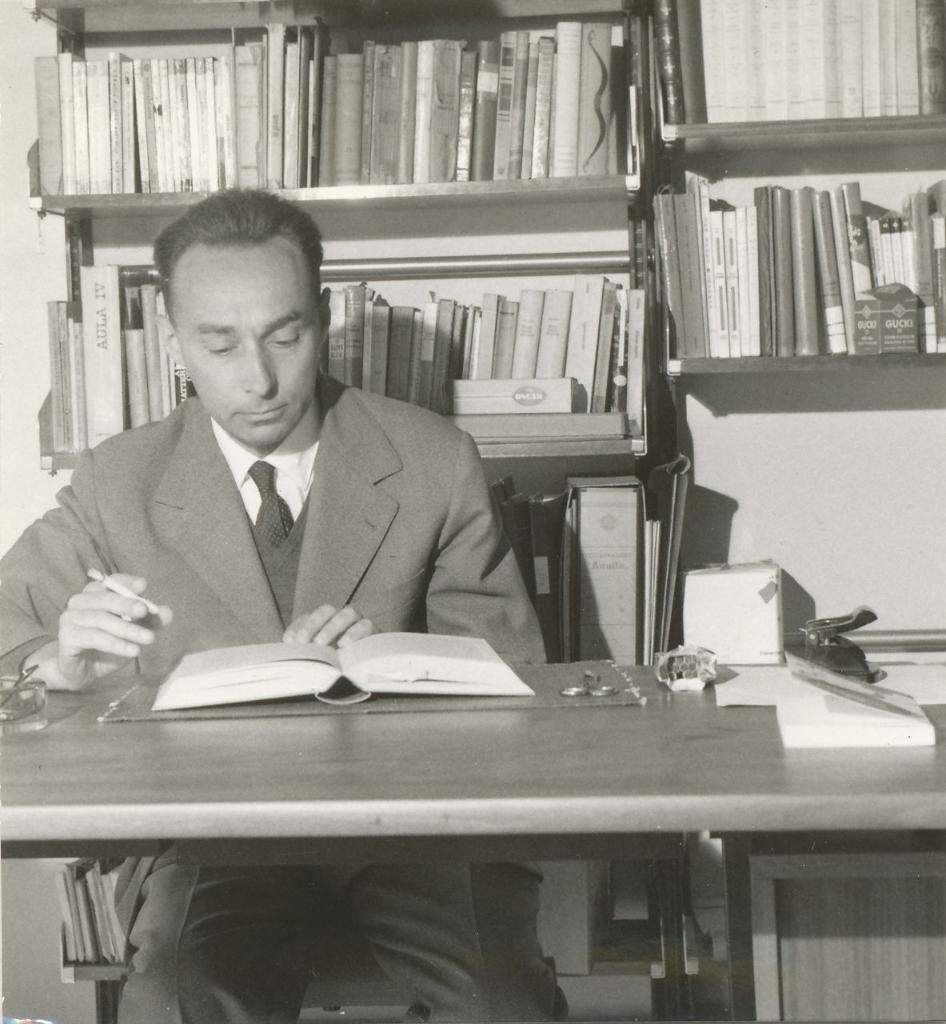
Yes, and for a long time! For nearly thirty years, I worked in a varnish and paint factory near Turin, until 1975. I even ended up as technical director, can you imagine? In the morning, I put on my lab coat, did my checks, solved manufacturing problems. It was concrete, you touched the material with your hands. And then in the evening, back home, I became a writer. I sat at my typewriter and told stories. Two lives in one man, you see. The chemist and the storyteller. They didn't interfere: on the contrary, the first gave the second his clear and precise way of saying things.
—How long did it take to get home after the camp?
Nine months! Imagine: nine months to make a journey that should take a few days. When the Red Army liberated the camp on January 27, 1945, I was free, but lost in a broken Europe. Trains left anywhere, stopped for weeks. I passed through Russia, Romania, Hungary, with other survivors. We slept where we could, looked for food. I didn't return to Turin until October. Later, I told all that in a book, The Truce. It was like a long strange detour between hell and home.
—Was it sad all the time, that return journey?
No, not all the time, and that's what's strange. There was misfortune, of course. But also funny encounters, colorful people, noisy markets. A bit like a battered great adventure. You know, when you come back from hell, simply seeing a horse, a green field, a child playing, it gives you back the taste for life. At the same time, there was a pain that words couldn't catch. I once wrote that "our language lacks words to express this offense, the demolition of a man." There you have it: sometimes I laughed on the road, and sometimes no word was enough.
—Why did you give chemistry names to the chapters of your book?
Ah, The Periodic Table! Have you ever seen that big chart hanging in a science room, with all the little boxes? Each box is an element: iron, gold, argon... To each element, I associated a story from my life. Iron for a courageous friend, gold for a precious memory. For me, every substance has a character, like a person. I said that "chemistry is the art of separating, weighing, and distinguishing" — and telling one's life is the same. A famous American writer even said it was the most beautiful book ever written by a chemist. That touched me deeply, I admit.
Every substance has a character, like a person.
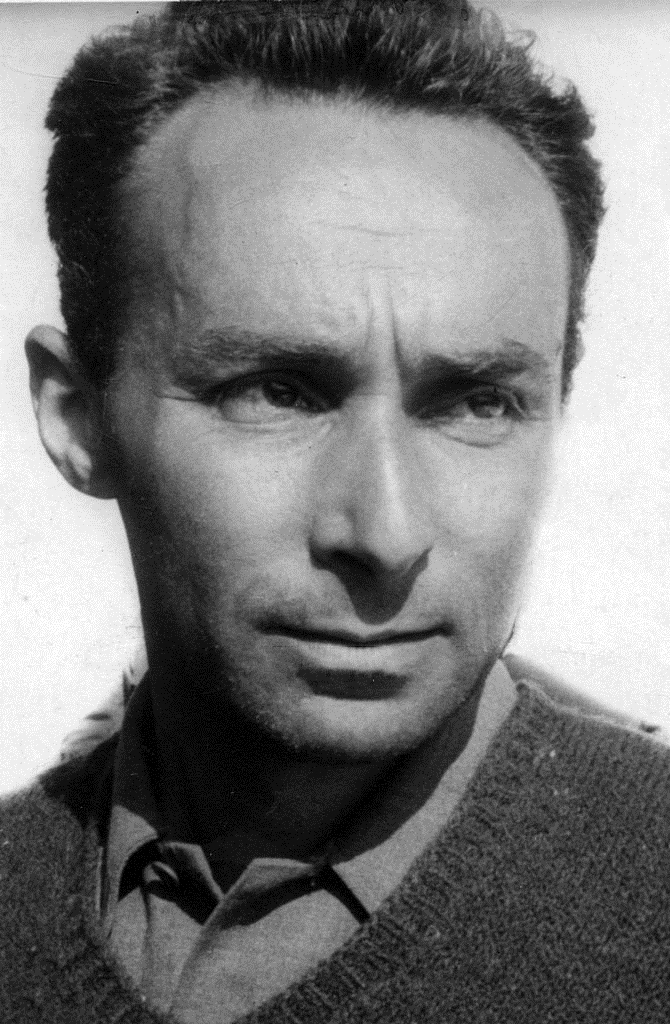
—Which did you prefer, being a chemist or a writer?
What a good question! But I couldn't choose, you know. During the day, I was at the factory, in the smell of varnishes, among my colleagues. I loved that: it was solid, useful, it worked or it didn't. And in the evening, in my apartment on Corso Re Umberto, where I was born, I sat at my typewriter. I wrote at night, on weekends, in addition to my job. The two nourished each other. Without chemistry, I wouldn't have survived the camp or learned to observe so precisely. Without writing, I wouldn't have been able to transmit. A man can have two hands: one for doing, one for telling.
—Did you write your first book to get revenge on the Germans?
No, my child. Not to take revenge. If This Is a Man, I wrote it to bear witness, not to complain. That's very different. Revenge would have made me someone full of hate. Bearing witness means: I tell exactly what I saw, calmly, so that others know and never forget. I chose a sober narrative, without shouting, almost like a report. And you know, that calm strikes harder than anger. The book began with a line to people safe and warm at home, so they would ask themselves: "consider if this is a man." Telling, for me, was my way of resisting.
I wrote to bear witness, not to complain.
—Is it true that no one wanted to publish your book at first?
It's true, and it hurt me. In 1947, I submitted my manuscript to a major publisher, Einaudi. He refused it. Imagine: you come back from hell, you lay your testimony on the table, and you're told no. A small publisher finally published it, only two thousand five hundred copies. Almost no one read it. The book slept for years. Then, in 1958, it was reprinted, and suddenly the whole world discovered it. Translated everywhere. A lesson in patience, you see: a truth that isn't listened to right away can wait its turn and eventually speak to everyone.
—What is the 'gray zone' you talk about in your books?
You touch on something difficult, but I'll try simply. In the camps, there weren't only all-black bad guys and all-white good guys. In between, there was a gray zone. Some prisoners received a little power: to watch others, distribute soup. In exchange, they survived a bit better. Were they guilty? Not really. Innocent? Not quite. They were trapped. I wrote about that in my last book, The Drowned and the Saved, in 1986. I wanted people to understand: judging is easy from a warm chair. There, everything was murky, and it's precisely that murkiness we must face.
—Why do you say we must be careful, that we forget?
Because memory is fragile, my child. I wrote it thus: "human memory is a marvelous but deceitful instrument." Deceitful means it sometimes tricks us. Our memories are not carved in stone. Over the years, they fade a little, or distort without our knowing. That's why I wanted to write everything quickly, precisely, like a chemist records his observations. A book, unlike a memory, does not wear out. It keeps the exact trace. You young people are the memory of tomorrow. If you read and remember, then what happened cannot be quietly erased.
—How could normal people do such horrible things?
That's the most important question you could ask me. One day, in a school like yours, a student asked me that. I answered something unsettling: precisely because they were ordinary people. Not monsters from elsewhere. Men like you and me, who obeyed, looked down, followed the crowd. That's why the worst can always return, in every generation. I don't say that to scare you. It's to arm you. Learn to say no when everyone says yes. Stay awake, curious, free in your mind. As long as there are children asking these questions, I'll be at peace.
Learn to say no when everyone says yes.
This imaginary interview was generated by artificial intelligence from sources documented in Primo Levi's profile. It dramatises what the figure might have said based on what we know about them, but does not constitute attested historical testimony. For primary sources and factual documentation, refer to the full profile.