Imaginary dialogue between Saul Bellow and Primo Levi
by Charactorium · Primo Levi (1919 — 1987) · Literature · 6 min read
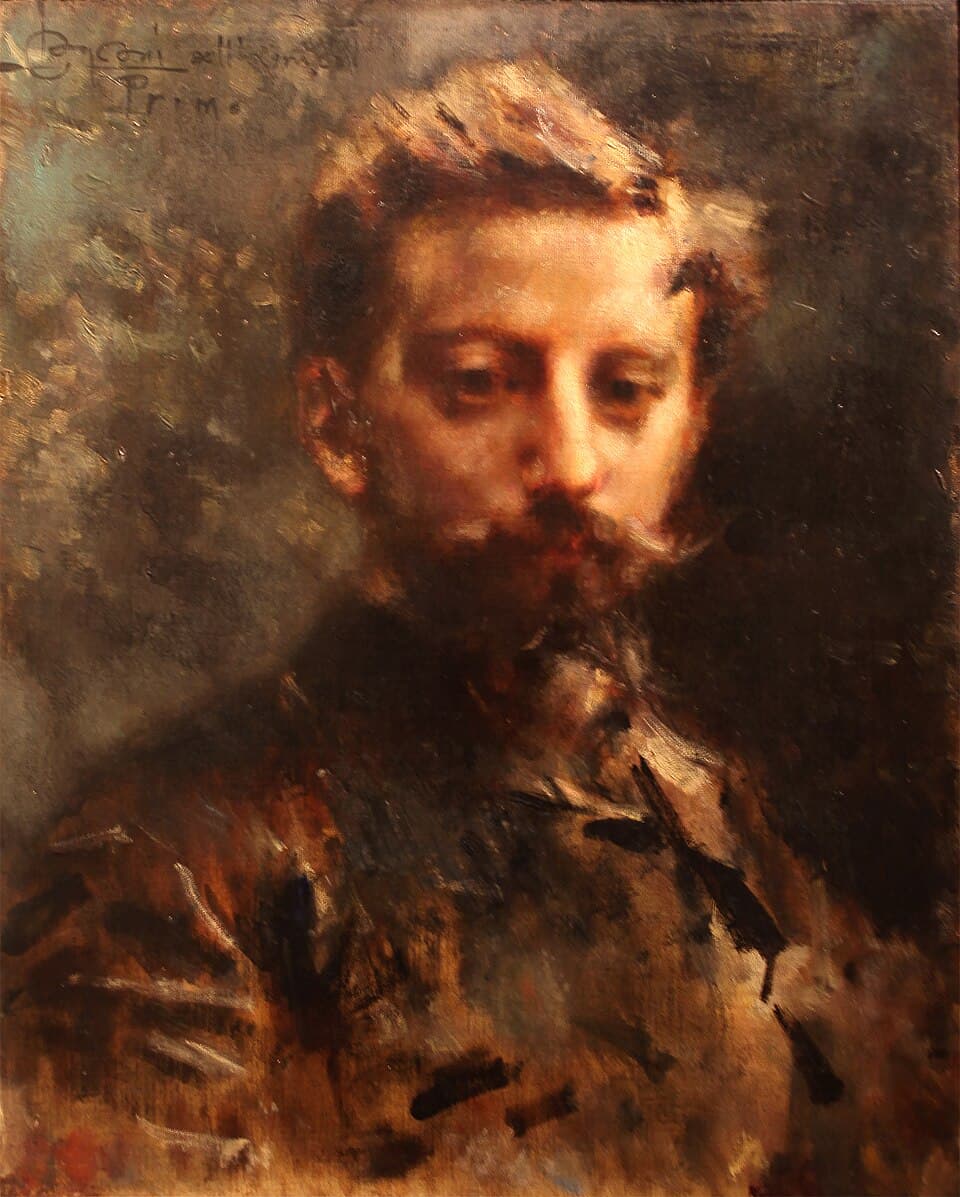
It is in the apartment on Corso Re Umberto in Turin, one evening in the autumn of 1985, that Saul Bellow meets Primo Levi among the bookshelves and the old typewriter set near the window. The oblique Piedmont light falls on a table cluttered with notes and an empty test tube used as a paperweight. The two men have never seen much of each other, but ten years earlier Bellow publicly praised The Periodic Table, and tonight he comes to seek the man behind the chemist-writer. Levi pours a glass of barbera and sits down, the hands of someone who has long handled test tubes.
—Primo, they say that in 1944 you took a chemistry exam in front of an SS officer. How does one endure such an ordeal?
Imagine the scene, my dear Bellow: myself, Häftling 174517, a skeleton in rags, standing before a German doctor of chemistry who looks me over as one examines a beast of burden. He asks me questions about synthesis, about the Hamburg methods. And then, a strange thing: my Turin memory surfaces, intact, like a buoy. I answer. I believe what struck him was not my knowledge, but that a number could still reason. That exam got me into the Chemical Kommando of the Buna, sheltered from the frost. A degree earned in hell probably saved my life. That evening, science was not nobility: it was an extra ration of survival.
A degree earned in hell probably saved my life.
—So you wore the white coat even in the Lager. Did you feel, there, that your profession set you apart from the others?
It set me apart, yes, and that weighed on me. The Buna laboratory was heated; there were windows, flasks, a semblance of human order. Outside, my comrades dug in the mud. I knew the price of that difference, and I knew it depended on a whim, on a formula remembered at the right moment. I took no pride in it, believe me. The chemist I was observed the camp like a monstrous sample to analyze, and it is perhaps that habit—weighing, measuring, distinguishing—that kept me from sinking. Surviving was never a merit, only a combination of chances. The best died; we stayed to tell the tale, which is a debt as much as a grace.
—In 1947, Einaudi rejected If This Is a Man. Did discouragement ever make you doubt the usefulness of testifying?
The rejection hurt me, I admit, but it did not touch my reason for writing. I had an almost physical necessity to tell—already in the camp, I dreamed of speaking and not being listened to. The book came out with a small publisher, two thousand five hundred copies, and it vanished like a stone in a well. I wrote this book to testify, not to complain. That is why I sought sobriety, the tone of a scientific report: no screams, no self-pity. I wanted the facts to accuse on their own. I had to wait until 1958 and the reprint for it to finally be heard. You know, the writer resembles the chemist: he prepares his compound and waits for the reaction to occur, sometimes ten years later.
I wrote this book to testify, not to complain.
—You who handle words with such precision, yet you wrote that language itself failed you. How does one say the unspeakable?
That is the paradox that still haunts me. Our language lacks words to express that offense, the demolition of a man. The words 'hunger', 'cold', 'fear' mean something different in our heated homes than in the Lager; they are free words, created by free men. There, a new language would have been needed, and we did not have it. So I did what the artisan does with a stubborn material: I worked as closely as possible, without ornament, seeking the exact word rather than the strong word. Precision was my only honesty. To lie through excess of eloquence would have betrayed the dead. Better to say a little less, but accurately, than a lot and falsely.
—After the liberation of January 27, 1945, your return took nine months. The Truce retains an almost joyful tone—where did that light come from?
What splendid absurdity, that return! Freed by the Red Army, I thought I would be home in a few weeks, and they took me through White Russia, Romania, Hungary, on trains that went the wrong way. And yet, my dear Bellow, those were months of convalescence. I was alive, and every face I met—the cunning Greek, the disheveled and kind Russian soldiers—taught me again that the world was not just a camp. Auschwitz had shown me the depths of man; this wandering showed me its fantasy, its regained warmth. It is called The Truce because that is what it was: a suspended interval between past horror and the weight of memory to come. I returned to Turin in October, heavier with images than with luggage.
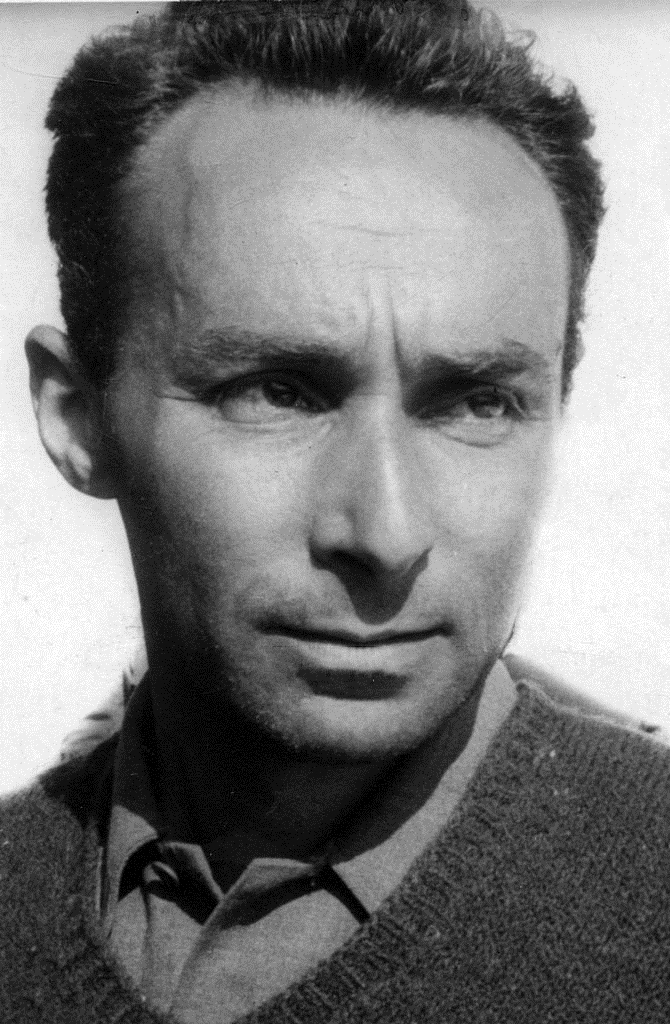
—You ran the SIVA varnish factory by day and wrote at night. Wasn't that a life split in two, almost torn apart?
People always ask me that as if there were a wound there, and I reply: on the contrary, it was my balance. In the morning, the laboratory, the checks, the resin problems to solve; in the evening, in this apartment, the typewriter. The two professions nourished each other. The factory kept my feet on the ground, among men who work, far from the vapors of pure literature. And chemistry taught me style: chemistry is the art of separating, weighing, and distinguishing. A writer does nothing else. I rubbed elbows with stubborn matter, reactions that fail, and that taught me humility not found in books. I never wanted to choose: I would have lost half of myself.
Chemistry is the art of separating, weighing, and distinguishing; a writer does nothing else.
—Primo, when I wrote that your Periodic Table was the most beautiful book ever written by a chemist, what did you feel?
I was as happy as a beginner, and a little confused too—coming from a novelist like you, the compliment engaged me. That book, you see, I had carried it within me forever. Each chapter bears the name of an element, and each element tells a stage of my life: argon of the old Piedmontese Jews, iron of the mountain friend, cerium whose spark helped me survive the camp. Mendeleev's table is for me a poetry, a grammar of the world. I wanted to show that matter has a morality, affinities, resistances, exactly like men. For a long time science was thought mute and literature talkative; I tried to prove they speak the same language. Your sentence, my friend, confirmed to me that the bet was not lost.
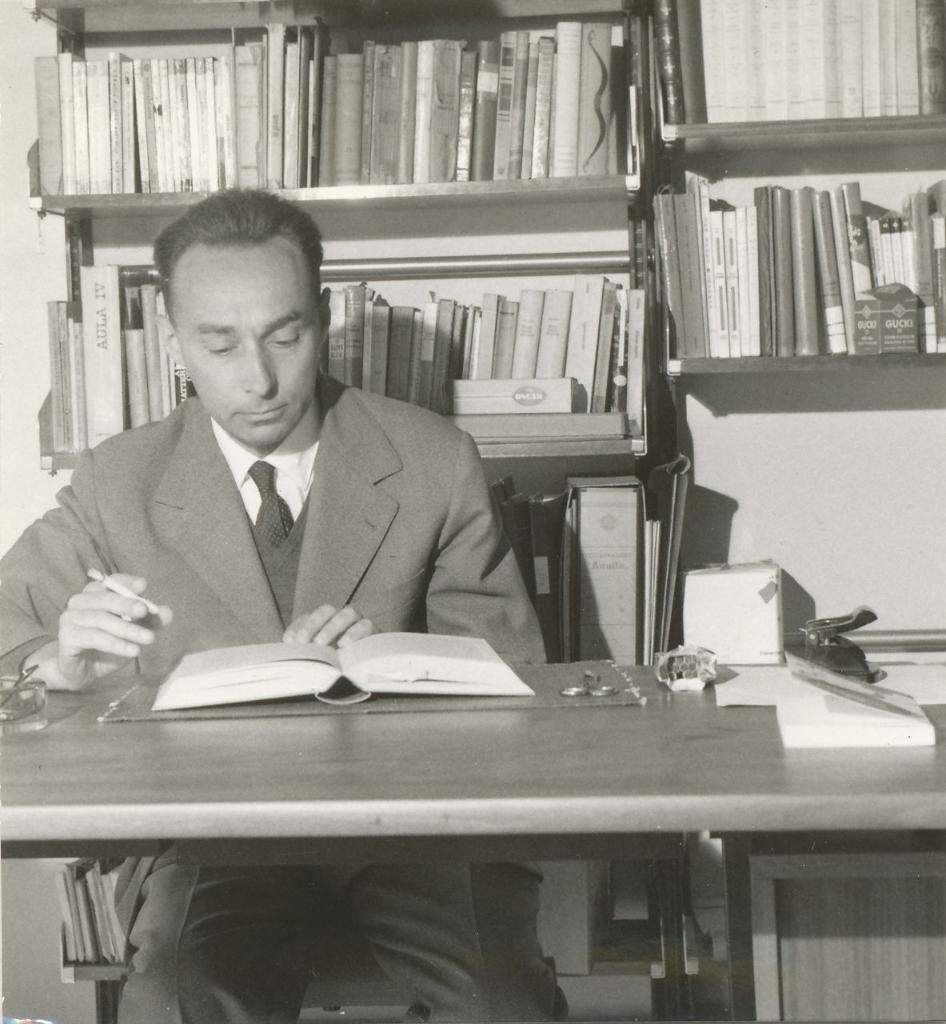
—In The Drowned and the Saved, you coin the idea of the 'gray zone.' Why refuse to so clearly separate executioners and victims?
Because the reality of the camp was more troubled than our consciences would like. We dream of a world where victims are pure and executioners monstrous. Yet the SS had invented a diabolical system: they delegated part of their power to the prisoners themselves. The Kapos, the men of the Sonderkommandos, lived in that ambiguous space where one collaborates a little to survive another day. The 'gray zone' designates that territory, neither innocence nor full guilt. I refrain from judging these men: whoever has not known absolute hunger does not know what they would have done. But understanding is not absolving. I only wanted to tell the reader: do not believe too quickly that you would have been on the right side.
Do not believe too quickly that you would have been on the right side.
—You still go to schools to speak to young people. What do you reply when a child asks you how it was possible?
A student, in fact, once asked me that question with disarming candor: how could men do that? I answered what I deeply believe: precisely because they were ordinary men. Not demons from hell, but officials, fathers of families, people like us, who obeyed, got used to it, stopped thinking. That is what should terrify us. The monster reassures because it is rare; the ordinary man worries because he is everywhere. That is why I repeat to these children that it happened, therefore it can happen again. Each generation must remain vigilant. My testimony only makes sense if it makes them, themselves, a little more watchful than we were.
—Forty years have passed. Do you fear, Primo, that memory itself will eventually betray what you saw?
That is my greatest fear, and I made it the subject of my last book. Human memory is a wonderful but fallacious instrument; memories are not engraved in stone, they fade, deform, sometimes enrich themselves with borrowed details. I know this as a chemist: no trace is stable. That is why the witness must distrust himself as much as the deniers. I wrote, again and again, not to fix my own legend, but to leave a document that others can verify when we, the survivors, have disappeared—and we are disappearing. The danger is not only denial; it is forgetting, gently, out of weariness. As long as I hold this typewriter, I fight against that erasure. That, I believe, is the only victory left to me.
Human memory is a wonderful but fallacious instrument.
This imaginary interview was generated by artificial intelligence from sources documented in Primo Levi's profile. It dramatises what the figure might have said based on what we know about them, but does not constitute attested historical testimony. For primary sources and factual documentation, refer to the full profile.