Imaginary interview with Ranavalona III
by Charactorium · Ranavalona III (1861 — 1917) · Politics · 6 min read
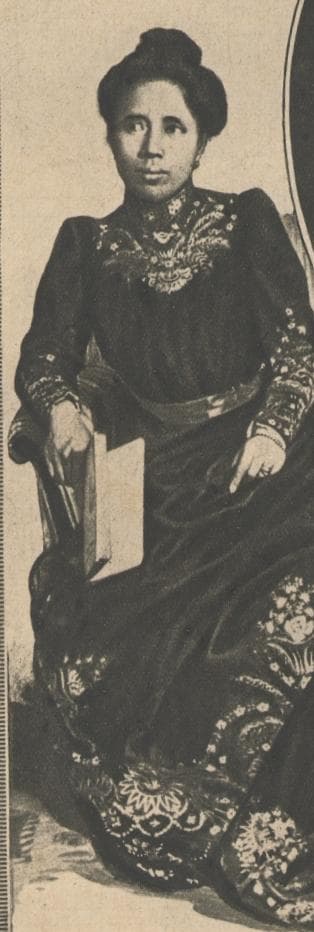
Algiers, 1916. In a modest villa on the heights of the white city, a fifty-five-year-old woman receives, draped in a worn but crown-like lamba. The last queen of Madagascar agrees to speak — of lost Antananarivo, of the soldiers she awaited without fleeing, and of a throne taken from her without ever making her lower her eyes.
—How did you become queen, at barely twenty-two?
I was not crowned because I was the wisest or the most beloved: I was chosen. In 1883, Prime Minister Rainilaiarivony set his eyes on me as one designates a seal for a decree. I was the third consecutive queen he married according to custom — understand well what that means. I was the face of the Merina kingdom, the sovereign my people acclaimed on the hill of the Rova, and he held in his hand the real weight of affairs. From the Hova class, neither noble nor slave, he had made royal marriage his staircase to power. People think a queen commands. I first learned to embody — to wear the red and gold silk lamba, to preside over the fomba, and to let a man govern behind my name.
I was chosen as one designates a seal for a decree.
—How did you feel, being both the highest symbol and not the real master of the kingdom?
Do not think that humiliated me. In our tradition, the sovereign is not a man who acts: he is the living link with the razana, the ancestors whose spirit protects the living. My palanquin never touched common ground, not out of pride, but because a queen's body belongs to the entire kingdom. Rainilaiarivony signed, raised the fanompoana corvées, dealt with the consuls — and I, before God and before the dead, bore the legitimacy of Madagascar. The day France wanted to break our sovereignty, it was my name, not his, that had to be erased. That is what they finally understood: a minister goes into exile in India, but a queen, even deposed, remains queen in the heart of her people.
—You chose to resist through diplomacy rather than arms. Why this path?
Because I knew our strengths, and theirs. From the protectorate treaty of 1885, I saw that they were taking away our foreign relations while leaving us the illusion of being masters at home. So I sent men where the fate of kingdoms is decided: delegations to Paris and London in 1895, to plead our cause before governments and the press. I wanted Europe to know that Madagascar was not an empty land to be shared, but a kingdom with its laws, its writing, its Bible in the Malagasy language. They opposed us with cannons; I answered with letters and envoys. Many deemed it futile. But how could a Christian queen throw her people, gun in hand, against an army that landed at Majunga?
They opposed us with cannons; I answered with letters and envoys.
—When annexation was proclaimed, what did you do?
I protested. Not in the secrecy of my chambers, but solemnly, in writing, addressed to the powers themselves. In 1896, I wrote to President Félix Faure to contest the legality of this theft: my people had never consented to become French subjects, and I could not accept that a decree could suppress Madagascar's sovereignty. It was pathetic, I knew. Their annexation act of August 1896 already declared our royalty abolished and ordered me to be taken out of the territory. But a written protest does not die like a soldier on a field. It remains in the archives. One day, someone will read it and know that there was, in Antananarivo, a queen who refused to sign her own disappearance.
A written protest does not die like a soldier on a field.
—Do you remember the day the French soldiers entered Antananarivo?
September 1895. The fighting was moving toward the capital, and I was urged to flee. I refused. Leaving the Rova would mean abandoning the razana and confessing that the queen was nothing. So I stayed, in the stone palace overlooking the hill, dressed in my ceremonial lamba, and I waited. When General Duchesne's officers presented themselves, they found a seated sovereign, not a fugitive. I asked to be treated with the respect due to my rank, and I refused to sign any paper that harmed Madagascar. I was later told that their own reports spoke of a dignity that surprised them. So much the better. I wanted them to know they were taking a city, but they had not made a queen bend.
They were taking a city, but they had not made a queen bend.
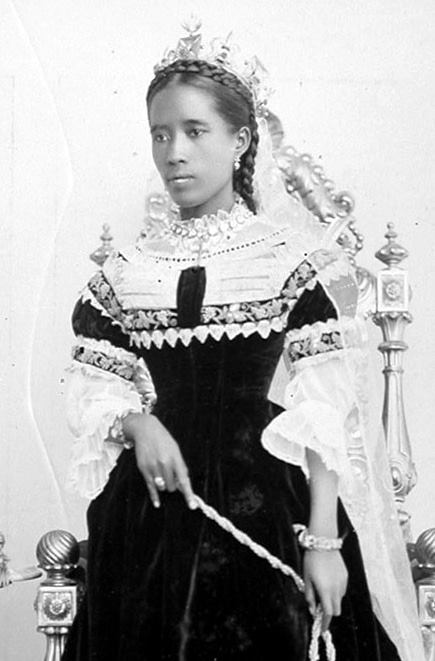
—Why did you hold so tightly to those garments, that ceremony, at the very moment of defeat?
Because a people looks to its queen to know whether to be ashamed or not. The red and gold silk lamba is not an ornament: it is the Merina royalty made fabric, what distinguishes me from my subjects and binds me to them. The day you lose everything, the attire remains. The French seized my crown, sent it to France as a trophy; they took the scepter, the seal that sealed our decrees. So be it. But the drape on my shoulder, the way I hold myself, the morning prayer in the palace chapel — that, they cannot confiscate. I understood that day that sovereignty resides not only in objects that can be taken away, but in the manner of having worn them.
—You speak of prayer. How do you reconcile your Christian faith with Madagascar's ancestral traditions?
In Europe, people think you must choose. I rise at dawn for Protestant prayer with my court, faithful to what my predecessor established; my Bible is in Malagasy, printed by the missionaries who brought us letters as much as the Gospel. And in the evening, at the dignitaries' table, we still tell the tantara, the stories of the ancestors, and we respect the fady, the taboos that no king defies with impunity. The worship of the razana has never left our walls. I am Christian without ceasing to be Malagasy. What the missionaries gave me — printing, schools, educated cadres — I wanted for my people, not to erase the fomba of our fathers, but to arm Madagascar against those who wanted to swallow it.
I am Christian without ceasing to be Malagasy.
—The Menalamba uprising rose against the French but also against Christians. How did you experience it?
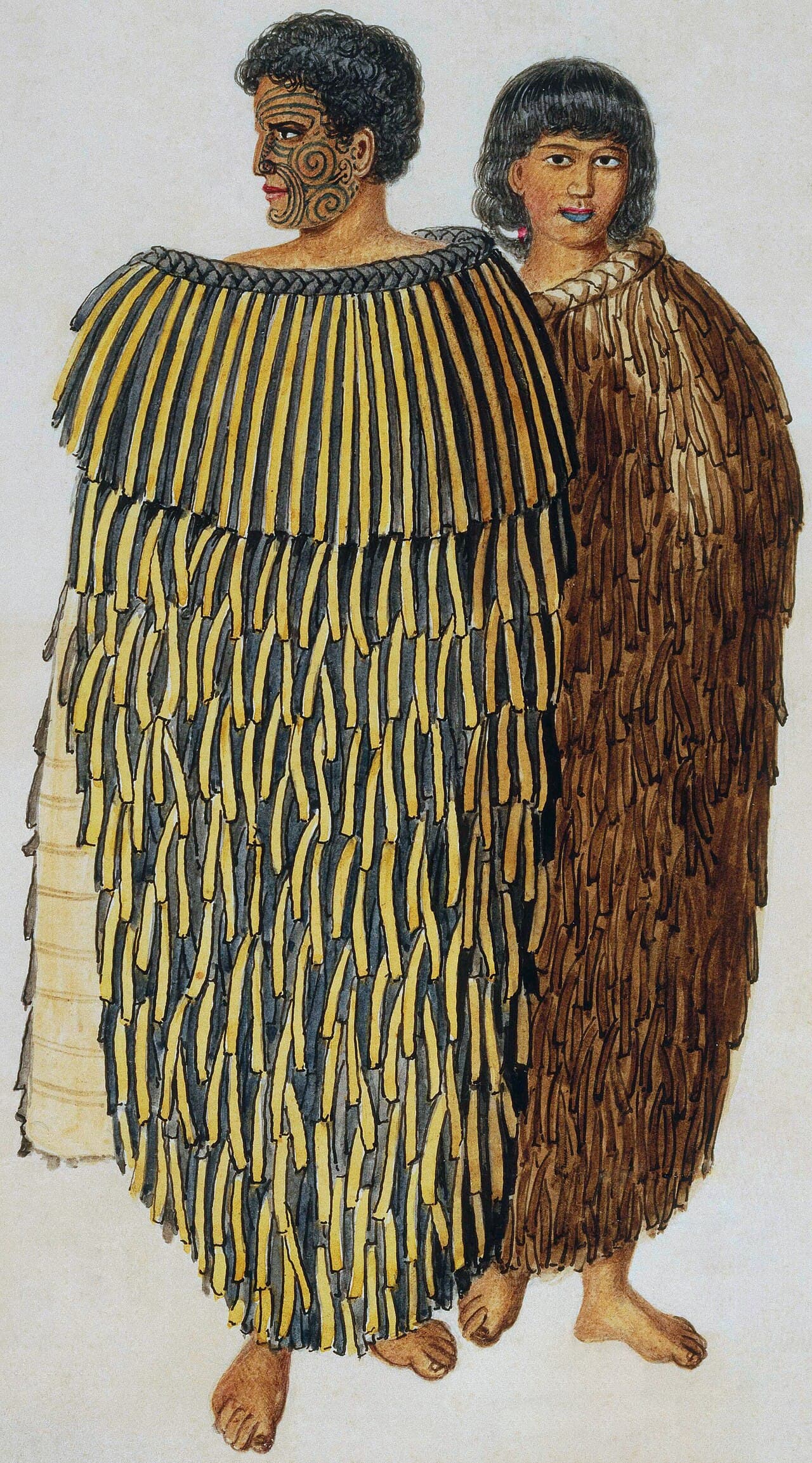
With heartbreak. In 1896, the Menalamba, the 'red lambas', rose against the occupation — and their anger also struck what I had supported: the missions, the converts, foreign influence. See the paradox of a queen: I had built a Christian court, and now the fiercest revolt against the invader fed on the rejection of that same cross. They defended the razana and the land of the ancestors with a fury I understood but could not embrace. I wished Madagascar could resist as one body. But a kingdom that modernizes always splits in two: those who look to the future and those who cling to the past. France knew how to exploit that crack, which I could not close.
A kingdom that modernizes always splits in two.
—After deposition, exile. How did you endure, far from Madagascar?
By refusing to stop being queen. I was first taken to Réunion, in Saint-Denis, in 1897, in an isolation they hoped would extinguish me. Then here, to Algiers, from 1899. I live modestly, it is true — far from the stone Rova where every room spoke of authority. But when Malagasy compatriots cross the seas to come greet me, these are not the visits of an ordinary exile: they come to pay homage to their sovereign. This greatly embarrasses the French authorities, who would like me to be nothing more than a burdensome pensioner. So I receive. I maintain my rank. As long as my people see me as their queen, annexation will not have taken everything: it will have a land, ports, an empty palace — but not loyalty.
Annexation will have an empty palace, but not loyalty.
—What would you say to those who, a century from now, would want to understand what your destiny was?
I would tell them not to pity me as one pities a defeated woman. If I could imagine being read after my death, I would want this to be remembered: a queen can lose her kingdom without losing her legitimacy. I will probably not see Antananarivo again in my lifetime — I feel that it is here, in Algiers, that I will die. But a land does not forget its sovereigns. Perhaps one day my people will reclaim my remains, have me brought back to the hill, laid to rest in the Rova among my own, near the razana. That would be less my return than an act of justice rendered to Madagascar as a whole. A sovereignty that was torn away can always, one day, be reclaimed. That is what I leave: not a defeat, but a debt.
A queen can lose her kingdom without losing her legitimacy.
This imaginary interview was generated by artificial intelligence from sources documented in Ranavalona III's profile. It dramatises what the figure might have said based on what we know about them, but does not constitute attested historical testimony. For primary sources and factual documentation, refer to the full profile.