Imaginary dialogue between Albert Camus and René Char
by Charactorium · René Char (1907 — 1988) · Literature · 5 min read
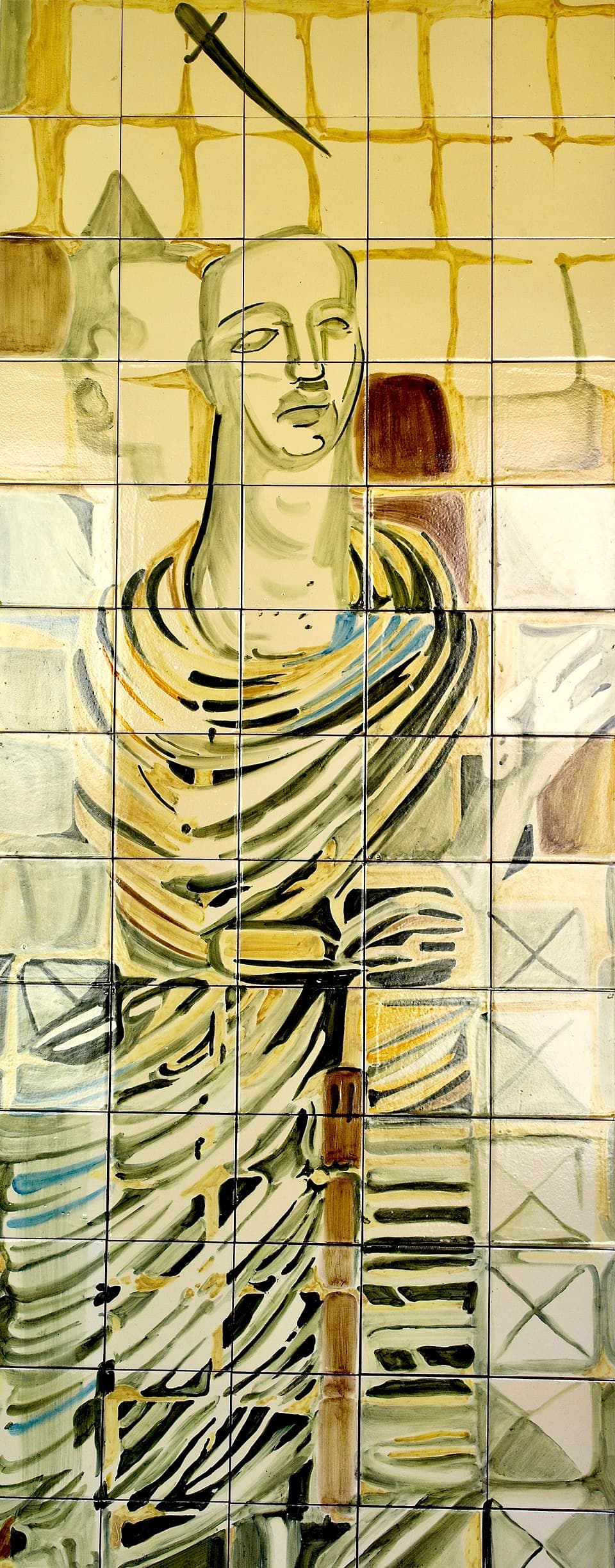
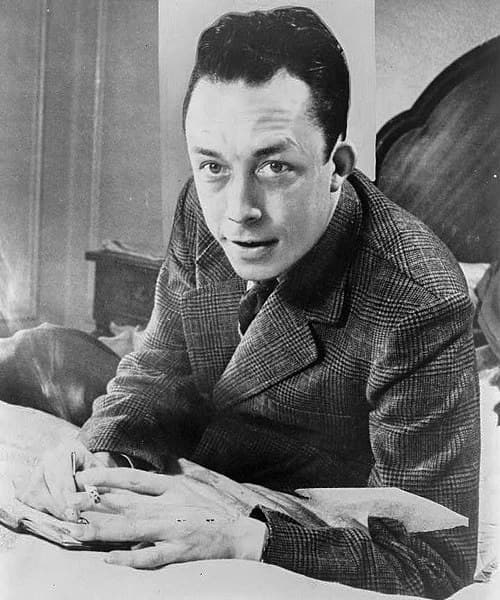
It is in the family home of L'Isle-sur-la-Sorgue, one summer afternoon in 1958, that Albert Camus meets René Char. The Sorgue murmurs behind the half-closed shutters, and on the table lie white pebbles and a few dog-eared books of Heraclitus. The two men have been writing to each other for years about freedom and revolt, and Camus, coming from nearby Lourmarin, is not a journalist: he is a friend seeking, behind the already famous poet, the man of the maquis and the Vaucluse.
—René, at Céreste you once showed me your war notebooks. Under the name Captain Alexandre, what did you learn about the courage of men?
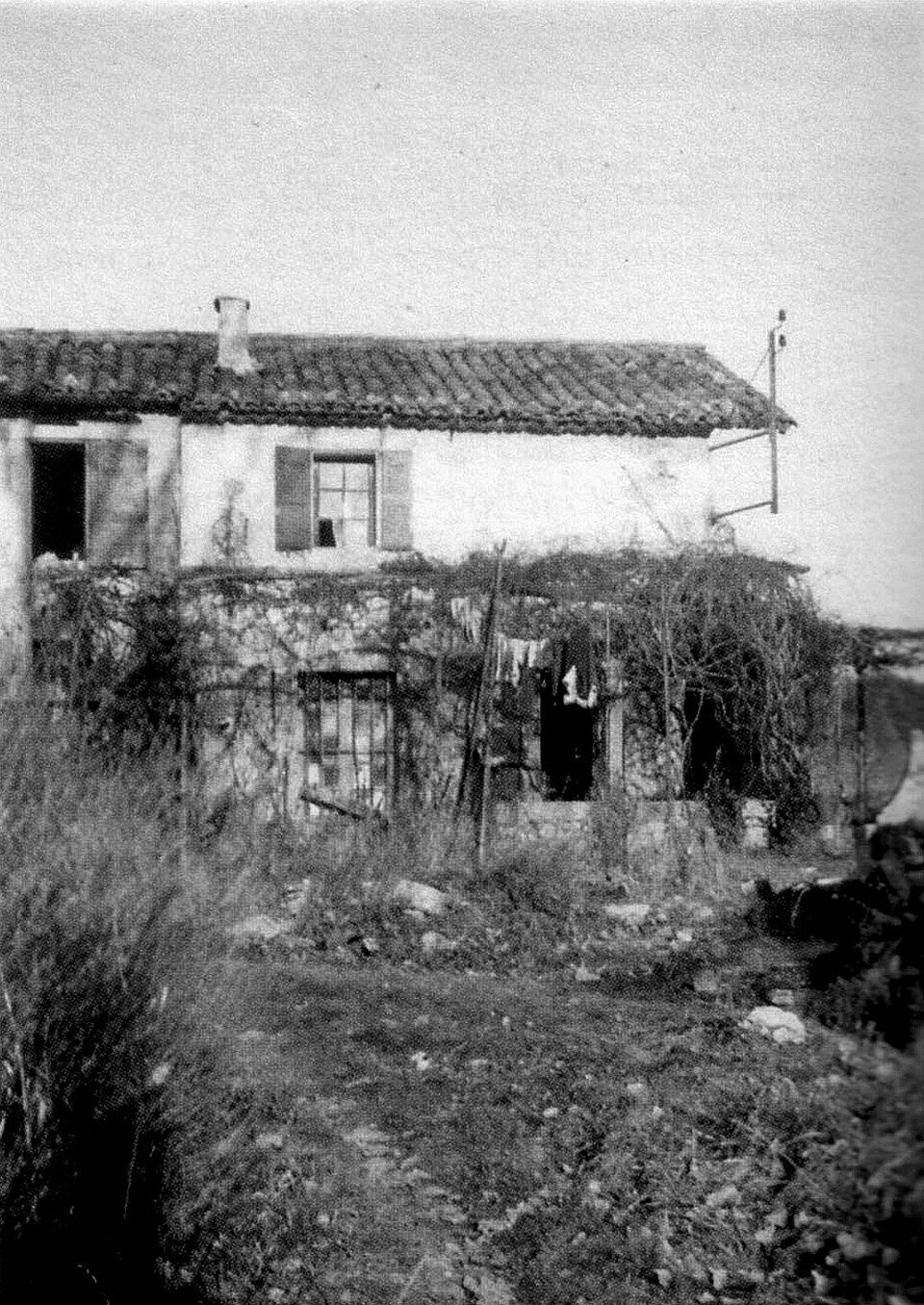
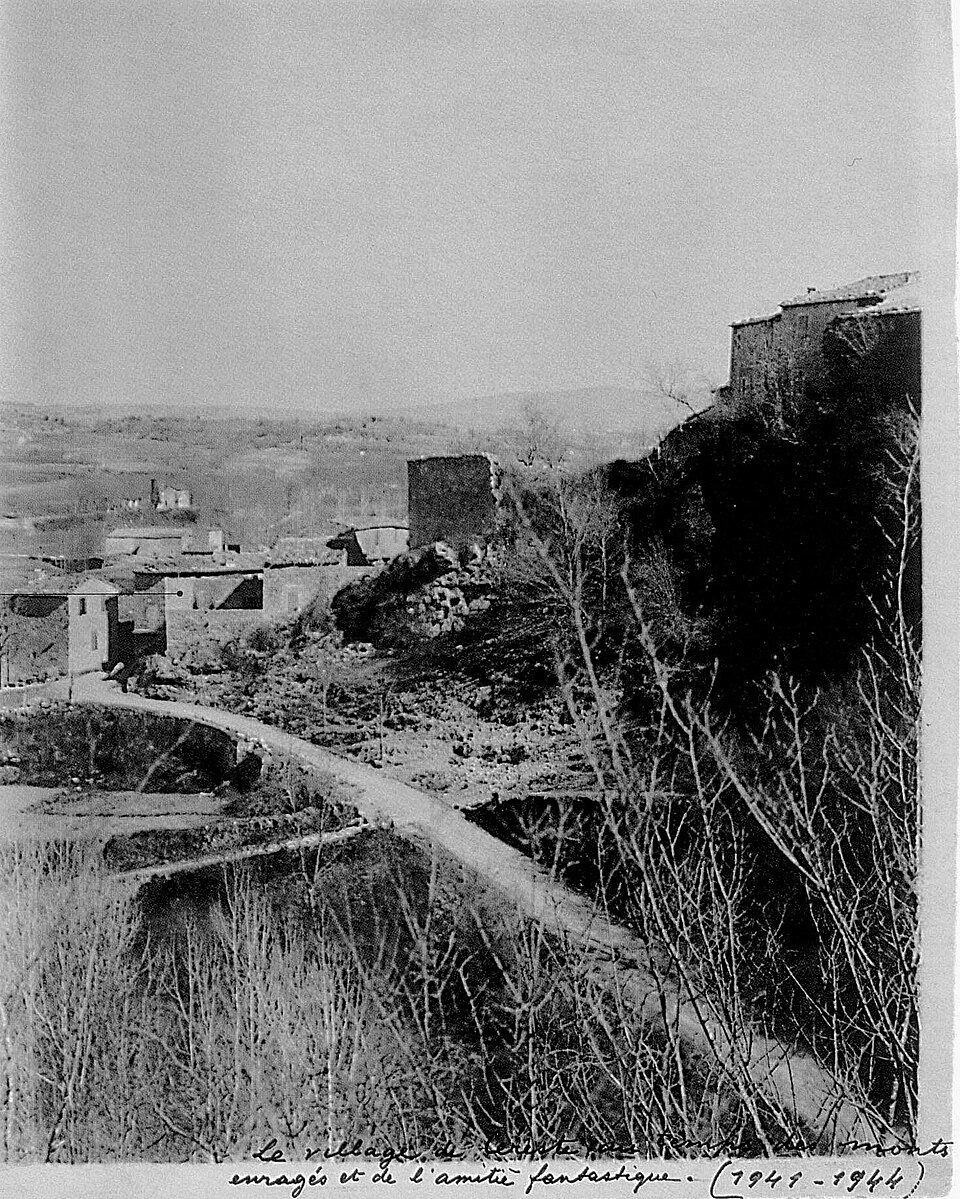
You who know the Vaucluse, Albert, you know that war is not played there, it is lived stone by stone. At Céreste, under that assumed name, I kept watch at night near the transmitter, waiting for Allied parachute drops as one waits for rain. I learned that courage is not a flash, but endurance: to hold on, to protect a hunted man, not to betray the silence. I wrote in the evening, in small notebooks that I hid — these are the Feuillets d'Hypnos. Lucidity, you see, is the wound closest to the sun. I never wanted to make them a tale of glory; these pages were born from fear overcome, not from pride.
Courage is not a flash, but endurance: to hold on, not to betray the silence.
—When you coordinated those arms drops in the Basses-Alpes, lives depended on a signal, a word. How did you bear such a weight?
You don't bear it, Albert: you marry it, or you collapse. Each parachute drop was an equation of flesh — a badly chosen field, a lamp lit too early, and men would die by my fault. The radio linked our maquis to London, and I learned to speak little, to decide fast, to erase my tracks. Clandestinity teaches a harsh morality: the leader does not confide, he shelters. I saw local kids, peasants, risk everything without a word. That's where I understood that revolt is not a romantic cry, but a daily task, almost humble. The rest — poetry, posterity — came after, if it came.
—In 1930, very young, you wrote Ralentir travaux with Breton and Éluard. What were you seeking from the Surrealists?
I went up there from Provence like a torrent rushing toward Paris, full of an energy that suffocated me at home. With Breton, I found a fiery brotherhood, the permission to write fast, together, against everything that quibbles. Ralentir travaux, we threw it onto paper in a few days, in three blended voices — it was a feast of the mind. Surrealism freed me from academic taste, it taught me that the image could strike like lightning. But already I felt discomfort: one obeyed slogans, a chapel. Yet I never knew how to pray in line. I took what was alive in that movement, and I left its dogmas behind.
—And yet you broke away. Le Marteau sans maître in 1934, then the return to the Sorgue. Why flee a label that carried you?
Because a label, Albert, is a comfortable shroud. With Le Marteau sans maître, I wanted a voice that owed nothing but to itself. Group quarrels, exclusions, manifestos signed with a knife — all that distanced me from the essential, which lies in the silence of a poem, not in the noise of a coterie. I went back down to the Sorgue, to the pebbles and the garrigue, because my source was there. Provence never demanded allegiance from me; it gave me back to myself. I understood that a poet belongs to his land and his language, never to a school. Freedom, for me, begins with the refusal to be enlisted.
—When I saw you working in the afternoon, you filled notebooks before even touching your typewriter. Where does this slowness come from?
You who caught me at my table, you know that I cross out more than I write. In the morning, I walk along the Sorgue and gather intuitions; in the afternoon, I put them to the test. Each word must withstand the trial, like a pebble rolled a thousand times. I fill notebooks, I wait, I let things cool, and only then do I type a version that is never the last. This slowness is not laziness: it is a demand. A too-easy line always lies a little. I prefer ten weighed words to a hundred tossed words. The poem is not an outpouring, it is a concentration — the silence around it must weigh as much as it does.
I prefer ten weighed words to a hundred tossed words.
—You read Heraclitus as others pray. What do these Presocratics teach you about the short form, about the fragment?
Heraclitus is my oldest companion, Albert, older than you yourself. The Presocratics spoke in bursts, in sentences that stand without demonstration. They taught me that truth is not proven, it is shown, in the time of a lightning flash. Hence my taste for the fragment: a form that says much in little, that leaves its share of meaning to silence. War, moreover, had already imposed this brevity on me — in clandestinity, you don't write long treatises, you jot down quickly, you hide. Heraclitus and the maquis came together in me. The fragment is not a ruin of discourse: it is an island of meaning, connected to others by what is left unsaid.
—Our letters constantly revolve around revolt and freedom. Tell me, René, what fundamentally binds you and me?
What binds us, Albert, is the same intransigence before oppression, and the same distrust of doctrines that claim to justify blood. You come from the sun of Algeria, I from that of the Vaucluse; we both know that the light of the South is a morality as much as a landscape. In our letters, we seek how to resist without becoming executioners ourselves — that is the hardest question of our time. I love you because you refuse to lie in order to be right. Revolt only makes sense if it keeps clean hands. We are not men of systems, you and I: we are men of the morning, whom the night has not defeated.
Revolt only makes sense if it keeps clean hands.
—You often tell me about that German philosopher, Heidegger, whom you dream of welcoming one day in Provence. What do you expect from such a dialogue?
I would like to seat him there, under the plane trees of Le Thor, and confront his thought with our stones. Heidegger questions language and being with a gravity that speaks to me, he who seeks in words their forgotten source — as I seek it, myself, in the poem. I dream of seminars where the philosopher and the poet would walk together, without one dominating the other. Poetry thinks differently than philosophy; it does not conclude, it illuminates. Of course, I forget nothing of what Germany was, and you know what ghosts weigh on that name. But I believe one can extend a hand to a thought without absolving a history. If this dialogue happens, it must take place on my land, on my terms.
—You who distrust institutions, would you ever accept a major official prize, a crown that the Republic would offer you?
Never, Albert, and you know it even before you ask. An official prize is the State placing its hand on the poet's shoulder to say: this one is ours, he is tamed. But authentic poetry lets itself neither be rewarded nor bought; it would instantly lose its reason for being. I have refused many honors, and I will continue. It is not disdain, it is hygiene. The day I accepted a medal, I would owe something to the one who gave it to me, and I owe nothing to anyone except to my language and to my dead from the maquis. Freedom is not for sale. They can take my life; they will not take my word.
Authentic poetry lets itself neither be rewarded nor bought.
—This land of the Vaucluse, these garrigues and plateaus — would you defend it if it were threatened, as you defended men?
Without a second's hesitation. I protected resistance fighters; I would protect these hills with the same fury. This land is not a backdrop, Albert: the Sorgue, the garrigue, the lavender plateaus are the very flesh of my work, and the flesh of those who live here. The day men want to scar these plateaus to plant their machines of death or their ambitions, they will find me in their way. My commitment has never changed nature: it is always the same refusal of oppression, whether it comes from the occupier or from those who sacrifice a country to power. One does not resist once and for all; one resists as long as one breathes. Poetry too is a way of standing guard.
This imaginary interview was generated by artificial intelligence from sources documented in René Char's profile. It dramatises what the figure might have said based on what we know about them, but does not constitute attested historical testimony. For primary sources and factual documentation, refer to the full profile.