Imaginary interview with René Char
by Charactorium · René Char (1907 — 1988) · Literature · 5 min read
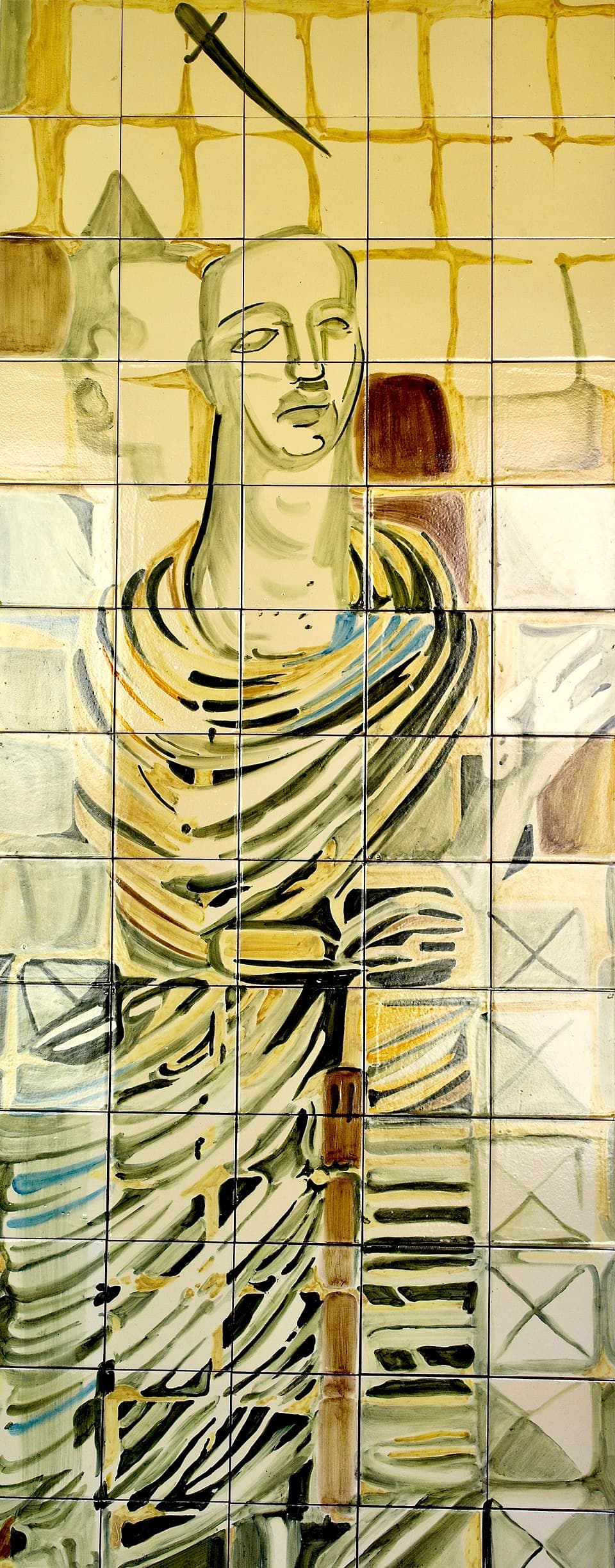
The water of the Sorgue runs beneath the open windows, in L'Isle-sur-la-Sorgue, on this late afternoon in 1975. René Char receives us in a cool room with half-closed shutters, cluttered with books and a few canvases offered by painter friends. His voice is deep, slow, hewn like his fragments; he weighs each word before letting it fall.
—Before the work, there is childhood: what remains of the land where you were born?
I was born in 1907 in L'Isle-sur-la-Sorgue, in a house where you heard the water before you heard the people. The Sorgue never sleeps; it emerges from the earth already full-grown at Fontaine-de-Vaucluse, and its white pebbles roll in my memory as in its bed. As a child, I picked up these smooth stones, I weighed them, I believed they held a mineral secret. Later I understood: a poem is shaped like a pebble, by patient friction, until it fits in the palm. Everything I have written goes back to this river and the light that strikes the garrigue above the village, the thyme and rosemary scorched white.
—How did you enter the circle of the Surrealists?
In 1929 I went up to Paris, I was twenty-two years old and had Arsenal under my arm, my first collection. Breton and Éluard opened their door to me as one adopts a fiery young dog. The following year, we locked ourselves in all three to write Ralentir travaux in a few days, with three hands, in a joyful fever. It was a game and serious at the same time: we wanted to uncage words, to make them clash against each other to see the spark fly. Surrealism taught me the freedom of the image; it never taught me obedience, and that is precisely where the trouble began.
—Why did you distance yourself from that movement as early as the mid-1930s?
Because a poet does not sign eternal manifestos. As early as 1934, with Le Marteau sans maître, I felt my voice pulling south, toward stone, far from Parisian cafés and sectarian excommunications. The movement was becoming a church, with its dogmas and its trials; but I have never tolerated being told how to breathe. I came back down to Provence to find the Sorgue and silence. Much later, the composer Pierre Boulez drew music from this collection — proof that a liberated text continues to live long after its author has slammed the door on schools.
—What would you say about the man you became under the name Captain Alexandre?
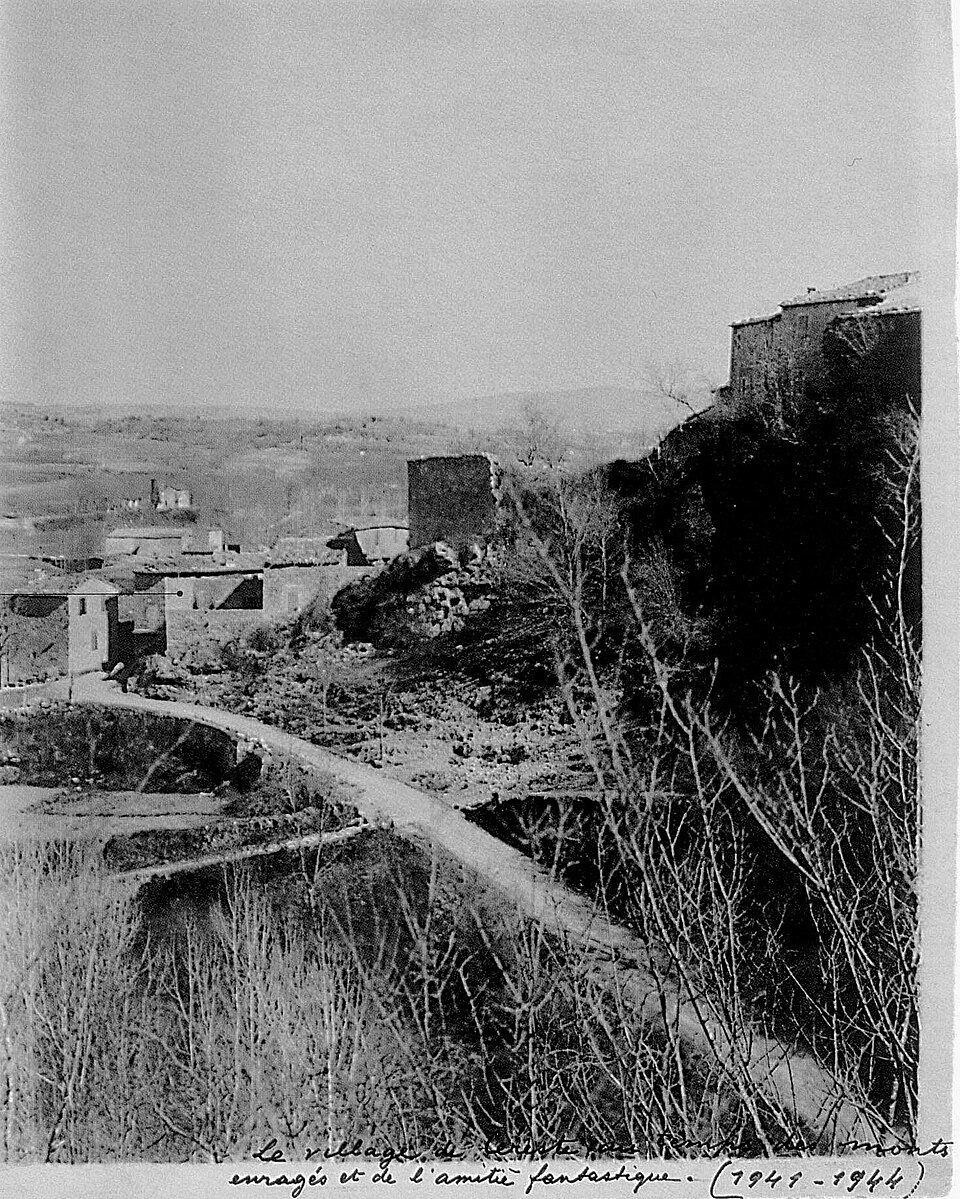
In 1942, I put away the poet and took up a rifle. In Céreste, in the Basses-Alpes, I commanded a maquis under the name Captain Alexandre — a pseudonym that smelled of gunpowder, not ink. Leading men in the underground is learning the exact weight of a word: a poorly weighed order, and someone dies at dawn. I no longer recited, I watched. At night, in a sheepfold, I listened to the wind coming down from the plateau and wondered which of us would see the morning. Strangely, I never thought so much about poetry as with weapons in hand.
I no longer recited, I watched.
—Do you remember the notebooks you kept during those years of hiding?
Small notebooks that I slipped into my jacket, against my skin, and would have burned rather than let fall into enemy hands. I threw fragments into them, in the evening, by the light of a shaded lamp: a thought, an anger, the face of a shot comrade. They became the Feuillets d'Hypnos, published in 1946. I wrote there that “lucidity is the wound closest to the sun” — a phrase born from a lookout's insomnia, not from a library armchair. The fragment was not an aesthete's choice: it was the only form that fit in a pocket and in a life that could be lost at daybreak.
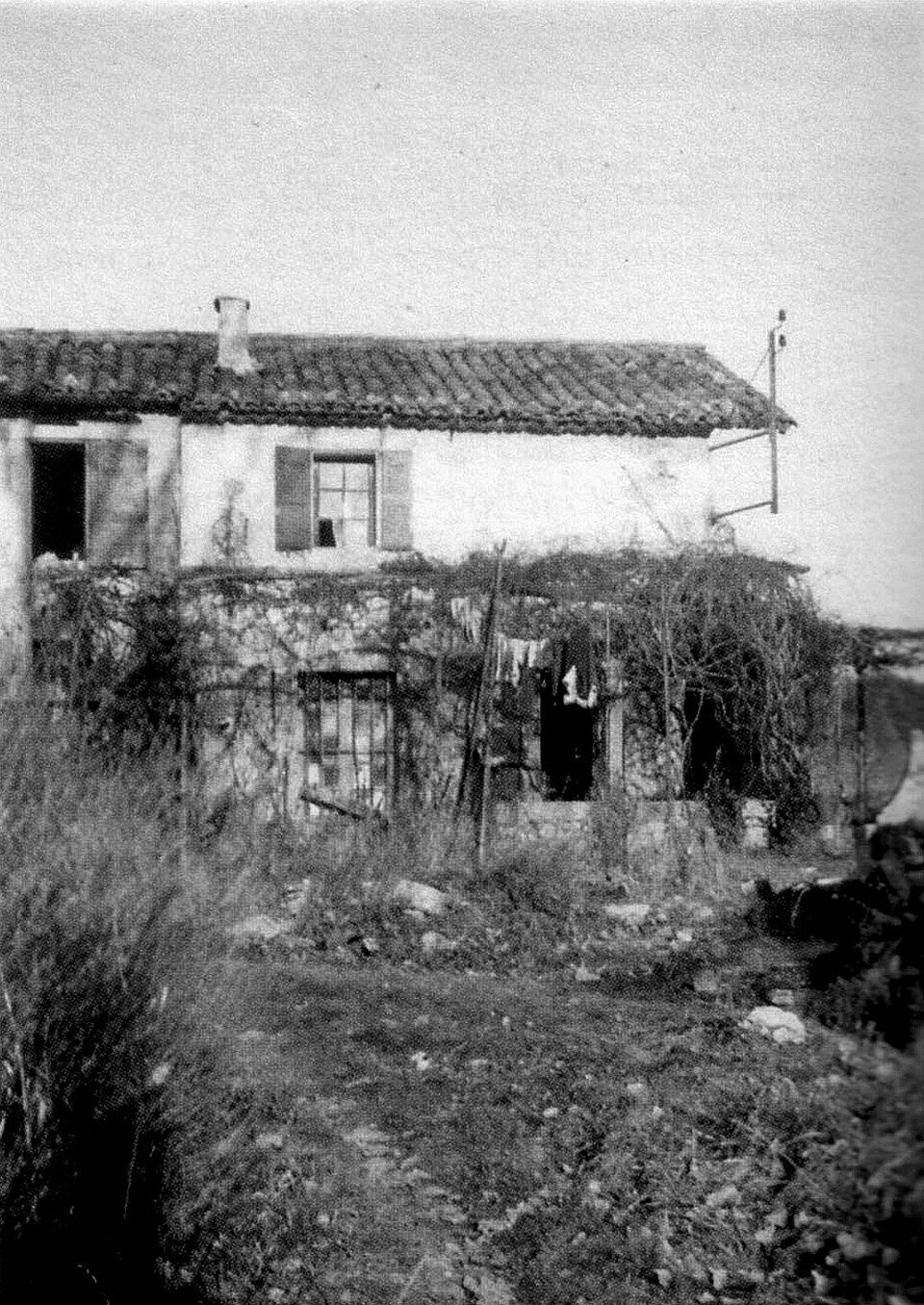
—How did coordination with the Allies work from your mountains?
Everything relied on a hidden radio transceiver and on coded phrases that Radio London broadcast in the evening — sequences of absurd words where the fate of a night was lodged. When the message came, we went up to the clearings to wait for the parachute drops: containers of weapons descended under the moon, suspended from white silks, and we had to dig them up, distribute them, erase the traces before dawn. Imagine a poet busy counting machine guns in the dew! I learned there that a misunderstood syllable sends a man into the ravine. This economy of language, this terrible respect for the right word, I kept all my life.
—Where does your fidelity to the fragment, to the short form, come from?
From Heraclitus, my old companion from Ephesus, that Presocratic who spoke the universe in fragments rather than systems. In the evening, after writing, I reread those Greeks before Socrates; their philosophy books rarely left my table. Heraclitus taught me that truth does not unfold in river-like discourses: it strikes, it burns, then it falls silent. A fragment says more than a treatise because it leaves the reader the silence to breathe. I distrust systems like a prison with gilded bars; I preferred the archipelago to the empire, islands of meaning connected by the sea of the unsaid.
I preferred the archipelago to the empire.
—What were you seeking in your meetings with the philosopher Martin Heidegger?
In Le Thor, in 1966 and then in 1968, I gathered around me thinkers and Martin Heidegger himself, in the Provençal light, for seminars where poetry and thought looked each other in the face. We walked among the olive trees, we spoke of speech, of being, of what it means to say. I did not follow the philosopher as a disciple — a poet has no master thinker — but I loved this friction of two different fires. Poetry does not illustrate philosophy and does not obey it; they dig the same well from two opposite slopes. From those days, I keep the memory of a demanding friendship, made of long silences.
—In 1966, you refused the Grand Prix National de la Poésie. What held you back?
The idea that one could pin a medal on freedom turns my stomach. Poetry is not a racehorse; it does not run for a ribbon. By refusing this Grand Prix in 1966, I was not trying to be proud — I wanted to protect something fragile: the independence of a speech that, if it accepts the honors of institutions, soon begins to resemble them. An authentic poem does not let itself be tamed by a jury. I have always thought one cannot serve two masters, the muse and the ministry. The true reward of a poem is that it continues to stand without anyone to applaud it.
—Your commitment did not stop with the war: we saw you fight the installation of missiles on the Plateau d'Albion.
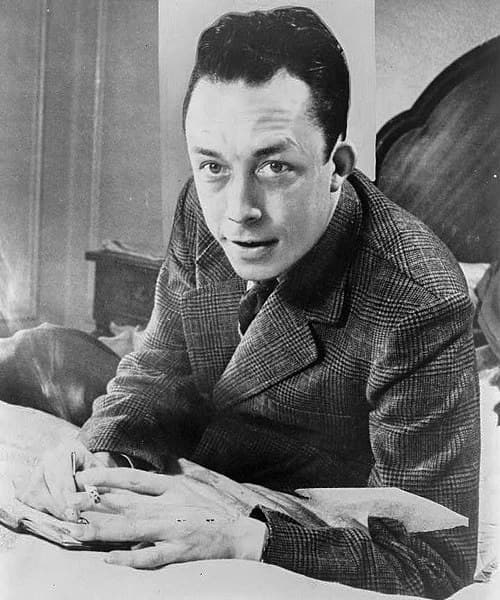
In 1974, when they wanted to bury nuclear missiles under the Plateau d'Albion, a stone's throw from my garrigues, I took up the pen as one takes up arms again. That my country of stones and thyme should become a silo for the apocalypse, that I could not accept. My friend Camus, with whom I had spoken so much of revolt and freedom before his death, would have understood me: resisting oppression is not an episode you close, it is a fidelity. You do not put your conscience in the attic once peace returns. Captain Alexandre had fought the occupier; the old man of the Sorgue now defended the earth itself.
—Why did you never want to leave this land of the Sorgue for good?
Because a tree transplanted too often no longer gives shade. I frequented Paris, its painters, my dear Braque, but I always returned to L'Isle-sur-la-Sorgue as one returns to a spring. A poet needs ground under his feet, a light he knows by heart, otherwise his words float without roots. In Les Matinaux, in 1950, I wrote that “we are of the morning, men whom the night has not vanquished” — and that morning has the exact color of dawn on the river. It is here that I was born, it is here that I want to be laid, in this Provençal earth that taught me everything about silence and duration.
A tree transplanted too often no longer gives shade.
This imaginary interview was generated by artificial intelligence from sources documented in René Char's profile. It dramatises what the figure might have said based on what we know about them, but does not constitute attested historical testimony. For primary sources and factual documentation, refer to the full profile.