Imaginary interview with Rita Levi-Montalcini
by Charactorium · Rita Levi-Montalcini (1909 — 2012) · Sciences · 5 min read
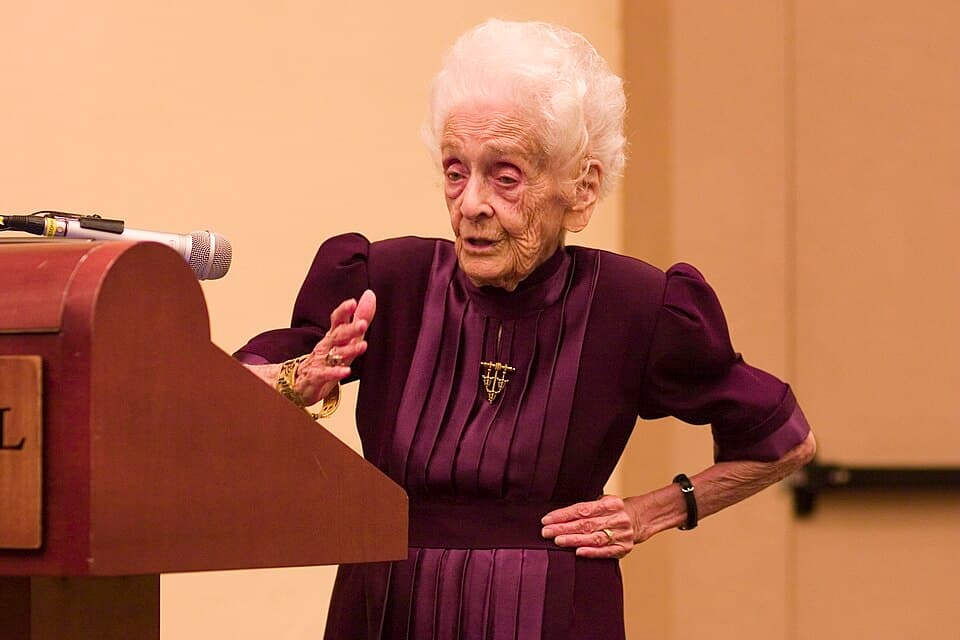
Rome, Parioli district, a bright apartment cluttered with scientific journals and a few canvases signed by her sister Paola. At over a hundred years old, Rita Levi-Montalcini's gaze remains that of a woman who never stopped scrutinizing life. She receives us one spring afternoon, upright in her dark suit, and agrees to trace the thread of a life lived against the current of her century.
—How did you react in the fall of 1938 when the racial laws expelled you from the university?
I remember the radio in Turin and Mussolini's voice promulgating the leggi razziali. Nell'autunno del 1938, mentre ascoltavo alla radio il discorso di Mussolini che promulgava le leggi razziali, non provai terrore, ma una fredda determinazione: avrei continuato a fare ricerca, in qualunque modo. A cold determination, yes, rather than fear. I was banned from the hospital, the faculty, the title of doctor because I was Jewish. So I made the simplest calculation in the world: if they took away my laboratory, I would build one. In my bedroom. A few eggs, a microscope, dissection instruments — that was enough to keep questioning the chicken embryo. Science didn't need their permission.
If they took away my laboratory, I would build one. In my bedroom.
—What exactly were you looking for in that improvised laboratory between your bed and nightstand?
I was trying to understand how nerve fibers form, how they find their way in a developing organism. My model fit in the palm of my hand: embryonated chicken eggs, which I obtained as best I could, sometimes on the black market, claiming they were to feed my children — I had none. Under the microscope, I dissected the tiny ganglia of the embryo with a sharp scalpel, at three or four days, when everything is still just promise. My sister thought it was crazy that I spent my days bent over unborn chicks while bombs threatened. But that is precisely what kept me going: turning a nightstand into a window on the development of life.
—Do you remember the day you had to flee Turin?
In 1943, Allied bombing made Turin unlivable, and the German occupation made every Jew a target. We left for Florence, my family and I, under false names — I was no longer Rita Levi-Montalcini but one refugee among others, forged papers, a Piedmontese accent I had to suppress. I packed the essentials: not jewelry, but my microscope and my embryos, packed in a suitcase like a treasure incomprehensible to others. At the Liberation, in 1945, I traded the research scalpel for the doctor's stethoscope, treating refugees struck by typhus in overcrowded camps. Science would wait; the living could not.
I packed the essentials: not jewelry, but my microscope and my embryos.
—How do you do science when you are hunted and everything can collapse overnight?
You learn to reduce research to its hardest core. No big means, no team, no freshly received journals — only a question, an instrument, and the discipline to record every observation in a laboratory notebook, even when you don't know if you will be alive the next day to read it again. Those notebooks kept in hiding, in Turin and then Florence, are perhaps what I am most proud of: proof that a regime can ban you from the university, steal your name, but not your way of thinking. I understood then that scientific clandestinity was not a shameful parenthesis but a form of resistance — silent, stubborn, at the level of an embryo.
—Tell us about that night in 1952 in Rio de Janeiro when everything changed.
I had been invited to the Instituto de Biofísica in Rio de Janeiro, to work with Hertha Meyer, who mastered the delicate art of tissue culture. I had brought, in my suitcase, two mice carrying tumors. By culturing a ganglion next to a fragment of that tumor, I saw what I did not expect. I looked at the tumor and suddenly the most beautiful sight confronted my eyes: a dense halo of nerve fibers around the tumor. A dense halo of nerve fibers, radiating like a crown around the cancerous mass. The tumor released something that called the nerves to grow. That night, half-tropical, I knew I had found an unknown substance — what we would name nerve growth factor.
A dense halo of nerve fibers, radiating like a crown around the cancerous mass.
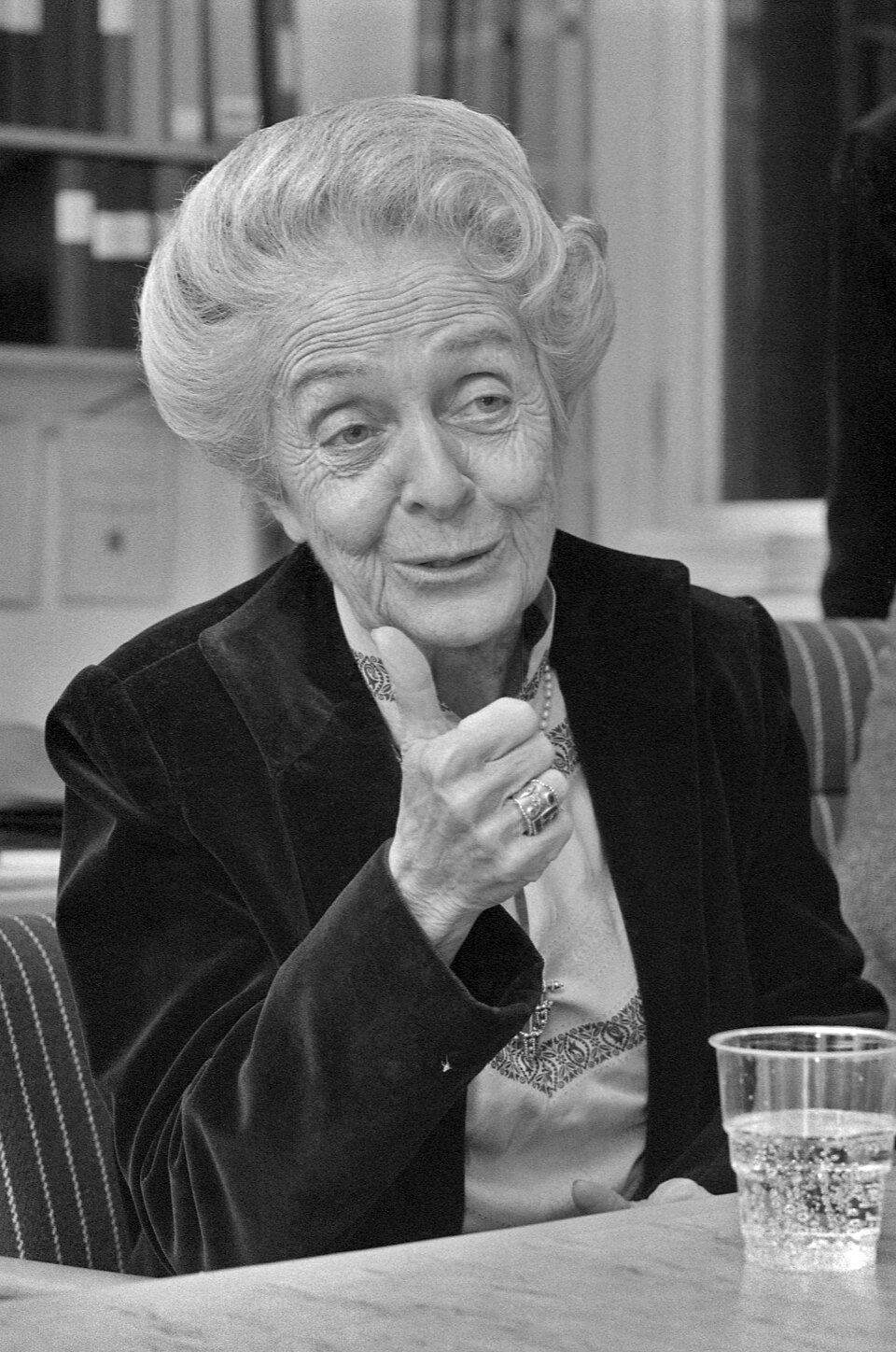
—What did this discovery, NGF, change in our understanding of the brain?
The nerve growth factor overturned a certainty: we believed the neuron was passive, docilely waiting for growth to be dictated. Yet there is a protein that nourishes it, guides it, decides whether it will live or die. With Stanley Cohen, at Washington University in St. Louis, we isolated that signal and published our results as early as 1954, in a paper I never imagined would be cited so many times. Understanding how a neuron survives opened a door to diseases where it dies — those degenerations that slowly erase memory and movement. I did not cure those ills. But I showed where to look for the lock.
—You spent your life bent over the infinitely small. What does one actually see in the eye of a microscope?
You see the invisible become law. A ganglion from a chicken embryo is, to the naked eye, just a gray dot; under the lens, it is an architecture that unfolds, fibers that spring out, grope, choose. I devoted my afternoons to that: dissection with a scalpel, placing in culture in flasks — that technique Hertha Meyer taught me in Rio — then observation, patient, almost meditative. Experimental embryology requires steady hands and a gaze that never tires. My medical training gave me dexterity; the rest is supplied by curiosity. Dissecting life is not profaning it: it is asking it, respectfully, how it goes about it.
Dissecting life is not profaning it: it is asking it, respectfully, how it goes about it.
—What was an ordinary day in your laboratory like?
I got up before seven, a strong coffee, a slice of toast, the latest publications skimmed standing up, and I arrived at the lab by eight, the first one. In the morning, I prepared experiments and examined the previous day's tissue cultures. The afternoon belonged to dissections: hours bent over the embryo, isolating ganglia smaller than a pinhead, then recording each result. I supervised my students with rigor, but without harshness — rigor does not forbid kindness. In the evening, at home, I wrote letters to my European collaborators and wrote to my sister Paola. I went to bed late, my mind in motion, sometimes scribbling an idea at the bedside. Science does not turn off with the bedside lamp.
—The Nobel Prize came to you at seventy-seven. How did you receive such late recognition?
In 1986, I was told I would share the Nobel Prize in Physiology or Medicine with Stanley Cohen. Seventy-seven: the age when one assumes a career ends. Mine was just changing form. In Stockholm, I made a point of naming Viktor Hamburger, the neurobiologist who had invited me to St. Louis in 1947, when I was an Italian refugee with nothing. Without that outstretched hand, NGF would never have appeared under my microscope. The gold medal I was given did not reward a single woman, but a whole obstinacy — that of a life spent refusing to let circumstances decide for me.
—At over ninety, a senator for life, you still sat in parliament. Where does this energy that seems to ignore age come from?
In 2001, President Ciampi appointed me senator for life, and I took it seriously: I went to vote, I participated in debates, I had no intention of being just an ornament. The following year, I founded the EBRI in Rome, so that brain research would not stop with my own end. I am constantly asked the secret of this longevity of the mind. There is none. The body ages, that's understood; but the brain only withers if you stop using it. I have always said that mine worked better at ninety-seven than at twenty — not out of vanity, but because curiosity, maintained every day, is the only remedy I know against extinction.
The body ages, that's understood; but the brain only withers if you stop using it.
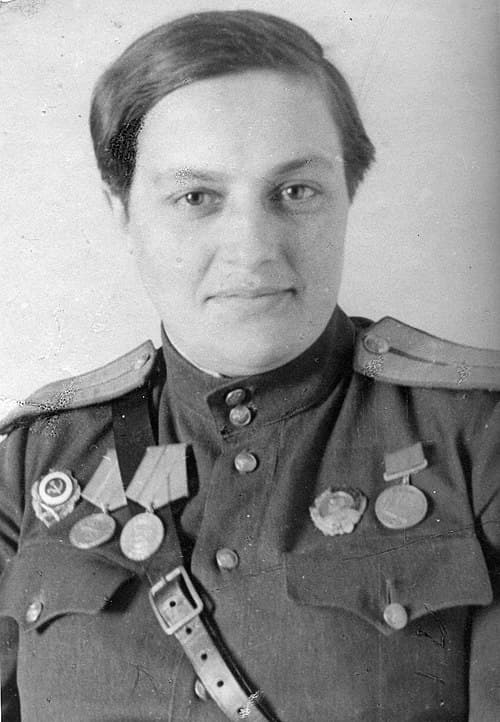
This imaginary interview was generated by artificial intelligence from sources documented in Rita Levi-Montalcini's profile. It dramatises what the figure might have said based on what we know about them, but does not constitute attested historical testimony. For primary sources and factual documentation, refer to the full profile.