Imaginary dialogue between Stanley Cohen and Rita Levi-Montalcini
by Charactorium · Rita Levi-Montalcini (1909 — 2012) · Sciences · 6 min read
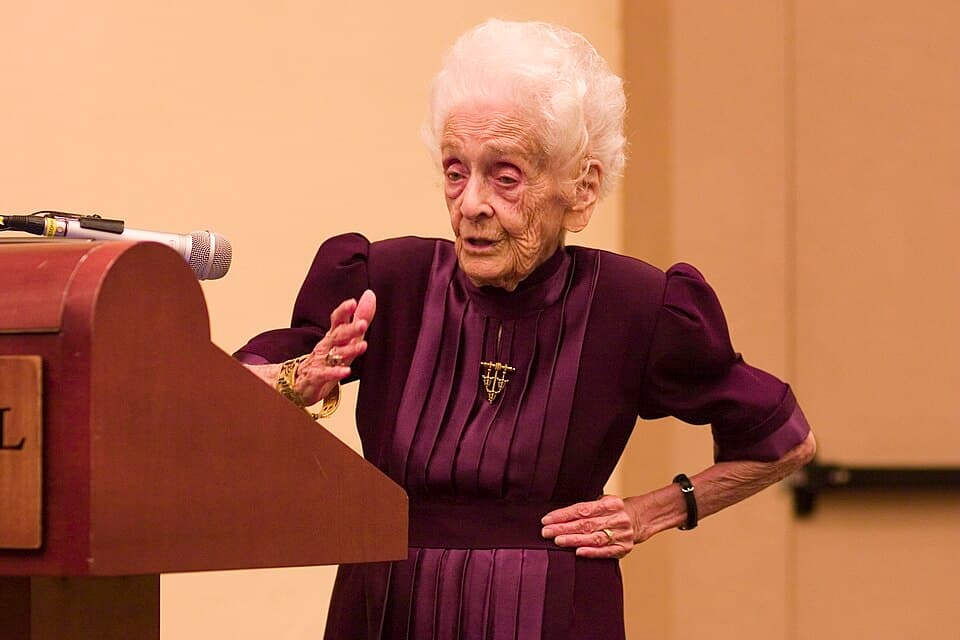
It is in the cluttered office of the EBRI, in Rome, on a late afternoon in the autumn of 2008, that Stanley Cohen meets Rita Levi-Montalcini again. The slanting light falls on piles of reprints, and you can still make out, on a shelf, an old microscope. The two researchers have known each other since Saint-Louis, since that shared lab bench where chemistry and biology supported each other. Cohen has come, not as a visitor, but as an accomplice to an adventure that only they have experienced from the inside.
—Rita, long before our lab bench in Saint-Louis, you were dissecting embryos in your room in Turin. How do you work when the law forbids you even to exist as a scholar?
You know, Stanley, in 1938 the leggi razziali expelled me from the university because I was Jewish. One might have thought that everything stopped there. But I turned my bedroom into a laboratory: a microscope, a few instruments, and chicken eggs that I got on the black market, pretending they were for my children — though I had none! I dissected the embryos on my nightstand, studying how nerve fibers form. Fascism wanted to humiliate me; it made me free, because I no longer depended on any institution. It was there, in hiding, that I learned never to let an ideology decide what my mind had the right to think.
Fascism wanted to humiliate me; it made me free, because I no longer depended on any institution.
—Then came 1943, the bombings. You had to abandon everything. What do you take when you flee Turin under a false identity?
You take the essentials, Stanley: my microscope and my embryos, in a suitcase. We fled to Florence, my family and I, under false names, and I rebuilt a tiny makeshift laboratory. While the bombs fell, I continued to observe the development of the embryonic nervous system — as if this stubbornness was my way of standing tall. At the Liberation, in 1945, I treated refugees, saw typhus and hunger up close. Believe me, after that, no failed experiment ever seemed like a tragedy to me. War taught me imperfection: you work with what you have, where you are, and you move forward despite everything.
My microscope and my embryos, in a suitcase: you take the essentials.
—It was Viktor Hamburger who brought you to Saint-Louis in 1947. Without that letter of invitation, our paths would never have crossed. What do you really owe him?
It all started with a small article I had published in hiding, which contradicted his own conclusions! Viktor could have taken offense; instead, he invited me to Washington University so we could understand together. That's the man. I was supposed to stay a few months; I stayed for years. It was in his laboratory that I saw the embryonic ganglia react to the tumor, and it was there, Stanley, that you arrived with your chemistry. Hamburger offered me not a position, but trust — he let me follow my intuition wherever it led. A discovery is never the work of a single person; it is born from a chain of generosities. His was the first link in mine.
A discovery is never the work of a single person; it is born from a chain of generosities.
—Let's talk about Rio, in 1952, before I arrived. You are at Hertha Meyer's, in front of the microscope. What do you see that night?
Ah, that night! I had brought two small tumor-bearing mice all the way to Brazil, to take advantage of Hertha Meyer's tissue cultures, a pioneer of the technique. And one evening, placing a ganglion near a fragment of tumor, I saw a dense halo of nerve fibers burst forth, radiating like a sun. I understood instantly that the tumor was releasing a substance that commanded the nerves to grow. It was the most beautiful sight of my entire career. I didn't yet know what that substance was — it would take your chemistry, Stanley, to truly isolate it. But that night, in a laboratory in Rio, the nerve growth factor signaled to me for the first time. I hardly slept.
A dense halo of nerve fibers, radiating like a sun: the most beautiful sight of my entire career.
—Exactly, I arrive when you return. Do you remember our shared lab bench? How did you experience this marriage of your biology and my biochemistry?
How could I forget? You always said, with your humor, that I could smell the factor without touching it, and that you would end up putting it in a bottle. You were right! I saw the effect — that explosion of fibers — you hunted the molecule, gram by gram. It was a dance, Stanley: I brought you a living phenomenon, you gave me back a purified protein. And along the way, you uncovered your own factor, the NGF leading you to the EGF. We made an odd couple, the Italian embryologist and the American biochemist, but it was this friction between two ways of thinking that moved everything forward. Alone, neither you nor I would have succeeded.
I brought you a living phenomenon, you gave me back a purified protein: it was a dance.
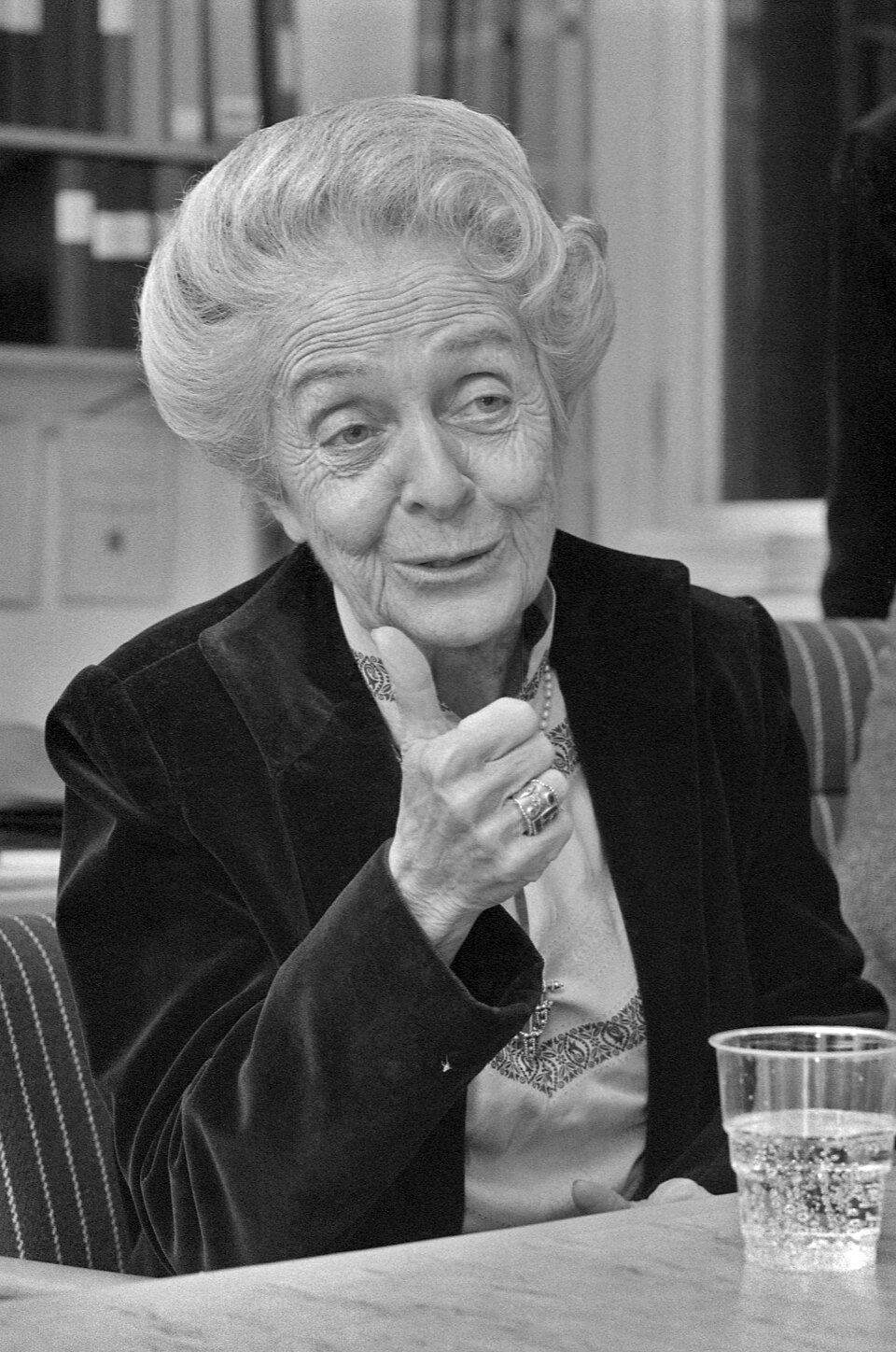
—Thirty years later, 1986, the phone rings from Stockholm. You are 77. How did you feel about sharing this prize with me?
Immense joy, and a form of justice. That the Nobel rewarded together the biologist who had seen and the biochemist who had proved, that spoke exactly the truth of our work. In my speech in Stockholm, I made a point of naming Viktor Hamburger, because without his invitation nothing would have happened — and some felt the committee had unjustly overlooked him. You know, Stanley, at seventy-seven you no longer receive a prize as a personal consecration, but as the recognition of a long chain of outstretched hands. I thought of my room in Turin, the suitcase in Florence, Rio, our lab bench. All that winding path suddenly fit into a gold medal. And I said to myself: this is what imperfection can accomplish when you persevere.
This is what imperfection can accomplish when you persevere.
—Today you sit in the Italian Senate, you direct this institute. What does a day look like for Rita after she has passed ninety?
You'll laugh, Stanley: I get up early, read the publications before coffee, and I'm often the first to arrive here at the EBRI. President Ciampi appointed me senator for life in 2001, and I take this mandate seriously — I go vote, sometimes under jeers, because I believe a stubborn old woman can still serve her country. The rest of the time, I devote to the brain and to young researchers, especially the young girls I help through my foundation, because too many talents are lost for lack of resources. I don't believe in rest. The body ages, fine, but the mind only asks to work if you nourish it.
The body ages, fine, but the mind only asks to work if you nourish it.
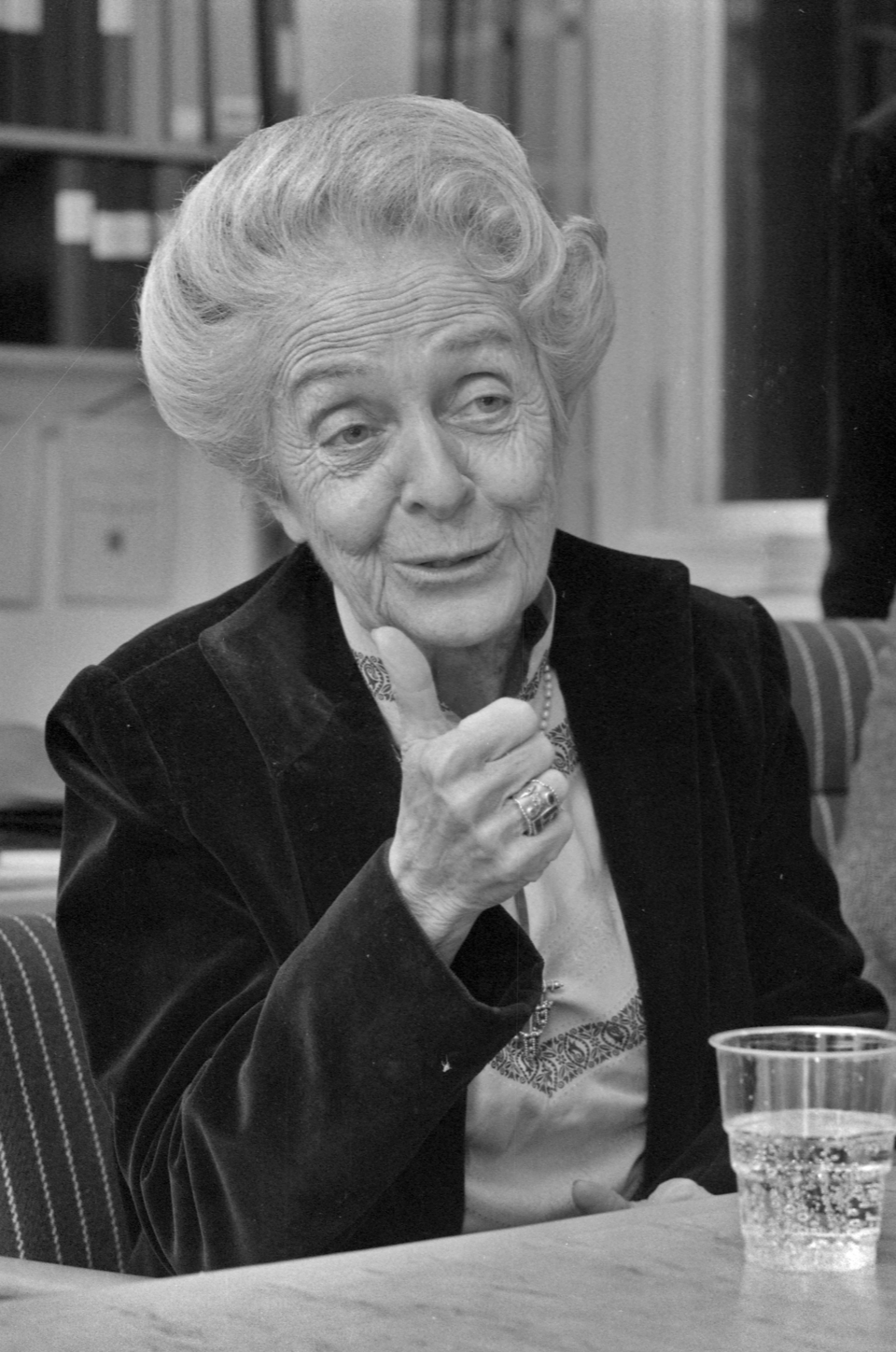
—We are the same age, almost, and have the same stubbornness. What is your secret to keeping, as you say, a brain sharper than ever?
There is no secret, only a hygiene of curiosity. I sleep little, eat little — some fruit, an egg, Italian-style — and I forbid myself mental idleness. The brain is an ungrateful muscle: if you stop using it, it fades faster than the body. I have seen so many people retire and die from the inside! As for me, I set a rule: each decade, a new project, more ambitious than the last. Passion, Stanley, that is the true growth factor — not only for neurons, but for an entire life. I sincerely believe my mind works better today than at twenty, because it has learned never to stop. As long as a question intrigues me, I remain alive.
Passion, that is the true growth factor — not only for neurons, but for an entire life.
—Looking back on your journey, from the racial laws to the Nobel, have you ever felt bitterness toward those who wanted to break you?
Surprisingly, no. I wrote in In Praise of Imperfection that I paradoxically owe something to the regime: without its iniquitous laws, I might have become an ordinary doctor, and I would never have opened that laboratory in my bedroom. Adversity forced me to find my path. Bitterness is a sterile emotion, Stanley, that consumes the energy one should put into work. I preferred to transform humiliation into stubbornness. That does not mean forgiving horror — I saw my people persecuted — but refusing to let others' hatred dictate my inner life. The best rebuttal I could offer to the racial laws was not resentment: it was the discovery of NGF. Science was my sweetest revenge.
Science was my sweetest revenge.
—One last question, Rita. If you had to pass on a single lesson from our shared adventure to a young researcher today, which would you choose?
I would tell them to trust their intuition as much as their measurements. The day I saw the halo of fibers in Rio, no equation predicted it — it was a look, almost an emotion, that whispered to me that something fundamental was happening. But intuition alone is not enough: then comes rigor, yours, Stanley, the patient chemistry that turns a vision into proof. I would also tell them not to fear imperfection, nor the detours. My career was nothing but a series of obstacles, escapes, and happy accidents, never a straight line. And yet it led somewhere. Let them cultivate their passion, remain humble before the living, and never wait for ideal conditions: you discover as much in a bedroom as in a palace.
You discover as much in a bedroom as in a palace.
This imaginary interview was generated by artificial intelligence from sources documented in Rita Levi-Montalcini's profile. It dramatises what the figure might have said based on what we know about them, but does not constitute attested historical testimony. For primary sources and factual documentation, refer to the full profile.