Imaginary dialogue between Youki Desnos (Youki Foujita) and Robert Desnos
by Charactorium · Robert Desnos (1900 — 1945) · Literature · 6 min read
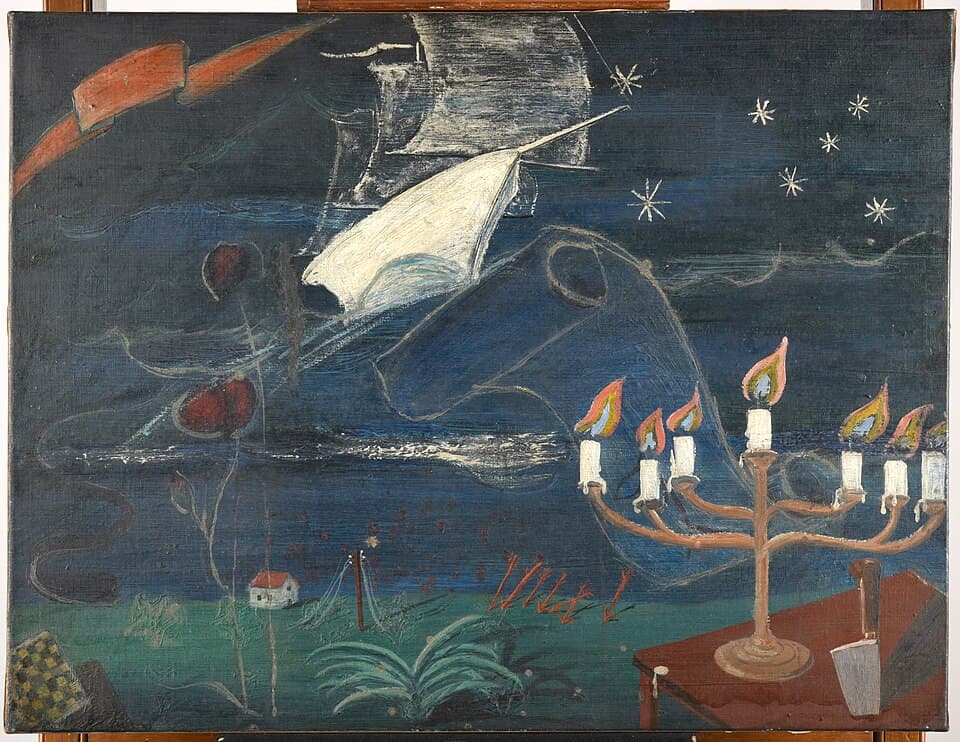
It is in the cluttered apartment of books and manuscripts, near rue Mazarine, that Youki finds Robert one winter evening in 1944. The portable typewriter is still open on the table, next to a cold black coffee and a folded newspaper. They have shared this life for years — the nights of Montparnasse, the poet friends, and now the anxious silence of occupied Paris. Tonight, Youki comes without any journalistic intention: she wants to hear the man she loves talk about what made him, before the night closes in completely.
—Robert, even before I knew you, I was told about those famous sleep sessions at Breton's. How did you fall asleep like that, at will?
Ah, those nights! At the Café Cyrano, Place Blanche, in 1922, I only had to close my eyes and something opened. I slipped into a half-sleep and the words came on their own, through my mouth, through my hand tracing signs on paper that I no longer controlled. Breton looked at me as if I were a phenomenon, almost a medium. It wasn't a carnival trick, you know: it was automatic writing pushed to its extreme, the living proof that poetry lives in us deeper than reason. The others wrote; I slept and spoke. I felt as if I were diving into black water and bringing back images that no one had chosen.
The others wrote; I slept and spoke.
—And that strange nickname you had back then, Rrose Sélavy — the one you shared with Duchamp — what did it mean to you?
Rrose Sélavy was a mask and a game, a character that Marcel Duchamp had invented and that I made my own in my own way. Under this name, I let out formulas that turned themselves inside out like gloves, mirror-phrases. While asleep, I dictated aphorisms signed by her, as if another voice were using my mouth. It amused my comrades a lot, but behind the amusement there was something serious: I sought to erase myself to let language speak on its own. Rrose Sélavy is the freedom to be no one, or to be several — a poet who eludes himself to better surprise words.
Rrose Sélavy is the freedom to be no one, or to be several.
—You constantly play with sounds, homophones. Those puns — "Rrose Sélavy and I dodge the echoes" — are they really more than entertainment?
Much more, believe me! When I make sounds answer each other like echoes in a corridor, I'm not trying to make people laugh — or not only. The pun is a weapon: it derails the official meaning of words, it cracks the language of notaries and policemen. Under the guise of play, it's a way to disobey. If I can make a sentence say the opposite of what it claims, then no word is entirely master over me. It's a gymnastics of freedom. Words are docile animals in appearance; I make them kick. Today especially, in the times we live in, playing with language is refusing to let it be confiscated.
The pun is a weapon: it cracks the language of notaries and policemen.
—In Corps et Biens, that line — "I have dreamed of you so much that you lose your reality" — still troubles me. Who were you dreaming of before me, Robert?
You ask the only question that disarms me, Youki. That line from Corps et Biens, in 1930, I wrote it in a time when love was for me an absence more than a presence — a woman dreamed of to the point of losing sleep, whose face blended with that of the dream. I loved an image, and the image devoured me. Then you came, and the dream took on a body, a voice, a warmth. You see, I long believed that poetry must feed on lack. You taught me that one can also write from happiness, which is much more difficult. That poem, I wrote it before I knew you; but when I reread it, it is you I find in it now.
I loved an image, and the image devoured me.
—You, the poet of the Surrealists, now in front of a radio microphone writing for the general public. Didn't your old comrades resent you for it?
Some pursed their lips, yes! For the purists, radio and advertising were beneath a poet. I saw in them a new instrument, an extension of the voice toward thousands of people who never open a collection. The microphone is a huge mouth. Since the thirties, I've written broadcasts, slogans, poems made for the ear, not the eye. I have never despised the popular audience — it's the audience of my childhood, of the Saint-Merri neighborhood, of the bistros. Poetry does not belong to a chapel. If it can enter a kitchen through the airwaves, between the ad and the news, then it has gained something. I prefer a poem sung by strangers to one admired by ten initiates.
The microphone is a huge mouth.
—And those nursery rhymes, your Chantefables — "An ant eighteen meters long with a hat on its head" — why does a poet like you write for children?
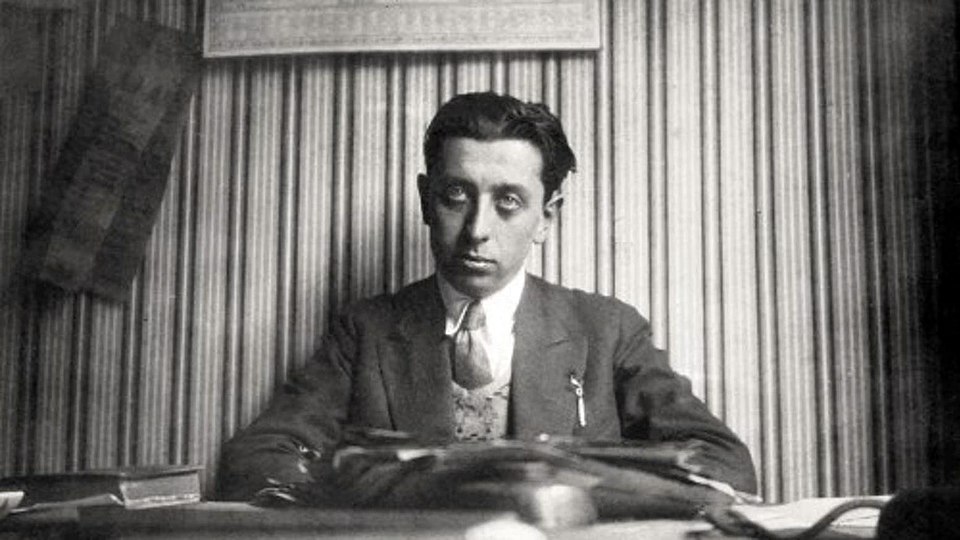
Because children are the best Surrealists in the world! An ant eighteen meters long dragging penguins doesn't shock them for a second — they know 'it doesn't exist,' and that's precisely why they laugh and believe in it at the same time. With the Chantefables, I rediscover the freedom of the sleep sessions, but washed clean, joyful, made to be sung. They are poem-nursery rhymes, language that dances. I like to imagine that one day schoolchildren will repeat them without even knowing my name, in a schoolyard. What greater survival for a poet? Great scholars will forget me; a laughing ant, perhaps, will keep me alive in the mouths of little ones.
Children are the best Surrealists in the world.
—That machine, on the table, is no longer just for your poems. I see you writing at night, sheets that you hide. What are you doing, Robert?
You've guessed it for a long time, and you said nothing to protect me. Yes, this typewriter is also used for leaflets, for texts that I sign with false names and that circulate under the coat. By day I am a journalist; by night, something else. I wrote This Heart That Hated War — I, who only beat to the rhythm of the tides and carefree love, now my blood rears up and goes to battle. I do not like war, you know that better than anyone. But there are silences that are cowardice. Writing a poem of Resistance or typing a leaflet is the same gesture, the same ink, the same refusal. Poetry, in these times, must go down into the street.
There are silences that are cowardice.
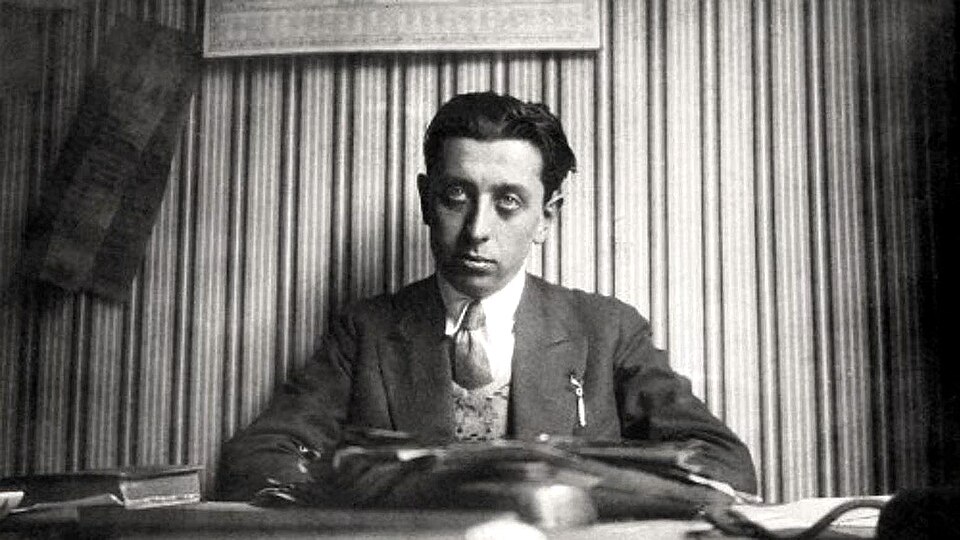
—I am afraid, Robert. You take crazy risks, the Gestapo arrests our friends one after another. Have you measured what you are gambling?
I have measured it, Youki, and that is why I continue. If I stopped out of fear, they would already have won inside me. Of course I know the danger: denunciations, knocks at dawn, arrests. I am not a hero, I am a man who loves morning coffee, your laugh, the bistros of Montparnasse. But precisely — all these simple things, they want to steal them from us by stealing our freedom to speak. So I type my sheets. If they must come for me, let them come; I prefer that to keeping silent and no longer being able to look you in the eye. Just keep that calm you have: it is what keeps me standing.
If I stopped out of fear, they would already have won inside me.
—You always keep my photograph on you. If they ever took you away, far away, to those camps people whisper about, what would you carry of us?
Your photograph, precisely — it never leaves me, I slip it against my chest like a talisman. If I were torn from you and sent very far, into the cold, into hunger, it is this face I would look at so as not to become a beast. They can take from a man his house, his name, his clothes, his food. They cannot take what he loves if he refuses to let it go. I already recite my poems to myself in a low voice to learn them by heart — for where we would go, there would be neither paper nor machine, only memory. And a poet's memory, Youki, is still a homeland. I would carry you there with me, intact.
A poet's memory is still a homeland.
—And if, there, they wanted to reduce you to a number, strip you even of your name — what would remain of you, my love?
The essential would remain, and they could not reach it. Strip me of everything, give me a prisoner number instead of a name, I would still know who I am: a poet. That is the only thing I did not receive from a civil registry and that no guard can erase with a stroke. As long as I can string two images together in my head, make a tide rhyme with a heartbeat, I will remain a free man inside. I even believe I would recite verses to my companions, in a low voice, to keep them standing as you keep me standing. They can starve a body; they cannot starve a poem learned by heart. That is what would remain of me: your photograph, and verses that no one can confiscate.
They can starve a body; they cannot starve a poem learned by heart.
This imaginary interview was generated by artificial intelligence from sources documented in Robert Desnos's profile. It dramatises what the figure might have said based on what we know about them, but does not constitute attested historical testimony. For primary sources and factual documentation, refer to the full profile.