Kids interview Robert Desnos
by Charactorium · Robert Desnos (1900 — 1945) · Literature · 5 min read
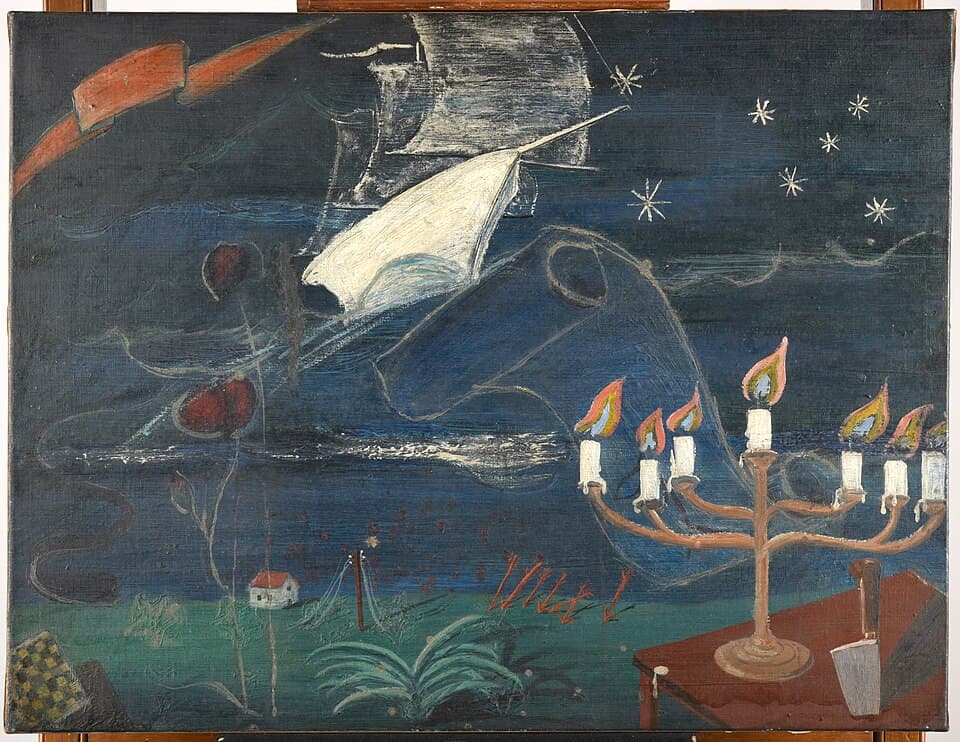
Two young visitors, barely twelve years old, came with their school trip to meet Robert Desnos. They set their notebooks on a café table and, shyly, began asking their questions. The poet, touched, smiled at them.
—Is it true you could fall asleep whenever you wanted to write poems?
You know, my child, that's the strangest story of my youth. Around 1922, I would join my friends at the Café Cyrano, place Blanche. We'd sit around a table, and I would close my eyes. In seconds, I'd drift into a kind of half-sleep. There, words would rise up on their own, and I would speak them aloud. My comrades were astonished! André Breton wrote everything down. Imagine a boy dreaming with his eyes closed and speaking in poems, without thinking. We called it écriture automatique: writing without control, letting the inner self speak.
I would close my eyes, and the words would rise up on their own.
—Weren't you afraid of saying nonsense while sleeping like that?
A little, yes. But you know, it was exhilarating! My friends had given me a funny nickname: Rrose Sélavy. It's a play on sounds—say it fast and you'll hear a hidden phrase. Breton wrote that I spoke surrealist "at will." Surrealism was our great adventure: exploring dreams and imagination, against overly tame logic. The danger was that I lost control of my hands tracing signs. But what joy to discover what sleeps inside us! Imagine a door you never open, and behind it, a treasure of words.
Behind the door of sleep lies a treasure of words.
—Why did you love playing with words that sound alike?
Ah, that was my passion! I invented sentences where sounds echoed each other like in a mirror. Listen: "Rrose Sélavy and I dodge the echoes." You hear how the sounds bounce? That's called a calembour: a play on words that sound alike but mean something else. For many, it's just for fun. For me, it was serious! By playing with language, I showed it was free, that you could twist it, turn it inside out. In my collection Corps et Biens from 1930, I pushed this game very far.
Playing with words proves that language is free.
—Can a poem be useful, or is it just pretty?
What a good question, my child! A poem is never "just pretty." When I played with sounds, I was having fun, yes, but I was also wielding a weapon. A gentle weapon made of words. During the war, I wrote poems to give courage, and even secret texts against the enemy. A poem can comfort, make you laugh, or resist. Imagine a little seed: you slip it into someone's head, and it grows, it grows. From my very first book, Deuil pour deuil, in 1924, I was seeking that freedom. Words are stronger than you think.
A word is a seed you slip into people's heads.
—What was a leaflet, and why was it dangerous to write one?
You see, in my time, France was occupied by the German army. We no longer had the right to say what we thought. A tract is a small sheet printed in secret, slipped under doors to tell the truth. I, on my portable typewriter, would type these sheets at night. It was forbidden! If you were caught, you could be arrested, or worse. Imagine writing while trembling, ear strained toward the stairs. But I could not stay silent. My heart, which hated the war, had begun to beat for the fight.
A small sheet printed at night—that was already resistance.
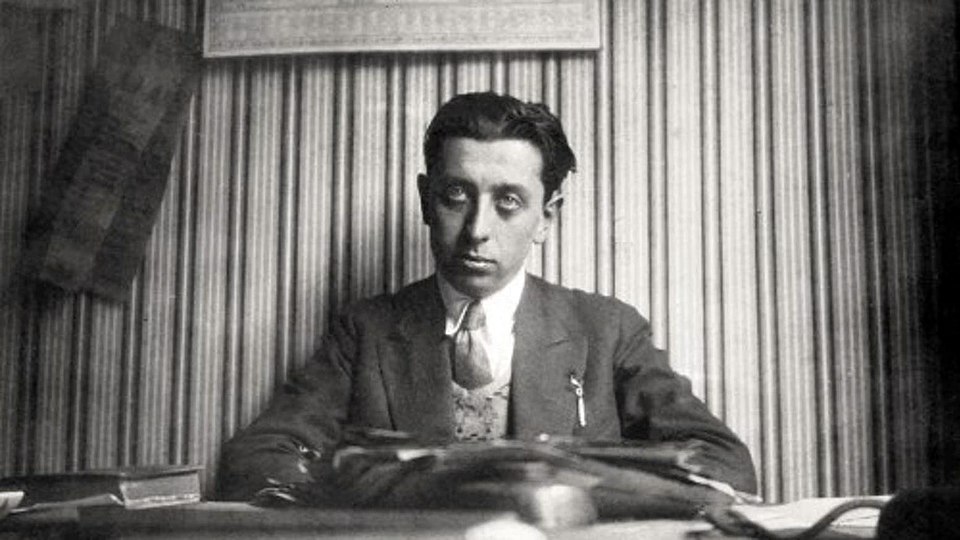
—Were you afraid the police would come for you?
Yes, I was afraid. Every day a little. You know, we lived with that shadow. And then it happened: on February 22, 1944, in the morning, the Gestapo—the German secret police—knocked on my door. Someone had denounced me. I understood right away. I had written a poem saying my heart "hated war" but rose up for battle. Well, the moment had come to pay for my words. They took me away. But I never regretted a single one of those sheets. Courage, my child, is decided in advance.
Courage is decided in advance, long before they knock on your door.
—Did you write the eighteen-meter ant? We know it!
Ha! So you know it? That makes me so happy! Yes, it's me: "An eighteen-meter ant with a hat on its head, that doesn't exist." I wrote it in 1944, in my Chantefables. Fancy that—a poet who played with bizarre dreams started writing for children! I imagined impossible, funny, enormous animals. They were nursery rhymes meant to be sung. And the most beautiful thing is this: a man spends his life writing complicated things, and it's his little ants that travel through time. I find that wonderful.
An ant that doesn't exist has traveled through time better than anything else.
—Why would a serious poet like you write funny stuff for little ones?
Because making people laugh is serious too, you know! In the 1930s, I was already working for radio. I spoke into a microphone for thousands of people, and I loved voices, sounds, songs. So writing for children came naturally. My Chantefleurs and Chantefables were full of unusual images: a hippopotamus, a giant ant. I wanted words to jump and dance. Imagine that poetry is a garden where you're allowed to play. A poem for a child is not a small poem: it's a poem that hasn't forgotten how to have fun.
A poem for a child is a poem that hasn't forgotten how to have fun.
—When you were a prisoner, could you still write poems?
On paper, almost never, my child. But in my head and in my mouth, always. After my arrest, I was taken far away, from camp to camp, all the way to Czechoslovakia. It was terrible—hunger, cold, fear. So in the evening, in a low voice, I would recite poems to my companions. The words warmed them a little. I also wrote to Youki, the woman I loved, to tell her to keep hope. You see, they can take everything from you: your clothes, your name on a list. But a poem you know by heart—no one can steal that.
A poem you know by heart—no one can steal that.
—If we could meet you at the end, what would you say to us?
I think I would say the words I whispered at the very end, at the camp of Terezín, in June 1945. I was exhausted, sick with typhus, the fever that spread through the camps. A comrade recognized me, despite my changed face. And I found the strength to say: "I am Robert Desnos, poet." Do you understand? Even dying, I remained what I had always been. That is what I leave you, you and your friend: know who you are, and hold on to it. Tyrants pass. Poems, they keep singing in schoolyards.
Even at the end, I remained what I had always been: a poet.
This imaginary interview was generated by artificial intelligence from sources documented in Robert Desnos's profile. It dramatises what the figure might have said based on what we know about them, but does not constitute attested historical testimony. For primary sources and factual documentation, refer to the full profile.