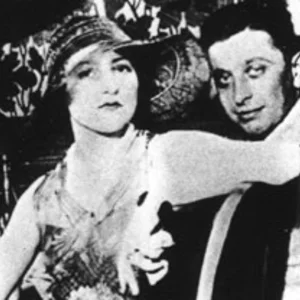

Youki Desnos (née Lucie Badoul, 1903–1962) was one of the iconic figures of the Parisian bohemian scene between the two World Wars. A model and muse for the painter Foujita, then partner of the Surrealist poet Robert Desnos, she was a central presence in the artistic circles of Montparnasse before becoming a gallerist.
Youki(1903 — 1966)
Youki
France
8 min read
Frequently asked questions
Key Facts
- Born Lucie Badoul in 1903 in Paris
- Model and companion of the painter Foujita in the 1920s, who nicknamed her "Youki
- (meaning
- snow" in Japanese)
- Partner of the Surrealist poet Robert Desnos from the 1930s onward
- An active presence in the artistic and literary circles of Montparnasse
- Died in 1962 after a life at the heart of the French avant-garde
Works & Achievements
Memoirs published by Fayard in which Youki recounts her life in Montparnasse, her relationships with Foujita and Robert Desnos, and the tragedy of deportation. A primary historical document of the utmost importance on the bohemian Paris of the interwar years.
A series of portraits by Tsuguharu Foujita, in which Youki is depicted using the artist's characteristic technique — a milky white background and fine ink outlines. These works earned her lasting renown in the history of modern art.
After Robert Desnos's death, Youki became actively involved as a gallery owner in Paris, supporting young artists and extending her role in the art world beyond that of muse and model. This trajectory illustrates the evolving status of women in postwar Parisian cultural circles.
Youki took part in various oral and written testimonies about Robert Desnos and the Surrealist movement, contributing to the collective memory of that period and to the posthumous recognition of Desnos's work.
Anecdotes
It was the Japanese painter Foujita who gave Lucie Badoul the nickname “Youki,” a Japanese word meaning “snow,” in tribute to the milky whiteness of her skin. This name, which she adopted permanently, encapsulates the cosmopolitan atmosphere of Montparnasse in the 1920s, where French and foreign artists crossed paths and inspired one another. Foujita made her one of his favorite models, painting her on numerous occasions with his distinctive technique of fine lines and white backgrounds.
Youki met the Surrealist poet Robert Desnos around 1928, while she was still living with Foujita. When Foujita left Paris on a long journey to South America and Japan, Youki and Desnos began living together. Their relationship became one of the most iconic in the Parisian artistic world of the 1930s, embodying the union between visual bohemia and Surrealist poetry.
On February 22, 1944, Robert Desnos was arrested at his home by the Gestapo because of his activities in the Resistance. Youki tirelessly fought to secure his release, exhausting every avenue with French and German authorities, all in vain. Desnos died of typhus at Theresienstadt, in Czechoslovakia, on June 8, 1945, just a few weeks after the liberation of the camp, while Youki was still waiting for his return.
In 1957, Youki published her memoirs, titled *Confidences de Youki*, in which she vividly recounted her extraordinary life amid the bohemian world of Montparnasse, the great artists of the École de Paris, and her love for Robert Desnos. This testimony remains one of the most valuable sources on the artistic and intellectual life of interwar Paris, seen from the inside.
After Desnos’s death, Youki did not vanish from the Parisian cultural scene: she became a gallery owner, moving from the role of muse and model to that of an economic and cultural force in the art world. This journey — from inspirational woman to female entrepreneur in the arts — illustrates the paths that were possible for women of her generation within the avant-garde movements.
Primary Sources
Youki recounts how Foujita gave her her Japanese nickname and describes daily life in the Montparnasse studios — the parties, the openings, and the decisive meeting with Robert Desnos, whose arrest and deportation she traces with restrained emotion.
In his letters sent to Youki from the concentration camps, Desnos speaks of his attachment to their life together, his moral resistance in the face of dehumanization, and his hope of returning to Paris and the people he loves.
Critics of the 1920s highlight Youki's recurring presence in Foujita's exhibited works, praising the refinement of the portraits and the distinctiveness of his technique blending Japanese ink with a milky white background.
Born on 29 April 1903 in Fontenay-aux-Roses (Seine), a town in the near southern suburbs of Paris, attesting to modest provincial origins before her rise into the artistic circles of the capital.
Key Places
Birthplace of Lucie Badoul, born on April 29, 1903, in this commune on the southern outskirts of Paris. She left these modest beginnings to join the vibrant world of the artists of Montparnasse.
The neighborhood where Youki spent most of her Parisian life, rubbing shoulders in studios and cafés with the leading figures of the international avant-garde. In the 1920s and 1930s, Montparnasse was the beating heart of the global artistic scene.
A legendary brasserie opened in 1927, a favorite meeting place for the artists, writers, and intellectuals whom Youki frequented regularly — first with Foujita, then with Desnos. These cafés served as informal literary and artistic salons.
The workspace and home of Foujita, where Youki regularly posed as his model. The artists' studios of Montparnasse were at once spaces of creation and centers of the bohemian social life of the era.
The concentration camp where Robert Desnos died of typhus on June 8, 1945. Youki had made repeated efforts to rescue her companion from deportation; it was in this camp that their story came to a tragic end.
Typical Objects

Tools with which Foujita painted his celebrated portraits of Youki in his Montparnasse studio. The palette symbolizes Youki's central role as a model and visual inspiration for one of the most prominent painters of the School of Paris.

Foujita used these traditional Asian instruments to trace the precise outlines of his compositions, giving his portraits of Youki a unique graphic quality that blended Eastern techniques with Parisian sensibility.

An emblem of the Montparnasse evenings that Youki enlivened alongside Foujita and later Desnos. Champagne was the ritual drink at vernissages, studio parties, and costume balls where the Parisian artistic avant-garde gathered.

Youki carefully preserved the correspondence Robert Desnos managed to send her from the concentration camps. These letters now stand as a historical testimony to the moral resilience of the deported and their bonds with loved ones who remained in Paris.

Foujita painted several portraits of Youki that became iconic works of the School of Paris. These paintings helped establish Youki as a recognized figure in the art history of the interwar period, well beyond her immediate circle.

Youki wrote her Confidences drawing on personal memories and preserved documents. This notebook led to the 1957 publication, an irreplaceable source for understanding the cultural and human life of Montparnasse during the Roaring Twenties.
School Curriculum
Vocabulary & Tags
Key Vocabulary
Daily Life
Morning
Youki woke up late, as was the custom of the Montparnasse bohemian set. Mornings often began over a coffee at the local zinc counter or in Foujita's studio, where posing sessions took place in the northern light so prized by painters.
Afternoon
Afternoons were spent in Montparnasse's iconic cafés — La Rotonde, Le Dôme, La Coupole — where Youki mingled with painters, poets, and writers from all over the world. These informal gatherings were the true driving force behind Parisian intellectual and artistic life of the era.
Evening
Youki's evenings were intense: gallery openings, studio parties, costume balls, and Surrealist soirées hosted by Desnos and his friends. Known for her vivacity and beauty, she was a highly sought-after presence in the artistic circles of the Roaring Twenties.
Food
The cuisine enjoyed by Youki and her Montparnasse contemporaries was simple but convivial: meals taken at the bistro or brasserie, washed down with red wine or pastis. Meals had a strong social and festive dimension, often stretching into lively discussions about art and literature.
Clothing
Youki embraced the liberated fashions of the 1920s: short dresses, a garçonne crop, and understated makeup. Her natural elegance, tempered by an artistic restraint, was appreciated in the circles she moved in and contributed to her image as a modern, emancipated woman.
Housing
Youki first lived in a live-work studio in Montparnasse with Foujita, then in an apartment in the 14th arrondissement with Robert Desnos. These bohemian spaces, adorned with canvases, books, and mementos, served as both intimate homes and gathering points for the neighborhood's artists.
Historical Timeline
Period Vocabulary
Liens externes & ressources
Références
Œuvres
Confidences de Youki (mémoires)
1957
Portraits de Youki par Foujita (série de tableaux)
1920-1929
Activité de galeriste parisienne
1945-1962
Témoignages et entretiens sur la vie surréaliste
1950-1962