Imaginary dialogue between Louis Antoine de Saint-Just and Robespierre
by Charactorium · Robespierre (1758 — 1794) · Politics · 6 min read
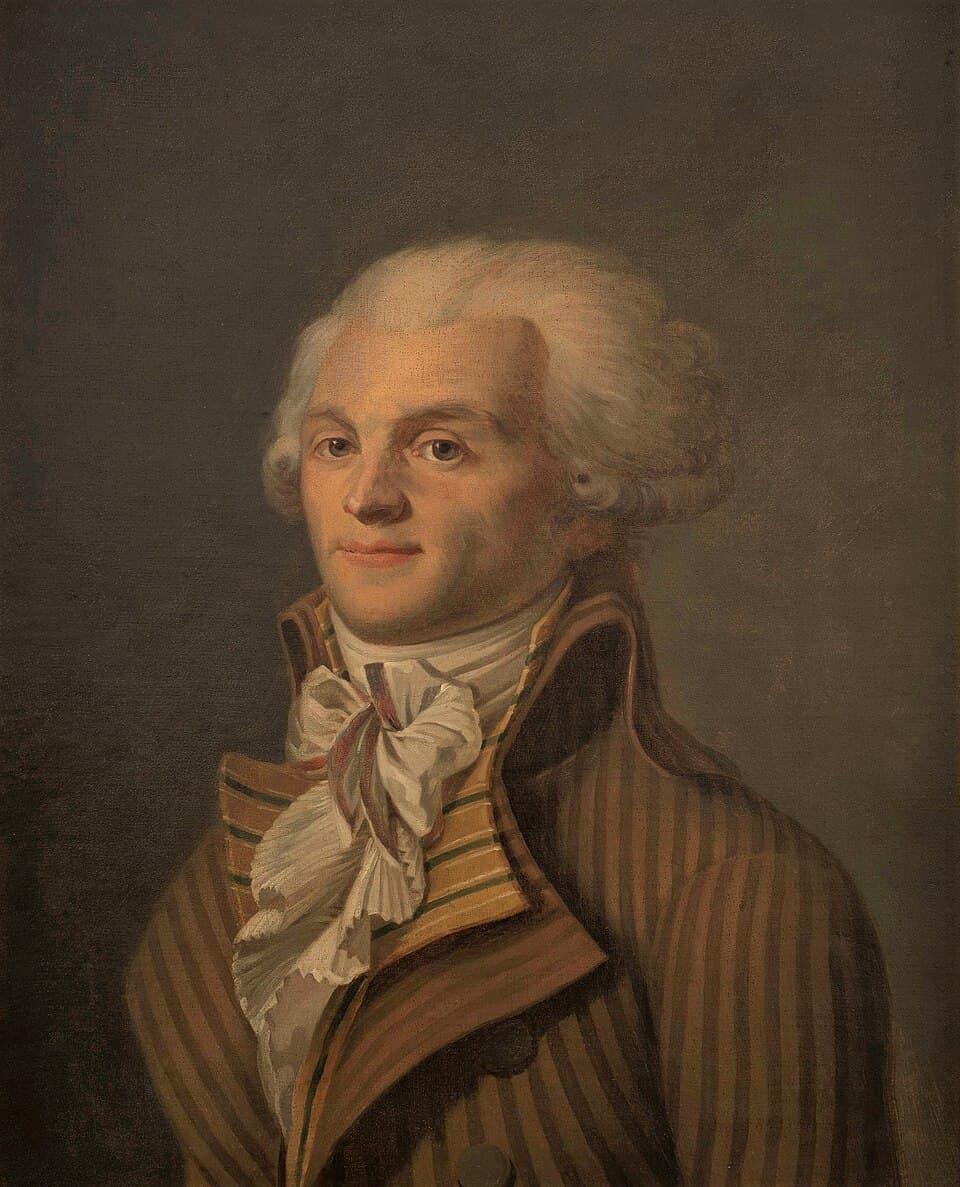
It is in the house of the carpenter Maurice Duplay, Rue Saint-Honoré, that Louis Antoine de Saint-Just meets Maximilien de Robespierre in this month of July 1794. The room is simple, a goose quill still drying on crossed-out sheets, and the summer heat weighs behind the closed shutters. Saint-Just knows this man better than anyone: they have kept watch together at the Committee, shared nights of speeches and anxious silences. He comes tonight not to press him, but to make him speak before the storm breaks.
—Maximilien, before Paris knew you, you pleaded in Arras. You were already called the poor man's lawyer. Do you remember?
I remember it like another life, and yet everything was already there. In Arras, in 1782, I defended a common man against the Company of the Mines of Anzin — a humble man against the powerful who thought justice was at their service. That day I understood that law is nothing if it does not first protect the weakest. They gave me that name of poor man's lawyer as one gives a burden, and I carried it. You see, Saint-Just, I have not changed my cause by ascending the rostrum; I have only broadened the courtroom. The Revolution is the greatest trial ever pleaded for the humble, and I am merely its obstinate defender.
The Revolution is the greatest trial ever pleaded for the humble.
—You are also called the Incorruptible. Does this nickname weigh on you, you who live so simply here, with our friends the Duplays?
It does not weigh on me, it obliges me. A man called incorruptible no longer has the right to weaken, for the slightest slackening becomes a betrayal in his own eyes. I live in this narrow room because I could not preach virtue and sleep in luxury. Money, positions, favors — all that has ruined so many of our own. I possess nothing but my principles, and that is my only wealth, the only one that cannot be stolen from me. You who see me every day, you know I am not playing a role: this sobriety is not a mask, it is my way of being faithful to the people who have nothing.
A man called incorruptible no longer has the right to weaken.
—In January 1792, against Brissot and almost alone, you fought the offensive war. Had you measured how harsh that solitude would be?
I measured it, and I accepted it. When the Girondins called for war against Austria, everyone saw it as the triumph of liberty; I saw it as a trap. You do not carry liberty at the point of bayonets — peoples do not like armed missionaries. And above all, I feared that a victorious general might one day return to dictate his law to the nation, as so often in history. Being alone at the rostrum of the Jacobins, under jeers, did not frighten me: truth is not counted by the number of voices. You know better than anyone, Saint-Just, I would rather be wrong with the people than right with its enemies — but this time, I was not wrong.
You do not carry liberty at the point of bayonets.
—In your report of February 5, 1794, you linked virtue and terror. Many do not understand. Explain this formula to me, to me alone.
It is the heart of everything, and yet it is distorted. I said that the mainspring of popular government in revolution is both virtue and terror: virtue, without which terror is fatal; terror, without which virtue is powerless. Understand well: terror alone is only a crime, the knife of a tyrant. But disarmed virtue, in the storm, is slaughtered by rogues. Terror is nothing other than prompt, severe, inflexible justice; it is therefore an emanation of virtue. We do not strike out of cruelty, Saint-Just, but because a nascent Republic, surrounded by traitors, cannot survive by turning the other cheek. The day the fatherland is saved, this sword will fall of its own accord.
Terror is nothing other than prompt, severe, inflexible justice.
—Yet this sword struck even Danton, a man of the first hour. Does this justice never cost you?
Do you think I am made of stone? To strike a man one has known, who cried out for the Republic when it faltered, that leaves a wound. But Danton had let himself be won over by gold and softness, and pity for one becomes cruelty to all. If I spare the guilty out of friendship, I betray a thousand innocents he would have delivered. That is the burden: public virtue requires that one silence one's private affections. I do not always sleep, I confess to you alone. But I console myself by thinking that those who reproach me for these rigors would be the first to be slaughtered if we let the factions retake France. You do not finish a revolution with drawing-room scruples.
Pity for one becomes cruelty to all.
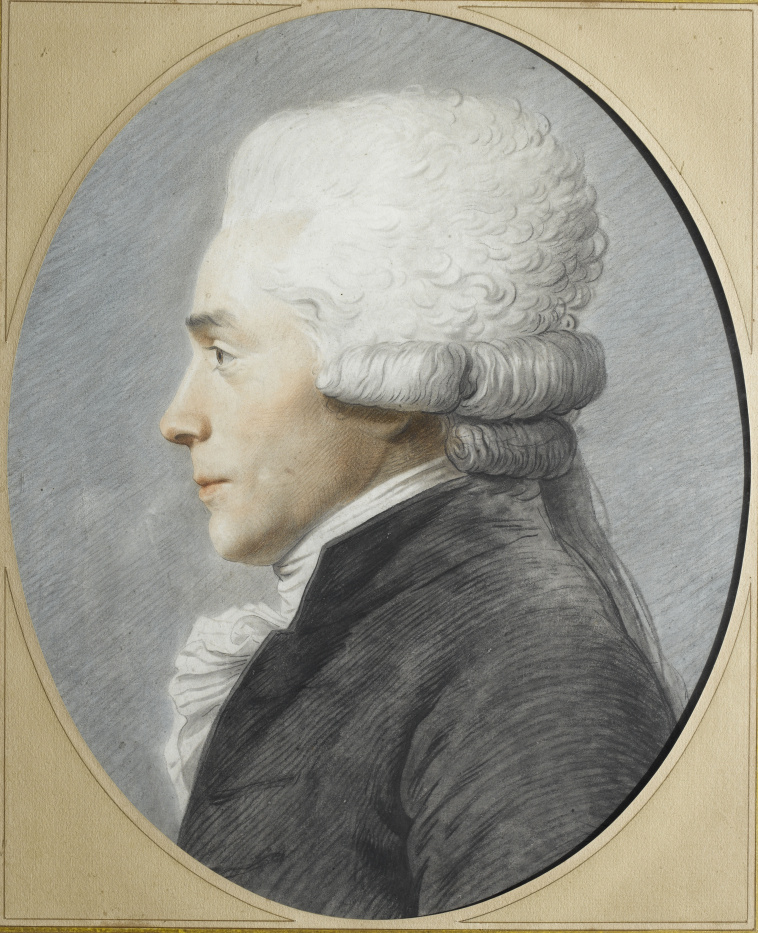
—On May 7, you decreed the cult of the Supreme Being. Why this new religion, when so many of our own dream of abolishing all worship?
Because a people without morality is only a mob, and there is no solid morality without a support that transcends men. Atheists want to tear from the poor their last consolation and persuade the scoundrel that no eye watches him — that plays into the hands of tyrants. I wanted to found the Republic on something other than fear of the executioner: on the idea of a Supreme Being and the immortality of the soul, which remind everyone of their duties. This is not a return to priests and their superstitions; it is a civic religion, where virtue alone is worship. Fanaticism and atheism are two reefs; between them I sought the path of reason and conscience.
A people without morality is only a mob.
—At the Festival of the Supreme Being, on June 8, you presided in a sky-blue coat, a bouquet in hand. What did you feel that day, at the head of the procession?
A grave happiness, such as one feels only once. To see an entire people gathered, not for hatred but to celebrate virtue and nature — that was the very image of what we are fighting for. I had taken care of my attire, yes, that blue coat, that bouquet; not out of vanity, but because such a day calls for dignity. When the fire consecrated the statue of Atheism to bring forth Wisdom, I thought I had touched the regeneration of morals. And yet — I will not hide it from you — I felt heavy looks on my back, smiles that were not of joy. Some saw me walking alone ahead of the others, and held it against me. The smoke blackened Wisdom; there are omens I prefer not to hear.
The smoke blackened Wisdom; there are omens I prefer not to hear.
—For weeks you have been deserting the Convention for this room. There is murmuring that you hold a list of traitors. What are you plotting, Maximilien?
I am plotting the moment to speak, for perhaps only one remains. You see these sheets: I am preparing a speech that will finally tell the truth about the conspiracy eating us from within. Men of the very Committee, hidden moderates, are plotting my downfall because I hinder their dealings and their cowardice. Yes, I know the guilty; and I will soon have to name them before the assembly. But I weigh every syllable, for naming too soon is to expose oneself, and naming too late is to perish. My silence today worries them more than my words. If I withdraw here, it is not out of weariness, it is to gather my strength. The Republic still needs one last effort, and I will not shrink from it, even if I lose my head.
Naming too soon is to expose oneself, and naming too late is to perish.
—And if the assembly turns against you? Could that same Place de la Révolution where the king fell also claim you?
I have thought about it, how could I not? The same Place de la Révolution that saw Louis fall in January 1793 is there, a few steps away, like a patient threat. But I have never sought to live, only to serve. If I am dragged there tomorrow, it will be proof that rogues have triumphed over virtue, and history will judge. What I fear is not the knife; it is that my fall may drag down the people, and that after me may return the corrupt, the starvers, those who haggle over liberty. You who are faithful to me, promise me only not to betray our principles, whatever happens. A man fades away; a just idea, you cannot guillotine it.
A man fades away; a just idea, you cannot guillotine it.
—One last thing, between us. You always invoke Rousseau. What do you owe him, deep down, more than anyone else?
I owe him my compass. As a child, I read Rousseau like one reads a revelation, and it is even said that I glimpsed him in his last days — I do not know if he looked at me, but he has seen me all my life. From him comes the idea that the sovereign people carries within itself a general will, distinct from particular appetites, and that virtue alone can make it live. Everything I have attempted — the Republic, the Supreme Being, the reign of morals — is only an attempt to give substance to his thoughts. Others read Rousseau to quote him in salons; I wanted to put him into practice at the cost of my peace. That is perhaps my fault in the eyes of the lukewarm: having taken the Enlightenment seriously.
My fault in the eyes of the lukewarm: having taken the Enlightenment seriously.
Read further
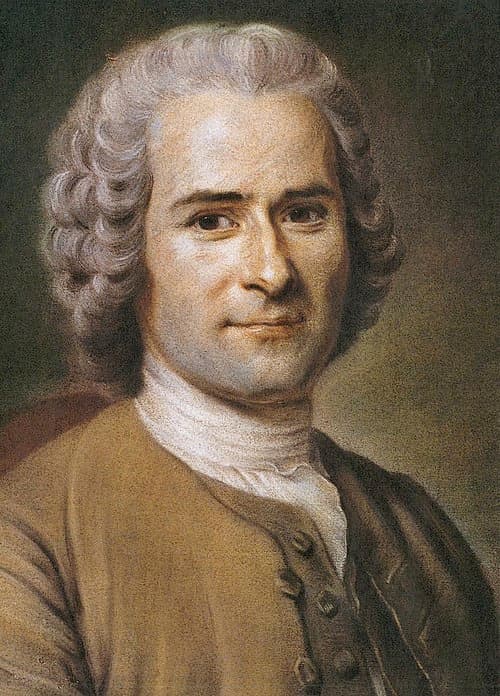
This imaginary interview was generated by artificial intelligence from sources documented in Robespierre's profile. It dramatises what the figure might have said based on what we know about them, but does not constitute attested historical testimony. For primary sources and factual documentation, refer to the full profile.