Imaginary interview with Robespierre
by Charactorium · Robespierre (1758 — 1794) · Politics · 6 min read
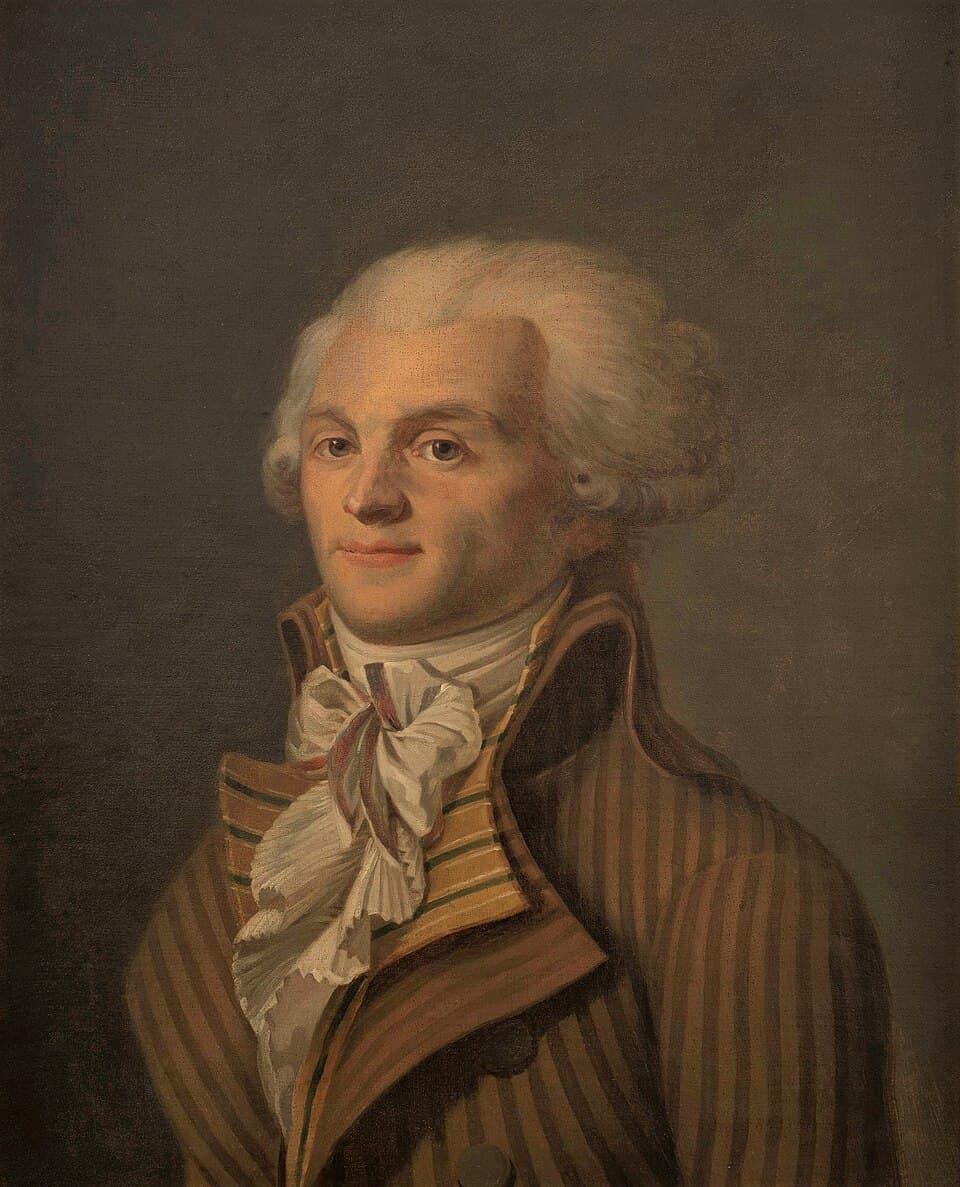
Summer 1794. In a modest room of the carpenter Duplay's house, rue Saint-Honoré, a few steps from the Jacobin Club, a slight man, in a blue coat and freshly powdered wig, sets aside his papers to receive his visitor. The candle is low, the Parisian night still echoes with the sounds of the Convention. Maximilien de Robespierre agrees, for once, to speak about himself.
—Do you remember your first great case as a lawyer, in Arras?
It was in 1782. The Anzin Mining Company wanted to crush a common man with all the weight of its fortune, and it seemed to me that justice was worthless if it did not first serve the one who has neither name nor gold to defend himself. I pleaded against those powerful men, and I won. I was called the poor man's lawyer — a nickname I never solicited but carried as a duty. You see, I never believed that one man was worth more than another because he owned coal mines. My whole life perhaps rests on that very simple conviction, born in Arras long before the Revolution.
The law belongs to the weak, or it is merely a mask on the tyranny of the strong.
—How do you explain that, having pleaded against the death penalty, you now preside over so many executions?
You touch my deepest wound. In May 1791, before the Constituent Assembly, I said this: 'I come to beg, not the Gods, but men, not tyrants, but my fellow citizens, to stop the course of these fatal errors. I claim to prove that the death penalty is essentially unjust.' I thought so then, and I still think so for the ordinary criminal, the thief, the misguided man. But a conspirator who would strangle the Republic in its cradle is not an accused: he is an enemy. One does not judge an enemy; one strikes him down. That this is a contradiction, I do not deny; I only say that it was imposed upon me by the steel of others.
The sword I refused to the wrongdoer, the fatherland tears from my hands to turn against its assassins.
—Why did you oppose, almost alone, the war against Austria in 1792?
January 1792. Everyone wanted war — the Girondins called for it as a festival, the king secretly desired it, convinced it would ruin us. At the Jacobins, rue Saint-Honoré, I rose against this general intoxication. I told them repeatedly that you do not carry freedom on the point of bayonets, that no people loves armed missionaries, and that an army led by generals loyal to the throne would sooner or later turn against us. They called me timid, a bad patriot. The following months proved me right more cruelly than I would have wished: Dumouriez betrayed us, the borders wavered. It is bitter to be right alone against everyone; yet that is the fate of whoever prefers the fatherland to applause.
You do not carry freedom on the point of bayonets.
—What do you reply to those who consider it monstrous to unite virtue and terror?
I reply with the very words I brought to the podium of the Convention, last February 5: 'The spring of popular government in revolution is at once virtue and terror: virtue, without which terror is disastrous; terror, without which virtue is powerless.' Understand well: terror alone is only the crime of despots. But disarmed virtue is merely a victim to be slaughtered. In a time of peace, I would speak to you of gentleness and merciful laws. We are not in a time of peace. The Republic is besieged from without, undermined from within; to survive it has only this swift and inflexible justice, which is but an emanation of virtue.
Take away virtue from me, only tyranny remains; take away severity, only corpses of patriots remain.
—How do you distinguish the suspect from the true enemy, when the law strikes so broadly?
That is the question that haunts me on evenings when I return late from the Committee of Public Safety. The Law of Suspects, passed in September 1793, counts as enemies anyone who, by their conduct or speech, has shown themselves a partisan of tyranny. The net is wide, I know, and no hand is steady enough never to tremble while drawing it. But what can you do? The people are one, their general will does not divide; whoever conspires against it cuts themselves off from the nation. I do not claim to read hearts. I only claim that in the midst of a war where each day brings us a new plot, to hesitate is to hand over the Republic. Error is possible, and it costs me. Inaction, however, would be a crime.
No hand is steady enough never to tremble while drawing this net.
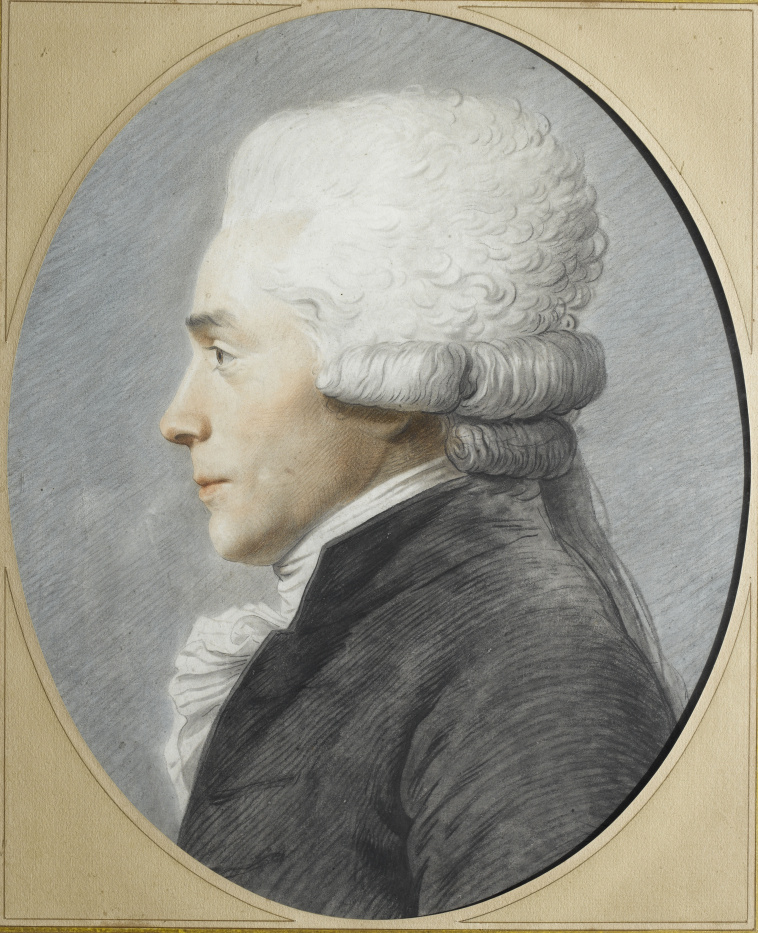
—How could you send Danton, your former ally, to the scaffold?
You think you wound me; you only reopen what I have already cut within myself. Danton was a great arm of the Revolution, I never denied it. But the man had grown fat, he made deals with corrupt suppliers, he demanded that the vice be loosened while the enemy was at our gates. In the spring of 1794, I presented the report that linked him to the foreign factions. Do you think my hand did not waver? I counted that man among my close ones. But the fatherland has no friends; it has only citizens and traitors. The day you spare a guilty person because you love them, you have ceased to be a republican and become a courtier again. I preferred to lose Danton rather than lose myself in complacency.
The fatherland has no friends; it has only citizens and traitors.
—You are called the Incorruptible, and people always notice your neat appearance. Why this care, amid so many who are unkempt?
They have made a whole case out of my sky-blue coat and powdered wig, as if cleanliness had become an aristocratic crime. Many of my colleagues affect a stained jacket and unshaven chin, thinking thereby to become one with the people. I consider that a comedy. The people do not need us to mimic their misery; they need us to restore their dignity. If I appear clean, with a touch of makeup, a fitted coat, it is because I want virtue to have a face that one is not ashamed to look at. I am called the Incorruptible: not that I think myself better than another, but I have never desired any fortune other than the esteem of honest people. I lodge with a carpenter; I have not a louis more than when I arrived in Paris.
—What are your evenings like in that house, when the Convention finally falls silent?
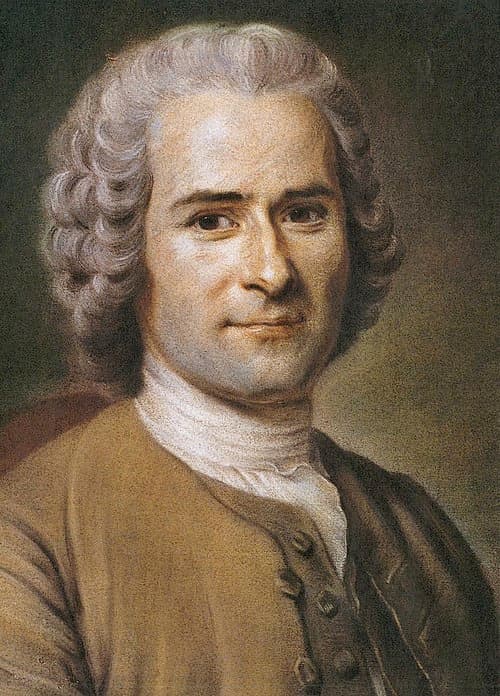
When the uproar of the galleries dies down, I go back up to my room at the Duplay home, and I take up my goose quill again. It is there, by candlelight, that I work on my speeches, revising them twenty times, for I cannot improvise and I distrust fine phrases that come too quickly. Often a volume of Rousseau lies open on the table — I glimpsed it as a youth, and it has never left me. His general will, the idea that virtue alone makes peoples free, that is my civil gospel. Saint-Just sometimes comes up; we speak in low voices, over a glass of wine diluted with water, eating frugally. The family treats me like a son. Those hours are the only ones when I belong to myself; the rest of my days belong to the Republic.
—What were you seeking on June 8, when you presided over the Festival of the Supreme Being?
That day, June 8, I marched at the head of the procession, dressed in blue, holding a bouquet of ears of corn and flowers. I set fire to a figure of Atheism, so that Wisdom might emerge from it. The smoke blackened the statue a bit, and already I heard behind me some laughter that I will not forget. No matter. A people without belief cannot stand: the Republic needs a foundation higher than its laws, faith in the Supreme Being and in the immortality of the soul, which comforts the poor and makes the wicked pale. I wanted neither priests who enslave, nor atheists who despair. I wanted a virtue that kneels before something greater than itself.
They saw only my hand pointing to the sky, never the sky I was pointing to.
—Do you feel, these days, the vice tightening around you?
I am not blind. Since the festival, I perceive in the Convention looks that turn away, silences that weigh heavily. There exists in this assembly a coalition of corrupt men, rogues whom virtue frightens as light frightens the thief. They whisper that I want dictatorship, I who have never asked for anything but that the general will be allowed to speak. Soon I must go to the podium and finally name those who are digging the Republic's grave. I am urged to give them up; I want first to be certain, for to accuse lightly would be to commit the very crime I fight. If I must fall, I will fall without having betrayed. My conscience is clear: it is the only fortune that cannot be torn from me.
Read further
This imaginary interview was generated by artificial intelligence from sources documented in Robespierre's profile. It dramatises what the figure might have said based on what we know about them, but does not constitute attested historical testimony. For primary sources and factual documentation, refer to the full profile.