Kids interview Robespierre
by Charactorium · Robespierre (1758 — 1794) · Politics · 5 min read
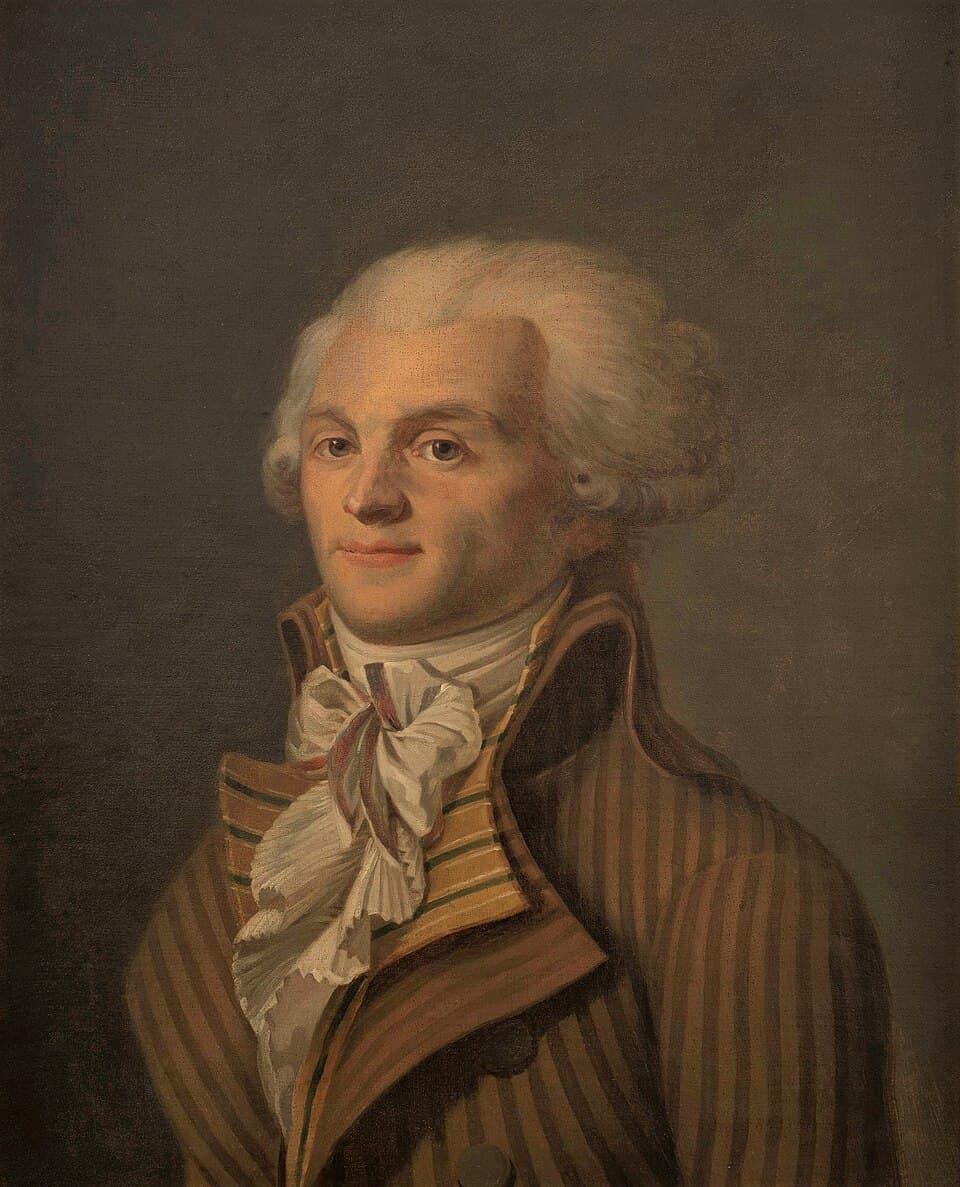
That morning, a school field trip visits an old building that smells of the History of the Revolution. Two students about twelve years old step forward, a little intimidated, toward the man in the sky-blue coat. Robespierre looks at them, surprised and touched that children want to listen to him—and he agrees to tell them everything.
—If we could see you today, what would we notice first?
You know, my child, many of my revolutionary friends wore dirty, torn clothes. They thought being unkempt made them closer to the people. Not me. I got up early, powdered my wig, adjusted my sky-blue coat carefully. Imagine a man always impeccable, even in the worst times. They called me the Incorruptible, the one who could not be bought with gold or promises. For me, this well-groomed body was like a flag: it had to show that I lived virtue, not just talked about it. Do you understand? My coat was already a speech.
My coat was already a speech.
—What did you eat in the evening, in the house where you lived?
Ah, a nice question! I lodged with a carpenter, Maurice Duplay, on Rue Saint-Honoré, very close to the club where I spoke. Imagine a simple house that smelled of freshly cut wood and workshop glue. The family treated me like one of their own. In the evening, we ate little: some bread, a few fruits, a glass of wine mixed with water. I did not like overflowing tables. Sometimes my young friend Saint-Just came, and we talked politics late into the night. You see, I preached sobriety; I had to live it too, otherwise my words would have been worthless.
—Was it true they called you 'the advocate of the poor'?
Yes, and I was proud of it. I was a young lawyer in Arras, my hometown, in the north. At that time, the powerful almost always won their cases. In 1782, I defended humble people against a large mining company, Anzin. Imagine: on one side, workers without money; on the other, very rich gentlemen in their fine clothes. I pleaded for the lowly, and people began to call me that. You know, I already believed in a simple thing: the law must not be the friend of the strong against the weak. It was this idea that later carried me all the way to Paris.
—Why did you want to abolish the death penalty, when afterward there was the guillotine?
You touch on something that weighs on my heart. In 1791, as a young deputy, I went to the rostrum to ask that no one be executed anymore. I said that the death penalty is essentially unjust. At the time, it was courageous: almost no one thought like me. Then the Revolution was threatened from all sides, by foreign kings, by conspiracies. And I, who wanted to save every head, let so many heads fall under the guillotine. I will not hide this contradiction from you. It is perhaps the heaviest of my life. History has not forgiven me for it, and I understand why.
—What exactly is the Terror that the books talk about?
It is the darkest word in my story, and I must speak to you frankly about it. The Terror is what we call a period, roughly from 1793 to 1794, when many people suspected of betraying the Revolution were arrested and executed. I led a group, the Committee of Public Safety, which decided all this. In a great speech, I declared that government must rely on two springs: virtue and terror. I believed I was protecting the Republic at war as one protects a house on fire. But when people are afraid, they strike too hard. Many innocents died. I do not want to hide that from you.
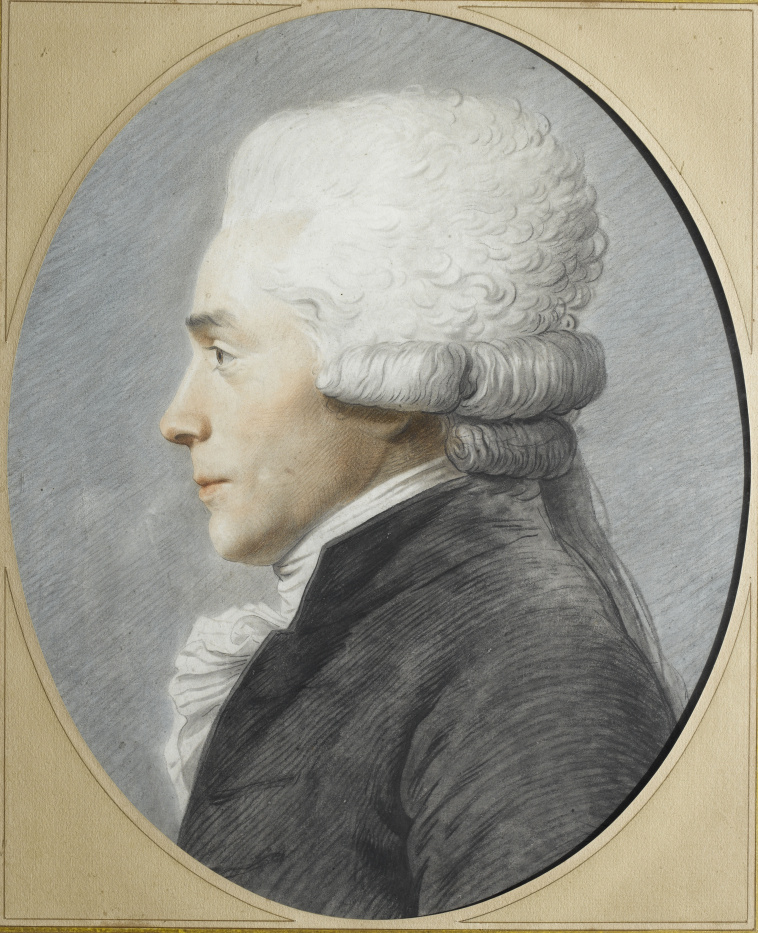
—You always talked about 'virtue'—what did it mean to you?
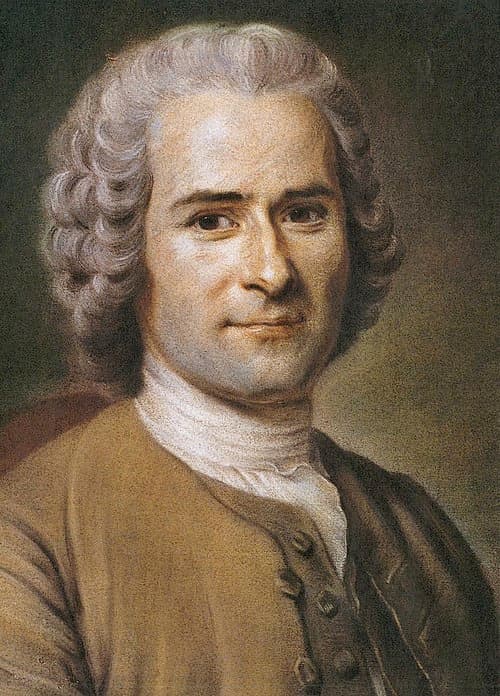
For me, virtue was not about being polite or well-mannered. It was something greater: loving one's country more than oneself, accepting to give up one's small comforts for the common good. I had read and reread a philosopher I admired enormously, Jean-Jacques Rousseau. His books never left me. He said that a free people must seek the common interest before private interests. Imagine a class where everyone thinks of others first: that was my dream of the Republic. The problem, you will say, is: who decides what is virtuous? I did not listen enough to that question. And it ruined me.
—Is it true that you invented a new religion?
Not a religion as you imagine, with priests and miracles. In May 1794, I wanted to establish the cult of the Supreme Being. The idea was simple: to believe in a great benevolent power above us, and in the hidden goodness of the human soul. I found it dangerous to destroy everything, including the idea of God. But I also found it dangerous to let a few decide faith for everyone. I wanted a gentle, shared belief that would make people better citizens. Many around me whispered that I was acting like a prophet. And that, my child, began to isolate me dangerously.
—What happened with the statue during your big festival?
Ah, that day! On 8 June 1794, I presided over a great festival in the heart of Paris. I wore a sky-blue coat and carried a bouquet of flowers and ears of wheat. Imagine the immense crowd, the songs, the sun on the flags. They had erected a statue representing Atheism—that is, the rejection of all belief. I set it on fire, and from its ashes a beautiful statue of Wisdom was supposed to emerge. But the smoke blackened it completely! My enemies immediately whispered that it was a bad omen, a sign that my fall was near. At the time, I smiled. Deep down, I was already a little afraid.
—Why didn't you name the traitors in your last speech?
What a mistake, my child... On 8 Thermidor, that is, late July 1794, I went to the rostrum, tired, surrounded by enemies. I announced that I knew of hidden traitors in the Assembly. But I refused to give their names. I thought I would frighten them. In reality, I frightened everyone! Imagine a room where each person thinks: 'What if I am the one he accuses tomorrow?' Each, out of fear, decided to strike me before I struck them. The next day, they all banded together against me. My silence, which I thought clever, cost me my life.
My silence, which I thought clever, cost me my life.
—When you were arrested, did you regret anything?
On 9 Thermidor, I was arrested at the Convention, and the next day they took me to the Place de la Révolution—the same place where the king had been executed. Do you want to know if I regretted? Yes. Not having loved the Republic; never that. But having believed that one could build the happiness of men by spreading fear. Fear builds nothing solid; it always ends up turning against the one who sows it. If I could pass on one thing to you, it would be that. Look at my story, my beautiful ideas and my faults, and learn to separate the two. That is all I ask of you.
Fear builds nothing solid.
Read further
This imaginary interview was generated by artificial intelligence from sources documented in Robespierre's profile. It dramatises what the figure might have said based on what we know about them, but does not constitute attested historical testimony. For primary sources and factual documentation, refer to the full profile.