Imaginary interview with Robin Hood
by Charactorium · Robin Hood · Mythology · 6 min read
Night falls on Sherwood Forest, and a campfire crackles in the hollow of a clearing that no path points to. Leaning against an oak, a longbow laid across his knees, a man in a green cloak signals to sit — but to speak softly, for lookouts watch the roads. Tonight, exceptionally, he agrees to tell his story.
—How would you describe this forest where you live on the fringes of everything?
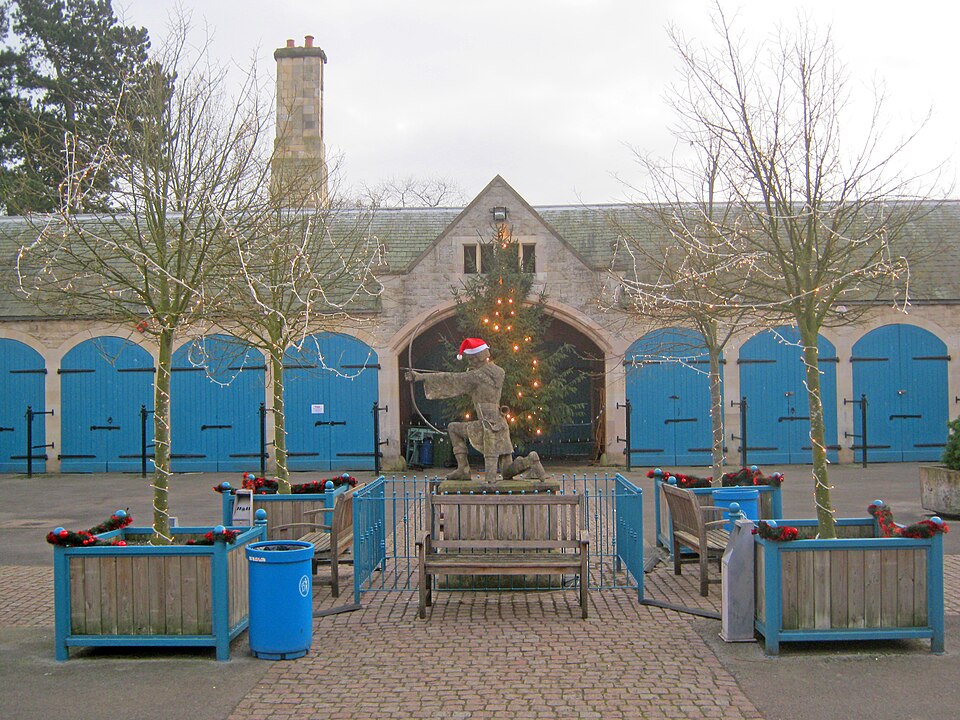
Come closer, and lower your voice — here the trees have ears, and so do my lookouts. Sherwood Forest is not a refuge, it's my kingdom, the only one where no sheriff wears a crown. Beneath these oaks, I feel freer than a king in his stone keep. In the morning, I check my traps and the men posted along the merchant roads; in the evening, we gather around the embers, and my hunting horn is enough to make thirty companions spring from the thickets. Those who hunt me find only huts of branches, already empty when they arrive. The forest feeds us, hides us, and closes behind us like a green door. As long as I hear it breathe above my head, I fear neither soldier nor gallows.
Sherwood Forest is not a refuge, it's my kingdom, the only one where no sheriff wears a crown.
—What does an ordinary day look like for you and your men?
You might imagine palaces under the canopy? Think again. We sleep in shelters of leaves that we raise and abandon as we flee — a camp that doesn't move is a camp already lost. At dawn, the birdsong serves as my wake-up and my sentinel: if they suddenly fall silent, a horse is approaching. We eat the king's game, deer and wild boar taken from his forbidden woods — that's already a theft, for a commoner who hunts here risks the rope. Bread confiscated from travelers too plump, wild honey, fish from the streams: a rustic table, but no lord has granted it to us, and that's what gives it its taste. At night, around the fire, we share the loot and the stories. It is there, far more than in gold, that fellowship is forged.
—Your skill with the bow is praised everywhere. Where does such mastery come from?
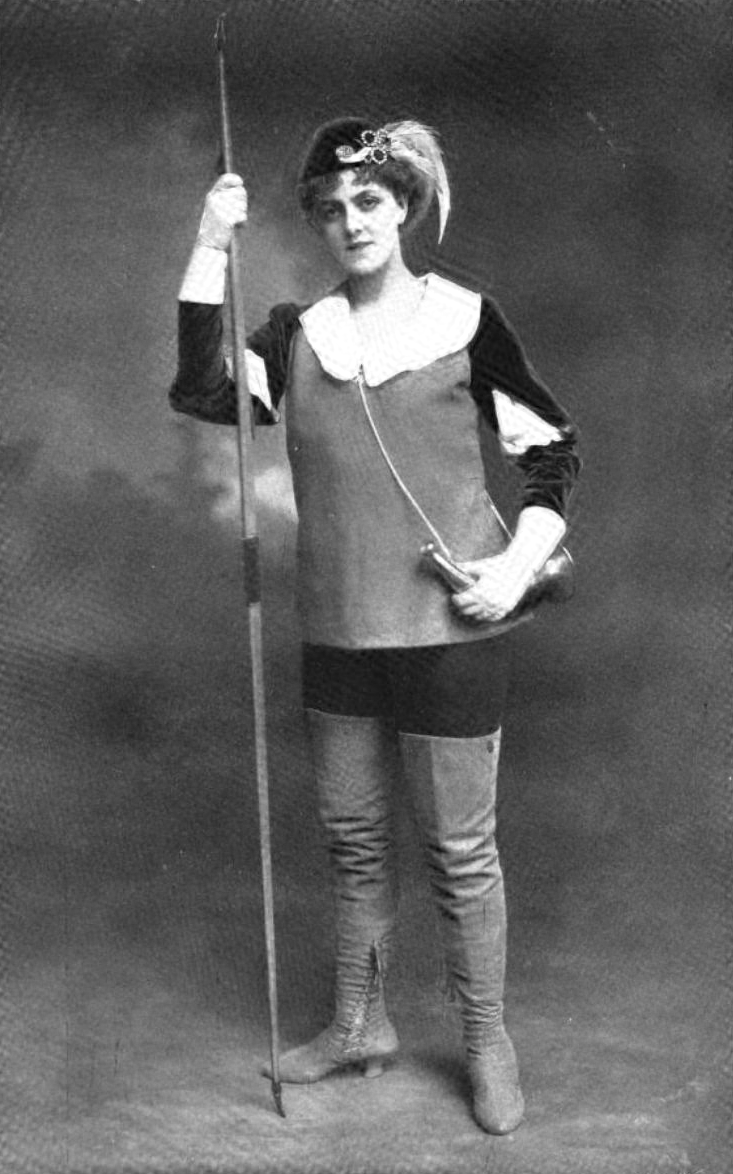
Give me a longbow of English yew, tall as a man, and I'll bring down a lark in full flight. It's the weapon of the poor that fells the rich: it requires neither warhorse nor steel armor, only a patient arm and a steady eye. Every afternoon, fair weather or rain, I loose my arrows at a split branch a hundred paces away, until my fingers bleed — for an archer who stops practicing is nothing but a boastful cripple. They say my shafts hit a target no one sees; the truth is, they hit the one I've aimed at a thousand times. The Sheriff of Nottingham has learned to his cost that between his guard and me there is always the range of an arrow — and I know it better than he.
An archer who stops practicing is nothing but a boastful cripple.
—Yet you are not alone in these woods. Who are these men who follow you?
Alone, a man in the woods is just an outlaw waiting for his rope; together, we become a law. Little John — little only in name, for he towers a head above me — thrashed me on a bridge with a staff before becoming my truest brother. Will Scarlet and the others came likewise, each having fled an injustice that dogged their heels. We call ourselves the Merry Men, and it's not idle bravado: there is much laughter when you've already lost everything. Among us, no lord nor vassal, no seigneurial justice that hangs one and pardons another according to birth. The spoils are shared equally, and the first rule is that no laborer, no widow, will ever be robbed. That is the only feudalism I recognize: that of a given word.
—Many call you a thief. What do you say to that accusation?
They call me a thief, and I don't deny it — but ask yourself first who stole first. The lord who squeezes the laborer down to the last sheaf, the abbot who grows fat while his flock fasts, the tax collector who empties a widow's purse in the name of the feudal tax: they steal with a seal and sleep soundly. I, on the other hand, give back. When my men lighten an overfed bishop's purse, that gold does not mold at the bottom of a chest: it returns to the calloused hands that made it grow. I take nothing from the honest pilgrim or the peasant; my prey wear velvet and gold chains. The rich call it brigandage, the poor call it justice — and between the two words, there is only the thickness of a coat of mail.
The rich call it brigandage, the poor call it justice.
—Do you remember a capture that marked you more than others?
There was that knight my men stopped on the road to Nottingham, sure they had caught a big fish. His purse was empty: he had mortgaged his lands to pay his son's ransom, imprisoned far away. Instead of robbing him, I lent him enough to redeem his honor, and he left with his head down, not knowing whether he had been robbed or saved. That is what the ballads sometimes forget to say: redistributing is not only emptying the rich, it is knowing how to read the heart of the one you stop. A starving commoner, I feed; a powerful man who weeps for his peasants, I let pass. Gold is just a tool; the true currency is giving back to each the share of dignity that feudalism has confiscated.
—The Sheriff of Nottingham appears as your eternal enemy. Why this relentless conflict between you?
The Sheriff of Nottingham and I are two sides of the same coin tossed in the air — he the obverse, I the reverse, and the people wait to see which falls. He holds the town, the jails, the gallows raised on the square; I hold the forest and the people's hearts. He thinks me game; I am the hunter. How many times has he set ambushes, organized archery contests to lure me out of the woods, sworn before the king to hang me before Michaelmas! And how many times has he returned empty-handed, his beard full of leaves, mocked by his own guards. He embodies an order that weighs on bent shoulders; as long as he brandishes his keys and his seal against the humble, he will always find me in his path, an arrow already nocked.
He thinks me game; I am the hunter.
—Does your revolt target the English crown itself?
They say I became an outlaw the day good King Richard the Lionheart left to wage war in the Holy Land, leaving the throne at the mercy of wolves. In his absence, John Lackland and his henchmen squeezed the kingdom like a fruit, multiplying levies and confiscations. Yet I have never raised my bow against the crown itself — I revere the rightful king, and I dream of the day Richard returns to set his house in order. But between an empty throne and an oppressed people, should I have folded my arms? I chose the forest over servitude. Let the true king return, and I lay down my arms at his feet; let a usurper reign, and Sherwood will remain the last free land in England. My rebellion does not target order, but those who pervert it.
—How can we know what in your story is true and what is not?
You want to know if all this is true? Listen instead to the passing minstrel: "Lythe and listin, gentilmen, That be of frebore blode; I shall you tel of a good yeman, His name was Robyn Hode." That is how I am kept alive — not in the parchments of clerks, but in the mouths of the people, from wake to wake. The chroniclers call me a great pillager and great thief; the peasants, for their part, sing my exploits while threshing wheat. Each storyteller adds his grain, turns an arrow into a miracle, moves my forest from one county to another. Am I a man or a song? Perhaps both — and perhaps the song will last longer than the man would have. You cannot hang a ballad, you see: that is my whole secret.
You cannot hang a ballad, you see: that is my whole secret.
—What would you say to the idea that your name would still be sung in a distant future?
To imagine myself told in a hundred years? The thought makes me smile under my green cloak. I can neither read nor write, and yet clerks would set my name down in their books! If such a thing came to pass, I wager they would disguise me in each generation according to its needs: now a fallen noble, now a simple brigand, now a champion of the little against the great. No matter the costume — as long as the essential is remembered: that a common man, with a bow and courage, can stand up to an entire county. The powerful build stone tombs so that they may be remembered; I will have only a forest and songs. But ask the children of Nottingham what name they shout while playing in the thickets. It is not the sheriff's. That is my true monument.
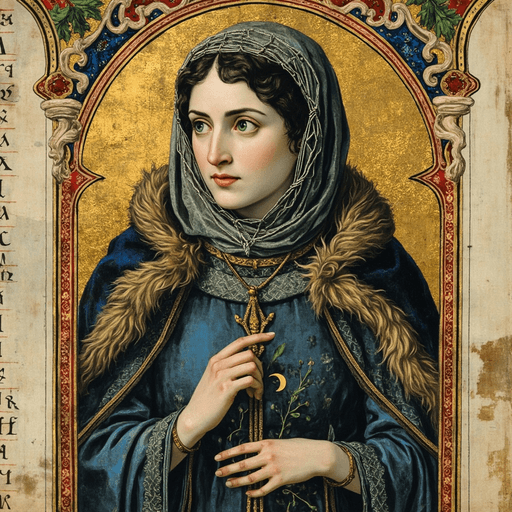
This imaginary interview was generated by artificial intelligence from sources documented in Robin Hood's profile. It dramatises what the figure might have said based on what we know about them, but does not constitute attested historical testimony. For primary sources and factual documentation, refer to the full profile.