Imaginary dialogue between Charlemagne and Roland
by Charactorium · Roland · Mythology · 5 min read
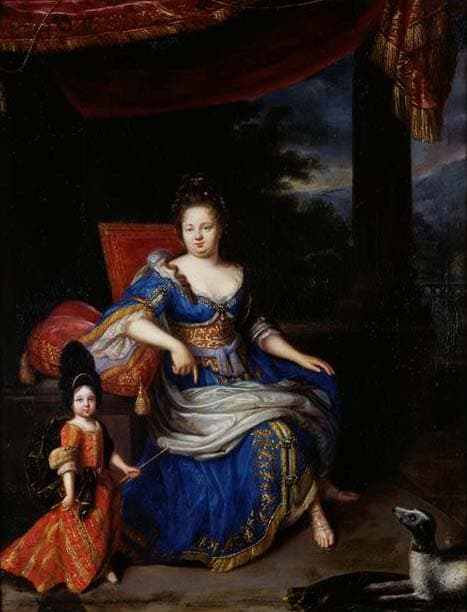
It is at the pass of Roncevaux, in the frozen air of the Pyrenees of the year 778, that Charlemagne retraces his steps, alerted by a horn sound that shattered against the rock. Amid the fallen rearguard, he finds Roland, his nephew and the most illustrious of his twelve peers, the shattered olifant still clutched against him and Durandal half-driven into the rock. The emperor comes not as a judge but as an uncle and lord, to hear from the paladin's lips what the annals will never tell. The wind still carries the echo of the battle as he kneels beside him.
—Roland, my nephew, I heard your horn beyond the mountains and turned the whole army back. Why did you wait so long to blow it?
You know better than anyone, my uncle: a peer of Charlemagne does not sound his horn for a few mountaineers. I thought I could hold the pass alone, out of honor, without summoning your host that was already moving toward the plain. When I saw my companions fall one by one in this gorge, I realized my pride had doomed them. Only then did I raise the olifant to my lips. I blew with all my soul, not to be saved, but so that you would know, so that you would return to avenge your men. The sound carried thirty leagues. That delay I now pay for—it weighs heavier on me than all my wounds.
A peer of Charlemagne does not sound his horn for a few mountaineers.
—I have been told you blew until your temples burst. Is it true that a man can kill himself that way, with a mere horn?
I cannot say whether it was the temples or the heart that gave way first. I blew as one prays, as one beseeches heaven, holding back nothing of my breath. Blood rose to my mouth and head, and I felt something break within me, just as the horn itself split. Look, the olifant is shattered in my hands. A horn is not meant to carry a man's despair to your distant ear. But I wanted that final call to cross the mountains at any cost. If it cost me my life, what matter: the sound reached you, and that is all I asked.
I blew as one prays, holding back nothing of my breath.
—I see your Durandal planted in the rock, chipped but whole. Why did you strike it so fiercely against the stone?
Because I would not let it fall into pagan hands, my lord. This blade you yourself girded on me: no sword in the world can resist it, and no enemy should boast of it after my death. I struck the rock with all my strength to break it—ten blows, twenty blows. But it was the sword that gashed the mountain, not the mountain that gashed it. Durandal cannot be broken, not even by the one who wields it. So I laid it beneath me, my body its last scabbard, that no unfaithful hand might touch it. Such a weapon does not outlive its master to serve another.
It was the sword that gashed the mountain, not the mountain that gashed it.
—They say holy relics are set into its pommel. What did you entrust to this blade, you who knew it better than anyone?
In its golden hilt rest holy relics I venerated each morning before battle: a tooth of the blessed, blood of a martyr, a piece of a saint's robe. It was no mere war-sword, my uncle, but a reliquary I carried at my side. Before every battle, I kissed the pommel as one kisses the altar. To strike with Durandal was to fight with all Christendom in my fist. That is why I could not bear it to serve a pagan: it was not my honor alone at stake, but that of the saints it sheltered. A blade that holds heaven must know no impious master.
It was no mere sword, but a reliquary I carried at my side.
—Do you remember, at Aix-la-Chapelle, when I counted you among my twelve peers? What did it mean to you to be my paladin?
I remember it as the finest day of my life, my uncle. In the great hall of your palace, among officers and bishops, you named me before all. To be your paladin was not a title worn like a cloak: it was to pledge my body, my blood, and my name to your service unto death. The vassal owes fidelity to his liege, but between us there was more than the oath—there was blood, and a nephew's love for the one who raised me. I wished to be first among your twelve, not out of vanity, but so that you would never blush for having chosen me. That is why I always stood in the rearguard, in the place of danger.
To be your paladin was to pledge my body, my blood, and my name unto death.
—You speak of honor and loyalty. But did your honor not cost the lives of all your companions in this gorge?
You touch the deepest wound, my lord, and I will not flinch. Yes, it was my honor that killed them. I wanted to be worthy of the knight the jongleurs sing of, the one who never retreats and never calls for aid. Chivalry taught me courage, but it forgot to teach me moderation. Olivier, my companion, begged me to sound the horn while there was still time; I refused out of pride. When at last I yielded, it was too late. Courage without wisdom is but pride that leads brave men to the grave. I die loyal, but I also die guilty of their deaths, and that thought gnaws me more than my wounds.
Courage without wisdom is but pride that leads brave men to the grave.
—We had come to besiege Saragossa and were returning victorious. Who struck you so in the back, in the heart of my own mountains?
It was not a formed army, my uncle, but a swarm that burst from the heights. While your main force descended toward Gascony, we held the rearguard with the baggage trains. They lay in wait, hidden in the rocks and woods of the pass: they rolled stones, loosed their shafts, and fell upon us where the gorge was narrowest. The terrain favored them more than numbers. We could neither charge nor flee, trapped between two walls. I know not whose mouth will tell of this day, nor if men will ever know whence those men came—but know that your peers did not retreat a single step and fell with their faces toward the enemy.
Your peers did not retreat a single step; they fell with their faces toward the enemy.
—What would you have me do with your body and your arms, my nephew? Where should your rest be, far from this accursed gorge?
Do not let me rot in this pass, my lord, I beg you. Carry my body toward the western lands, to Blaye, by the great river, where the air is mild and pilgrims pass. Let my shattered olifant and my Durandal be laid there, so that men who come may remember that here a peer of Charlemagne held to the end. I ask no king's tomb—a little stone and prayer suffice. But I want my horn and my sword to rest together, for they were my voice and my arm. Promise me this, you who gave me everything: you owe me this last journey.
Let my horn and my sword rest together: they were my voice and my arm.
—And of you, Roland, what will remain when your bones lie at Blaye? What do you expect men to keep from this day?
I know not what men will keep, my uncle, and perhaps it is better I do not. Let them at least remember this: that a man may fail through pride yet die loyal; that loyalty to one's lord is worth giving one's last breath. If my horn and blade are preserved at Blaye, let it not be to worship relics, but to remind young knights of the price of the oath. As for my name, I entrust it to your hands—you are my lord, and through you I am worth something. If Roland is to be remembered, let it first be that he was your man to the end, and did not fail.
A man may fail through pride yet die loyal.
Read further
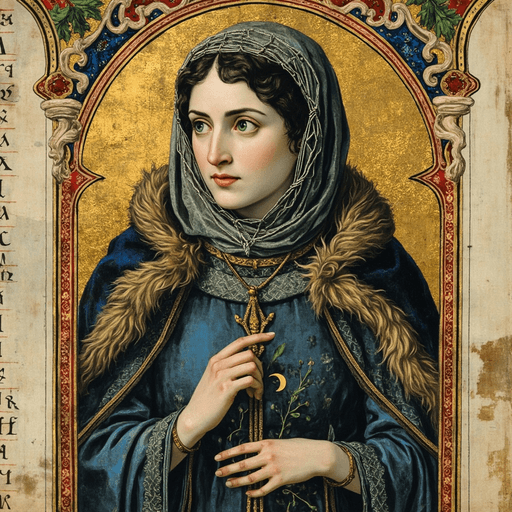
This imaginary interview was generated by artificial intelligence from sources documented in Roland's profile. It dramatises what the figure might have said based on what we know about them, but does not constitute attested historical testimony. For primary sources and factual documentation, refer to the full profile.